
About
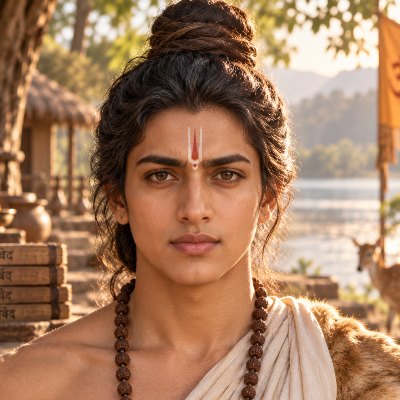
Devarata — Vedic Sage, Sacrificial Victim, and Adopted Son of Vishvamitra
Shunahshepa · Sunahsepa · Cunahcepa · Sunahsephas · Shunashepa · Devarata · Ajigarti (patronymic)
Shunahshepa is a legendary Vedic sage whose story constitutes one of the oldest and most widely transmitted narratives in the Hindu textual tradition. In the primary Vedic and Puranic account — preserved in its earliest form in the Aitareya Brahmana of the Rigveda (7.13–18) — he is the middle son of Ajigarta Sauyavasi, an impoverished Brahmin of the Angiras lineage. He is sold by his father as a human sacrificial substitute, bound to a sacrificial post, and rescued through his own fervent prayer to the Vedic gods, after which he is adopted by the sage Vishvamitra and renamed Devarata. A distinct parallel account in the Valmiki Ramayana (Bala Kanda, 1.61–62) assigns him an entirely different parentage — making him the middle son of Sage Richika and Satyavati — and situates the story within a different royal context. Several hymns in Mandala 1 of the Rigveda are attributed to him, making him also a seer of sacred verse. His narrative is prescribed for recitation during the Rajasuya royal consecration ceremony, embedding it at the centre of Vedic ritual life.
✦ The Names
The name Shunahshepa is a Sanskrit compound formed from shunah, meaning "of a dog," and shepa, meaning "tail," yielding the literal sense "dog's tail." The designation carries an overtly lowly or inauspicious connotation, and it is generally understood to reflect the degraded circumstances of his birth and upbringing rather than to be a name of honour. It may have functioned as a descriptive epithet attached to the figure in the earliest mythological stratum rather than as a name formally given at birth. His two brothers bear similarly canine names: the eldest is called Shunahpuccha ("dog's forepart") and the youngest Shunolangula ("dog's tail" in a variant compound), all three names forming a deliberate set within the Aitareya Brahmana narrative.
The name Devarata, meaning "given by the gods" or "deity-bestowed," was conferred upon him by Vishvamitra at the moment of his adoption. This name marks his transformation from a figure of degradation and near-death into a recognised heir of one of the greatest of Vedic sages. The patronymic Ajigarti, derived from his father Ajigarta's name, identifies him in the Vedic index tradition as the son of Ajigarta.
✦ Lineage
- Father (Vedic/Puranic tradition): Ajigarta Sauyavasi — an impoverished Brahmin sage of the Angiras lineage, who sells Shunahshepa as a sacrificial victim and later agrees to act as his executioner, actions for which his son publicly repudiates him.
- Father (Ramayana tradition): Richika — a Brahmin sage of the Bhrigu lineage, husband of Satyavati, who agrees to sell his middle son to King Ambarisha for one hundred thousand cows and gold.
- Mother (Ramayana tradition): Satyavati — wife of Richika and sister of the sage Vishvamitra. Her identity as Vishvamitra's sister is the structural basis for Vishvamitra's intervention as maternal uncle in the Ramayana version.
- Elder brother (Aitareya Brahmana): Shunahpuccha — the eldest son of Ajigarta, whom Ajigarta refuses to surrender as a sacrificial victim.
- Younger brother (Aitareya Brahmana): Shunolangula — the youngest son of Ajigarta, whom Ajigarta's wife refuses to surrender.
- Adoptive father: Vishvamitra — one of the Seven Great Sages of the Vedic tradition, a king of the Kushika lineage who achieved Brahmin status through sustained austerity, and who adopts Shunahshepa as his eldest son under the name Devarata following the events of the sacrifice.
- Adoptive brothers (accepting): The younger fifty of Vishvamitra's one hundred sons, who accept Devarata as their elder brother without protest.
- Adoptive brothers (rejecting): The elder fifty of Vishvamitra's sons, who refuse to accept the adoption; Vishvamitra curses their descendants to be exiled beyond the pale of Aryan settlement.
✦ The Sacrifice of King Harishchandra: The Aitareya Brahmana Account
The earliest extended narrative is that of the Aitareya Brahmana. King Harishchandra of the Ikshvaku dynasty, having no son, prays to Varuna for offspring, making a vow that the child born would be sacrificed to that god. A son named Rohita is born. When Varuna comes to collect on the vow, Harishchandra repeatedly defers the sacrifice, each time offering a fresh excuse — that the child must be older, must be armed, must be past a certain rite of passage. Rohita, eventually learning of the arrangement, refuses to submit and flees to the forest. Varuna's anger manifests as a painful illness — described as dropsy or a swelling of the abdomen — which afflicts the king. Rohita wanders for six years, periodically returning toward his father's kingdom but on each occasion being dissuaded from surrender by Indra, who urges continued evasion.
In the sixth year, Rohita encounters Ajigarta Sauyavasi, a Brahmin of the Angiras lineage, living in a state of destitution with his wife and three sons. Rohita proposes a transaction: one hundred cows in exchange for one of Ajigarta's sons to serve as a sacrificial substitute. Ajigarta accepts. He declines to give his eldest son on his own account; his wife refuses to part with the youngest. The middle son, Shunahshepa, is therefore selected. Rohita pays the agreed sum and brings both Ajigarta and Shunahshepa to the royal court. Varuna accepts the substitution on the grounds that a Brahmin is a worthy replacement for a Kshatriya in the ritual context.
Harishchandra combines the sacrifice with his own Rajasuya coronation ceremony. Four great priests are appointed: Ayasya as the udgatr, Jamadagni — the son of Richika and Satyavati, and father of Parashurama — as the adhvaryu, Vasishtha as the brahman priest, and Vishvamitra as the hotar. All four refuse to bind Shunahshepa to the sacrificial post. Ajigarta, his greed inflamed by the prospect of further payment, offers to bind his own son for an additional hundred cows; Rohita accepts. Ajigarta binds Shunahshepa. When the time of slaughter comes, the priests again refuse to act. Ajigarta once more offers his services, this time as executioner, for yet another hundred cows. The bargain is struck.
Facing certain death at his father's hand, Shunahshepa turns to the gods in a succession of hymns drawn from the Rigveda, invoking Agni, Savitri, Varuna, the Vishvedevas, and ultimately Ushas, the goddess of the dawn. The other gods, fearing Varuna's wrath, withhold their assistance until Ushas responds. At the invocation of Ushas, Shunahshepa's bonds loosen and fall away, and simultaneously Harishchandra is cured of his affliction. The sacrifice is considered complete in its ritual efficacy without Shunahshepa's death.
Vishvamitra then offers to adopt Shunahshepa as his eldest son. Shunahshepa accepts, on the stated condition that he be recognised as the heir to both Vishvamitra's material wealth and his spiritual attainments. He publicly repudiates his biological father Ajigarta, denouncing him in terms that equate Ajigarta's conduct with that of the lowest social order. Vishvamitra bestows on him the name Devarata, meaning "given by the gods." Of Vishvamitra's one hundred sons, the younger fifty accept Devarata as their elder brother. The elder fifty refuse. Vishvamitra curses the descendants of the recalcitrant elder sons to be driven out of the Aryan world; the Aitareya Brahmana names the resulting peoples as the Andhras, the Mutibas, the Pulindas, the Pundras, the Shabaras, and various Dasyu tribes.
✦ The Sacrifice of King Ambarisha: The Ramayana Account
The Valmiki Ramayana retells the narrative within its Bala Kanda (chapters 61–62) as part of a long account of Vishvamitra's spiritual history, narrated to Rama in the city of Mithila. In this version, the king involved is not Harishchandra but Ambarisha of Ayodhya, an ancestor of Rama in the Ikshvaku line. Ambarisha is performing an Ashvamedha horse sacrifice when Indra steals the consecrated horse, creating a ritual crisis. The officiating priests inform the king that the only valid substitute for the stolen horse is a human victim; without such a substitute, the king's ceremony will be incomplete and his kingdom endangered.
Ambarisha travels in search of a willing human victim and arrives at the hermitage of Sage Richika at a place called Bhrugutunda. Richika is the husband of Satyavati, who is herself the sister of Vishvamitra. Ambarisha offers Richika an extraordinarily large sum — one hundred thousand cows together with gold — for one of his sons. Richika, like Ajigarta in the Aitareya version, declines to surrender his eldest son; Satyavati refuses to part with the youngest. The middle son, Shunahshepa, volunteers of his own accord. The king makes the agreed payment and departs with Shunahshepa.
Travelling toward Ayodhya, Ambarisha and Shunahshepa halt at the sacred site of Pushkara. While the king rests, Shunahshepa wanders and encounters Vishvamitra engaged in spiritual practice among a gathering of sages. He recognises Vishvamitra as his maternal uncle — because Vishvamitra is the brother of his mother Satyavati — and falls at his feet in distress, seeking protection. Vishvamitra, moved by his appeal, turns to his own sons and asks whether any of them will take Shunahshepa's place at the altar. His sons refuse with contempt. Vishvamitra curses them to be reborn for a thousand years as outcastes who eat the flesh of dogs, as Vasishtha had once cursed his own sons. He then instructs Shunahshepa in two sacred hymns and tells him to recite them at the moment of sacrifice. Shunahshepa does so, and Indra appears, returns the stolen horse, and blesses Shunahshepa with long life. Ambarisha's ceremony is brought to successful completion.
✦ Shunahshepa as Rigvedic Seer
Several hymns in Mandala 1 of the Rigveda — notably hymns 24 through 30 — are attributed by the Rigvedic Anukramani tradition to Shunahshepa as their seer. These hymns are principally addressed to Varuna and constitute a sustained appeal for release from the god's bonds. Hymn 1.24 in particular names him as a devotee of Varuna and refers obliquely to his peril, making it the oldest extant textual reference to the figure. The Kathaka Samhita also preserves a reference identifying him as the son of Ajigarta who, seized by Varuna, was the seer of Rigveda 1.24.15. The narrative of the Aitareya Brahmana can thus be read partly as a mythological elaboration of the circumstances under which these hymns were composed — a story of origin for the hymns themselves.
✦ Textual Variants and Inconsistencies
The two primary accounts of the Shunahshepa story differ on several fundamental points, and these differences are irreconcilable within a single continuous narrative.
Parentage: The Aitareya Brahmana, the Sankhyana Srauta Sutra, and the Puranas consistently identify his father as Ajigarta Sauyavasi of the Angiras lineage, a Brahmin with no familial connection to Vishvamitra. The Valmiki Ramayana (Bala Kanda, 1.61–62) identifies his father as Richika of the Bhrigu lineage and his mother as Satyavati, who is Vishvamitra's sister. These are genealogically incompatible accounts. In the Aitareya Brahmana, Vishvamitra is one of four officiating priests at the ceremony; in the Ramayana, Vishvamitra is the boy's maternal uncle encountered by chance on the road to the sacrifice, entirely outside the sacrificial arena.
The king and the occasion: The Aitareya Brahmana names the king as Harishchandra and describes the ceremony as a Rajasuya combined with a Purushamedha, arising from a vow Harishchandra made to Varuna for the birth of his son Rohita. The Ramayana names the king as Ambarisha and describes the ceremony as an Ashvamedha interrupted by the theft of the sacred horse by Indra. These are different kings, different sacrificial occasions, and different precipitating causes.
The payment: In the Aitareya Brahmana, Rohita pays Ajigarta one hundred cows for Shunahshepa, with further payments made incrementally for the binding and the slaughter. In the Ramayana, Ambarisha pays Richika one hundred thousand cows together with gold in a single transaction.
The deliverance: In the Aitareya Brahmana, Shunahshepa is delivered through his own extended prayer to the Vedic gods, concluding with Ushas; his bonds fall from him at the sacrificial post. In the Ramayana, he is instructed by Vishvamitra in two specific hymns before the ceremony, and it is Indra who appears at the altar to save him, simultaneously returning the stolen horse and completing Ambarisha's Ashvamedha.
Adoption by Vishvamitra: The adoption and renaming as Devarata are present in the Aitareya Brahmana and related Vedic literature. The Ramayana account does not narrate an adoption or renaming, ending instead with Shunahshepa's deliverance and the completion of Ambarisha's ceremony.
The Bhagavata Purana (9.16) includes reference to Shunahshepa within its discussion of the lineage associated with Harishchandra, consistent with the Aitareya Brahmana framework, without adopting the Ramayana variant. The Baudhayana Srauta Sutra and the Sankhyana Srauta Sutra follow the Aitareya Brahmana line.
✦ Theological and Ritual Significance
The Shunahshepa narrative occupies a prescribed position in the Rajasuya ceremony: the story is to be recited as part of the royal consecration rite, embedding it directly within the liturgical framework of kingship rather than treating it as a purely mythological episode. Its association with the Rajasuya — itself a ceremony that asserts a king's sovereignty over the entire realm — gives the narrative a structural significance beyond the story's surface content.
The narrative engages directly with the institution of the Purushamedha, the human sacrifice, as attested in the Aitareya Brahmana. Shunahshepa's survival without actual death — the bonds loosen, Harishchandra is cured, the vow is discharged — has been read as a ritual demonstration that the efficacy of the sacrifice can be achieved through prayer and sacred verse in place of killing, a position consistent with the broader Vedic tendency to internalise or sublimate the most extreme sacrificial forms.
The adoption episode carries further theological weight. The transformation from Shunahshepa — a name evoking baseness — to Devarata, a name meaning "given by the gods," enacts a complete reversal of status achieved through devotion and divine favour rather than through birth. The cursing of Vishvamitra's disobedient elder sons and the genealogical derivation of peripheral and non-Aryan peoples from them constitutes an origin myth of a particular kind — one that places the boundaries of Brahminic and Aryan identity in direct relation to this adoption event.
✦ Connection to the Wider Genealogy
In the Aitareya Brahmana tradition, Shunahshepa's adoption by Vishvamitra places him within the Kushika lineage by adoption, as the eldest son of a sage who was himself born a Kshatriya and who achieved Brahmin status through tapas. Vishvamitra belongs to the Kaushika gotra, and Shunahshepa — as Devarata — becomes the founding member of the Shaunahshepa or Devarata branch of that lineage. The fifty younger sons of Vishvamitra who accept his precedence become the ancestral stock of this branch.
In the Valmiki Ramayana tradition, Shunahshepa belongs biologically to the Bhrigu lineage through Richika, and is the younger brother of Jamadagni — who is the son of Richika and Satyavati and the father of Parashurama, the sixth avatar of Vishnu. In this tradition, Vishvamitra's intervention is not as adoptive father but as maternal uncle, and the biological tie to the Bhrigu-Bhargava lineage is the defining genealogical connection.
Within the database structure maintained for Panchala and Lunar dynasty genealogy, Shunahshepa's primary placement is under Ajigarta's line in accordance with the Aitareya Brahmana, Sankhyana Srauta Sutra, Baudhayana Srauta Sutra, and Puranic consensus. His appearance as a son of Richika and Satyavati — and therefore a sibling of Jamadagni — is documented as the Ramayana variant and is cross-noted at the Richika–Satyavati node with the textual source clearly identified.
✦ References
Primary Sources
- Rigveda, Mandala 1, Hymns 24–30: The oldest textual stratum in which Shunahshepa appears as the attributed seer of hymns addressed to Varuna; hymn 1.24 is the first explicit reference to the figure.
- Kathaka Samhita, XIX.11: Identifies Shunahshepa as the son of Ajigarta who, seized by Varuna, was the seer of Rigveda 1.24.15; one of the earliest prose references to his name and parentage.
- Aitareya Brahmana of the Rigveda, 7.13–18: The earliest full narrative account; establishes Ajigarta as his father, narrates the Harishchandra–Rohita–Varuna sacrifice episode, and records his adoption by Vishvamitra as Devarata.
- Sankhyana Srauta Sutra, XV.20: A closely related Vedic text that parallels and supplements the Aitareya Brahmana's account; records the names of his brothers Shunahpuccha and Shunolangula.
- Baudhayana Srauta Sutra: An additional Vedic liturgical text that borrows the Shunahshepa narrative within the Aitareya Brahmana framework.
- Valmiki Ramayana, Bala Kanda, 1.61–62: The primary source for the rival tradition; names his father as Richika and his mother as Satyavati, sister of Vishvamitra; substitutes King Ambarisha and an Ashvamedha ceremony for the Harishchandra–Rajasuya framework; narrates deliverance through hymns taught by Vishvamitra and the appearance of Indra.
- Bhagavata Purana, 9.16: References Shunahshepa in the context of the Harishchandra lineage, consistent with the Aitareya Brahmana tradition.
Secondary and Reference Works
- Wisdomlib — "Shunahshepa: 8 definitions": Compiles Sanskrit dictionary entries and Puranic glossary definitions; confirms the etymology of the name and the patronymic Ajigarti.
- Wisdomlib — "The Legend of Shunahshepa [Part 12]," Aitareya Brahmana Analysis: Provides commentary on the Aitareya Brahmana narrative and its Vedic context; notes the earliest textual stratum in the Kathaka Samhita.
- Wisdomlib — Valmiki Ramayana, Bala Kanda, Chapter 62 (Shunashepha obtains help from Vishvamitra): Translation of the Ramayana episode; confirms Vishvamitra's address to Shunahshepa as maternal uncle and the setting at Pushkara.
- Wikipedia — "Shunahshepa": Provides a synthesis of the two traditions with citation to David Shulman's interpretation of the narrative as a study of father–son relationships, and to David Gordon White's astronomical reading of the original Rigvedic allusion.
- Bharatpedia — "Shunahshepa": Supplements the Wikipedia entry with further detail on the two-tradition structure and the outcast-origin dimension of the Aitareya Brahmana version.
- Wisdomlib — "Shunolangula: 4 definitions": Confirms the names of Shunahshepa's brothers Shunahpuccha and Shunolangula with citations to the Aitareya Brahmana and Sankhyana Srauta Sutra.