
About
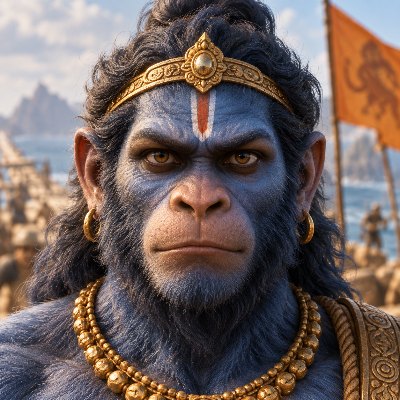
Nila — Son of Agni, Commander-in-Chief of the Vanara Army, Slayer of Prahasta
Nila · Neela · Nīla · Pavakasunu (son of the fire-god) · Kapishreshtha (foremost among the vanaras)
Nila is a vanara chieftain who appears in the Valmiki Ramayana as the commander-in-chief of the monkey army under King Sugriva of Kishkindha, and as one of the most formidable warriors in Rama's campaign against Ravana, the rakshasa king of Lanka. He is the son of Agni, the god of fire, and is described in the Valmiki Ramayana as Kapishreshtha — the foremost among the vanaras in effulgence, reputation, and prowess. His divine origin as the son of the fire-god is confirmed in the Sanskrit text of the Yuddha Kanda at sarga 59, verse 2, which refers to him as Pavakasunu — "son of the fire-god" — in the context of announcing Prahasta's death to Ravana. His most celebrated martial achievement is the killing of Prahasta, the commander-in-chief of Ravana's rakshasa army, narrated with precision in Yuddha Kanda sarga 58. He is also closely associated with Nala — the vanara engineer and son of Vishvakarma — with whom he is identified as a brother in the tradition, and with whom he is jointly credited in later adaptations of the Ramayana with the construction of the Rama Setu, the bridge across the ocean to Lanka, though the Valmiki Ramayana credits Nala alone as the sole engineer of the bridge.
✦ The Name
The Sanskrit name Nila means dark blue or black, and is used across Sanskrit literature as a colour epithet for beings whose complexion is described as dark or blue-hued. In the iconographic tradition of the Ramayana, Nila is conventionally depicted as blue in colour, consistent with his name. The epithet Kapishreshtha — formed from kapi (monkey or vanara) and shreshtha (best, foremost, most excellent) — appears in the Valmiki Ramayana as the specific designation applied to Nila in terms of his radiant energy and martial excellence. The Sanskrit compound Pavakasunu in Yuddha Kanda 59.2 — from pavaka (fire, or Agni) and sunu (son) — confirms his divine paternity in the primary text itself.
✦ Lineage
- Brahma's decree and the divine origin of the Vanara army: The Valmiki Ramayana's Bala Kanda (sarga 17, verses 1–8) records the theological foundation for the birth of Nila and all the divinely sired vanara chieftains. When Vishnu agreed to be born as the son of King Dasharatha, Brahma the self-created addressed all the gods with the following directive: that mighty, guise-changing helpmates be procreated for the truth-abiding and valorous Vishnu who was the well-wisher of all the gods. The gods agreed to Brahma's order and accordingly began to father sons in the semblance of monkeys. The Bala Kanda sarga 17 passage specifies the wide range of female beings through whom the gods sired these sons — female langoors, female bears, kinnaras, apsaras, she-vidyadharas, naga women, and gandharva women. These divinely sired offspring were endowed with the shape, bearing, and valour of the god who fathered them, with guise-changing faculties and bodily might, born free in their movement in forests and capable of crossing great oceans. Agni's fathering of Nila is part of this divinely ordained creation event.
- Father: Agni — the Vedic god of fire, one of the most prominent deities of the Rigveda, the divine witness of all sacred rites and sacrifices, and the carrier of offerings between the human and divine realms. His paternity of Nila is confirmed in the Sanskrit of Yuddha Kanda sarga 59, verse 2, which uses the compound Pavakasunu — son of the fire-god — in announcing Prahasta's death to Ravana. Agni's own paternity of Nila is the source of Nila's fiery effulgence and his designation as Kapishreshtha in that quality. Agni also appears at the war's conclusion as the witness of Sita's Agni-pariksha, where he vouches for her purity and restores her to Rama. The Bala Kanda sarga 17 does not name the specific mother through whom Agni sired Nila; only the divine father is identified in the primary text. Brother: Nala — the son of Vishvakarma, the divine architect of the gods; the chief engineer of the Rama Setu; Nila's close associate throughout the Lanka campaign; identified as Nila's brother in the tradition preserved in the Wikipedia Nala and Nila infoboxes. The Valmiki Ramayana specifies different divine fathers for the two — Agni for Nila, Vishvakarma for Nala — making their brotherhood one of divine association and fraternal bond in the vanara tradition rather than a shared paternity. Later retellings including the Ramacharitamanasa describe them as twin brothers.
✦ Commander-in-Chief of the Vanara Army
The Valmiki Ramayana consistently designates Nila as the senapati — the commander-in-chief — of the vanara army under King Sugriva. This appointment placed him as the supreme military officer of the entire force, responsible for its strategic organisation, its march, and its deployment in battle, while Sugriva held the royal authority and Angada served as crown prince. In Yuddha Kanda sarga 26, when Ravana climbs to the roof of his palace to observe the approaching vanara army from a distance, Sarana — his minister — identifies the leading chieftains for him, and Nila is among the first named, described with his distinguishing characteristics.
In the Kishkindha Kanda, when Sugriva dispatched search parties in the four cardinal directions to find Sita, Nila was assigned to the southern search party — the most significant of the four, as it was the party that eventually found Sita in Lanka. This party included Hanuman, Angada, Jambavan, and other leading chieftains. The Wikipedia Nila article, drawing on the primary text, also records that Nila is mentioned as one of four vanaras powerful enough to cross the ocean between India and Lanka — a designation that places him among the elite tier of the vanara force alongside Hanuman, Angada, and Jambavan.
✦ The Rama Setu: Nila's Role in the Bridge Construction
The Valmiki Ramayana credits Nala as the sole engineer and architect of the Rama Setu — the bridge of ten yojanas built across the ocean from the southern coast of India to Lanka. The text records that Varuna, the ocean deity, appeared to Rama and informed him that Nala, the son of Vishvakarma, was among his vanara army and possessed the architectural expertise of his divine father; Varuna advised that Nala be set to construct the bridge, and Nala volunteered for the task. The bridge was completed in five days by the vanara army working under Nala's direction. In this account from the primary Valmiki text, Nila's specific role in the engineering of the bridge is not separately distinguished from the general labour of the vanara army.
Later traditions and commentaries on the Ramayana, as well as regional adaptations including the Ramacharitamanasa, expand Nila's role in the bridge construction and credit him alongside Nala as a co-builder with a parallel ability to make stones float. The Nala Wikipedia article records the tradition — found in later commentaries — that Nala and Nila as children had thrown the ritual images of sages into water as a prank, causing the sages to curse them such that any stone they threw would float rather than sink. In this tradition the floating of the bridge stones is attributed to both Nala and Nila jointly. This is a later elaboration not present in the Valmiki primary text, which is clear that the boon and the engineering belong to Nala.
✦ The Killing of Prahasta: Yuddha Kanda Sarga 58
Nila's most consequential single combat in the Lanka war is narrated in precise detail in Yuddha Kanda sarga 58, which the Dharma Scriptures Ramayana titles "Nila Kills Prahasta." Prahasta was the commander-in-chief of Ravana's rakshasa army — his highest-ranking military officer — whose emergence onto the battlefield caused widespread destruction among the vanara forces. The Valmiki Ramayana specifies that Prahasta's army comprised two-thirds of Lanka's full military strength. When Prahasta appeared, Nila advanced to meet him as the vanara senapati confronting his rakshasa counterpart.
The Valmiki Ramayana (Yuddha Kanda 58.34–54) narrates the combat in the following sequence. Prahasta, on his sun-coloured chariot, attacked Nila with a volley of arrows resembling furious serpents; Nila bore the arrows and was struck but did not flee. Enraged, he uprooted a great tree and used it to kill Prahasta's horses and break his bow. Prahasta then fought with a mace. As Prahasta advanced with his mace longing for battle, Nila seized a massive rock and hurled it swiftly at Prahasta's head. The Sanskrit verse 58.54 states: the huge and terrible rock released by Nila the leader of the monkeys broke Prahasta's head into myriad pieces. With Prahasta dead, the remaining rakshasa army fled to Lanka in panic. The Valmiki Ramayana records (sarga 58, verse 60) that the triumphant Nila was thereafter honoured by Rama and Lakshmana for his task accomplished well, and experienced supreme joy. Sarga 59 opens with the announcement of Prahasta's death — "slain in battle by Nila the foremost of monkeys" — and records Ravana's fury upon hearing the news, which prompted him to take the battlefield himself for the first time.
✦ The Confrontation with Ravana: Yuddha Kanda Sarga 59
Ravana, enraged at Prahasta's death, led his forces personally onto the battlefield. The Valmiki Ramayana narrates in sarga 59 a series of confrontations between Ravana and multiple vanara chieftains — Sugriva, Lakshmana, Hanuman — before and after Nila's encounter with him. Nila, through his agility and the fiery swiftness inherited from his divine father Agni, leapt onto Ravana's chariot and engaged him in a manner that utterly confounded the rakshasa king. The Sanskrit of sarga 59 verse 85 records that Nila perched on the tip of Ravana's standard — the flagstaff of his chariot — and Ravana, provoked by the shouts of the watching vanara army who celebrated his confusion, took up an arrow charged with the Agneya astra, the missile presided over by the fire-god, and aimed it at Nila on the flagstaff. The text records that the assembled monkeys rejoiced to see Ravana disconcerted by Nila's agility, and that Ravana's heart was filled with confusion because he could not dislodge him by ordinary means. It was only through the deployment of a fire-charged divine weapon that Ravana was able to dislodge Nila from his position. After the confrontation with Nila, Ravana proceeded to encounter Rama himself, and after sustaining a defeat at Rama's hands in that same sarga, withdrew to Lanka.
✦ Other Battle Engagements
The Valmiki Ramayana records Nila as active throughout the Yuddha Kanda's battle narrative beyond the Prahasta and Ravana episodes. The Wikipedia Nila article, drawing on the primary text, records that Nila and Hanuman together battled the rakshasas Trishira and Mahodara — making the Mahodara engagement a joint combat between Nila and Hanuman rather than Nila's individual exploit. The Wikipedia Nila article also records that Nila defeated Nikumbha, one of Ravana's commanders. Yuddha Kanda sarga 47 lists Nila alongside Hanuman, Angada, Nala, Jambavan, and other leading chieftains as part of the core group that surrounded and guarded Rama after Indrajit's attack, confirming his position in the innermost protective circle of Rama's command.
✦ Textual Variants and Inconsistencies
The principal textual variant concerning Nila is the question of his relationship to Nala and the extent of his contribution to the Rama Setu. The Valmiki Ramayana's Yuddha Kanda attributes the bridge engineering solely to Nala with Varuna's recommendation; Nila's role is that of the general who supervises the vanara labour force rather than the architect. Later vernacular adaptations — particularly the Ramacharitamanasa of Tulsidas and various regional retellings — credit both Nala and Nila jointly as builders with shared floating-stone powers, and some describe them as twin brothers born of the same event rather than as half-brothers with different divine fathers. The Nala Wikipedia article draws on both the Valmiki primary text (Nala alone) and later commentary (Nala and Nila jointly) and notes the distinction explicitly.
The submitted information described Nila as having killed Mahodara by leaping onto his elephant and tearing out its tusks in individual combat. The Valmiki Ramayana's account of Mahodara's death involves both Nila and Hanuman, and Hanuman is credited with Mahodara's killing in the primary text. Nila's participation in the Mahodara engagement is attested but the individual kill attribution is not.
✦ Theological Significance
Nila's divine origin as the son of Agni places him within the theological framework of the Ramayana's Kishkindha Kanda, which presents the vanara army as a divinely constituted force deliberately created by Brahma's decree to serve as the instrument of Rama's mission. The gods sired their vanara sons specifically so that Rama — the seventh avatar of Vishnu — would have the necessary divine support in mortal form for his war against Ravana. Nila's fire-heritage is thus not incidental to his identity but is the theological ground of his capacity for the effulgence and prowess that define him as Kapishreshtha. The detail in the Ravana-Nila encounter — that Ravana was forced to deploy the Agneya astra, the fire-god's own weapon, to dislodge the son of the fire-god from his flagstaff — carries an implicit theological irony that the primary text's Sanskrit preserves in the choice of weapon.
✦ Connection to the Wider Genealogy
Nila belongs to the vanara lineage of Kishkindha through his upbringing and military service under Sugriva, though his divine paternity through Agni places him outside the conventional biological lineage of the vanara royal family. Through his brother Nala, son of Vishvakarma, he is connected to the divine craftsman lineage of the gods. His father Agni is the same deity who serves as the witness of Sita's Agni-pariksha at the conclusion of the Lanka war — a convergence that gives Agni a presence at both the beginning of Nila's military career and at the resolution of the war's central moral question. No children of Nila are recorded in any primary source consulted.
✦ References
Primary Sources
- Valmiki Ramayana, Bala Kanda, sarga 17 (verses 1–8): The primary source for Brahma's decree to the gods to sire powerful vanara sons as helpmates for Vishnu incarnate as Rama; verse 1 records Brahma's address to the assembled gods following Vishnu's agreement to be born as Dasharatha's son; verse 8 confirms the gods' assent and the commencement of the divine procreation; the passage specifies the range of female beings through whom the sons were sired and the qualities with which they were endowed. This is the foundational theological source for the divine origin of the entire vanara army including Nila.
- Valmiki Ramayana, Kishkindha Kanda: Records the deployment of the southern search party for Sita including Nila alongside Hanuman, Angada, and Jambavan; establishes Nila's role in the army's operations prior to the Lanka campaign.
- Valmiki Ramayana, Yuddha Kanda, sarga 26: Ravana observes the vanara army from his palace roof; Sarana identifies Nila among the leading chieftains with his distinguishing characteristics; establishes his prominence in the army's command structure before battle.
- Valmiki Ramayana, Yuddha Kanda, sarga 47 (verses 2–3): Lists Nila among the core group — alongside Hanuman, Angada, Nala, Jambavan — who surrounded Rama in protective formation after Indrajit's attack.
- Valmiki Ramayana, Yuddha Kanda, sarga 58 (verses 34–60): The primary source for the complete battle account of Nila versus Prahasta; narrates the volley of arrows, Nila's uprooting of the tree to kill Prahasta's horses and break his bow, the mace combat, and the fatal rock hurled onto Prahasta's head; verse 54 gives the Sanskrit of the killing blow; verse 60 records Rama and Lakshmana honouring Nila.
- Valmiki Ramayana, Yuddha Kanda, sarga 59 (verses 1–2 and 84–85): Verse 2 identifies Nila explicitly as Pavakasunu — son of the fire-god — in the announcement of Prahasta's death; verses 84–85 narrate Nila perched on Ravana's flagstaff tip and Ravana deploying the Agneya astra to dislodge him.
- Valmiki Ramayana, Sundara Kanda and Yuddha Kanda (Nala bridge episode): The primary source establishing Nala alone as the engineer of the Rama Setu, with Varuna's recommendation and Nala's divine architectural inheritance from Vishvakarma; Nila's role in this episode in the primary text is as part of the general vanara labour force, not as co-engineer.
Secondary and Reference Works
- Wikipedia — "Nila (Ramayana)": Confirms the senapati designation, the son-of-Agni paternity, the Kapishreshtha epithet, the Prahasta killing, the Ravana flagstaff episode, and the joint Mahodara-Trishira combat with Hanuman; cites Vettam Mani's Puranic Encyclopaedia as the primary reference.
- Wikipedia — "Nala (Ramayana)": Source for the Nala-Nila brotherhood identification and for the distinction between the Valmiki primary text (Nala as sole builder) and later commentary and adaptations (Nala and Nila jointly); source for the floating-stone boon tradition in later texts.
- Valmikiramayan.net — Yuddha Kanda sarga 58 (Sanskrit text and translation): The principal primary-text source consulted for the verbatim Sanskrit of the Prahasta killing at verses 53–54 and the honouring of Nila at verse 60.
- Valmikiramayan.net — Yuddha Kanda sarga 59 (Sanskrit text and translation): Source for the verbatim Sanskrit at verse 2 (Pavakasunu) and verse 85 (dhvajashirsa sthitam Nilam — Nila perched on the tip of the standard); source for the Agneya astra deployed by Ravana against him.
- Dharma Scriptures — Ramayana Yuddha Kanda chapter 58 (Redzambala translation): Source for the chapter title "Nila Kills Prahasta" and the prose summary of the battle sequence with verse references.
- HinduPad — "Neela, Vanara Army Chief in Ramayana": Confirms the senapati role and the Kapishreshtha designation; notes the distinction between Nila's role in the Valmiki text and his expanded role in later adaptations.
- Academia.edu — Dr. Uday Dokras, "Nala and/or Neel in Ramayana: 2 Critical Monkey Roles": Source for the scholarly analysis of Nala and Nila's respective roles across Valmiki and later adaptations; confirms the different divine fathers and the fraternal association.