
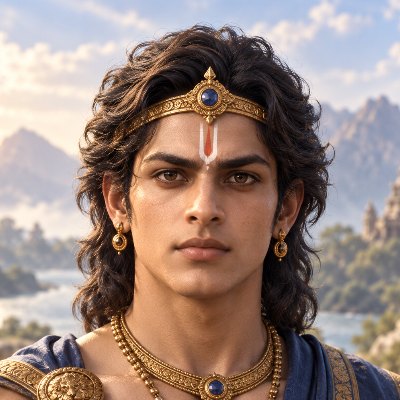
About
Kala — Son of Dhruva the Vasu, the Chastiser of the World
Kala · Kāla · Kaal · Lokaprakashana (sibling in one tradition)
Kala is a divine being named in the Harivamsha, the Padma Purana, and the Saurapurana as the son of Dhruva, the fourth of the eight Vasus. The Harivamsha (Adi Parva, chapter 3, verse 40) identifies him as "the Divine Kala, the destroyer of creatures." The Saurapurana, cited in the Wisdomlib Dhruva entry, designates him as "Kala, the chastiser of the world." The Padma Purana confirms the same parentage in its enumeration of the eight Vasus and their offspring. His name Kala means time — specifically cosmic time, the time that governs all existence and brings all things to their end — and his epithets of destroyer of creatures and chastiser of the world are consistent with the concept of Kala as the personification of time's consuming and disciplinary power in the Hindu tradition. No narrative episode, marriage, children, or biographical detail beyond his name, parentage, and epithets is recorded for him in any primary source consulted.
A critical disambiguation is necessary at the outset. Dhruva the Vasu — the fourth of the eight Vasus, son of Vasu and the divine wife Dharani — is an entirely distinct figure from Dhruva the devotee, the son of King Uttanapada and Queen Suniti, who performed intense penance as a child and was elevated by Vishnu to become the Pole Star. These two figures share only a name. The Kala profiled here is the son of Dhruva the Vasu, not of Dhruva the Pole Star devotee. The Harivamsha passage that names Kala situates him explicitly within the enumeration of the eight Vasus and their children, confirming that the Dhruva in question is the Vasu.
✦ The Name
The Sanskrit name Kala carries the primary meaning of time — specifically the inexorable, all-consuming aspect of time that governs the cycle of creation, sustenance, and destruction in the Hindu cosmological framework. As a personified divine being, Kala is the embodiment of this force. The Harivamsha's epithet "destroyer of creatures" — indicating that he consumes all living beings as time does — and the Saurapurana's epithet "chastiser of the world" encode directly the cosmological identity of Kala as the power that enforces the law of impermanence on all existence. In the broader tradition, Kala and Yama — the god of death — are closely associated, and in some theological framings Yama himself is addressed as Kala. Whether the Kala named here as son of Dhruva the Vasu is identified with or distinct from Yama or from the abstract principle of cosmic time as Mahakala is not stated in the primary sources that name him.
✦ Lineage
- Father: Dhruva — the fourth of the eight Vasus in the standard Puranic enumeration; son of Vasu and the divine wife Dharani; representing in his cosmic identity the element of space or the Akasha Tattva according to the Vishnu Purana; associated with constancy, steadiness, and fixity. Dhruva the Vasu is the father of Kala across the Harivamsha, Padma Purana, and Saurapurana consistently. He is distinct from Dhruva the devotee and Pole Star of the Bhagavata Purana tradition.
- Mother (by implication): Dharani — named in the Wisdomlib Dhruva entry as the wife of Dhruva the Vasu; her name means "the earth-bearing" or "she who holds"; if Dharani is Dhruva the Vasu's sole wife in the primary sources, she is Kala's mother by implication. The primary texts naming Kala do not specify his mother directly.
- Grandmother: Vasu — the divine wife of Dharma and mother of the eight Vasus, named in the Padma Purana's lineage enumeration as the source of the Ashta Vasus.
- Siblings (one Puranic tradition): Bhava and Lokaprakashana — named alongside Kala as sons of Dhruva the Vasu in the Wisdomlib Dhruva entry's citation of a Puranic source. The Harivamsha and Padma Purana name only Kala as Dhruva's son, while the additional Puranic source (cited without chapter identification in the Wisdomlib compilation) names three sons. The discrepancy reflects variant Puranic traditions about the extent of Dhruva the Vasu's progeny.
- Paternal uncles (the other seven Vasus): Apa, Soma, Dhara, Anila, Anala, Pratyusha, and Prabhasa — the remaining seven of the eight Vasus, brothers of Dhruva. Among their offspring are Soma's son Varcha, Dhara's sons Dravina and Havyavaha, Anila's sons Prana, Ramana, and Sharira, Prabhasa's son Vishvakarma, and the sons of Apa.
✦ Textual Variants and Inconsistencies
Three primary sources confirm Kala as the son of Dhruva the Vasu — the Harivamsha, the Padma Purana, and the Saurapurana — with consistent agreement on the name and parentage. The variation between these sources concerns only the number of Dhruva's sons: the Harivamsha and Padma Purana name Kala alone; the additional Puranic source cited in the Wisdomlib Dhruva entry names Bhava, Kala, and Lokaprakashana as three sons. This is a standard type of cross-Puranic genealogical variation in which later or different Puranic traditions expand the offspring lists of established divine figures.
The enumeration of the eight Vasus themselves varies slightly across texts — the Padma Purana lists Aapa, Dhruva, Soma, Dhara, Anila, Anala, Pratyusha, and Prabhasa; the earlier Vedic tradition of the Brihadaranyaka Upanishad gives different names for the same group; and the Mahabharata's Adi Parva enumeration substitutes Nala or Aha for one of the Padma Purana's names in some manuscript traditions. Dhruva's place in the list as the second Vasu (in the Padma Purana and Harivamsha enumerations) is consistent across these sources despite the variation in the full list.
✦ Scope of the Textual Record and Database Placement
Kala son of Dhruva the Vasu is attested by name and epithet across three independent primary sources and is not a minor or doubtful figure in the genealogical record of the Vasus. However, the textual record for him as an individual is limited entirely to his name, his parentage, and his two epithets. No narrative episode, no cosmological role, no marriage, no children, and no teacher-disciple relationship is recorded for him in any primary source consulted. He is adequately represented as a lineage entry under the node for Dhruva the Vasu, with a dedicated profile reflecting the three independent primary source confirmations and the two variant traditions on the number of Dhruva's sons.
✦ References
Primary Sources
- Harivamsha, Adi Parva, chapter 3, verse 40: The earliest primary source confirming Kala as Dhruva the Vasu's son; states directly "Dhruva's son was the Divine Kala, the destroyer of creatures" in the enumeration of the eight Vasus and their offspring narrated by Vaishampayana to Janamejaya; the Wisdomlib Harivamsha translation (Dutt) preserves this verse verbatim.
- Padma Purana, Srishti Khanda (Creation section, as summarised at Kamakoti.org): Confirms "Dhruva's son was called Kaal" in its enumeration of the eight Vasus — listed as Aapa, Dhruva, Soma, Dhara, Anila, Anala, Pratyusha, and Prabhasa — and their respective offspring.
- Saurapurana: Designates Kala as "the chastiser of the world" and confirms him as the son of Dhruva the Vasu; cited in the Shodhganga critical study of the Saurapurana as summarised in the Wisdomlib Dhruva definition entry.
- Unnamed Puranic source (cited in Wisdomlib Dhruva entry): Names Dhruva the Vasu as the father of three sons — Bhava, Kala, and Lokaprakashana — expanding the offspring list beyond the single son named in the Harivamsha and Padma Purana.
Secondary and Reference Works
- Wisdomlib — "Dhruva: 48 definitions": The most comprehensive secondary compilation consulted; aggregates the Harivamsha, Saurapurana, and additional Puranic source references to Kala as son of Dhruva the Vasu; confirms Dharani as Dhruva the Vasu's wife and the three-son variant (Bhava, Kala, Lokaprakashana).
- Wisdomlib — "Vasu: 40 definitions": Confirms the eight-Vasu enumeration and states "Kala (the chastiser of the world) is the son of Dhruva" alongside the confirmation that "Vishvakarman is the Son of Prabhasa."
- Wisdomlib — "Eight Vasus: Significance and Symbolism": Confirms that Vasu gave birth to the eight Vasus including Dhruva and Prabhasa; provides the cross-text framework for the Vasu genealogy.
- Hinduwebsite.com — "The Eight Vasus: Elemental Gods of Hindu Mythology": Source for the symbolic identification of Dhruva the Vasu with the Akasha Tattva and the historical development of the eight Vasus' names across the Brihadaranyaka Upanishad, Mahabharata, and Puranic tradition.