
About
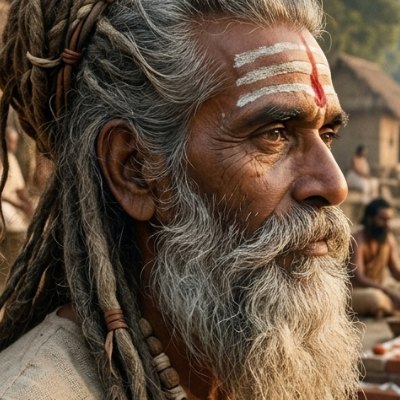
Shantanu (of Kamarupa) — Sage of the Eastern Hill Country, Earthly Father of Brahmaputra
Shantanu · Santanu · Shantanu of Gandhamadana · Shantanu of Kamarupa
Shantanu is a sage of the eastern hill country of Kamarupa who appears in the Kalika Purana (chapters 85–86) as the husband of Amogha and the earthly father-figure who placed the divine child Brahmaputra — the son of Brahma born through Amogha — among the four sacred mountains, thereby establishing the Brahmakunda lake from which the Brahmaputra river flows. He is an entirely distinct figure from the Shantanu of the Mahabharata — the king of Hastinapura, son of Pratipa, husband of Ganga and Satyavati, grandfather of Bhishma and great-grandfather of the Kuru princes — who belongs to the Puru-Bharata royal lineage and has no connection to the Kalika Purana's sage of Kamarupa. This disambiguation is confirmed explicitly by the Hindutva.online account of the Kalika Purana narrative. No parentage, gotra, or prior biography is recorded for the Kamarupa Shantanu in any primary source consulted. His entire textual presence is defined by his role in the Brahmaputra birth narrative.
✦ The Name and Disambiguation
The Sanskrit name Shantanu derives from shanta, meaning peaceful, tranquil, or well-composed, and the suffix nu or tanu, yielding the sense "the peaceful one" or "one with a tranquil body." It is a name borne by at least two entirely distinct figures in the Hindu textual tradition. The first and most prominent is the Mahabharata's Shantanu — a king of the lunar dynasty, son of King Pratipa, whose love for Ganga and later for Satyavati drives the foundational genealogy of the Kuru war. The second is the sage of Kamarupa in the Kalika Purana, whose only recorded characteristics are that he was a pious householder living near the lake Lohita on the mountain Gandhamadana, that Brahma was impressed by the piety of his household, and that he was the husband of Amogha and the figure who placed the divine child among the four sacred mountains. These two figures share only a name; they belong to different textual traditions, different geographies, different periods, and entirely different narrative contexts.
✦ Lineage
- Wife: Amogha — the pious woman selected by Brahma as the vessel for his son; the earthly mother of Brahmaputra.
- Son (placed and raised): Brahmaputra — the divine river deity born of Brahma's energy through Amogha; placed by Shantanu among the four sacred mountains Kailasa, Gandhamadana, Jarudhi, and Samvartaka, where he formed the Brahmakunda lake before flowing as the river Lauhitya.
✦ Role in the Brahmaputra Narrative
The Kalika Purana identifies Shantanu as a sage who lived with his wife Amogha on the banks of the lake Lohita on the mountain Gandhamadana, which lies at the outskirts of Kailasa. The Wisdomlib Studies in the Upapuranas account of Kalika Purana chapters 85–86 records that the chapter's heading itself names the locale as "a lake named Lohita on the mountain Gandhamadana lying at the outskirt of Kailasa." The household of Shantanu and Amogha was distinguished by its piety and austere practice, qualities that drew Brahma's attention and caused the creator deity to select Amogha as the appropriate vessel for his son. Shantanu's role in the conception mechanism — as described in the Wisdomlib extract — was active rather than passive: he transferred Brahma's energy into Amogha after drinking it, functioning as the intermediate agent of the divine transmission.
After Amogha gave birth to the child who was born in the form of water, Shantanu performed the decisive act that established the sacred geography of the northeastern region: he placed the child in the centre of the four sacred mountains — Kailasa to the north, Gandhamadana to the south, Jarudhi to the west, and Samvartaka to the east. The Wisdomlib extract confirms: "After birth, Santanu placed the son in that very condition in the middle of four mountains." From this placement the child grew into the Brahmakunda, the sacred lake that constitutes the river's mythological origin point. No further episode involving Shantanu of Kamarupa is recorded in any primary source after this act of placement; his narrative role concludes with the establishment of the Brahmakunda.
✦ Scope of the Textual Record
The textual record for the Kamarupa Shantanu is limited entirely to his appearance in chapters 85–86 of the Kalika Purana as the husband of Amogha and the figure who placed Brahmaputra among the four mountains. No other primary text names him independently, assigns him a teaching, a disciple, a lineage, or any further narrative episode. His profile is proportionally brief and reflects this limited textual base honestly.
✦ References
Primary Sources
- Kalika Purana, chapters 85–86: The sole primary source for the Kamarupa Shantanu; names him as a sage living near the lake Lohita on Gandhamadana, the husband of Amogha, and the figure who placed Brahmaputra among the four sacred mountains; the Wisdomlib Studies in the Upapuranas chapter 6.3 provides the most detailed extracted account confirming all these details including the four mountains by their cardinal directions and the intermediate conception mechanism.
Secondary and Reference Works
- Wisdomlib — Studies in the Upapuranas, chapter 6.3: The most detailed secondary account consulted; provides the chapter heading confirming the locale as "a lake named Lohita on the mountain Gandhamadana lying at the outskirt of Kailasa" and the verbatim statement "After birth, Santanu placed the son in that very condition in the middle of four mountains."
- Hindutva.online — "Brahmaputra River: Son of Brahma Story": The source that most explicitly distinguishes the Kalika Purana's Shantanu from the Mahabharata's Shantanu; states directly that the two figures are "distinct" and describes the Kamarupa Shantanu as "a sage of the eastern hill country" living near the river Lohita.
- Thedivineindia.com — "Interesting Facts and Religious Significance of the Brahmaputra River": Source for the household piety account as the basis of Brahma's selection; confirms Shantanu's role as the sage-husband of Amogha.
- Chardhambooking.com — "Brahmaputra River": Confirms the four mountain names and Shantanu's act of placement as the founding moment of the Brahmakunda; consistent with the Wisdomlib primary source extract.