
About
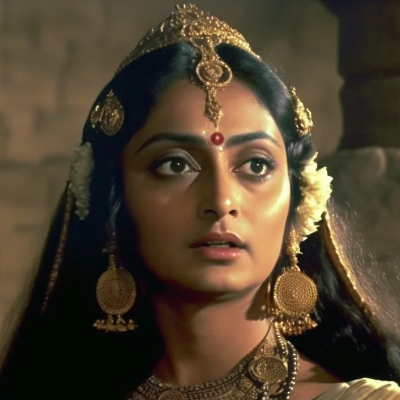
Kunti — Princess of the Yadavas, Queen of Hastinapura, and Mother of the Three Elder Pandavas
Kunti · Pritha · Panduraja-patni · Shuranandini · Kuntibhoja-putri · Vasudeva-svasar · Karnamata · Yudhishthira-janani · Partha-mata
Kunti — born Pritha — is one of the most consequential female figures in the Mahabharata, and her biography spans nearly the entire narrative of the epic from before its central conflict to its final resolution. She is the daughter of Shurasena, a king of the Yadava clan and a cousin of Vasudeva — the father of Krishna — making her Krishna's paternal aunt. She was given in adoption to her father's childless cousin Kuntibhoja, from whom she received the name Kunti by which she is universally known. She is the first wife of Pandu — the king of Hastinapura and the nominal progenitor of the Pandava line — and the mother of the three elder Pandavas: Yudhishthira, born of the god Dharma; Bhima, born of Vayu the wind god; and Arjuna, born of Indra the lord of the gods. Before her marriage to Pandu, she had also — through an act of youthful curiosity that she later described as a transgression — invoked the sun god Surya using a mantra given to her by the sage Durvasa, and the son born of this union was Karna, the great warrior who became the Pandavas' most formidable rival without knowing until near the end of the war that he was their eldest brother. Kunti gave this son away in shame by placing him in a basket on the river, a decision whose consequences — the lifelong enmity between Karna and the Pandavas while Kunti carried her secret — is one of the Mahabharata's most sustained meditations on the weight of a single act of concealment. After Pandu's death, Kunti raised all five Pandavas in the Kuru household, navigated the family's political dangers with considerable skill, and ultimately retired to the forest with Dhritarashtra and Gandhari, dying in the same forest fire that consumed them.
✦ The Names
The birth name Pritha derives from a Sanskrit root associated with the palm of the hand or a flat expanse, and is used as a proper name without an elaborated internal etymology in the primary texts. The name Kunti — by which she is known throughout the tradition — was given to her by her adoptive father Kuntibhoja, after whom it is formed, and it functions as a patronymic that became her personal name by adoption and usage. The patronymic Shuranaandini means "daughter of Shurasena." The epithet Vasudeva-svasar means "sister of Vasudeva" — identifying her as the paternal aunt of Krishna, since Vasudeva was her biological brother. Karnamata means "mother of Karna" — the identity she concealed for most of her life and revealed only at the war's eve. Partha-mata means "mother of Partha" — Partha being another name for Arjuna derived from the name Pritha, meaning the son of Pritha. Yudhishthira-janani means "mother of Yudhishthira."
✦ Lineage
- Biological father: Shurasena — a king of the Yadava clan, a descendant of the Chandravamsha through the Yadava branch. He is the father of Vasudeva — who became the father of Krishna — making Kunti and Vasudeva full siblings. Shurasena gave Kunti in adoption to his cousin Kuntibhoja because Kuntibhoja was childless and had requested a child. This adoption was the standard practice described in the tradition for a childless relative's household.
- Adoptive father: Kuntibhoja — a king of the Yadava lineage and cousin of Shurasena, who adopted Pritha and raised her as his own daughter, giving her the name Kunti. The Mahabharata presents Kuntibhoja as a caring and respected father in every practical sense, and Kunti's name throughout the tradition reflects this adoption rather than her birth.
- Brother: Vasudeva — the son of Shurasena and the father of Krishna, the supreme deity of the Bhagavata Purana. Vasudeva's relationship to Kunti makes Krishna her nephew, a fact that the Mahabharata acknowledges repeatedly and that provides the personal dimension of the close alliance between Krishna and the Pandavas — he was, through Kunti, their maternal cousin.
- Husband: Pandu — the pale-complexioned king of Hastinapura, nominal son of Vichitravirya and biological son of the sage Vyasa through the levirate arrangement, who ruled Hastinapura briefly and died in the forest under the fulfilment of Kindama's curse. Pandu's death left Kunti a widow with five sons to raise in a politically dangerous household.
- Son — born before marriage: Karna — born of Kunti's invocation of the sun god Surya using the mantra given to her by Durvasa, before her marriage to Pandu. Karna was born with natural armour (kavacha) and earrings (kundala) as marks of his divine solar parentage. Kunti placed him in a basket on the Ashva river in shame at being an unmarried mother, and he was found and raised by Adhiratha the charioteer and his wife Radha — from whom he also received the name Radheya. Karna grew to be one of the greatest warriors of the age, a friend and champion of Duryodhana, and the Pandavas' most dangerous enemy throughout the war — without knowing until Kunti's eve-of-war revelation that he was their eldest brother.
- Sons by Pandu — through divine paternity:
- Yudhishthira — born of Kunti's invocation of Dharma, the god of cosmic order and righteousness. He is the eldest Pandava, the figure of supreme dharmic rectitude, and the king of Hastinapura after the war.
- Bhima — born of Kunti's invocation of Vayu, the wind god. He is the second Pandava, of immense physical strength, and the one who killed Duryodhana, Dushasana, and many of the foremost Kaurava warriors in the war.
- Arjuna — born of Kunti's invocation of Indra, the king of the gods. He is the third Pandava, the greatest archer of the age, the recipient of the Bhagavad Gita, and the figure through whom the war's outcome was most decisively shaped.
- Sons through Madri — by courtesy: Nakula and Sahadeva, born of Pandu's second wife Madri through her invocation of the Ashvins. After Madri's death, Kunti raised all five Pandavas as her own sons, and Nakula and Sahadeva regarded Kunti as their effective mother throughout their lives.
✦ The Mantra of Durvasa and the Birth of Karna
The Mahabharata's Adi Parva narrates that when Kunti was a young woman in Kuntibhoja's household, she was appointed to serve the visiting sage Durvasa — a figure of supreme ascetic power and legendary irascibility whose curses when offended were among the most feared in the tradition. Kunti served him with such complete attention, skill, and equanimity that Durvasa was entirely satisfied, and at the end of his visit he gave her a mantra as a gift: a formula by which she could invoke any god, who would then come to her and by whom she could bear a child. The mantra was given as a blessing — a provision for future need — and Durvasa told her it would be useful to her.
Kunti, still a young girl and full of curiosity, was unable to resist testing the mantra. She invoked Surya — the sun god — out of nothing more than the desire to know whether the mantra would actually work. Surya appeared in a blaze of light and warmth. Kunti was overwhelmed and asked him to return — telling him she had only been testing the mantra and did not intend to bear a child. Surya, however, explained that the mantra's invocation was irrevocable: once spoken it could not be recalled, and he could not return to the sky without fulfilling the mantra's purpose. He promised, however, that her virginity would be restored after the child's birth so that her unmarried state would not be permanently compromised. The child born was Karna — radiant with the sun's own light, born with the natural armour and earrings that were marks of Surya's divine gift to his son. Kunti, terrified by what she had done — she was unmarried, still a girl in her father's household, and the birth of a child by a god in these circumstances would be incomprehensible and shameful — placed the newborn Karna in a basket lined with soft material and set it on the Ashva river. The basket was found by Adhiratha the charioteer, whose wife Radha raised Karna as her son.
The Mahabharata does not present this act as simple wickedness — it presents it as a young girl's panic at the consequences of her own curiosity — but neither does it spare Kunti or the reader the full weight of what the abandonment produced. Karna grew up not knowing his parentage, was denied the status of a Kshatriya because he was believed to be a charioteer's son, was insulted by Draupadi at her svayamvara when she refused to allow a sutaputra — a charioteer's son — to compete for her hand, formed a bitter alliance with Duryodhana who alone accepted and honoured him, fought against his own brothers in the Kurukshetra war, and died at Arjuna's hands. All of this flowed from Kunti's act on the river.
✦ Marriage to Pandu and the Forest Births of the Pandavas
Kunti was given in marriage to Pandu at his svayamvara — the ceremony at which she chose him from the assembled kings. Their marriage was one of great affection, and the Mahabharata describes Pandu as deeply devoted to Kunti. After Pandu's hunting expedition and the curse of the sage Kindama — which forbade him all conjugal relations on pain of immediate death — he retired to the forest with both Kunti and his second wife Madri. In the forest, tormented by his inability to father children by conventional means and aware of his dharmic obligation to produce heirs, Pandu told Kunti of the mantra she possessed and asked her to use it to produce sons for the dynasty.
Kunti invoked Dharma and bore Yudhishthira — the god of cosmic order himself entering the human world as the eldest Pandava, a fact that gives Yudhishthira his defining characteristic of absolute commitment to truth and righteousness even when it is personally costly. She invoked Vayu and bore Bhima — the second Pandava, whose wind-god strength would make him the physical instrument of the dynasty's most decisive martial acts in the war. She invoked Indra and bore Arjuna — the third Pandava, for whom Indra the king of the gods himself descended to earth to father a son who would be his human counterpart. Pandu subsequently requested that Kunti share the mantra with Madri, and Kunti gave Madri a single use of it; Madri invoked both Ashvins simultaneously and bore twins — Nakula and Sahadeva.
✦ Pandu's Death and Kunti's Return to Hastinapura
When Pandu died — overcome by desire for Madri in a moment when the spring's beauty broke through his constant vigilance and he touched her, fulfilling Kindama's curse — Madri chose to immolate herself on his funeral pyre. She asked Kunti to take care of Nakula and Sahadeva as her own children. Kunti raised all five Pandavas and returned with them to Hastinapura. The Mahabharata records that Bhishma and the citizens of Hastinapura received the five boys and their mother with great honour. Kunti's management of the household politics that followed — navigating the hostility of Duryodhana and the tensions of a court divided between the Kaurava and Pandava factions — was conducted with both maternal vigilance and considerable political intelligence.
✦ Kunti During the Pandavas' Exile
The Mahabharata records several episodes during the Pandavas' forest exile and travels in which Kunti plays an active role. When the Pandavas and Kunti arrived at the town of Ekachakra during their incognito wanderings and stayed with a brahmin family, the family was in distress because a demon named Baka regularly demanded tribute of food and a human victim from the town. Kunti directed Bhima to go in the brahmin's place and defeat the demon — one of the earliest demonstrations of the Pandavas' martial superiority, and a decision taken by Kunti independently and on behalf of the family in which they were guests. The Mahabharata presents this as an act of dharmic generosity — using her son's extraordinary strength to protect an innocent family — and as evidence of Kunti's active management of the Pandavas' circumstances during the exile years.
Kunti also accompanied the Pandavas to the svayamvara of Draupadi — the daughter of King Drupada of Panchala — where Arjuna shot the famous target and won Draupadi. When all five brothers returned and called to Kunti from outside saying they had won a great prize, Kunti — without having seen the prize — declared as mothers do that whatever they had won must be shared equally among them. This declaration — made before she knew it concerned a person rather than a material prize — became the occasion of Draupadi's marriage to all five Pandavas, with Vyasa and Drupada both subsequently affirming the arrangement through their own dharmic reasoning. Kunti's impulsive maternal declaration thus shaped the most unusual marital arrangement in the epic.
✦ Kunti's Revelation to Karna Before the War
One of the most dramatically and morally powerful episodes in the Mahabharata is Kunti's revelation of Karna's parentage to him on the banks of the Ganga on the eve of the Kurukshetra war. The Udyoga Parva narrates that Kunti — knowing the war was coming and that Karna would fight against her sons — went to Karna alone and revealed to him for the first time that she was his mother, that his father was Surya the sun god, and that he was the eldest of the Pandavas. She implored him to join his brothers' side, telling him that if he did so he would be acknowledged as Yudhishthira's elder and would share in everything the Pandavas won. She also told him that in any case, she would not lose a son — either Arjuna would kill him or he would kill Arjuna, and either way five sons would survive to honour her in the end.
Karna listened to all of this — the revelation of his parentage that he had sought his entire life, the acknowledgement that came too late, the mother who had abandoned him on a river and now came to ask a strategic favour. His response was one of the most complex in the epic. He told Kunti that she had shown no motherly concern for him when it would have mattered — that she had abandoned him and left him to grow up without the status that was his birthright — and that he could not abandon Duryodhana, whose friendship had been the one constant of his life and who had accepted him when the world of warriors rejected him. He made her one promise, however: that he would not kill any of the other four Pandavas in the war. Only Arjuna and he were destined for each other; one of them would die. She would have five sons at the war's end, no fewer. He dismissed her, and she went with the secret still hers and with the knowledge that she had failed. The scene is among the Mahabharata's finest — two figures in enormous pain, both acting with mixed motives, both constrained by decisions made long ago, unable to give each other what each needed.
✦ Kunti's Role During and After the War
During the war itself Kunti remained in Hastinapura. The Mahabharata does not give her an active narrative role in the battle period — she is the absent mother whose sons fight without her present. After the war, when the Pandavas had won and Yudhishthira was crowned, Kunti revealed publicly that Karna had been her son — the eldest of the Pandavas — and asked that his proper funeral rites be performed. The revelation at this point — after Karna's death in battle at Arjuna's hands — was received by the Pandavas with enormous grief and with reproach toward their mother for the secrecy that had kept them ignorant of their eldest brother for their entire lives, and that had caused them to treat him as an enemy. Yudhishthira in particular expressed intense anguish and pronounced a curse — that henceforth no woman would be able to keep a secret. The Mahabharata records his grief and anger without endorsing it as fully just, and Kunti's own position — a woman who had spent her life carrying a secret whose disclosure could have changed everything — is presented with the full weight of its ambiguity.
✦ The Forest Retirement and Death
The Ashramavasika Parva narrates that Kunti chose to accompany Dhritarashtra and Gandhari into their forest retirement rather than remain in Hastinapura with her victorious sons. The Pandavas — particularly Yudhishthira — tried to dissuade her, pointing out that she had endured enough suffering and deserved comfort in her final years. Kunti told them that her place was with the elders — with Dhritarashtra, whom she served as she would a father-in-law — and that her sons were capable of looking after themselves. She went into the forest and died in the same fire that consumed Dhritarashtra and Gandhari — a death the tradition presents as the appropriate ending for a life of extraordinary endurance, service, and consequence.
✦ Textual Variants and Inconsistencies
The river on which Karna was placed: Different passages of the Mahabharata and different Puranic accounts give different river names for the river on which Kunti set Karna's basket — the Ashva river and the Charmanvati river appear in different passages. The core narrative of the abandonment is consistent across all versions; the specific river varies.
The manner of the mantra's transmission from Durvasa: The Mahabharata gives the Durvasa episode as the source of Kunti's mantra. Some regional and devotional traditions give slightly different accounts of how she received it — in some versions the mantra is more elaborately described and its terms more explicitly stated. The Mahabharata's Adi Parva account is the authoritative primary version.
Kunti's declaration about sharing the prize: The episode in which Kunti declared that whatever the Pandavas had won must be shared — thereby occasioning Draupadi's polyandrous marriage — is narrated in the Adi Parva. Some later commentators and traditions have debated whether Kunti's declaration was genuinely impulsive or whether she foresaw or intended its consequences. The Mahabharata's text does not resolve this question explicitly, presenting the declaration as made before she saw Draupadi.
✦ Theological and Philosophical Significance
Kunti is one of the Mahabharata's most complex and morally complete female figures. She is the mother of three of the four most significant warriors on the winning side of the Mahabharata's war — and of the most significant warrior on the losing side. She is the figure whose possession of the divine mantra made possible both the Pandavas' existence and Karna's existence. She is the mother whose moment of curiosity in youth produced consequences that shaped the entire epic — Karna's abandonment, his ignorance of his lineage, his alliance with Duryodhana, and his death at Arjuna's hands are all consequences traceable back to a young girl's impulsive use of a sage's gift on a riverbank.
The tradition presents Kunti without sentimentalisation. She is a woman of great courage, intelligence, and love for her sons — and also a woman whose fear of social shame caused her to abandon a child, whose strategic intelligence was active in managing her sons' careers, and whose revelation to Karna on the eve of the war was motivated by a mixture of genuine maternal feeling and desperate hope of altering the war's outcome. She is neither heroine nor villain but a full human being operating under extraordinary constraints with both generosity and self-interest present simultaneously. The Mahabharata's portrait of her is one of its finest achievements in characterisation.
✦ Connection to the Wider Genealogy
Through her biological father Shurasena and the Yadava line, Kunti descends from the Chandravamsha through the Yadava branch — the same line from which Krishna descends through Vasudeva, her biological brother. Through her marriage to Pandu and the Kuru-Paurava line, she connects to the Chandravamsha through the Kaurava branch. Through her sons Yudhishthira, Bhima, and Arjuna — whose divine fathers were Dharma, Vayu, and Indra respectively — she is the mother of three of the five Pandavas and the effective mother of all five. Through Arjuna she is the grandmother of Abhimanyu and great-grandmother of Parikshit — the last surviving Pandava-line king, whose story frames the recitation of the entire Bhagavata Purana. Through Karna she is the biological mother of the Pandavas' greatest enemy and their eldest unacknowledged brother, connecting the heroic generation to the solar divine line through Surya.
✦ References
Primary Sources
- Mahabharata, Adi Parva, sections 57, 111–128: Kunti's birth as Pritha, her adoption by Kuntibhoja, the Durvasa episode and the mantra, the birth and abandonment of Karna, her marriage to Pandu, Pandu's curse, the retreat to the forest, the births of Yudhishthira, Bhima, and Arjuna through divine paternity, and the sharing of the mantra with Madri.
- Mahabharata, Adi Parva, sections 155–192 (Draupadi Svayamvara and polyandrous marriage): Kunti's declaration that whatever the Pandavas won must be shared; the arrangement of Draupadi's polyandrous marriage to all five Pandavas.
- Mahabharata, Adi Parva, sections 130–138 (Varanavata): Kunti's navigation of the burning-house plot with Vidura's covert assistance.
- Mahabharata, Vana Parva, sections 11–15 (Baka-vadha): Kunti's direction of Bhima to defeat the demon Baka at Ekachakra.
- Mahabharata, Udyoga Parva, sections 138–144 (Kunti-Karna conversation): Kunti's revelation to Karna of his parentage; his refusal to join the Pandavas; his promise to spare four of the five Pandavas. One of the most dramatically powerful passages in the Mahabharata.
- Mahabharata, Stri Parva, sections 24–27: Kunti's public revelation after the war that Karna was her son; Yudhishthira's grief and anger; the performance of Karna's proper funeral rites.
- Mahabharata, Ashramavasika Parva (Book 15): Kunti's choice to accompany Dhritarashtra and Gandhari into forest retirement; her death in the forest fire.
- Vishnu Purana, Book 4, chapters 14–15: The Yadava genealogy placing Kunti as the daughter of Shurasena and the sister of Vasudeva.
- Bhagavata Purana, Book 1, chapters 8–9: Kunti's celebrated hymn to Krishna — the Kunti Stuti — delivered after the Kurukshetra war, one of the most theologically important devotional passages in the entire Bhagavata Purana. In it Kunti prays to Krishna to continue sending her adversity, because it is in adversity that she remembers him and in comfort that she forgets.
- Bhagavata Purana, Book 9, chapter 24: The Yadava genealogy confirming Kunti's position as Shurasena's daughter and Vasudeva's sister.
Modern Reference Works
- Vettam Mani, Puranic Encyclopaedia (1975): Entry on Kunti; comprehensive collation of all primary references across the Mahabharata, Bhagavata Purana, Vishnu Purana, and Harivamsa.
- J. A. B. van Buitenen (translator), The Mahabharata, Volumes 1–3 (1973–1978): Critical translations of the Adi, Sabha, and Vana Parvas with scholarly notes; the most authoritative English-language primary source for the episodes of Kunti's early biography and her role in the exile period.
- Irawati Karve, Yuganta: The End of an Epoch (1969): Contains the most sustained and searching modern analysis of Kunti's character — examining the abandonment of Karna, the declaration about sharing the prize, and the eve-of-war revelation as interconnected acts of a woman operating under impossible moral conditions throughout her life.
- Wendy Doniger O'Flaherty, Women, Androgynes, and Other Mythical Beasts (1980): Contains analysis relevant to Kunti's use of the divine mantra and the pattern of divine paternity in the Pandavas' births.
- Alf Hiltebeitel, The Ritual of Battle: Krishna in the Mahabharata (1990): Contains discussion of the divine paternity of the Pandavas and the theological significance of their connection to Dharma, Vayu, and Indra through Kunti's invocations.