
About
Bhima — Vrikodara, the Wind-Born Colossus of the Kuru Line
Vrikodara · Bhimasena · Pavanaputra · Ballava · Jarasandha-jit · Kichaka-sudana · Pandava-madhyama
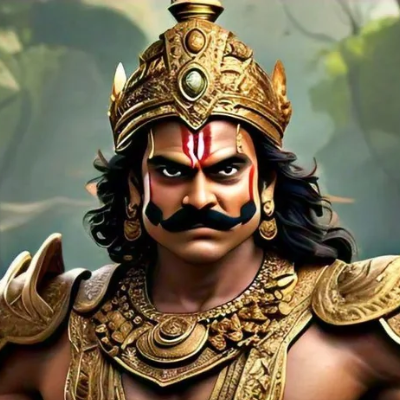
Among the five Pandavas, Bhima is the elemental one — raw, roaring, and unstoppable as the wind from which he was born. Where Yudhishthira embodies dharma and Arjuna embodies skill, Bhima embodies shakti — the primal force that upholds the world when all else fails. He is the arm of the Pandava cause, the avenger of Draupadi's humiliation, the slayer of a hundred Kauravas, and the man whose grief was as large as his strength. To underestimate Bhima as merely a warrior of brute force is to miss the fierce loyalty, the volcanic love, and the occasionally heartbreaking tenderness that made him, in many ways, the most purely human of all the Pandava brothers.
✦ Born of the Wind — A Cry That Shook the Mountains
Bhima was born to Kunti through the invocation of Vayu — the god of wind, breath, and vital force. His birth itself was an event of omen: when he slipped from Kunti's arms as an infant and fell upon a rock, the rock shattered into a hundred pieces while the child remained unharmed. His body was said to possess the strength of ten thousand elephants from the moment of birth, and his cry at birth echoed through the forest like a thunderclap, startling the animals for miles around.
As a child in Hastinapura, Bhima's sheer physical dominance was apparent and deeply threatening to the Kauravas. He would drag young Duryodhana and his brothers by their hair, hold them underwater, and shake them from trees — not always out of malice, but with the careless power of one who does not yet understand his own strength. This childhood antagonism with Duryodhana would eventually become the central personal conflict of the Kurukshetra war.
✦ Lineage — Wind, Earth, and the Unbroken Lunar Chain
Bhima stands firmly within the Chandravamsha — the Lunar Dynasty — as the second son of Pandu and Kunti, and the earthly inheritor of Vayu's boundless vitality.
- Divine Father: Vayu — god of wind, breath, life-force, and cosmic movement
- Mother: Kunti (Pritha) — princess of the Yadava line, adopted daughter of Kuntibhoja
- Legal Father: King Pandu of Hastinapura — son of Vyasa and Ambalika
- Elder Brother: Yudhishthira — son of Dharma, the eldest Pandava
- Younger Brothers: Arjuna (son of Indra), Nakula and Sahadeva (sons of the Ashvins by Madri)
- Half-Brother: Hanuman — also a son of Vayu, making him Bhima's elder divine half-brother; the two famously met during the forest exile
- Dynastic Line: Lunar Dynasty (Chandravamsha) → Kuru → Shantanu → Pandu → Bhima
Wives and Sons:
- Draupadi (Panchali) — his queen among the five shared wives; bore him Shrutasoma
- Hidimba — the rakshasi princess of the forest whom he married after slaying her brother Hidimba; bore him the mighty Ghatotkacha, who fell heroically at Kurukshetra sacrificing himself to exhaust Karna's Vasavi Shakti
- Valandhara — princess of Kashi, married during his conquest of kingdoms for the Rajasuya yajna; bore him Sarvaga
- Son Ghatotkacha: Half-rakshasa, half-Pandava — one of the most powerful warriors of the war, whose death moved even Krishna to tears of relief and grief simultaneously
✦ The Education of Strength — Drona, Demons, and the Serpent King
While Arjuna was Dronacharya's prized archery student, Bhima's primary martial training was in gada yuddha — mace combat — under Balarama, the elder brother of Krishna and the greatest mace-fighter in the world. This training would prove decisive at Kurukshetra, where his ultimate confrontation with Duryodhana was always destined to be settled by the mace alone.
Early in the Pandavas' exile from Hastinapura — engineered by Duryodhana's poison plot — Bhima was thrown into the Ganga river, having been drugged with poison by Duryodhana. He sank to the realm of the Nagas, where he was bitten by countless serpents — but the venom of the nagas neutralised the poison already in his body. The Naga king Aryaka, his great-grandfather's kinsman, received him with honour and gave him vessels of Naga rasayana — divine nectar — each of which multiplied his strength a thousandfold. He returned to the surface with the strength of ten thousand elephants, further amplified.
✦ The Slayer of Giants — Demons, Tyrants, and the Unliftable Tail
Bhima's career as a slayer of impossible adversaries began early and never ceased. His most celebrated non-battlefield encounters include:
- Hidimbasura: The cannibal rakshasa of the Kamyaka forest, slain by Bhima in single combat when the demon attempted to devour the sleeping Pandavas. Bhima's subsequent marriage to Hidimba — the demon's compassionate sister — produced Ghatotkacha
- Bakasura: A rakshasa who terrorised a village near Ekachakra by demanding regular tribute of food and human victims. Bhima was sent as the human offering, ate all the food himself, and beat Bakasura to death — freeing the village permanently
- Jarasandha: The mighty king of Magadha who had imprisoned eighty-six kings for eventual sacrifice to Shiva. At Krishna's counsel, Yudhishthira challenged him to single combat; Bhima fought Jarasandha in a bare-handed wrestling match that lasted twenty-seven days before Bhima, guided by Krishna's gesture, tore Jarasandha's body in two and threw the halves in opposite directions so they could not reunite
- Kichaka: The powerful army commander of King Virata's court who harassed Draupadi during the year of incognito exile. Bhima, disguised as a cook named Ballava, met Kichaka in secret at Draupadi's arrangement and beat him to death, compressing his body into a featureless mass — earning him the title Kichaka-sudana
- Hanuman and the Unmovable Tail: During the forest exile, Bhima encountered an aged monkey blocking his path, whose tail he arrogantly attempted to lift and move. He could not shift it by even a fraction — the monkey was his divine half-brother Hanuman in disguise. Humbled, Bhima received Hanuman's blessing and was promised that Hanuman's roar would echo from Arjuna's chariot banner throughout the war
✦ The Guardian of Draupadi — A Vow Written in Fury
Of all the Pandavas, it was Bhima whose rage at Draupadi's humiliation in the Kuru court burned most visibly and most persistently. When Duhshasana dragged Draupadi by her hair into the sabha and attempted her disrobing, Bhima made two vows before the assembled kings — vows he would carry for thirteen years like burning coals in his chest:
First, that he would tear open Duhshasana's chest and drink his blood. Second, that he would shatter Duryodhana's thigh — the thigh upon which Duryodhana had contemptuously slapped, inviting Draupadi to sit. Both vows were fulfilled exactly at Kurukshetra. On the fourteenth day, Bhima killed Duhshasana, tore open his chest, and brought his blood to Draupadi's unbound hair. On the eighteenth day, he struck Duryodhana below the waist with his mace — a blow that was technically adharmic but that Krishna silently sanctioned, for Duryodhana had himself transgressed dharma beyond measure.
✦ Kurukshetra — The Mace That Ended an Age
Across the eighteen days of the Kurukshetra war, Bhima was the single greatest destroyer of the Kaurava forces. It was he who personally slew ninety-nine of the hundred Kaurava brothers — one by one across the days of battle, each killing a deliberate act of justice rather than mere warfare. He slew Duhshasana on the fourteenth day in the manner he had vowed. He killed the elephant division commanders, rampaged through enemy formations with his mace when arrows failed, and served as the unmovable anchor of the Pandava left flank.
Among his most pivotal acts at Kurukshetra were the slaying of Bahlika, the oldest living warrior on either side; the destruction of Alambusha, the powerful rakshasa fighting for the Kauravas; and the killing of Maniman and numerous other demon allies of Duryodhana. When Ghatotkacha — his beloved son — fell to Karna's Vasavi Shakti on the fourteenth night, Bhima fought through his grief with a fury that stunned both armies.
The war's final personal combat was Bhima's — the mace duel with Duryodhana at the Dvaipayana lake on the eighteenth day. Both were supreme mace-fighters, trained by the same master Balarama. The fight was long, evenly matched, and watched by kings and sages alike. At a critical moment, guided by Krishna's gesture reminding him of his vow, Bhima struck Duryodhana below the navel — a prohibited blow in formal mace combat. Duryodhana fell with shattered thighs. Balarama was outraged at the foul. Krishna defended the necessity. Draupadi's honour was finally answered.
✦ The Tender Colossus — Love, Food, and Unspoken Devotion
Bhima is often reduced to his strength, but the Mahabharata is careful to show his other dimensions. He was renowned for his extraordinary appetite — a reflection of his Vayu nature, for wind consumes everything — and his love of food was both literal and symbolic of his all-consuming vitality. During the incognito year at Virata's court, he served as the royal cook Ballava, and excelled at it, suggesting a domesticity beneath the warrior exterior.
His love for Draupadi was perhaps the most unconditional and single-minded of all the Pandavas — he never once hesitated when her honour was at stake, never counselled patience when she demanded justice, and never chose political calculation over her dignity. His tenderness toward Ghatotkacha — the half-demon son who was also his most joyful creation — and his grief at that son's death reveal a man of enormous emotional depth beneath the thundering exterior.
His meeting with Hanuman in the Gandhamadana forest is one of the most moving encounters in the Vana Parva — the elder half-brother gently humbling the younger, blessing him, and promising to lend his voice and his strength to the Pandava cause. The two sons of Vayu, separated by epochs, meeting briefly in a forest of flowering trees — it is among the quietly extraordinary moments of the entire epic.
✦ After the War — The Weight of What Was Won
The aftermath of Kurukshetra weighed heavily on Bhima as on all the Pandavas. The near-total destruction of an entire generation of warriors, the deaths of Abhimanyu and Ghatotkacha, the revelation that Karna was their elder brother — all of this accumulated into the particular sorrow of those who survive wars they have won. Bhima participated in the Ashvamedha campaign and served loyally as Yudhishthira consolidated his reign over Hastinapura.
A haunting late episode involves the blind king Dhritarashtra, who had always secretly resented Bhima above all others for killing his sons. When the old king embraced the Pandavas before his forest retirement, Krishna — foreseeing what Dhritarashtra intended — substituted an iron effigy of Bhima. Dhritarashtra, in his grief and fury, crushed the effigy to powder. Had it been the real Bhima, even he might not have survived. It was a final, quiet testament to the depth of feeling — on all sides — that Bhima's existence had generated.
In the Mahaprasthana — the great final journey northward — Bhima was the fourth to fall, after Draupadi, Sahadeva, and Nakula. When he fell, he asked Yudhishthira why. The answer given was that Bhima had eaten too much and boasted of his strength. But those who revere him see it differently — he had given everything his strength possessed, and there was simply nothing left to carry him further. He had been, in the fullest sense, entirely consumed by his own life.
✦ Eternal Legacy — The Indispensable One
Bhima's legacy is that of the indispensable man — the one without whom the Pandava cause would have collapsed at every critical juncture. Jarasandha would not have been slain. Kichaka would not have been punished. The Kaurava brothers would not have been destroyed. Duryodhana would not have fallen. At each hinge-point of the epic, it is Bhima's body, Bhima's fury, and Bhima's unbreakable loyalty that holds the arc of justice in place.
He is worshipped in folk traditions across Maharashtra, Karnataka, and parts of northern India as a deity of strength, protection, and righteous anger. In the Mahabharata's moral universe, he represents the truth that dharma sometimes requires not subtle argument but the unambiguous language of the mace — and the courage to wield it without flinching, and without forgetting why.
✦ Primary Scriptural References
- Mahabharata (Vyasa) — Adi Parva, Sabha Parva (Jarasandha-vadha), Vana Parva (Bakavadha, Hanuman encounter, Kichaka-vadha), Virata Parva, Bhishma through Shalya Parvas, Gadayuddha Parva, Mahaprasthanika Parva
- Bhagavata Purana — references to Bhima's role in the consolidation of Krishna's allies and the Jarasandha episode as precursor to the Rajasuya yajna
- Gadayuddha of Ranna — the celebrated Old Kannada mahakavya narrating the final mace duel between Bhima and Duryodhana, considered one of the four gems of classical Kannada literature
- Skanda Purana — regional traditions referencing Bhima's tirthas and his encounter with Hanuman at Gandhamadana
- Pandava Gita — devotional compilation including verses attributed to Bhima expressing surrender to Krishna, revealing the spiritual dimension beneath the warrior exterior
"He was not merely the strongest man of his age — he was the one who used that strength entirely in the service of those he loved, and never once for himself alone."