
About
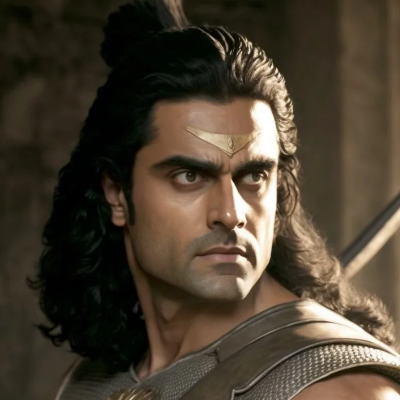
Sahadeva — The Silent Sage, Star-Reader of the Pandava Line
Sahadeva · Madreya · Ashvinisuta · Tantripala · Arishtanemi · Pandava-kanishtha · Nakula-sahaja
Among the five Pandavas, Sahadeva is the youngest, the most inward, and in many ways the most mysteriously gifted. He is the fifth and final Pandava — the last born, the last to speak, and yet the one who knew the most. Born of the same divine Ashvin invocation as his twin Nakula, Sahadeva inherited from those celestial physicians not the mastery of horses and the sword, but something at once more subtle and more overwhelming: the gift of trikala jnana — the knowledge of past, present, and future. He knew what was coming at Kurukshetra long before the first conch was blown. He knew who would fall, who would survive, and how the age would end. And he was bound, by a divine condition placed upon his knowledge, to speak it only when asked — and to suffer the consequences of that silence alongside everyone else. To understand Sahadeva is to contemplate one of the most poignant paradoxes in all of epic literature: the man who saw everything, and could save almost nothing.
✦ Born at Dawn — The Younger Ashvin Made Mortal
Sahadeva was born to Madri — the beloved second queen of King Pandu and princess of the Madra kingdom — through the invocation of the Ashvins, the twin celestial physicians who ride golden chariots across the threshold of dawn. The Ashvins are simultaneously healers and seers — they restore youth, return the lost, illuminate the hidden, and move between worlds with a freedom no other deity possesses. Sahadeva, as the younger of the mortal twins, was said to embody the more contemplative, inward aspect of the Ashvin nature — the one who observes, calculates, and knows — while Nakula embodied the active, outward aspect.
At the moment of the twins' birth, celestial voices proclaimed that they exceeded even the Ashvins themselves in beauty, and that each would become supreme in his particular domain. For Sahadeva, that domain was knowledge — of cattle, of statecraft, of the movements of stars, and ultimately of time itself. He was said to have consumed, after his father Pandu's death, a portion of Pandu's brain — a ritual act in certain traditions — which conferred upon him the fullness of his father's wisdom and his own prophetic gifts. The story, preserved in certain regional and folk traditions, frames Sahadeva's omniscience as literally inherited — wisdom passed through flesh and bone from father to son.
✦ Lineage — The Youngest Thread, Woven of Starlight
Sahadeva stands at the youngest end of the Pandava line within the great Chandravamsha — the Lunar Dynasty — carrying within him the dual heritage of the divine Ashvins and the royal Madra kingdom.
- Divine Fathers: The Ashvins (Nasatya and Dasra) — twin gods of dawn, celestial medicine, and prophetic illumination
- Mother: Madri — princess of Madra, second queen of Pandu, renowned for her beauty and devotion; died on Pandu's funeral pyre, leaving the twins in Kunti's care
- Maternal Uncle: Shalya — mighty king of Madra, who fought for the Kauravas at Kurukshetra and fell to Yudhishthira on the final day of battle
- Legal Father: King Pandu of Hastinapura — son of Vyasa and Ambalika, whose wisdom Sahadeva is said to have inherited through ritual consumption after his death
- Elder Brothers: Yudhishthira (son of Dharma), Bhima (son of Vayu), Arjuna (son of Indra)
- Twin Brother: Nakula — elder of the Madri twins, master of horses and swordsmanship, inseparable companion across all thirteen years of exile and the war
- Step-Mother: Kunti (Pritha) — who raised Sahadeva and Nakula as her own after Madri's death, with a love the epic consistently records as genuine and complete
- Dynastic Line: Lunar Dynasty (Chandravamsha) → Kuru → Shantanu → Pandu → Sahadeva
Wife and Son:
- Draupadi (Panchali) — his queen among the five shared wives; bore him Shrutakarman, slain in Ashvatthama's night raid on the Pandava camp
- Vijaya — princess of Madra, his individual wife married during the southern campaign; bore him Suhotra
✦ The Gifts of the Youngest — Cattle, Stars, and the Weight of Knowing
Where Nakula was the supreme master of horses, Sahadeva was the supreme master of cattle and animal husbandry — a domain that in Vedic and Puranic culture carried immense sacred and economic significance. Cattle were the measure of wealth, the currency of sacrifice, and the living embodiment of prosperity. Sahadeva's knowledge of cattle — their breeds, their diseases, their auspicious markings, the omens they carried — made him an indispensable advisor and manager of the Pandava household's material foundations.
Beyond cattle, Sahadeva was the foremost astrologer and astronomer among the Pandavas — skilled in reading the positions of stars, the movement of planets, and the auspicious and inauspicious configurations of time. His knowledge of jyotisha — the sacred science of celestial illumination — was so profound that both sides at Kurukshetra sought his counsel on auspicious timings. Most strikingly, Duryodhana himself secretly consulted Sahadeva about the most auspicious moment to begin the Kurukshetra war — and Sahadeva, bound by the warrior's code of honest answer to a genuine question, told him truthfully, even though Duryodhana was his enemy. That single act of principled honesty against self-interest illuminates the quality of Sahadeva's character more vividly than any battlefield deed.
His most awesome gift, however, was trikala jnana — knowledge of the three times: past, present, and future. This foreknowledge was both a divine endowment and a divine burden. He knew before the dice game that Yudhishthira would lose everything — and could not speak unless asked. He knew the war was coming years before it arrived. He knew Karna's identity, the fates of each warrior, and the shape of the age's end. He carried this knowledge in silence, and the silence cost him — and those he loved — everything it was destined to cost.
✦ The Southern Digvijaya — Where Wisdom Met the Sword
For the great Rajasuya Yajna of Yudhishthira, Sahadeva was entrusted with the southern campaign — the Dakshina Digvijaya — and conducted it with a combination of martial precision, diplomatic acuity, and strategic intelligence that made it one of the most successful of the four directional conquests.
Marching southward from Indraprastha, Sahadeva first subdued Shurasena and the kingdoms of the Yamuna's banks, then turned toward the Deccan. He defeated the powerful king Dantavakra of Karusha, brought the Nishada king into submission, and conquered the kingdoms of Mahishmati — whose ruler Nila initially resisted, protected by the fire god Agni himself, before yielding. He then moved further south, subduing the kingdoms of Traipura, Paundraya, and the coastal realms near the southern sea, bringing into Pandava suzerainty kingdoms that no northern army had previously reached.
Most significantly, he subdued the kingdom of Kishkindha — the land once ruled by Vali and Sugriva — and received tribute from rulers of the far south, extending Yudhishthira's imperial reach to its southernmost limit. He returned with gold, precious stones, fine southern cloth, spices, and the pledged fealty of kings whose names had never before appeared in Kuru tribute rolls. The campaign revealed that the youngest and quietest Pandava possessed, when called upon, the full martial authority of his divine heritage.
✦ Tantripala — The Cowherd Who Kept a Kingdom's Secret
During the year of incognito exile at King Virata's court, Sahadeva assumed the identity of Tantripala — a skilled cowherd and superintendent of the royal cattle herds. The disguise was perfectly fitted to his gifts: his knowledge of cattle was so encyclopaedic and his management of the herds so immediately effective that King Virata came to regard him as perhaps the finest cattle-master he had ever employed.
Under his care, Virata's cattle multiplied, the diseased animals were healed, the herd's composition was improved through his knowledge of auspicious breeding, and the losses to predators and theft — which had plagued the royal herds — dramatically decreased. What was for Sahadeva an exercise in concealment was for Virata's kingdom a year of unexpected agricultural abundance. He maintained his disguise with the same quiet discipline his twin showed in the stables — calm, thorough, and entirely invisible behind the ordinariness of essential work.
✦ The Burden of Foreknowledge — What Sahadeva Knew and Could Not Say
The most philosophically haunting dimension of Sahadeva's existence is his relationship with his own foreknowledge. The tradition records that he knew — fully, precisely, and in detail — that the dice game would destroy the Pandavas' prosperity, that the exile would follow, that the war was inevitable, and that tens of millions would die at Kurukshetra. He knew the identities and fates of the key warriors. He knew Karna was Kunti's son. He knew Duryodhana would not yield.
The divine condition upon his knowledge was stark: if he volunteered what he knew without being asked, the knowledge would turn against him and harm those he sought to protect. He was thus trapped in a terrible silence — watching events he had foreseen unfold exactly as he knew they would, unable to intervene except when directly questioned. This condition is what makes Sahadeva, in the eyes of many commentators, the most tragic figure among the Pandavas — not because he suffered more than the others, but because he suffered with full awareness of what was coming and could not share the weight of that awareness with anyone.
There is a profound and painful irony in the fact that Krishna — the one being in the story whose omniscience matched Sahadeva's foreknowledge — is said to have regarded Sahadeva with particular affection and respect for precisely this reason. Two beings who knew everything that was going to happen, moving through the narrative as though discovering it for the first time, carrying their knowledge like an invisible burden — the bond between them is one of the quieter and more extraordinary dimensions of the epic.
✦ At Kurukshetra — The Seer Who Fought Anyway
Sahadeva fought across all eighteen days of the Kurukshetra war with a focused, controlled ferocity that belied his reputation as the quiet, scholarly youngest brother. He was a skilled swordsman and a capable chariot-fighter, and the Mahabharata records several significant engagements on his part.
His most emotionally charged combat was against Shalya — the king of Madra, his own maternal uncle — who had been manipulated by Duryodhana into fighting for the Kauravas. The two faced each other in direct combat at multiple points during the war, each knowing the full weight of what they were doing: a nephew fighting his mother's brother, each on opposite sides of the most devastating war in history. The combat was intense and unresolved across most of the war. On the final day, Shalya was appointed commander-in-chief of the Kaurava forces after Karna's death — and was ultimately slain by Yudhishthira, not Sahadeva, though Sahadeva had fought him repeatedly.
Sahadeva is also credited with the killing of Shakuni — the architect of the entire catastrophe, the man whose loaded dice had started the chain of events that killed millions. On the eighteenth day, as the last Kaurava resistance collapsed, Sahadeva pursued Shakuni and slew him in single combat. It was a fitting conclusion: the man who had deployed deceit and hidden knowledge to destroy the Pandavas was killed by the Pandava who had always possessed true knowledge and had never once used it deceptively. The symmetry is precise and the epic intends it.
✦ Devotion to Krishna — A Kinship of Knowing
Among the Pandavas, Sahadeva's devotion to Sri Krishna was singular in its nature — less the ardent bhakti of Arjuna, less the pragmatic alliance of Yudhishthira, and more a quiet recognition between two beings who inhabited the same relationship with time. Sahadeva knew who Krishna was — truly was — with a clarity that the others arrived at gradually and imperfectly. His reverence was thus not faith working toward knowledge but knowledge flowering into reverence.
Several regional and folk traditions record that when Krishna's death was approaching — when the Yadava clan destroyed itself at Prabhasa and Krishna lay wounded under the tree where the hunter Jara's arrow had found him — it was Sahadeva who knew it first among the Pandavas, who felt the shift in the fabric of time that Krishna's departure created, and who sat quietly with that knowledge long before the news arrived at Hastinapura.
✦ The Fall on the Final Journey — Pride of Mind
In the Mahaprasthanika Parva, as the Pandavas undertook their great northward journey of renunciation toward Mount Meru, Sahadeva was the second to fall — after Draupadi and before Nakula. When Bhima asked Yudhishthira why Sahadeva had fallen, the eldest Pandava gave his answer with characteristic precision: "Sahadeva believed that no one equalled him in wisdom."
Like Nakula's pride in his beauty, Sahadeva's pride in his wisdom is a flaw so embedded in truth as to seem almost unjust. He was, in fact, the wisest of the Pandavas in the specific sense of possessing the most complete knowledge. His pride was not the pride of the ignorant but the pride of one who genuinely knew more than everyone around him and lived with the daily burden of that knowledge. That such a man might take quiet satisfaction in his own exceptional mind is, in the Mahabharata's moral universe, still a departure from perfect humility — and the epic, with its characteristic unflinching exactness, notes it without malice and without mercy.
✦ Eternal Legacy — The Knowing Silence
Sahadeva's legacy in the broader cultural memory of the Mahabharata tradition is that of the indispensable silent witness — the one who knew, who endured the knowledge, and who acted with integrity within the limitations placed upon him. He is the patron of astrologers and cattle-herders in several regional traditions. In parts of South India — particularly Kerala and Tamil Nadu — Sahadeva is venerated as a deity of wisdom and foresight, and his image appears in temple complexes dedicated to the Pandava brothers as a group.
His killing of Shakuni remains one of the most morally satisfying acts of retributive justice in the entire epic — the defeat of cunning by clarity, of manipulative half-knowledge by genuine omniscience. And his bond with his twin Nakula — the two Ashvin-born, the two youngest, the two most beautiful, the two most quietly gifted of the five — remains one of the epic's most tender and most understated relationships: a pairing of complementary excellences that together formed a wholeness neither possessed alone.
In the end, Sahadeva's story is the story of jnana — knowledge — in its most complete and most costly form. He knew everything. He bore it alone. He acted rightly within his constraints. He never betrayed the truth for convenience. And when he fell on the final journey, it was not because he had failed — it was because he was, at last, released from the weight of knowing.
✦ Primary Scriptural References
- Mahabharata (Vyasa) — Adi Parva (birth, early life, and the inheritance of Pandu's wisdom), Sabha Parva (Digvijaya campaign to the south and the Rajasuya), Vana Parva (forest exile and the Yaksha Prashna restoration), Virata Parva (service as Tantripala), Karna Parva and Shalya Parva (battles with Shalya and the killing of Shakuni), Mahaprasthanika Parva and Svargarohana Parva
- Bhagavata Purana — genealogical and devotional passages on the Pandava twins, their Ashvin heritage, and Sahadeva's special relationship with Krishna within the broader Yadava-Pandava network of kinship and devotion
- Jyotisha Vedanga and related astrological literature — Sahadeva is cited in several classical jyotisha commentaries as the archetypal mortal astrologer, his foreknowledge invoked as a foundational myth for the sacred science of celestial reading
- Regional Mahabharatas — Tamil Mahabharata traditions (particularly Villipputhurar's version) and Kerala's Mahabharata Manipravalam texts give Sahadeva significantly expanded roles as seer, counsellor, and divine intermediary, preserving traditions of his omniscience that the Sanskrit critical edition records only in fragments
- Harivamsha — supplementary passages on Sahadeva's relationship with Krishna and the metaphysical dimensions of his foreknowledge within the Vaishnava theological framework of the Kurukshetra war as cosmic necessity
"He saw the fire before the spark was struck, the grief before the blow was dealt, the end before the beginning was fully begun — and he walked into it anyway, eyes open, because dharma asked it of him and he had never once refused dharma's asking."