
About
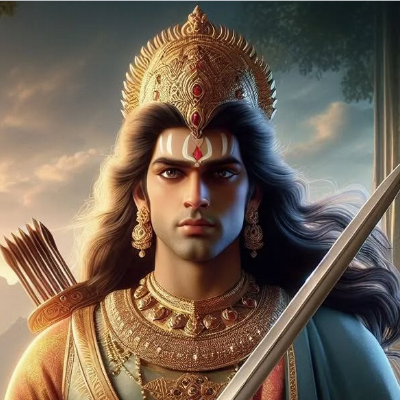
Shatanika — The Fourth Flame, Son of the Radiant Twin
Shatanika · Nakulaja · Draupadeya-chaturtha · Upapandava-kaniyan · Madreya-suta · Ashvini-pautra
Among the five Upapandavas — those brief, radiant sons of Draupadi who were raised to inherit a world their fathers had bled to reclaim, and who were taken before that inheritance could begin — Shatanika is the fourth, the son of Nakula and Draupadi, inheritor of the most physically perfect and the most quietly gifted of all the Pandavas. He bears a name that rings with martial authority, carries in his blood the celestial heritage of the divine Ashvin physicians through his father, and arrives at the confluence of two traditions — the graceful, refined mastery of Nakula's horse-craft and sword-skill on one side, and the fire-born moral intensity of Draupadi's Panchala lineage on the other. Like his brothers, he was young, fully trained, and full of unlived possibility. Like his brothers, he was taken in the darkness of a single catastrophic night. But Shatanika's story carries its own particular texture — the story of a boy who inherited the quietest and most understated form of Pandava excellence, who grew up in the shadow of four extraordinary brothers and an even more extraordinary father, and who fought at Kurukshetra with all the composed, precise competence that his Ashvin heritage demanded — and whose loss, when it came, fell upon a father whose grief, like all of Nakula's truest emotions, was borne in a silence that made it no less devastating for being unannounced.
✦ The Name and Its Martial Proclamation — He of a Hundred Warriors
The name Shatanika is built from two Sanskrit roots of unambiguous martial meaning: shata — meaning "hundred" — and nika — derived from nika or anika, meaning "warrior," "army," "front rank of battle," or "one who faces the enemy." Together the name declares: one who faces a hundred warriors, or one who is equal to a hundred soldiers — a name that in the kshatriya tradition of naming proclaimed from birth the kind of battlefield authority its bearer was expected to grow into.
The choice of this name by Nakula is deeply revealing. Nakula — the most beautiful of the Pandavas, the one whose gifts were most often characterized as elegant and refined rather than overwhelming and raw — chose for his son a name of pure martial force. A hundred warriors. Not grace, not beauty, not learning — a hundred warriors. In this naming there is something of the father's own quietly fierce nature made visible: Nakula, who had been underestimated all his life because his beauty made people forget his sword arm, who had subdued the entire western region of Bharata for the Rajasuya campaign with a combination of martial skill and diplomatic precision that his more celebrated brothers could not have replicated — this man named his son for the capacity to face a hundred enemies and not yield. It was the statement of a father who knew exactly what the world overlooked in him, and who wanted his son armed with the authority that he himself had been required to prove silently, again and again.
It is also worth noting that the name Shatanika has distinguished precedents in the Kuru lineage — there was an ancestor of the same name in the Pandava family tree, a king of the Kuru line mentioned in earlier genealogies, suggesting that Nakula was also honouring a dynastic heritage in the naming, connecting his son to the long chain of Kuru kings who had borne that name before him.
✦ Born of the Ashvins' Son and the Sacred Fire — A Heritage of Dawn and Flame
Shatanika was born at Indraprastha during the years of Pandava prosperity — into the golden court that Maya the divine architect had built for the Pandavas on the banks of the Yamuna, a palace so magnificent that even the gods came to admire it. He was born of Nakula's year of exclusive companionship with Draupadi, the son in whom the most physically graceful of the Pandavas had placed his hopes for a line that would carry both the Ashvin heritage and the Panchala fire forward into the next generation.
From Nakula — son of the Ashvins, the most beautiful man of his age, master of horses and swordsmanship, possessor of deep Ayurvedic knowledge and the healing arts of his divine fathers — Shatanika inherited a paternal lineage of extraordinary refinement and celestial grace. The Ashvins are the physicians of the gods, the restorers of youth and wholeness, the twin deities who move between worlds at the threshold of dawn — and their gifts, transmitted through Nakula, ran in Shatanika's blood as the capacity for beauty, for precise and elegant mastery, and for the particular kind of intelligence that sees what needs to be healed and knows how to heal it.
From Draupadi — fire-born, Panchala-raised, the woman whose unbound hair had waited thirteen years for the blood of her tormentor, whose moral precision and fierce dignity were the most uncompromising forces in the entire epic — Shatanika inherited the flame that tempered whatever the Ashvin grace gave him. In Shatanika, the Ashvin dawn-light and the Panchala sacrificial fire met — a combination that the tradition associated with both healing and burning, both the restoration of what was broken and the destruction of what was corrupt.
✦ Lineage — The Fourth Weave, Where the Madra Thread Enters the Tapestry
Shatanika's lineage introduces into the Upapandava genealogical tapestry the particular thread of the Madra kingdom — the western royal line from which Nakula and Sahadeva's mother Madri descended, and which gives Shatanika a distinctive regional and dynastic heritage that none of his brothers through their respective fathers shared.
- Father: Nakula (Madreya, Granthika) — fourth Pandava, first of the Madri twins, son of the Ashvins, master of horses and sword-craft, most beautiful man of his age
- Mother: Draupadi (Panchali, Krishnaa, Yajnaseni) — fire-born queen of the five Pandavas, daughter of King Drupada of Panchala
- Paternal Divine Grandfathers: The Ashvins (Nasatya and Dasra) — twin gods of dawn, celestial medicine, and divine horsemanship
- Paternal Grandmother: Madri — princess of Madra, second queen of Pandu, who died on her husband's funeral pyre leaving the twins in Kunti's care
- Paternal Great-Uncle: Shalya — king of Madra, Nakula's maternal uncle, who fought for the Kauravas at Kurukshetra and fell to Yudhishthira on the final day — making him Shatanika's great-grand-uncle through the Madra line
- Paternal Step-Grandmother: Kunti — who raised Nakula and Sahadeva as her own, making her Shatanika's step-grandmother by adoption and affection
- Maternal Grandfather: King Drupada (Yajnasena) of Panchala
- Maternal Uncle: Dhrishtadyumna — fire-born commander-in-chief of the Pandava forces at Kurukshetra
- Twin Uncle: Sahadeva — Nakula's inseparable twin, whose son Shrutakarman was Shatanika's youngest brother among the Upapandavas
- Half-Brother through Nakula: Niramitra — son of Nakula by Karenumati, princess of Chedi
- Brothers among the Upapandavas: Prativindhya (eldest, son of Yudhishthira), Shrutasoma (son of Bhima), Shrutakirti (son of Arjuna), Shrutakarman (youngest, son of Sahadeva)
- Divine Lineage: Lunar Dynasty (Chandravamsha) → Kuru → Shantanu → Pandu → Nakula → Shatanika
✦ The Twin Dimension — Growing Up Between Two Fathers
Among the circumstances of Shatanika's life that deserve particular attention is the fact that his father Nakula was a twin — and that his father's twin, Sahadeva, was also the father of his youngest brother Shrutakarman. The two youngest Upapandavas were thus the sons of the two youngest Pandavas — twins who had been born together, raised together, exiled together, disguised together, and fought together across all eighteen days of Kurukshetra. Shatanika and Shrutakarman were not merely brothers among the Upapandavas; they were the sons of an inseparable twin pair, which gave their relationship a depth and a mirroring quality that was unique among the five.
Growing up at Drupada's court in Panchala during the exile years, Shatanika would have been acutely aware of this doubled heritage — the sense that his father and his uncle were, in some deep sense, a single thing divided into two complementary halves, and that he and Shrutakarman were the next generation of that same complementarity made flesh. Where Nakula was the master of horses and sword, Sahadeva was the master of cattle and stars — and their sons, trained in the same court and by the same masters, would have absorbed some echo of that complementary division in their own formations and temperaments.
✦ The Madra Heritage — A Kingdom in the Blood
Through Nakula, Shatanika carried in his blood the heritage of the Madra kingdom — one of the most powerful and culturally distinctive of the northwestern kingdoms of Bharata. The Madra kings were celebrated warriors, their kingdom strategically located in the Punjab region, their martial tradition vigorous and their horses among the finest bred anywhere on the subcontinent.
This Madra connection gave Shatanika a heritage that none of his three elder brothers shared. While Prativindhya descended through Yudhishthira from the pure Kuru-Dharmaraja line, Shrutasoma through Bhima from the Vayu-born vitality of the wind god's line, and Shrutakirti through Arjuna from the Indra-blessed celestial archer's tradition — Shatanika carried through Nakula the blood of the Madra kings, the western warriors, the breeders of magnificent horses, the people whose land sat at the gateway between the Kuru heartland and the wider world beyond.
The fact that Shalya — king of Madra and Nakula's maternal uncle — fought for the Kauravas at Kurukshetra added a particular complexity to Shatanika's position on the battlefield. His great-grand-uncle through the Madra line was fighting against him. The war's tendency to tear apart kinship networks — to place uncles against nephews, grandfathers against grandsons, teachers against students — found in Shatanika's specific genealogy another instance of its devastating thoroughness.
✦ Raised at Panchala — The Horse-Master's Son Among Warriors
Like his brothers, Shatanika was sent to Drupada's court at Panchala when the dice game drove the Pandavas into exile. There, in the same royal establishment that had produced Draupadi's fire-born emergence and where the highest standards of kshatriya education were maintained, Shatanika received the formation that would make him a maharatha warrior by the time the Kurukshetra war arrived.
As Nakula's son, Shatanika would have shown a natural aptitude for the equestrian arts — the deep, instinctive connection with horses that the Ashvin heritage transmitted through Nakula was likely to have appeared in his son as well. The Panchala stables, which Nakula himself had served in disguise as Granthika during the incognito year, would have been a domain in which Shatanika felt particularly at home — the horses responding to him with the ease that characterises those who carry the Ashvin nature in their blood.
His sword training would have been conducted with the awareness that his father was the greatest swordsman of his age — a standard as demanding in its own domain as Arjuna's archery was for Shrutakirti. The Panchala masters who oversaw his training would have known whose son he was, and the precision, elegance, and speed that Nakula brought to sword combat would have been the model against which Shatanika's own developing technique was measured and refined.
✦ The Orphan's Inheritance — Madri's Grandchild
One of the most poignant dimensions of Shatanika's existence is his position as the grandson of Madri — the queen of Hastinapura who had died on Pandu's funeral pyre before Nakula and Sahadeva were old enough to remember her, who had left her twins in Kunti's care and departed the mortal world in an act of devotion and grief that the Mahabharata treats with great tenderness.
Shatanika never knew his paternal grandmother. Madri was a figure of story and loss in his family — the beautiful queen of Madra who had loved Pandu absolutely and who had chosen death over life without him, leaving her sons to be raised by a stepmother whose love for them was, by all accounts in the epic, genuine and complete. Through Nakula, Shatanika was the continuation of Madri's line — the living evidence that the Madra queen's blood had persisted through the exile and the war, that the children born of her invocation of the Ashvins had produced their own children who carried her heritage forward.
This is the same consideration that had moved Yudhishthira, in the Yaksha Prashna episode at the forest lake, to choose Nakula's restoration over the restoration of his own full brothers — so that Madri's line would not be entirely extinguished. The gesture was an act of equity and love that Nakula had carried in his heart ever after, and that he would have passed to Shatanika as a piece of family history — the story of how Yudhishthira had chosen to preserve the Madra thread of the Pandava weave, and what that act of generosity had meant to the twins who survived because of it.
✦ At Kurukshetra — The Fourth Flame in the Great Fire
Shatanika fought at Kurukshetra as part of the Upapandava cohort across all eighteen days of the war — five young princes fighting together with the precision and coordination that their shared upbringing at Panchala had built into them. As Nakula's son, Shatanika brought to the battlefield the qualities most associated with his father's line: composure, precision, elegance of movement, and the particular lethality that comes from technique refined to its highest expression rather than merely supplemented by raw power.
The Mahabharata records the Upapandavas fighting with maharatha-level distinction across multiple parvas — engaging significant Kaurava commanders, demonstrating the full quality of their Panchala training, and surviving encounters that destroyed warriors of far greater experience. Shatanika, as the son of the greatest swordsman of the age, would have been most formidable in close-quarter combat — the domain where Nakula's blade-craft translated most directly into the inherited reflexes of a son trained in his father's tradition.
He fought through the death of Abhimanyu, through Ghatotkacha's sacrifice on the fourteenth night, through the fall of Drona and the killing of Karna, through Duryodhana's final defeat. He was there at the end — alive, his dharma upheld, his family's honour partially restored. The war had taken much from everyone around him. But it had not taken him. Not yet.
✦ The Night of the Sauptika — A Hundred Warriors Could Not Help Him Now
The Sauptika Parva records the act that defines the ending of the Upapandava generation. Ashvatthama, the last great Kaurava warrior standing, entered the sleeping Pandava camp on the night following Duryodhana's fall, driven by a grief and fury that had dissolved the boundaries of dharmic conduct entirely. Moving through the darkness toward the section where the Upapandavas slept, he found them defenceless and unaware — five young princes who had survived the war and who lay sleeping in the false security of a victory they had believed was complete.
Shatanika — the boy named for facing a hundred warriors, who had trained his entire life for exactly the kind of combat his name declared he would master — was killed in his sleep. The name his father had given him proclaimed a capacity the moment of his death made irrelevant. A hundred warriors could not come for him in the darkness. Only one man came, in silence, without announcement, without the declaration of challenge that the kshatriya code required and that all of Shatanika's training had prepared him to answer. His sword arm, which his father had shaped into a weapon of precise and devastating elegance, was still at his side when Ashvatthama found him.
The irony encoded in the gap between his name and his death is one of the Mahabharata's most quietly devastating observations about the nature of war and fate — that no amount of martial preparation can protect against the dark that comes not as a warrior but as a grief-destroyed man who has abandoned every code that would make the contest fair.
✦ Nakula's Grief — The Quiet Man and the Unspeakable Loss
For Nakula — the most composed and the most privately emotional of the Pandavas, the man whose deepest feelings were expressed in action and mastery rather than in words or displays — the loss of Shatanika was the kind of grief that a man of his nature could not easily show and could never entirely survive. He had already lost the war's eighteen days with the full intensity of his martial commitment. He had fought his great-uncle Shalya in the anguish of kinsmen on opposite sides. He had seen the war consume everyone around him with the systematic thoroughness of a fire that recognises no distinction between the deserving and the innocent.
And now Shatanika — the boy in whom he had placed the hopes of the Madra line and the Ashvin heritage and the horse-master's refined excellence — was gone. Killed sleeping. Killed in the night that should have been safe. Killed by a man whose grief had made him into something the Mahabharata would record as one of the war's most definitive acts of adharma.
Nakula's grief, like all of Nakula's truest experiences, was carried in a silence that the text does not attempt to fully describe — knowing that some losses exist beyond the reach of description, that some silences are more eloquent than any lamentation, and that the quietest of the Pandavas bore the loss of his son with the same composed dignity with which he had borne everything else, and that this composure cost him more than any battlefield wound.
✦ Eternal Legacy — The Fourth Flame and What It Illuminated
Shatanika's legacy within the moral architecture of the Mahabharata is part of the collective legacy of the five Upapandavas — the generation whose deaths proved that the war's cost could not be confined to those who had made its decisions, that the children of the righteous were not protected by their parents' virtue, and that dharma's restoration came at a price that included the very heirs for whose sake the restoration was being attempted.
Within that collective, Shatanika carries the particular significance of the Madra-Ashvin lineage made manifest in the Upapandava generation — the evidence that the divine physicians' gifts, transmitted through Nakula, had produced in the next generation a warrior of precision, grace, and composed authority. He is the fourth flame of the five — and the fourth position, in the Vedic reckoning of the five elements, corresponds to vayu, the wind, the element of movement and touch and the breath that connects the inner self to the outer world. That Shatanika — son of the Ashvins' child, born of the twin who embodied active grace — should occupy this fourth position is a correspondence the tradition notices with the quiet satisfaction of a pattern correctly perceived.
In the Draupadi Amman temple traditions of Tamil Nadu and in the Upapandava veneration practices of Karnataka and Andhra Pradesh, Shatanika is honoured as the fourth of the five sacred princes — his Ashvin-descended paternal heritage, his Madra lineage, and his composed martial competence all acknowledged in the ritual remembrance that the southern devotional traditions maintain for the sons of Draupadi. He is the quiet one among five quiet princes — the son of the most quietly excellent of the Pandavas, bearing a name that roared with martial authority and a nature that expressed that authority in the most composed and refined of forms.
✦ Primary Scriptural References
- Mahabharata (Vyasa) — Adi Parva (birth of the Upapandavas at Indraprastha and their upbringing at Panchala during the exile years), Drona Parva and Karna Parva (participation in the Kurukshetra war as part of the Upapandava cohort), Sauptika Parva (the night raid of Ashvatthama and the killing of all five Upapandavas including Shatanika), Stri Parva (lamentations of Draupadi, Nakula, and the women of both sides over the fallen)
- Bhagavata Purana — genealogical passages listing Shatanika as the son of Nakula and Draupadi within the Upapandava group, his place in the Kuru dynastic succession, and the significance of the Madra lineage thread within the broader Pandava genealogical record
- Vishnu Purana — dynastic records noting Shatanika's position in the Pandava line through Nakula, the Madra heritage he carried, and the passing of the Kuru succession through Abhimanyu's son Parikshit after the extinction of all five Upapandavas
- Regional Mahabharatas — Tamil, Telugu, and Kannada retellings in which the relationship between Shatanika and Shrutakarman as sons of the Ashvin twins Nakula and Sahadeva receives particular attention, their bond among the Upapandavas mirroring the inseparable twin relationship of their fathers
- Draupadi Amman temple traditions and Upapandava veneration literature — liturgical and folk texts of the Draupadi cult in Tamil Nadu in which Shatanika is honoured as the fourth of the five sacred Upapandava princes, his Ashvin-descended celestial heritage and his Madra dynastic lineage noted as distinguishing features within the collective veneration of Draupadi's five sons
"His father was the most beautiful man of his age, and his name meant a hundred warriors — and in that gap between beauty and battle, between the grace of the Ashvins and the authority of a hundred facing swords, Shatanika lived his brief and complete life, asking nothing of the world but the chance to be what his blood had made him."