
About
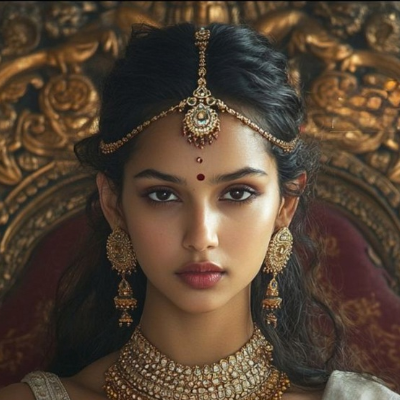
Subhadra — Sister of Krishna and Balarama, Wife of Arjuna, Mother of Abhimanyu
Subhadra · Subhadra Devi · Arjunasambhava · Vrishnikulodbhava · Bhadra · Krishnasvasri
Subhadra is one of the significant female figures of the Mahabharata and the Puranic tradition, identified as the daughter of Vasudeva — the Yadava chief of the Vrishni clan and father of both Krishna and Balarama — and of Rohini, the senior wife of Vasudeva. She is thus the full sister of Balarama and the half-sister of Krishna, both through the paternal line. Her marriage to Arjuna — the third of the five Pandava brothers, son of the god Indra and Kunti, and one of the greatest warriors of the Mahabharata war — is one of the most consequential unions of the entire epic tradition, as it produces Abhimanyu, whose own brief life and heroic death at Kurukshetra form one of the most emotionally charged episodes of the Mahabharata, and whose son Parikshit becomes the last surviving heir of the Kuru-Pandava lineage and the king to whom the sage Shuka narrates the Bhagavata Purana. Subhadra thus occupies a pivotal genealogical position connecting the Yadava lineage of Krishna and Balarama to the Pandava lineage through her son and grandson, making her a figure of considerable structural importance in the Itihasa-Puranic genealogical system even though her own independent narrative is relatively limited in scope. Her principal appearances are in the Mahabharata — chiefly the Adi Parva — the Bhagavata Purana, the Harivamsa, and the Vishnu Purana. She is also one of the three principal deities venerated at the Jagannatha temple at Puri in Odisha, where she is worshipped alongside her brothers Jagannatha and Balabhadra in a tradition of great antiquity and regional significance.
✦ The Name
Subhadra is a Sanskrit compound of su meaning good, auspicious, or excellent, and bhadra meaning auspicious, fortunate, or noble, yielding the sense of the supremely auspicious one or the very fortunate one. The name is entirely consistent with the tradition's general use of bhadra-compounds for figures regarded as particularly blessed or gracious. The epithet Krishnasvasri — sister of Krishna, from Krishna and svasri meaning sister — identifies her through her most theologically significant family relationship. Vrishnikulodbhava — born of the Vrishni clan, from Vrishni, kula meaning clan, and udbhava meaning born of — places her within the specific sub-clan of the Yadava confederation from which both Krishna and Balarama also come. Bhadra as a shortened form of her name is used in some passages of the Mahabharata in direct address.
✦ Lineage
- Father: Vasudeva — a chief of the Vrishni clan of the Yadava confederation, descended from the ancient lunar king Yadu through a long lineage; son of Shura, a Yadava king; father of both Balarama by Rohini, Krishna by Devaki, and Subhadra by Rohini. Vasudeva is regarded throughout the Puranic and epic tradition as a noble and dharmic figure.
- Mother: Rohini — the senior wife of Vasudeva, who had been residing in the household of the cowherd chief Nanda in Gokula at the time of Balarama's birth and who raised both Balarama and Subhadra. Rohini is also the mother who carried Balarama to term after the miraculous transfer of his embryo from Devaki's womb.
- Brother: Balarama — also known as Baladeva, Balabhadra, and Sankarshana; the elder brother of Krishna and the full brother of Subhadra through both Vasudeva and Rohini; an avatara of Adi Shesha, the primordial cosmic serpent; wielder of the plough and the mace; one of the foremost figures of the Mahabharata period among the Yadavas.
- Half-brother: Krishna — the eighth avatara of Vishnu and supreme deity of the Vaishnava tradition; son of Vasudeva and Devaki; Subhadra's half-brother through the paternal line; the architect of her marriage to Arjuna and her closest divine protector throughout the events of the Mahabharata.
- Husband: Arjuna — the third of the five Pandava brothers; son of the god Indra, the king of the gods, and the princess Kunti, also known as Pritha, daughter of Shurasena and adoptive daughter of Kuntibhoja; one of the greatest bowmen and warriors in the tradition of the Mahabharata; a central figure of the Kurukshetra war and the recipient of Krishna's teachings in the Bhagavad Gita.
- Son: Abhimanyu — born of Subhadra and Arjuna; one of the most celebrated warriors of the Mahabharata war; killed on the thirteenth day of the Kurukshetra war while trapped inside the Chakravyuha formation by multiple Kaurava warriors acting in violation of the rules of single combat; his death provokes the famous oath of Arjuna to kill Jayadratha before sunset on the following day.
- Daughter-in-law: Uttara — the daughter of King Virata of the Matsya kingdom, in whose court the Pandavas spent their final year of incognito exile; married to Abhimanyu; pregnant at the time of Abhimanyu's death; mother of Parikshit.
- Grandson: Parikshit — born of Abhimanyu and Uttara after Abhimanyu's death; revived in the womb by Krishna when the Brahmastra weapon of Ashvatthama threatened to destroy all life in Uttara's womb; the last surviving heir of the Kuru-Pandava lineage; the king to whom the sage Shuka narrates the Bhagavata Purana; his birth ensures the continuation of the lineage beyond the destruction of the Kurukshetra war.
✦ The Marriage to Arjuna
The account of Subhadra's marriage to Arjuna is narrated in the Mahabharata's Adi Parva and is one of the more dramatically presented marriage narratives of the epic. Arjuna, having committed a violation of the agreement among the Pandava brothers regarding shared access to their common wife Draupadi — entering her chambers while she was with Yudhishthira, the eldest Pandava, in order to recover weapons needed for the protection of a brahmin — underwent a voluntary twelve-year period of exile and pilgrimage as penance. During this period he travelled extensively across the subcontinent, contracting marriages in different regions — including a union with Ulupi, a Naga princess, and with Chitrangada, a princess of Manipura.
In the course of his wanderings Arjuna arrived at Dwaraka, the island city of the Yadavas, and was received by Krishna as an honoured guest. The Mahabharata narrates that Arjuna, during his stay in Dwaraka, encountered Subhadra and was deeply attracted to her. He confided this attraction to Krishna. Krishna, who favoured the marriage and regarded Arjuna as an eminently worthy match for his sister, nonetheless advised Arjuna against seeking a formal request for her hand, pointing out that Balarama — the elder brother who held the primary authority in such matters within the family — had already indicated a preference to give Subhadra to Duryodhana, the eldest of the Kauravas, with whom the Yadavas had family ties and political relationships. A formal request would almost certainly be refused.
Krishna instead counselled the path of abduction — svayamvara-related abduction of the kind considered legitimate for the Kshatriya warrior class under certain circumstances — arguing that Subhadra herself should be given the opportunity to exercise her own choice, which she would be denied if the matter were left to Balarama's decision alone. He indicated that Subhadra was herself favourable to Arjuna. Following Krishna's counsel, Arjuna waited for the occasion of a festival during which Subhadra went out on a procession. He then armed himself, mounted his chariot, and carried Subhadra away from the procession by force, fighting off the Yadava warriors who attempted to intervene and stop him.
The news of the abduction reached Dwaraka and created immediate turmoil among the Yadavas. The Mahabharata narrates that Balarama was furious — his anger, which could be extreme when aroused, was directed both at Arjuna for the act itself and at Krishna for his suspected role in facilitating it. An assembly of the Yadava chiefs was convened. Krishna skillfully managed the assembly, arguing that Arjuna was of equal or superior noble lineage and heroic standing to any king in the world, that a Kshatriya of Arjuna's calibre choosing a wife by his own strength — as the tradition of Kshatriya abduction permitted — was no dishonour to the woman or her family, and that Subhadra herself had not resisted and had shown no distress at her situation. These arguments gradually pacified the assembly, and Balarama himself, whatever his personal feelings, accepted the outcome. The Mahabharata states that a formal ceremony of marriage was subsequently conducted, with the Yadavas attending and offering gifts, transforming what had begun as an abduction into a properly ratified union celebrated by both families.
The Mahabharata also records that Subhadra, in the period following her marriage, drove Arjuna's chariot herself as they returned to Indraprastha — the Pandava capital — dressed as a cowherd woman, a detail that the text presents as reflecting both her courage and her practical capacity. She was received warmly at Indraprastha by the other Pandava wives, and the Mahabharata's account of her arrival suggests that she was integrated into the Pandava household without the tensions that might have been expected.
✦ Subhadra During the Kurukshetra War
Subhadra's direct narrative role during the Kurukshetra war itself is limited, but the events affecting her are among the most emotionally significant in the entire epic. Her son Abhimanyu — described throughout the Mahabharata as inheriting the extraordinary martial gifts of both his father Arjuna and his maternal uncle Krishna, and having absorbed knowledge of the Chakravyuha formation while still in the womb when Arjuna narrated its entry sequence to Subhadra, who fell asleep before the exit sequence could be completed — was one of the most brilliantly celebrated warriors of the war's early days.
On the thirteenth day of the war, Abhimanyu entered the Chakravyuha — the wheel-shaped military formation — alone, as none of the other Pandava warriors knew the method of breaking out of it. He was cut off from support and then attacked simultaneously by multiple senior Kaurava warriors — including Drona, Karna, Ashvatthama, Kripa, and Duryodhana — in direct violation of the rules of single combat. His chariot was destroyed, his horses killed, his charioteer slain, his bow broken, and ultimately he was killed while fighting on foot with only a chariot wheel as his weapon. The death of Abhimanyu is presented in the Mahabharata as one of the most grievous losses of the entire war, and Subhadra's grief as his mother — alongside the grief of his wife Uttara and his father Arjuna — is recorded in the lamentation passages that follow the battle's account.
The subsequent threat to Abhimanyu's unborn son — when Ashvatthama, in a desperate final act of revenge after the Kaurava defeat, discharged the Brahmastra weapon against the Pandava camp with the intent of extinguishing the Pandava lineage entirely — directly imperilled Subhadra's continuity through her grandchild. The child in Uttara's womb was scorched by the weapon and appeared to die. Krishna, in his final great act of grace before his departure from the earthly realm, revived the child and restored life to him, naming him Parikshit — the examiner — because he had examined or tested all beings in the womb looking for the divine presence that had preserved him. Parikshit's survival ensured that Subhadra's lineage continued beyond the destruction of the war.
✦ Subhadra in the Jagannatha Tradition
Subhadra occupies a unique and theologically elevated position in the Jagannatha tradition centred at the great temple of Puri in Odisha. In this tradition, the three principal deities of the temple — Jagannatha, identified with Krishna or Vishnu; Balabhadra, identified with Balarama; and Subhadra — are venerated together as a divine triad of cosmic significance that transcends the narrative framework of the Mahabharata and Puranic texts and represents a theological synthesis that is ancient and distinctive to this tradition. The three figures are depicted in the highly abstract iconic style characteristic of the Jagannatha tradition, with Subhadra's image placed between her two brothers, her form depicted in yellow — her identifying colour in this tradition — as distinct from the white of Balabhadra and the dark of Jagannatha.
In the Jagannatha tradition Subhadra is not merely a human figure of the epic but a divine presence — understood in some theological interpretations of the tradition as a form of Devi or Yogamaya, the divine feminine power — and the annual Rath Yatra festival at Puri, in which the three deities are placed on great chariots and drawn through the streets of the city, involves a separate chariot for Subhadra between those of her brothers. The theological significance assigned to Subhadra in the Jagannatha tradition considerably exceeds her narrative role in the Mahabharata and Puranic texts, reflecting the distinct regional and devotional development of this tradition over many centuries.
✦ Textual Variants and Inconsistencies
The most significant textual variant concerning Subhadra involves her parentage. The Mahabharata consistently identifies her as the daughter of Vasudeva and Rohini — the same mother as Balarama — making her the full sister of Balarama and the half-sister of Krishna. However, certain regional and later traditions identify her as the daughter of Vasudeva and Devaki — which would make her a full sister of Krishna and a half-sister of Balarama through the paternal line only. The Bhagavata Purana's account is consistent with the Mahabharata in identifying Rohini as her mother. A reference system should note this variant and identify the Mahabharata and Bhagavata Purana as the primary authorities for the Rohini-as-mother identification.
The nature of Subhadra's own consent to the marriage with Arjuna is treated with some variation across different retellings and regional traditions. The Mahabharata's account, as summarised by Krishna in pacifying Balarama, implies that Subhadra was herself agreeable to Arjuna — this is the justification Krishna uses for having facilitated the abduction rather than seeking formal permission. Some later retellings make this consent more explicit and present Subhadra as an active participant in the elopement rather than its passive object, while others emphasise the abduction aspect more heavily. The primary Mahabharata text itself leaves some ambiguity on this point.
The episode of Abhimanyu's learning of the Chakravyuha entry — understood as having occurred while he was in Subhadra's womb, with Subhadra falling asleep before the exit sequence was completed — is narrated in some versions of the Mahabharata tradition and referenced in others, but the precise textual locus of this account and its status across different recensions of the Mahabharata requires care in citation, as it is not equally prominent in all manuscript traditions of the text.
✦ Theological and Genealogical Significance
Subhadra's theological significance in the broader Itihasa-Puranic tradition is primarily genealogical and structural rather than arising from independent spiritual or philosophical teaching associated with her name. She is the pivot through which the Yadava-Vrishni lineage of Krishna and Balarama connects to the Pandava lineage of Arjuna and through Abhimanyu to the continuing Kuru lineage of Parikshit. Without this connection — without Subhadra's marriage to Arjuna and the birth of Abhimanyu — the genealogical continuity between the age of Krishna and the age of Parikshit, which is the framing structure of the Bhagavata Purana itself, would not exist in the form it takes in the primary texts. In this sense Subhadra's role, though it operates largely through her relationships rather than through her own actions, is foundational to the narrative and theological architecture of the tradition's most important devotional text.
Her elevation in the Jagannatha tradition to co-equal divine status with Krishna and Balarama represents a significant further development of her significance beyond the Mahabharata's treatment of her as an important but secondary figure, and reflects the capacity of the devotional traditions of the subcontinent to recognise and develop theological potential in figures whose narrative roles in the primary texts do not fully exhaust their religious significance.
✦ Connection to the Wider Genealogy
Subhadra connects the two most important lineages of the Mahabharata period through her marriage. On her paternal side she belongs to the Yadava-Vrishni lineage descended from Yadu, the eldest son of the ancient king Yayati — himself descended from the primordial ancestor Pururava through the Aila lineage of the Chandravamsha, the lunar dynasty. On her marital side she enters the Pandava lineage through Arjuna, whose own ancestry runs through Pandu and Dhritarashtra back to the sage Vyasa and through Vyasa to the sage Parashara and ultimately to the lunar lineage through a different branch. Her son Abhimanyu inherits both lineages, and his son Parikshit carries the combined hereditary weight of the Yadava, Pandava, and Kuru traditions into the post-war era. The Bhagavata Purana's choice to frame its narratives as a teaching given to Parikshit — Subhadra's grandson — at the moment of his death from a serpent's curse means that Subhadra's genealogical position is embedded in the very structure of one of the most significant Puranas of the tradition.
✦ References
- Primary Sources:
- Mahabharata, Adi Parva, Chapters 211 to 221 — the principal source for the narrative of Subhadra's marriage to Arjuna; contains the account of Arjuna's arrival at Dwaraka, his attraction to Subhadra, Krishna's counsel to abduct her, the abduction itself, Balarama's anger and its pacification, and the formal celebration of the marriage.
- Mahabharata, Drona Parva — contains the account of Abhimanyu's death in the Chakravyuha on the thirteenth day of the Kurukshetra war, including the violation of the rules of single combat by multiple Kaurava warriors; the grief of Subhadra as Abhimanyu's mother is recorded in the subsequent lamentation passages.
- Mahabharata, Ashramavasika Parva and Mausala Parva — contains references to Subhadra in the post-war period and in the context of the final events of the Yadava era.
- Bhagavata Purana, Canto 1 — narrates the revival of Parikshit in Uttara's womb by Krishna and identifies Subhadra's genealogical significance through the continuation of the lineage; Canto 9 provides genealogical data on the Vrishni clan including Subhadra's family position.
- Harivamsa — contains material on Subhadra's family position within the Vrishni clan and on the events surrounding her marriage; contributes genealogical data consistent with the Mahabharata account.
- Vishnu Purana, Book 5 — references Subhadra within its account of the Vrishni clan genealogy and the life of Krishna.
- Secondary Sources:
- Vettam Mani, Puranic Encyclopaedia (Motilal Banarsidass, 1975) — provides a consolidated entry on Subhadra with cross-references to the relevant Mahabharata and Puranic passages and a summary of her principal narrative episodes and genealogical connections.
- Alf Hiltebeitel, The Ritual of Battle (State University of New York Press, 1990) — provides analysis of Abhimanyu's role in the Mahabharata war and the significance of his parentage through Subhadra and Arjuna.
- Frederique Apffel Marglin, Wives of the God-King (Oxford University Press, 1985) — provides detailed discussion of the Jagannatha tradition at Puri and the theological significance of Subhadra as one of the three primary deities of that tradition.
- Wisdomlib (wisdomlib.org) — provides indexed references to Subhadra across multiple Puranic and epic texts with verse-level citations useful for cross-referencing the variant accounts of her parentage and marriage narrative.