
About
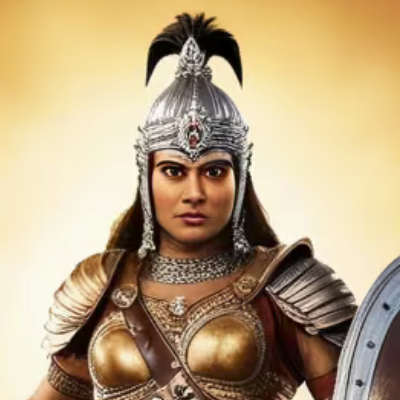
Shikhandi — Prince of Panchala, Reincarnation of Amba, and Instrument of Bhishma's Fall
Shikhandi · Shikhandin · Shikhandini (natal female name) · Drupadaputra · Panchalakumara · Srikandi (Javanese tradition)
Shikhandi was a prince of the Panchala kingdom, the son of King Drupada and his chief queen Prishati, and the brother of Dhrishtadyumna — the supreme commander of the Pandava armies — and of Draupadi, the shared queen of the five Pandava brothers. He was born female, named Shikhandini, and became male through an exchange of sex with a Yaksha named Sthunakarna, an exchange subsequently made permanent by the curse of the god Kubera. In the majority of recensions of the Mahabharata, Shikhandi is identified as the reincarnation of Amba — eldest daughter of the King of Kashi — who had been abducted by Bhishma, rejected by the king she loved, denied the possibility of marriage, and consumed by a single overriding purpose: the destruction of Bhishma. Shikhandi fulfilled that purpose on the tenth day of the Kurukshetra War, riding in Arjuna's chariot as Bhishma refused to fight him and was brought down by Arjuna's arrows. His story spans the Adi Parva, the Udyoga Parva, and the Bhishma Parva of the Mahabharata, with his death recorded in the Sauptika Parva.
✦ The Name
The name Shikhandi derives from the Sanskrit shikhanda, meaning a peacock's crest or tuft of hair worn at the top of the head — a reference to a distinctive feature of appearance or, in another reading, a name connected with the peacock as a symbol of beauty and martial display. The feminine form Shikhandini is its regular grammatical feminine derivative. The name appears in the Mahabharata primarily in its masculine form Shikhandi or the Sanskritic variant Shikhandin, the latter being the form most commonly cited in scholarly transliterations. In the Javanese wayang tradition, the figure is known as Srikandi and undergoes a reversal of the sex-change narrative — born male and changed to female — and becomes a wife of Arjuna; this represents a distinct regional tradition rather than a variant of the Sanskrit primary text.
✦ Lineage
- Father: Drupada — King of Southern Panchala, also known as Yajnasena, son of King Prishata. Drupada was a childhood friend of Dronacharya and later his bitter enemy after being humiliated at Drona's hands. Drupada performed austerities to Shiva specifically seeking a son who would become his heir and avenge the loss of half his kingdom; Shiva granted him a boon that a daughter would be born to him who would in due course become a son. He was killed by Drona on the fifteenth day of the Kurukshetra War.
- Mother: Prishati — chief queen of Drupada.
- Brothers: Dhrishtadyumna — born from the sacrificial yajna fire, the supreme commander of the Pandava armies and the man ordained to kill Drona, which he accomplished on the fifteenth day. Satyajit — who died as Yudhishthira's personal guardian on the twelfth day. Uttamaujas and Yudhamanyu — the paired guardians of Arjuna's chariot wheels throughout the war. Several other brothers named across recensions including Vrika, Kumar, Panchalya, Suratha, Shatrunjaya, and Janmejaya.
- Sister: Draupadi — born Krishnaa, who emerged from the same sacrificial yajna fire as Dhrishtadyumna, and who became the shared wife of the five Pandava brothers.
- Spouse: An unnamed princess, daughter of Hiranyavarman, King of Dasharna — a marriage contracted by Drupada while Shikhandini was still living as a girl but raised as a prince.
- Son: Kshatradeva — mentioned in the primary text; on the twelfth day of the war he was wounded by Lakshmana Kumara, the son of Duryodhana.
✦ The Previous Life: Amba of Kashi
The foundational episode of Shikhandi's narrative is the story of Amba in a prior life, narrated in the Adi Parva (Sambhava Parva, Section 67) and elaborated in full in the Ambopakhyana chapter of the Udyoga Parva, where Bhishma recounts the history to Duryodhana in explanation of why he would not fight Shikhandi. Amba was the eldest daughter of the King of Kashi. At the swayamvara of the three princesses of Kashi — Amba, Ambika, and Ambalika — Bhishma arrived uninvited, defeated all the assembled kings in combat, and carried the three sisters away by force to Hastinapur as prospective brides for his younger half-brother Vichitravirya, the reigning King of Hastinapur.
Before the wedding ceremony could proceed, Amba disclosed to Bhishma that she had already given her heart to Salva, the King of Saubala, and that she had expected to choose him at the swayamvara. Bhishma — adhering to the principle that a woman who loves another should not be forced into marriage — released her and had her escorted with honour to Salva's kingdom. Salva rejected her. His reasoning was that she had been won by Bhishma, carried off in his chariot before all the assembled kings, and was therefore by the customs of Kshatriya dharma no longer eligible to be his wife. Amba returned to Bhishma and demanded that he marry her himself, since he had caused her ruin. Bhishma refused, citing his vow of perpetual celibacy. Neither course of redress was available to her.
Amba sought military champions willing to fight Bhishma on her behalf. None were willing; Bhishma was universally acknowledged as invincible. She eventually approached Parashurama — the great sage-warrior who was Bhishma's own martial preceptor — who agreed to compel Bhishma to marry her. Parashurama fought Bhishma for twenty-three days on the field of Kurukshetra in what became one of the most celebrated duels in the tradition, deploying the full range of celestial weapons both possessed. The duel ended without a decisive victor — Parashurama could not overcome his own student — and he informed Amba that he was unable to move Bhishma's resolve.
Amba then undertook twelve years of severe austerities. Shiva appeared and granted her a boon. She asked for Bhishma's death. Shiva told her that she would be reborn as a girl who would later become a man, and in that form would become a Maharathi capable of bringing about Bhishma's end. Overjoyed and finally at peace with the certainty of eventual vengeance, Amba built a funeral pyre, prayed for the destruction of Bhishma, and self-immolated. She was reborn as Shikhandini, the daughter of King Drupada of Panchala.
A variant account associated with C. Rajagopalachari's retelling records that Amba obtained from the god Kartikeya a garland of ever-blooming blue lotuses with the property that whoever wore it would become the cause of Bhishma's death. Unable to find any warrior willing to wear it, she hung the garland on the gates of King Drupada's palace and departed. The garland remained there unaccepted by all. In some versions it is eventually found and worn by Shikhandini herself. This variant circulates in secondary retellings but is not the primary text account preserved in the Udyoga Parva.
✦ Birth, Upbringing, and the Sex Exchange with the Yaksha
Shiva's boon to Amba had specified a girl who would become a man; Shiva's grant to Drupada in response to his austerities likewise specified that a daughter would be born to him who would in due course become a son. The two boons converged in the birth of Shikhandini. Drupada, receiving divine confirmation that his child would eventually become male, raised Shikhandini entirely as a boy — in male dress, with male education, and with male training in weaponry. The natal female identity of the child was kept a secret from the wider world.
When Shikhandini reached the age of marriage, Drupada arranged a formal wedding with the daughter of Hiranyavarman, the King of Dasharna. Shikhandini's wife soon became aware that her husband was not biologically male and informed her father Hiranyavarman. The king, outraged, sent envoys to confirm the matter and began preparations for war with Panchala. Drupada maintained to all that Shikhandini was a man. Shikhandini, distressed by the crisis her presence had caused, left the palace and went into a forest said to be inhabited by the Yaksha Sthunakarna — a forest that other humans avoided. Sthunakarna encountered Shikhandini performing austerities and, moved by her story, offered to exchange his sex with her for a defined period of time. Shikhandini agreed; the exchange was made; Shikhandini returned to Drupada as a man, and Drupada invited Hiranyavarman's envoys — women — to verify Shikhandi's manhood. They confirmed it. The crisis was resolved and the two kingdoms were at peace.
The exchange was intended to be temporary, but it became permanent through a divine intervention. When the god Kubera — lord of the Yakshas — visited Sthunakarna's domain, the Yaksha was in female form and failed to greet Kubera appropriately, either out of distraction or indifference. Kubera, angered, cursed Sthunakarna: the sex exchange that had been made would be permanent, and the Yaksha would remain female until the death of Shikhandi, after which the Yaksha's original male form would be restored. From this point forward Shikhandi was permanently and biologically male.
✦ Pre-War Standing and Bhishma's Assessment
Before the war, when the Pandavas were assembling their forces, Bhima proposed that Shikhandi be made the supreme commander of the Pandava army on the grounds that he was born specifically to kill Bhishma. Arjuna and Krishna preferred Dhrishtadyumna instead, and Dhrishtadyumna received the command. Shikhandi was given command of one of the seven akshauhini divisions of the Pandava army. In the Rathatiratha-sankhyana of the Udyoga Parva, Bhishma's formal pre-war assessment of the Pandava warriors, Bhishma spoke about Shikhandi at length — identifying him as a figure he would not fight, not because Shikhandi lacked martial capacity, but because Shikhandi had been born female. Bhishma's vow, which he had stated explicitly, was that he would not shoot at a woman, anyone who had been a woman, anyone who bore a woman's name, or anyone who appeared to be a woman. Shikhandi, whatever his present biology, fell within the scope of that vow in Bhishma's judgement.
✦ The War Before the Tenth Day
Shikhandi engaged in active fighting across the first nine days of the war. On the first day he confronted Ashwatthama — the son of Drona — and the two wounded each other several times before withdrawing. On the seventh day he confronted Ashwatthama again and succeeded in wounding him on the forehead; an enraged Ashwatthama retaliated by destroying Shikhandi's chariot and wounding him badly. Satyaki intervened to rescue Shikhandi from the engagement. These early-war encounters establish that Shikhandi was a genuine Maharathi who participated actively in the fighting rather than being preserved only for the one defining moment of the tenth day.
On the night of the ninth day — after nine days of enormous Pandava casualties and without a decisive break in the stalemate — Yudhishthira led the Pandavas and Krishna to visit Bhishma on the battlefield. Yudhishthira asked Bhishma directly how he could be killed, so that the devastating loss of Kshatriya lives might be brought to an end. Bhishma — in a passage of singular importance — told them plainly that he could not be conquered while he bore arms, but that he would not fight Shikhandi, and that if Arjuna placed Shikhandi before him and attacked from behind that shield, Bhishma would be unable to defend himself and would fall. The Bhishma Parva records this conversation and makes clear that Bhishma was in effect giving the Pandavas the means of his own defeat.
✦ The Tenth Day: The Fall of Bhishma
On the tenth day, Shikhandi rode in the chariot of Arjuna — positioned in the front of the Pandava forces. The Kaurava army sent warriors to intercept the pair and prevent them from reaching Bhishma, but the combined assault of the Pandava forces cleared a path. Bhishma, seeing Shikhandi approaching, lowered his weapons and ceased to defend himself in accordance with his vow. He declared openly before the assembled armies that he would not release his arrows against one who had been born a woman. With Bhishma's weapons lowered, Arjuna — positioned behind Shikhandi — attacked Bhishma with a sustained volley of hundreds of arrows. Shikhandi also shot at Bhishma; the primary text notes, through Bhishma's own declaration before his death, that it was Arjuna's arrows that had truly brought him down, not Shikhandi's — a statement that acknowledges the deliberate construction of the situation.
Bhishma fell from his chariot, his body so thickly pierced with arrows that when he lay on the earth the shafts prevented him from touching the ground — forming the celebrated bed of arrows on which he rested until Uttarayana, the auspicious northward movement of the sun, at which point he chose to depart the body. The Mahabharata records that Bhishma himself, as he lay on this bed, identified it as Arjuna's doing and acknowledged Shikhandi's role as the instrumentality through which the situation had been made possible. With Bhishma's fall, Amba's purpose across two lifetimes was fulfilled.
✦ After the Tenth Day
Shikhandi continued to fight actively through the remaining days of the war. On the twelfth day his son Kshatradeva was injured by Lakshmana Kumara, Duryodhana's son. On the night of the fourteenth day, Shikhandi was defeated by Kripacharya in a night engagement. On the sixteenth day he was wounded again and fainted when Kritavarman's arrow pierced his armour. On the seventeenth day, following the death of Shalya — the commander of the Kaurava armies on that day — Shikhandi contributed significantly to the destruction of the retreating Kaurava forces. The text records that he caused great devastation among them in this phase of fighting.
✦ Death in Ashwatthama's Night Raid
On the night following the war's final day, Ashwatthama, Kripacharya, and Kritavarma entered the sleeping Pandava camp. Ashwatthama — driven by grief for his father Drona and by the oath of revenge he had sworn to the dying Duryodhana — moved through the camp killing its occupants. Shikhandi was among those killed. The Wikipedia article on Shikhandi, drawing on the Sauptika Parva account, records that Shikhandi was dazed and mortally wounded in a sword fight with Ashwatthama during the raid and subsequently succumbed to his wounds. Yudhishthira arranged the cremation of Shikhandi together with the other fallen warriors of both sides after the raid concluded.
✦ Textual Variants
Several significant textual variants surround Shikhandi's story. The primary text of the Udyoga Parva presents the birth of Shikhandini as the result of Drupada's conscious austerities to Shiva, who granted the boon that a daughter would become a son. A second variant held in some recensions presents the discovery of the garland of blue lotuses as the mechanism by which Shikhandini comes to learn of her destiny. The Bharatapedia article notes that in early versions of the Mahabharata, Shikhandi is Amba reborn but remains female — it is specifically in a culture such as Panchala that does not discriminate by gender in military training that she is able to fulfil her purpose without needing the sex exchange; the sex change narrative is a later, dominant development.
On the question of Bhishma's refusal: the Mahabharata preserves the statement of Bhishma's vow in terms of one who was a woman, had been a woman, or bore a woman's name. This has been understood differently across commentarial traditions. In some readings, Bhishma refused to fight Shikhandi because he recognised Amba's soul in him — a theological recognition of the prior identity. In others, Bhishma's vow was entirely about the natal sex of his opponent, independent of any recognition of Amba. The primary text does not resolve this distinction definitively. Bhishma's own dying declaration that it was Arjuna's arrows, not Shikhandi's, that truly felled him — recorded in the Bhishma Parva — further complicates any single reading of Shikhandi's instrumental role: the text simultaneously presents him as the essential cause of Bhishma's death and qualifies the direct military credit.
✦ Theological and Narrative Significance
Shikhandi's story is one of the Mahabharata's most sustained engagements with the themes of karma, rebirth, and the persistence of unfulfilled purpose across lifetimes. Amba's grievance against Bhishma was not merely personal: Bhishma had acted in conformity with his role as the protector of the Kuru throne, yet his action destroyed a woman's life without remedy. The tradition does not present Bhishma's act as villainous — his conduct in releasing Amba when her prior attachment was disclosed is explicitly presented as honourable — yet the consequence for Amba was total. The tradition's resolution to this moral knot is that it required two lifetimes to complete: Amba obtained the certainty of the outcome in one life and the means of execution in the next. Shikhandi, as a human being of his own present, is simultaneously himself and the vehicle of another's unfinished karmic account.
The sex-change element of Shikhandi's story has attracted sustained scholarly and theological attention. The primary text treats Shikhandi consistently as male after the Yaksha exchange and presents his biological maleness as definitively established by Kubera's curse. Bhishma's refusal to fight him — rooted in the natal female identity — raises complex questions about the relationship between identity, biology, and social recognition that the text presents without simplification or resolution, leaving both the dharmic complexity and the human tragedy intact.
✦ Connection to the Wider Genealogy
Shikhandi stood within the Panchala royal family as a sibling of Dhrishtadyumna and Draupadi, making him a brother-in-law of all five Pandava brothers. Through Draupadi's sons — the Upapandavas — he was the maternal uncle of five young warriors who also died in Ashwatthama's night raid. His son Kshatradeva continues the Shikhandini-Shikhandi line into the post-war generation. The death of Sthunakarna the Yaksha's female form at Shikhandi's death — when Kubera's curse was scheduled to lift and the Yaksha's original male form would be restored — provides a narrative closure to the supernatural dimension of the sex exchange, tying the resolution of the Yaksha's fate directly to the termination of Shikhandi's life and purpose.
✦ References
Primary Sources
- Mahabharata, Adi Parva, Sambhava Parva, Section 67 — Narrates the events of the svayamvara of the princesses of Kashi, Bhishma's abduction of Amba, Ambika, and Ambalika, and Amba's disclosure of her love for Salva; the foundational episode of the Amba narrative that underlies the Shikhandi story.
- Mahabharata, Udyoga Parva, Ambopakhyana chapter (Ambopakhyana Parva) — The principal primary source for the complete story of Amba: her rejection by Salva, her appeal to Bhishma, the intervention and failure of Parashurama, her twelve years of penance, Shiva's boon, her self-immolation, and her rebirth as Shikhandini; narrated by Bhishma to Duryodhana in explanation of why he would refuse to fight Shikhandi.
- Mahabharata, Udyoga Parva, Rathatiratha-sankhyana — Contains Bhishma's formal pre-war assessment of warriors in which he identifies Shikhandi as one he will not fight, explains his vow regarding those born female, and establishes the strategic significance of Shikhandi's presence for the Pandava cause.
- Mahabharata, Bhishma Parva — Bhishma Parva, Chapters covering the Yaksha episode and the Tenth Day — Records the story of the Yaksha Sthunakarna's sex exchange with Shikhandini, Kubera's curse making the exchange permanent, Bhishma's disclosure on the ninth night of how he could be killed, and the events of the tenth day including Shikhandi's positioning before Bhishma, Bhishma's lowering of his weapons, Arjuna's arrow volley, and Bhishma's fall.
- Mahabharata, Bhishma Parva — Bhishma's death declaration — Records Bhishma's statement before dying that it was Arjuna's arrows, not Shikhandi's, that had truly brought him down, qualifying the nature of Shikhandi's instrumental role.
- Mahabharata, Drona Parva and Karna Parva — Records Shikhandi's continued fighting through the later days of the war: engagements with Ashwatthama on days one and seven, defeat by Kripacharya on the fourteenth night, wounding by Kritavarman on the sixteenth day, and devastation of the retreating Kaurava army on the seventeenth day.
- Mahabharata, Sauptika Parva — Records Shikhandi's mortal wounding during Ashwatthama's night raid on the Pandava camp following the war's formal conclusion.
- Mahabharata, Striparva — Records Yudhishthira's arrangement of Shikhandi's cremation together with the other fallen warriors.
Modern and Secondary Reference Works
- Wikipedia — Shikhandi article (en.wikipedia.org/wiki/Shikhandi) — Provides a comprehensive summary of the character's narrative arc from birth through death, including day-by-day battle record, the Kubera curse, Bhishma's vow, and the Javanese wayang variant; well-sourced with primary text chapter citations.
- Wikipedia — Amba (Mahabharata) article (en.wikipedia.org/wiki/Amba_(Mahabharata)) — Provides the full narrative of Amba's prior life, her rejection by Salva, her failed appeal to Parashurama, and her rebirth as Shikhandi; confirms the location of the Ambopakhyana in the Udyoga Parva and cites the Adi Parva section for the svayamvara episode.
- Vyasa Mahabharata Online Encyclopedia — Shikhandin entry (vyasaonline.com/encyclopedia/shikhandi) — Confirms the story of the sex exchange, Kubera's curse, Bhishma's recognition of Shikhandi as Amba reborn, the tenth-day events, and the killing of Shikhandi by Ashwatthama in the night raid; notes that Kshatradeva was Shikhandi's son.
- Bharatpedia — Shikhandi article (en.bharatpedia.org/wiki/Shikhandi) — Records the variant in early Mahabharata recensions where Shikhandi is Amba reborn but remains female, relying on Panchala's non-discriminatory military culture; provides comparative recension context for the sex-change narrative.
- Wisdomlib — Puranic Encyclopedia, Story of Shikhandin (wisdomlib.org/hinduism/compilation/puranic-encyclopaedia/d/doc241956.html) — Provides a compiled reference entry for Shikhandi drawing on multiple Parva sources; confirms the primary text details of the Sthunakarna exchange and Bhishma's death.
- Wisdomlib — Mahabharata English Summary, Bhishma Parva Chapters 6 and 10 — Chapter 6 confirms Bhishma's assessment of Shikhandi at the war's outset; Chapter 10 provides the summary of the tenth day's events including Bhishma's fall at Shikhandi and Arjuna's combined assault.
- Rajagopalachari, C. — Mahabharata, Bharatiya Vidya Bhavan, 1951, p. 22 — The secondary source for the garland of blue lotuses variant in which Amba obtains the garland from Kartikeya and hangs it on Drupada's palace gate; this version circulates widely in retellings but is distinct from the primary Udyoga Parva account.