
About
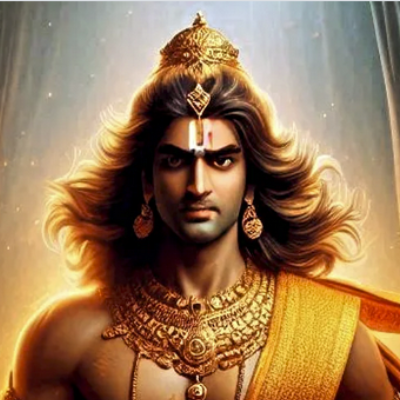
Dhrishtadyumna — Prince of Panchala, Commander of the Pandava Forces, and Slayer of Drona
Dhrishtadyumna · Draupada · Prishatasuta · Parshata · Yajnasambhava · Agniputra
Dhrishtadyumna was a prince of Southern Panchala, son of King Drupada and twin brother of Draupadi, born not from a woman's womb but as an ayonija — a being of non-womb origin — emerging fully grown and armed from the sacred sacrificial fire of the Putrakameshti yajna commissioned by Drupada in pursuit of vengeance against the brahmin preceptor Drona. He served as the supreme commander-in-chief of the seven-akshauhini Pandava army throughout all eighteen days of the Kurukshetra War and fulfilled the purpose of his divine birth on the fifteenth day by beheading Drona after the preceptor had laid down his weapons in meditation upon hearing a false report of his son Ashvatthama's death. He was subsequently killed in the night attack on the Pandava camp on the night following the eighteenth day of the war by Drona's son Ashvatthama, who sought vengeance for his father's death. Dhrishtadyumna is one of the central warrior figures of the Mahabharata and is attested principally in the Adi Parva, the Bhishma Parva, the Udyoga Parva, the Drona Parva, and the Sauptika Parva. The Adi Parva's Amshavatara Parva (Chapter 67, Ganguli edition) identifies him as a partial incarnation (amsha) of Agni, the Vedic fire deity.
✦ The Names
The name Dhrishtadyumna is a Sanskrit compound of dhrishta (bold, courageous, confident, or audacious) and dyumna (splendour, glory, or radiance), conventionally translated as "the courageous and splendorous one" or "bold in glory." Wikipedia and the Vyasaonline encyclopaedia confirm this etymology as the standard interpretation. The name encodes simultaneously his martial boldness and his radiant splendour — qualities appropriate to one born from fire.
The patronymic Draupada — meaning "son of Drupada" — is confirmed in the Vyasaonline encyclopaedia and Scribd compilation as an alternative designation. The patronymic Parshata or Prishatasuta — meaning "grandson of Prishata" or "son of the Prishata line" — is the form most frequently used to address him during the Kurukshetra War books of the Mahabharata, reflecting the dynastic prestige of his grandfather Prishata's name. The epithet Yajnasambhava — "born of the yajna" — and the designation Agniputra — "son of Agni" — are both attested in secondary sources and consistent with his birth narrative and divine amsha identification.
✦ Lineage
- Father: Drupada (also called Yajnasena) — king of Southern Panchala, son of Prishata (himself the youngest of Somaka's hundred sons), childhood companion and later sworn enemy of Drona, and the king who commissioned the Putrakameshti yajna from which Dhrishtadyumna and Draupadi were born. Drupada was killed by Drona on the fifteenth day of the Kurukshetra War, the same day his son killed Drona.
- Mother: Addressed throughout the Mahabharata as Prishati — the relational title meaning "daughter-in-law of Prishata" — rather than by a personal name. She was instructed by the sacrificial priests Yaja and Upayaja to consume the sacred oblation at the yajna's conclusion but declined, whereupon the priests poured the offering directly into the fire, producing Dhrishtadyumna and Draupadi without her physical participation. They are therefore ayonija — not born from a womb.
- Twin sister: Draupadi — also called Krishna (for her dark complexion), Panchali, Yajnaseni, and Parshati — born from the same sacrificial fire simultaneously with Dhrishtadyumna. She became the common wife of the five Pandava brothers and is one of the central figures of the Mahabharata.
- Brother: Shikhandi — born female as Shikhandini after Drupada's prayer to Shiva for a child who would bring about Bhishma's death, later transformed into a male and the instrument of Bhishma's fall on the tenth day of the Kurukshetra War. Killed by Ashvatthama in the same night attack that claimed Dhrishtadyumna's life.
- Brother: Satyajit — a son of Drupada rated by Bhishma in the Udyoga Parva as the equal of eight rathas; killed by Drona on the twelfth day of the war.
- Sons: Kshatradharman, Kshatravarman, and Kshatranjaya — all three killed by Drona during the Kurukshetra War; and Dhrishtaketu — killed by Karna during the war. All four sons perished in the conflict. The Mahabharata's account of their deaths is confirmed in the Wikipedia article on Dhrishtadyumna with specific citations to primary passages.
- Divine identity: The Adi Parva's Amshavatara Parva (Sambhava Parva, Chapter 67, Ganguli edition; confirmed from the Sacred-texts.com primary text) states explicitly that Dhrishtadyumna was a portion of Agni — the Vedic fire deity — incarnated in human form. This identification is consistent with his birth from fire and with his role as the instrument of a predetermined cosmic purpose.
✦ Birth from the Sacrificial Fire
The birth of Dhrishtadyumna is narrated in the Adi Parva (Sambhava Parva, Section CLXVII in the Ganguli edition, corresponding to Chapter 167) as the outcome of the Putrakameshti yajna commissioned by Drupada from the brahmin ritual specialists Yaja and Upayaja. The background is Drupada's humiliation at Drona's hands: after being captured and brought bound before Drona as the teacher's fee demanded of the Pandavas, Drupada had lost the northern half of Panchala and retired to Kampilya consumed by a desire for vengeance that ordinary military means could not achieve, since he recognised he could not match Drona's celestial weapons directly.
At the conclusion of the yajna, when the priests instructed Prishati to consume the oblation, she declined. Yaja poured the offering into the sacrificial fire. From that fire emerged Dhrishtadyumna — fully grown, bearing a bow and sword, wearing armour and a crown — accompanied by a disembodied divine voice that announced his destiny to kill Drona and dispel the fears of the Panchalas. Draupadi emerged immediately afterwards from the same fire. Both children are explicitly described in the primary text as ayonija.
A further passage in the Adi Parva (Section CLXVII, confirmed from Sacred-texts.com) records that the Pandavas, upon hearing of these extraordinary births, specifically asked their brahmin informant how Drupada's son had subsequently learned all weapons from the great bowman Drona — establishing in the primary text itself that Dhrishtadyumna's tutelage under Drona was a known and remarkable fact that required explanation.
✦ Training Under Drona
One of the most morally complex facts of Dhrishtadyumna's biography is that Drona — fully aware of the prophecy of his own death at this prince's hands — nonetheless accepted Dhrishtadyumna as a student and taught him the complete science of weapons, including advanced celestial weapons (astras). The Adi Parva and the Vyasaonline encyclopaedia both confirm this fact. Drona is described as imparting all his military knowledge generously despite the knowledge of what the student was destined to do. The Scribd compilation on Duryodhana's diplomacy notes that at the opening of the Bhishma Parva (corresponding to the Bhagavad Gita's first chapter), Duryodhana deliberately pointed out to Drona that the Pandava forces were led by Dhrishtadyumna, Drona's own student, placing the preceptor in a position of acute moral discomfort that was itself a calculated political move.
✦ The Swayamvara of Draupadi — Discovering the Pandavas
At the swayamvara of Draupadi — the assembly at which Arjuna, disguised as a brahmin, successfully strung the great bow and struck the revolving fish-eye target — Dhrishtadyumna secretly followed the successful suitor and his sister as they departed the arena. By observing them carefully, he was able to identify the disguised Arjuna as a Pandava prince and reported this discovery to his father Drupada. This act of intelligence-gathering was the means by which Drupada first confirmed that the Pandavas, long believed dead, were alive — and through which the foundational political alliance of the Mahabharata's war generation, the Panchala-Pandava marriage alliance, was formally established.
✦ Appointment as Commander-in-Chief
The Udyoga Parva records the formal appointment of Dhrishtadyumna as the Senapati — the commander-in-chief — of the entire seven-akshauhini Pandava army. The appointment was made on the advice of Krishna and Arjuna, and Yudhishthira consecrated him with sacred water. This appointment placed him in supreme command of the combined Pandava military force for all eighteen days of the war — a position he held from beginning to end without being superseded. The Bhagavad Gita's opening chapter (Bhishma Parva, Chapter 1, verse 17) names Dhrishtadyumna among the distinguished warriors blowing their conches before the battle, specifically naming his conch as Krishnapingala, confirming his status as a figure of the first rank at the war's commencement.
✦ Role in the Kurukshetra War
Throughout the eighteen days of the war Dhrishtadyumna commanded the Pandava forces in the capacity of Senapati, deploying and adjusting military formations in response to the Kaurava vyuhas arranged by Bhishma and later by Drona. He participated in combat across multiple days of the war. On the first day he engaged Drona directly in single combat. He fought against several major Kaurava commanders on successive days, engaging Kripa, Duryodhana, and Ashvatthama at various points across the middle days of the war. He witnessed the deaths of his father Drupada and of Virata of Matsya on the fifteenth day at Drona's hands, which intensified his determination to fulfil the purpose of his birth.
✦ The Slaying of Drona
The killing of Drona by Dhrishtadyumna on the fifteenth day of the Kurukshetra War is one of the most morally contested acts in the Mahabharata. The Drona Parva (in the range of Sections 190–193 in the Ganguli edition) narrates the sequence in detail. The stratagem was devised by Krishna: Bhima killed an elephant named Ashvatthama and the Pandavas spread the report that Ashvatthama — Drona's beloved son — was dead. Drona, unable to believe the report unless it came from Yudhishthira, the most truthful of men, turned to the king. Yudhishthira confirmed that Ashvatthama had died — speaking clearly of the elephant but allowing the ambiguity to stand. Drona, overcome with grief, descended from his chariot, laid down his weapons, and sat in meditation.
Dhrishtadyumna seized this moment. Despite the protests of Arjuna, who argued that a warrior in meditation could not be attacked, Dhrishtadyumna stepped forward and beheaded Drona with his sword. The act is described in the primary text as the fulfilment of the prophecy announced at Dhrishtadyumna's birth. The Mahabharata presents the killing as a violation of the rules of engagement — Ashvatthama specifically condemns Dhrishtadyumna in the Drona Parva as "an injurer of his own preceptor" — and yet also as a destined and necessary event within the cosmic framework of the war. Krishna's justification of the act, citing Drona's own participation in the killing of the unarmed Abhimanyu, is the epic's own response to the moral charge.
✦ Death in the Night Attack — Sauptika Parva
The Sauptika Parva (Book 10 of the Mahabharata, principally Chapters 7–8 in the Ganguli edition) narrates the events of the night following the eighteenth day. Ashvatthama, Kripa, and Kritavarma — the three surviving Kaurava warriors — approached the Pandava camp under cover of darkness after the main Pandavas had retired to rest elsewhere. Ashvatthama entered the camp alone, his heart consumed by grief and rage at his father's killing.
He went first to the chamber of Dhrishtadyumna — the slayer of his father — and woke him with a kick. Dhrishtadyumna, roused from sleep, attempted to resist with his bare hands and asked that he be allowed to die with a weapon in hand, as befitted a warrior. Ashvatthama refused this request. He killed Dhrishtadyumna by kicking and trampling him until his internal organs were crushed, denying him the warrior's death he sought. The Sutradhar and Sacred-texts primary text summaries both confirm this method of killing and Dhrishtadyumna's dying request. The guard women present lamented the death of the Pandava commander. Ashvatthama then proceeded to kill Shikhandi, Uttamaujas, Yudhamanyu, the five sons of Draupadi, and thousands of other sleeping warriors in the same night.
✦ Theological and Narrative Significance
Dhrishtadyumna's narrative arc is one of the most precisely structured in the Mahabharata: born for a single destined purpose, trained by the very man he was born to kill, fulfilling that purpose in morally contested circumstances, and dying immediately after in a manner that mirrors the moral ambiguity of the killing he performed. He denied Drona the opportunity to die as a warrior in meditation — killing an unarmed man — and in turn was denied the opportunity to die as a warrior with a weapon in hand. The symmetry is exact and has been noted in scholarly discussions of the epic's architecture of karma and consequence.
His identification as an amsha of Agni — confirmed in the Adi Parva's Amshavatara Parva — gives his fiery birth a theological dimension beyond the narrative: he is not merely a prince born of a fire sacrifice but a partial manifestation of the divine fire itself, incarnated to serve as the instrument of a cosmic realignment. The fire that produced him consumes Drona's life through him, and the cycle is complete.
✦ Connection to the Wider Genealogy
Dhrishtadyumna stands at the culminating position of the Panchala dynastic line in this genealogical reference series. Upward through his father Drupada, grandfather Prishata, and great-grandfather Somaka, the line connects to the ancient Puru-Bharata dynastic trunk through Ajamidha and the Panchala lineage reaching back to Mudgala and Divodasa. Through his twin sister Draupadi's marriage to the five Pandavas, he is the brother-in-law of the Pandava heroes and thereby connected to the entire Kuru-Pandava dynastic tree. His sons — Kshatradharman, Kshatravarman, Kshatranjaya, and Dhrishtaketu — all died in the war, making Dhrishtadyumna's line effectively extinct at the conclusion of the Kurukshetra conflict. The Vishnu Purana (Book IV, Chapter XIX) names Dhrishtaketu as the last recorded figure in the Panchala dynastic succession, confirming that the genealogical line of this reference series terminates with Dhrishtadyumna's generation.
✦ References
Primary Sources
- Mahabharata, Adi Parva, Sambhava Parva, Chapter 67 (Ganguli edition): The Amshavatara Parva passage confirming Dhrishtadyumna as a partial incarnation (amsha) of Agni, confirmed from the Sacred-texts.com primary text.
- Mahabharata, Adi Parva, Sambhava Parva, Sections CLXVII–CLXVIII (Ganguli edition): The birth narrative of Dhrishtadyumna from the sacrificial fire, his emergence with armour, bow and sword, the divine proclamation of his destiny, and the passage in which the Pandavas ask how Drupada's son learned weapons from Drona.
- Mahabharata, Bhishma Parva, Chapter 1, verse 17 (Bhagavad Gita opening): Names Dhrishtadyumna among the warriors at the opening of the war and identifies his conch as Krishnapingala.
- Mahabharata, Udyoga Parva: The formal appointment of Dhrishtadyumna as Senapati of the Pandava army on the advice of Krishna and Arjuna, consecrated by Yudhishthira.
- Mahabharata, Drona Parva, Sections 190–193 (Ganguli edition): The full narrative of the stratagem of Ashvatthama's false death, Yudhishthira's morally ambiguous confirmation, Drona's laying down of arms and meditation, and Dhrishtadyumna's beheading of the preceptor.
- Mahabharata, Sauptika Parva, Chapters 7–8 (Ganguli edition; Sacred-texts.com): The night attack on the Pandava camp, Ashvatthama's entry into Dhrishtadyumna's chamber, the killing by kicking and trampling, Dhrishtadyumna's dying request for a warrior's death, and the subsequent killing of Shikhandi and the Upapandavas.
- Vishnu Purana, Book IV, Chapter XIX: Names Dhrishtaketu as the last figure in the Panchala dynastic succession following Dhrishtadyumna, establishing the terminal position of Dhrishtadyumna's generation in the lineage tree.
Secondary and Reference Sources
- Wikipedia, "Dhrishtadyumna": Confirms name etymology, ayonija birth, Agni amsha identification, sons and their fates, Senapati appointment, Drona killing, and Sauptika Parva death with specific primary source citations.
- Vyasaonline.com, "Dhrishtadyumna": Confirms the training under Drona despite the prophecy, the swayamvara episode, and the killing of Drona with the relevant primary text framing.
- Sacred-texts.com, Mahabharata, Sauptika Parva, Section 8 (Ganguli translation): The canonical English translation of the aftermath of the night attack, confirming the killing of Dhrishtadyumna and the subsequent events of that night.
- Wisdomlib.org, "Dhrishtadyumna: 12 definitions": Aggregates primary source references across the Mahabharata for all major episodes of Dhrishtadyumna's narrative.
- Wikipedia, "List of avatars in the Mahabharata": Confirms the Critical Edition's Amshavatara Parva identification of Dhrishtadyumna as a partial incarnation of Agni and distinguishes this from other amsha identifications in the same passage.
- Mysutradhar.com, "Sauptika Parva 1": Provides the narrative detail of Ashvatthama kicking Dhrishtadyumna repeatedly until his internal organs were crushed and the dying request for a warrior's death, drawn from the primary text.
- Mani, Vettam. Puranic Encyclopaedia. Motilal Banarsidass, 1975: Provides a comprehensive entry on Dhrishtadyumna covering all major narrative episodes and their primary source chapter references.