
About
Kekaya — Suta Chieftain and Father of Kichaka
Kekaya · Suta of the Matsya Court · Father of Kichaka · Father of the Upakichakas
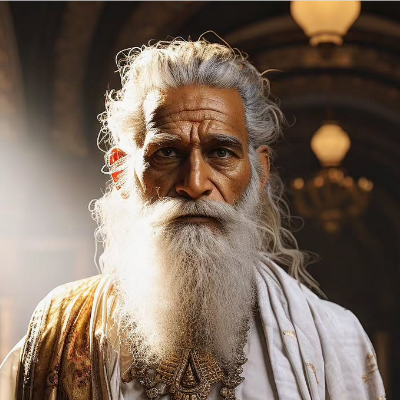
Kekaya is a figure from the Mahabharata identified as the father of Kichaka and the Upakichakas. Kichaka was the commander-in-chief of the armies of King Virata, ruler of the Matsya kingdom, and was celebrated in the epic for his extraordinary physical power and his dominance over the Matsya court. The Upakichakas were the collective brothers of Kichaka, who served alongside him in Virata's kingdom. Kekaya himself belonged to the Suta community — a class traditionally associated with chariot-driving, bardic recitation, and royal service — and his name connects him to the Kekaya country, a well-known northwestern kingdom of ancient Bharatavarsha. His presence in the Mahabharata is limited to his genealogical function as the progenitor of these sons. No episode, speech, or personal narrative is attached to him in any surviving primary source.
✦ The Name
The name Kekaya derives from the ancient kingdom of Kekaya, also rendered in Sanskrit sources as Kaikeya, situated in the northwestern region of the Bharatavarsha, generally identified with territories in the area of modern Punjab and the Jhelum river basin. In the broader epic and Puranic literature, the Kekayas are a well-attested people and royal lineage — their princesses appear as queens of major dynasties, and their warriors participate in the Kurukshetra war. The use of the regional name Kekaya as a personal identifier for this Suta figure likely indicates his origin from or association with that country, functioning as a patronymic or regional epithet rather than a birth name. The Suta designation identifies his community: in ancient Indian social classification, Sutas occupied a distinct hereditary role as charioteers and bards attached to royal courts, and were counted among the mixed-origin classes in the dharmashastra literature.
✦ Lineage
- Community: Suta — the hereditary charioteer-herald caste, associated with royal military and bardic service across the courts of ancient Bharatavarsha
- Regional affiliation: Kekaya — a powerful northwestern kingdom of ancient Bharatavarsha, also known as Kaikeya, frequently mentioned in both the Mahabharata and the Ramayana in connection with its royal dynasty and warriors
- Son: Kichaka — commander-in-chief of the armies of King Virata of the Matsya kingdom; renowned throughout the Mahabharata for his immense physical strength and his unchallenged authority within the Matsya court; he was slain by Bhima, the second of the five Pandava brothers and son of the wind-god Vayu and Kunti, during the year in which the Pandavas lived in disguise at Virata's court; his fatal pursuit of Draupadi, the wife of the five Pandavas, precipitated his destruction
- Sons (collectively): The Upakichakas — the brothers of Kichaka, who served the Matsya kingdom alongside him; after Kichaka's death, the Upakichakas attempted to cremate Draupadi alive with his corpse, an act for which Bhima killed them all, extinguishing Kekaya's male line
✦ Textual Base and Its Limitations
The reference to Kekaya in the Mahabharata is confined to the Virata Parva, where he is named solely to establish the parentage of Kichaka. The text identifies Kichaka as the son of Kekaya the Suta when introducing him as the dominant military figure of the Matsya court. No narrative episode, personal characterisation, or independent action is attributed to Kekaya himself at any point in the Mahabharata or in any of the eighteen Mahapuranas or Upapuranas. No Vedic text references this figure. The profile is accordingly brief by necessity, and all substantive material in the tradition concerns his sons rather than himself.
✦ Connection to the Wider Genealogy
Through his son Kichaka, Kekaya stands at the root of one of the central episodes of the Virata Parva. The Pandavas — the five sons of Pandu, namely Yudhishthira, Bhima, Arjuna, Nakula, and Sahadeva — were required by the terms of their defeat at dice to spend thirteen years in exile, the final year incognito. They chose the court of King Virata of the Matsya kingdom as their place of concealment. Kichaka, as the brother-in-law of Virata through his sister Sudeshna, the queen of Virata, wielded effective power over the entire kingdom. His obsession with Draupadi, who was living in the court disguised as a serving woman named Sairandhri, and his assault upon her, led Bhima to kill him in secret. The subsequent killing of the Upakichakas by Bhima removed all of Kekaya's sons from the world. The Kekaya country from which this figure originated was itself a kingdom of considerable standing in the epic period, with its own royal dynasty, and its name as carried by this Suta father distinguishes him within the genealogical record of the Matsya court.
✦ References
- Mahabharata, Virata Parva (Book 4), chapters 13–23: Primary and sole direct source for Kekaya as father of Kichaka and the Upakichakas; narrates Kichaka's dominance at Virata's court, his pursuit of Draupadi, his death at Bhima's hands, and the subsequent killing of the Upakichakas.
- Vettam Mani, Puranic Encyclopaedia (1975): Entry on Kichaka references his father Kekaya the Suta; provides secondary synthesis of Mahabharata material without contributing independent primary source detail beyond what the epic itself states.
- Adi Parva, Mahabharata (Book 1): Background context on the Suta community and the social classification of mixed-origin classes in the epic world; does not mention Kekaya directly but supplies the social framework within which he is identified.