
About
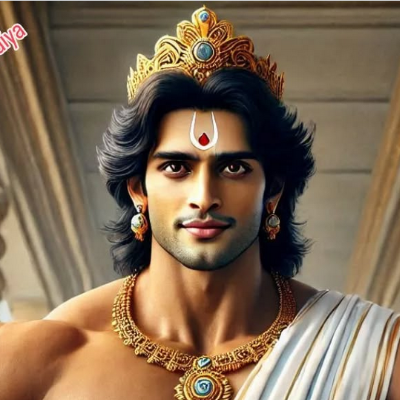
Balarama — The Plough-Bearer, Elder Brother of Krishna, and Avatara of Adi Shesha
Balarama · Baladeva · Balabhadra · Rama · Rohini · Rohineya · Sankarshana · Haladhara · Halayudha · Langali · Musali · Revatipati · Nishathapati · Sita · Acyuta · Ananta · Pradyumna · Gada
Balarama is one of the most significant figures of the Puranic and epic tradition — the elder brother of Krishna, who is himself the eighth avatara of Vishnu and one of the supreme deities of the Hindu tradition. Balarama is identified across a range of primary texts as an avatara or direct manifestation of Adi Shesha — the great primordial serpent upon whose coils Vishnu reclines in his cosmic form between cycles of creation — and in some traditions is simultaneously counted as an avatara of Vishnu himself, making him one of the few figures in the Puranic canon whose divine identity is debated across sectarian lines. He is the son of Vasudeva — a Yadava chief and member of the Vrishni clan descended from the ancient lunar lineage of kings — and of Rohini, the first wife of Vasudeva. His birth involves one of the most celebrated miraculous episodes in the Bhagavata Purana: the transfer of his embryo from the womb of Devaki, the second wife of Vasudeva and the primary mother of Krishna, to the womb of Rohini, accomplished through the divine agency of Yogamaya — the goddess of divine illusion acting at Vishnu's command. Balarama's life is narrated at length across the Bhagavata Purana, the Harivamsa, the Mahabharata, the Vishnu Purana, and the Brahma Purana, among other texts. He is the wielder of the plough — his primary weapon — and the mace, and is celebrated for his immense physical strength, his fierce and occasionally intemperate nature, his deep loyalty to Krishna, and his role as a teacher of the mace to both Duryodhana of the Kauravas and Bhima of the Pandavas. His consort is Revati, the daughter of the ancient king Raivata Kakudmi, and the circumstances of their marriage involve a remarkable narrative of temporal displacement. Balarama does not participate in the Kurukshetra war as a combatant, instead undertaking a pilgrimage along the sacred Sarasvati river, and his death at the end of the Dvapara Yuga takes the form of a great white serpent departing from his body — an event that confirms, in the symbolic language of the Puranic tradition, his identification with Adi Shesha.
✦ The Name
Balarama is most commonly understood as a compound of bala meaning strength or power and Rama — a name whose precise meaning in this compound is interpreted variously as one who is pleasing or delightful, or as a name in its own right shared with the seventh avatara of Vishnu, Rama son of Dasharatha. The compound thus denotes one who is mighty and pleasing, or the powerful Rama, distinguishing him from the Rama of the Ramayana while associating both figures with the same divine name. Baladeva compounds bala with deva meaning deity or divine being, yielding the powerful deity or the deity of strength, emphasising his divine status rather than his relationship to Krishna.
Balabhadra compounds bala with bhadra meaning auspicious or noble, yielding the auspicious one of great strength or the noble and powerful one. This name is particularly prominent in the Jagannatha tradition of Puri in Odisha, where Balabhadra is venerated alongside Jagannatha — identified with Krishna — and the goddess Subhadra as one of the three primary deities of one of the most celebrated pilgrimage temples in the Hindu tradition. Rohineya and Rohini as epithets derive from his mother Rohini, meaning the son of Rohini, and are used to identify him through his maternal lineage. Sankarshana is among his most theologically significant names — derived from a root meaning to draw together, to pull, or to attract — and refers to the miraculous drawing of his embryo from Devaki's womb to Rohini's womb, which is the defining event of his birth. Sankarshana is also one of the four Vyuha forms of Vishnu in the Pancharatra theological system — the four emanations of the supreme Vishnu — making this name the point of connection between Balarama's narrative identity and his position in Vaishnava systematic theology.
Haladhara and Halayudha both identify him through his primary weapon — hala meaning plough and dhara meaning bearer, ayudha meaning weapon — yielding the plough-bearer and the one whose weapon is the plough. Langali similarly derives from langala, another word for plough. Musali derives from musala meaning pestle or mace — his secondary weapon — and identifies him as the mace-wielder. Revatipati means lord or husband of Revati, his consort. Nishathapati similarly means lord of Nishatha — Nishatha being one of his names in certain traditions.
✦ Lineage
- Father: Vasudeva — a chief of the Yadava clan, specifically of the Vrishni sub-clan within the Yadava confederation descended from the ancient lunar lineage through Yadu, son of the king Yayati. Vasudeva is the son of Shura, a Yadava king, and is regarded as a noble and dharmic figure throughout the Puranic and epic tradition. He is the father of both Balarama and Krishna, though by different wives.
- Birth mother: Devaki — the second wife of Vasudeva, daughter of the Yadava chief Devaka, and the niece of Kamsa — the tyrannical king of Mathura who imprisons both Vasudeva and Devaki upon receiving a divine prophecy that her eighth child will destroy him. Devaki is the mother in whose womb the embryo of Balarama was first conceived, before its miraculous transfer.
- Mother who carried and raised him: Rohini — the first and senior wife of Vasudeva, who was living at the time of Balarama's birth in the household of Nanda, the cowherd chief of Gokula and foster father of Krishna, in the region of Vraja. Rohini receives the transferred embryo and carries Balarama to term, and is the mother who raises him in Gokula alongside Krishna.
- Brother: Krishna — the eighth child of Vasudeva and Devaki, regarded in the Vaishnava tradition as the supreme avatara of Vishnu or as Vishnu-Narayana himself directly incarnate rather than merely a partial descent. Krishna is Balarama's constant companion, co-participant in virtually all the major events of their shared narrative, and the figure in relation to whom Balarama's life is most fully defined across the primary texts.
- Sister: Subhadra — the daughter of Vasudeva and Rohini in the Mahabharata's account, and thus a full sister of Balarama and a half-sister of Krishna. Subhadra becomes the wife of Arjuna — the third of the five Pandava brothers and one of the greatest warriors of the Mahabharata war — through an elopement orchestrated by Krishna against Balarama's expressed preference that Subhadra be given to Duryodhana, the eldest of the Kauravas.
- Consort: Revati — the daughter of King Raivata Kakudmi, an ancient king who had taken his daughter to the realm of Brahma to seek a suitable husband for her. The circumstances of her marriage to Balarama involve a dramatic temporal displacement, discussed in the narrative episodes below.
- Sons: Nisatha and Ulmuka are named in the Bhagavata Purana as sons of Balarama and Revati. The Harivamsa names Shatha and Pragriha as sons of Balarama in some accounts, while other texts give variant names, and the lists are not entirely consistent across sources.
✦ Divine Identity — Adi Shesha and the Avatara Question
The question of Balarama's precise divine identity is one of the more theologically complex in the Puranic tradition, and different texts and different theological schools within Vaishnavism resolve it differently. The Bhagavata Purana identifies Balarama explicitly as an avatara of Adi Shesha — the primordial cosmic serpent, also known as Ananta, the infinite one, upon whose vast coils Vishnu-Narayana reclines in his form as the cosmic sleeper between cycles of creation. In this identification Balarama is Shesha himself descended into human form to accompany and serve Krishna — Vishnu himself incarnate — just as Shesha eternally serves as Vishnu's couch and canopy in the cosmic realm. This identification is confirmed symbolically at the end of Balarama's earthly life when, as described below, a great white serpent departs from his body — understood as Shesha returning to the cosmic realm.
In the Pancharatra Agamic theological system, however, Balarama-Sankarshana occupies a significantly elevated position. The Pancharatra system articulates the supreme Vishnu as manifesting in four Vyuha forms — cosmic emanations through which the divine functions in different modes. The four Vyuhas are Vasudeva, Sankarshana, Pradyumna, and Aniruddha. Sankarshana — identified with Balarama — is the second of these four cosmic emanations, the form of Vishnu associated with the dissolution of the universe and with the quality of sovereign power. In this theological framework Balarama is not merely an avatara of Shesha but a direct cosmic form of Vishnu himself at the highest level of divine emanation, making him co-equal in divine status with Vasudeva-Krishna rather than subordinate to him.
The Mahabharata at various points refers to Balarama as a great divine being, a partial manifestation of Vishnu, and a figure of supreme spiritual authority, though it does not consistently develop the Shesha identification or the Pancharatra Vyuha framework. The tradition therefore presents a genuinely complex divine identity that cannot be reduced to a single clean formulation without suppressing one or more of its primary textual expressions.
✦ The Miraculous Birth — Transfer of the Embryo
The birth narrative of Balarama begins with the imprisonment of his parents. The Yadava chief Kamsa — son of the king Ugrasena of Mathura, who had been deposed by Kamsa himself — had received a divine prophecy through an aerial voice declaring that the eighth child of his cousin Devaki would destroy him. Enraged by this prophecy, Kamsa imprisoned both Devaki and her husband Vasudeva and proceeded to kill each of their children as they were born. Six children were thus killed by Kamsa before the events surrounding Balarama's conception.
The seventh conception in Devaki's womb was not an ordinary child but the embryo of Balarama — Shesha descending into incarnation. Vishnu, planning the circumstances of his own incarnation as Krishna and requiring that his divine companion Shesha be born safely before him, directed the goddess Yogamaya — the divine power of cosmic illusion who acts as Vishnu's instrument — to transfer the embryo from Devaki's womb to the womb of Rohini, who was at that time residing in Gokula in the household of the cowherd Nanda. The Bhagavata Purana describes Yogamaya accomplishing this transfer, and the appearance to those outside was that Devaki had miscarried. The transferred embryo grew to term in Rohini's womb, and Balarama was born safely in Gokula, far from Kamsa's reach. It is from this miraculous drawing — sankarshana — of the embryo from one womb to another that Balarama receives his theologically significant name Sankarshana.
✦ Childhood in Gokula and Vrindavana
Balarama grew up in Gokula and later Vrindavana alongside Krishna, raised by Rohini in the household of the cowherd chief Nanda and his wife Yashoda — who was the foster mother of Krishna. The two brothers were inseparable throughout their childhood and youth, and the Bhagavata Purana, the Harivamsa, and the Vishnu Purana narrate a series of episodes from their early life together in the cowherd community.
One of the most significant of Balarama's childhood episodes is his encounter with the demon Dhenuka, narrated in the Bhagavata Purana's tenth Canto. Dhenuka was a powerful Asura who had assumed the form of a donkey and had taken possession of the Talavana forest — a palm grove — near Vrindavana, preventing access to its fruits and terrorising anyone who approached. Balarama and Krishna entered the grove with their cowherd companions. When Dhenuka attacked them, Balarama seized the demon by his hind legs and whirled him around until his life force departed, then threw his body into the top of a palm tree. The associates of Dhenuka who came to avenge him were similarly dispatched by the two brothers. This episode establishes Balarama's characteristic fighting style — the use of overwhelming physical strength and the spinning of opponents — which recurs across multiple subsequent episodes.
Another significant episode from the Vrindavana period is the killing of the serpent demon Pralambasura, narrated in the Bhagavata Purana. Pralambasura was an Asura sent to destroy Krishna and Balarama who infiltrated their group of cowherd companions in disguise. The demons and cowherds engaged in a game in which the losers were required to carry the winners on their backs. Pralambasura, having chosen Balarama as his target, allowed himself to lose and then carried Balarama on his back, attempting to run away with him and destroy him. Balarama, recognising the demon, struck him on the head with such force that Pralambasura — described as blazing with demonic energy in his true form — was killed instantly. This episode is notable for Balarama acting independently of Krishna rather than as a secondary figure.
✦ The Marriage of Revati — Temporal Displacement
The narrative of Balarama's marriage to Revati is one of the most remarkable episodes associated with him, and it involves a theme of temporal displacement that is without close parallel elsewhere in the Puranic tradition. Revati was the daughter of King Raivata Kakudmi, also known as Revata, an ancient king who ruled a prosperous kingdom in a former age. Dissatisfied with the suitors available for his beloved daughter, Kakudmi took Revati with him to the realm of Brahma — the four-faced creator deity who resides in the highest celestial realm — to seek Brahma's counsel on a worthy husband for her.
Upon arriving in Brahma's realm, they found Brahma engaged in listening to a musical performance by the Gandharvas — the divine musicians of the heavenly realms — and waited respectfully for it to conclude before presenting their question. When the performance ended and Kakudmi put his question to Brahma, naming the various great kings and princes he had considered as potential husbands for Revati, Brahma laughed gently and explained that time moves at entirely different rates in the divine realms compared to the mortal world. The Bhagavata Purana states that while the brief period of their visit to Brahma's realm had elapsed, an enormous span of time had passed on earth — described in terms of several cosmic ages. All the kings and princes that Kakudmi had named as potential suitors, along with their entire dynasties, their children, and their grandchildren, had long since perished. The world they had known no longer existed. A new age — the Dvapara Yuga transitioning toward Kali Yuga — was now upon the earth.
Brahma then informed Kakudmi that the supreme Vishnu had himself descended upon the earth in this new age in the form of Krishna and Balarama, and that Balarama — the elder brother, of immense strength and virtue — would be a worthy husband for Revati. Kakudmi descended to the earth with Revati, found the world radically changed and diminished from what he remembered, and presented Revati to Balarama. The Bhagavata Purana notes in a detail that some later commentators have found significant that Revati, having grown up in a more expansive and heroic age, was physically larger in stature than the people of the current age, and that Balarama gently touched her with the tip of his plough to bring her to the appropriate stature for the present era. Kakudmi then retired to undertake austerities, having entrusted his daughter to Balarama's keeping.
✦ Return to Mathura — Killing of Mushtika and Chanura
When Balarama and Krishna were of sufficient age, they were summoned to Mathura by the messenger of Kamsa — ostensibly to participate in a great wrestling festival, in reality as a stratagem by Kamsa to have them killed by his champion wrestlers. The two brothers made the journey to Mathura, an episode narrated in considerable detail in the Bhagavata Purana's tenth Canto. Upon entering the city they engaged in a series of encounters — meeting the hunchbacked woman Kubja who offered them sandalwood paste, breaking the great ceremonial bow of Kamsa at the festival ground, and killing the elephant Kuvalayapida who was stationed at the gate of the arena to destroy them before they could reach the wrestling ring.
In the wrestling arena Kamsa had arranged for his two great champion wrestlers Chanura and Mushtika to fight and kill the brothers. Balarama was matched against Mushtika while Krishna fought Chanura. Both wrestling bouts are narrated as intense and prolonged contests of strength. Balarama ultimately killed Mushtika with his fists and then killed a second wrestler named Toshalaka. Following the death of the wrestlers, Krishna killed Kamsa, and Balarama seized and killed Kamsa's brothers who came to avenge him. The restoration of Kamsa's father Ugrasena to the throne of Mathura followed, and the liberation of Vasudeva and Devaki from their long imprisonment was accomplished.
✦ Education at Sandipani's Hermitage
Following the events at Mathura, Balarama and Krishna were sent by their father Vasudeva to receive formal education at the hermitage of the sage Sandipani, located at Avantipura — identified with the city of Ujjain in the modern state of Madhya Pradesh. The Bhagavata Purana states that the two brothers studied all the branches of knowledge, the Vedas, the Vedangas, the art of warfare, and the sixty-four skills that constitute a complete education, completing their studies in a remarkably short period of sixty-four days. Upon completion of their studies they sought to make the traditional gift to their teacher — the guru dakshina — and Sandipani requested the return of his son who had drowned in the sea at Prabhasa. Krishna and Balarama went to the ocean, and Krishna ultimately recovered the boy from the demon Shankhasura and restored him to Sandipani. This episode is narrated in the Bhagavata Purana and the Vishnu Purana.
✦ Balarama as Teacher of the Mace
One of Balarama's most significant roles in the Mahabharata tradition is as the foremost teacher of mace combat — gadayuddha — in his age. The Mahabharata records that both Duryodhana, the eldest of the hundred sons of the blind Kuru king Dhritarashtra and the principal antagonist of the Mahabharata war, and Bhima, the second of the five Pandava brothers and the greatest physical fighter among them, were pupils of Balarama in the art of the mace. This dual discipleship placed Balarama in an extraordinarily delicate position when the conflict between the Kauravas and Pandavas came to the point of war — he had trained the two principal mace fighters of both sides and had deep personal loyalty to both families.
The Mahabharata presents Balarama as deeply partial to Duryodhana both out of affection for his student and because of the marriage alliance between the two families — Duryodhana was married to Bhanumati, and Balarama had at one point favoured a marriage between Duryodhana and Subhadra, his sister, a plan that Krishna subverted by facilitating Subhadra's elopement with Arjuna. This preference for Duryodhana became a source of considerable tension between Balarama and Krishna in the period leading up to the Kurukshetra war.
✦ The Abduction of Subhadra
The episode of Subhadra's marriage is among the more contentious in Balarama's narrative, as it involves a direct conflict between his wishes and Krishna's plans. The Mahabharata narrates that Arjuna, the third Pandava, encountered Subhadra during his period of exile from Indraprastha — a twelve-year period of wandering imposed upon him as a consequence of violating an agreement among the Pandava brothers — and fell deeply in love with her. Krishna, knowing Arjuna's feelings and wishing to secure this alliance, advised Arjuna to abduct Subhadra rather than requesting her formally, as Balarama's preference was to give her to Duryodhana. Arjuna, with Krishna's encouragement, carried Subhadra away by force from Dwaraka during a festival.
Balarama's rage at this abduction was considerable. The Mahabharata narrates that he was furious and prepared to pursue Arjuna. Krishna pacified him by pointing out that Subhadra herself had not resisted, that Arjuna was a worthy husband of royal and heroic lineage, and that the marriage was in every respect a noble one. Balarama ultimately accepted the situation, and the formal union of Arjuna and Subhadra was celebrated with appropriate ceremony. Subhadra subsequently became the mother of Abhimanyu — one of the most celebrated warriors of the Mahabharata war, whose death at the hands of multiple Kaurava warriors in violation of the rules of combat provoked one of the most dramatic episodes of the entire conflict.
✦ The Killing of Rukmi
The killing of Rukmi by Balarama is one of the episodes in his narrative that most clearly illustrates his impetuous and fierce character. Rukmi was the brother of Rukmini — the principal queen of Krishna — who had violently opposed Rukmini's marriage to Krishna and had pursued them after their elopement, only to be defeated and humiliated by Krishna, who spared his life at Rukmini's pleading but left him in a state of dishevelment that permanently wounded his pride. Rukmi thereafter nurtured a deep resentment against the Yadava clan.
The occasion of Rukmi's death arose during a game of dice following the marriage of Aniruddha — the grandson of Krishna — to Rukmi's granddaughter, a union intended to heal the long-standing rift between the families. Rukmi challenged Balarama to a game of dice and cheated — or was perceived by Balarama to have cheated — in the course of the game. The dispute escalated rapidly. Balarama, whose temper when roused was extreme, struck Rukmi and killed him with the mace during the quarrel. The Bhagavata Purana and the Harivamsa both narrate this episode, and it is presented in the texts with a degree of moral ambiguity — Balarama's action is not straightforwardly condemned but neither is it presented as fully just, and Krishna, who was present, remained silent and neither approved nor prevented it, not wishing to grieve either Rukmini by approving the death of her brother or Balarama by criticising him.
✦ The Episode with Duryodhana and Samba
Another episode that reveals Balarama's complex loyalties and his explosive temper is the incident involving Samba — the son of Krishna and the fierce goddess Jambavati — and the Kaurava princess Lakshmanaa, the daughter of Duryodhana. Samba had entered the Kaurava capital Hastinapura and attempted to abduct Lakshmanaa, whom he wished to marry. He was captured by Kaurava warriors, including Karna and Duryodhana himself, and imprisoned. When news of Samba's capture reached Dwaraka, Balarama volunteered to go to Hastinapura to secure his release through diplomacy rather than war.
At Hastinapura, Balarama requested the release of Samba respectfully but was met with a dismissive response from Duryodhana and the Kaurava elders, who pointed out that Samba had committed a serious offense and that the Yadavas were in no position to make demands of the Kauravas. Balarama's response to this refusal was extreme — the Bhagavata Purana narrates that in his fury he plunged his plough into the earth at the base of the city of Hastinapura and began to drag the entire city toward the Ganga river, threatening to submerge it. Terrified by this demonstration of supernatural strength, the Kauravas immediately relented, released Samba, and gave him Lakshmanaa as his wife with appropriate gifts. This episode is one of the most dramatic expressions in the entire tradition of Balarama's characteristic combination of diplomatic intent and catastrophic physical power when provoked.
✦ The Killing of Romaharshana and its Consequences
During his pilgrimage along the Sarasvati river — undertaken during the Kurukshetra war to avoid taking sides — Balarama arrived at the sacred site of Naimisha, where a great assembly of sages and scholars was gathered for an extended sacrificial session. The suta Romaharshana — a disciple of the sage Vyasa and the custodian of the Puranic tradition, appointed by Vyasa himself to be the reciter of the Puranas to the assembled sages — was seated on the highest seat of the assembly, the seat reserved for the preceptor, and did not rise to greet Balarama when he entered despite Balarama's divine status. This failure of appropriate respect, combined with a view held by Balarama that Romaharshana lacked the spiritual qualification for the exalted seat he occupied, provoked Balarama to strike Romaharshana with a blade of grass — and by the force of his divine energy, Romaharshana died from this blow.
The assembled sages were dismayed — not only because of the death itself, which had disrupted the sacred assembly, but because Romaharshana was a brahmin and the killing of a brahmin, even by a being of divine nature, was a grave matter requiring expiation. The sages also pointed out that Vyasa himself had appointed Romaharshana to this role, and that the divine sage Vyasa's instruction could not be simply set aside. The situation was resolved through a compromise: Balarama agreed to grant the sages any boon they requested as expiation. The sages requested that the life force be restored to Romaharshana's body, or failing that, that his son Ugrasravas — also known as Sauti, and the narrator of both the Mahabharata and the Puranas in the framing of those texts — be installed in his father's place. They also requested that Balarama slay the demon Balvala, who had been disrupting their sacrificial sessions. Balarama granted these requests, slew Balvala, and completed the remaining portion of his Sarasvati pilgrimage, visiting numerous sacred sites along the river before returning at the conclusion of the Kurukshetra war.
✦ Balarama and the Kurukshetra War
Balarama's non-participation in the Kurukshetra war as a combatant is one of the most significant and deliberately chosen aspects of his Mahabharata narrative. When the Pandavas and Kauravas each sent representatives to Dwaraka to seek the support of the Yadavas — with Duryodhana and Arjuna both arriving on the same day — Balarama was conspicuously absent from the decision-making described in the Mahabharata's account of that encounter, which focuses on Krishna's choice to offer himself as a non-fighting adviser to the Pandavas while his Narayani army went to the Kauravas.
The Mahabharata makes clear that Balarama refused to take sides in the war precisely because he had deep attachments to both parties — to the Pandavas through family connection and through his discipleship with Bhima, and to the Kauravas through his bond with Duryodhana and his own student. Rather than be forced into a choice that would in either case involve fighting against someone he loved and had trained, he undertook the Sarasvati pilgrimage, departing before the fighting began and returning after the war's conclusion. This decision is presented in the texts not as cowardice or indifference but as a recognition of an impossible conflict of loyalties.
Balarama did return at the very end of the war to witness the final encounter between Duryodhana and Bhima — the mace duel that would determine the ultimate outcome of the conflict. This final duel between his two greatest students was fought on the banks of the Dvaipayana lake. Bhima, recognising that he could not defeat Duryodhana in a fair contest of equal mace skill — for Duryodhana was described as the superior technician — struck Duryodhana below the navel in violation of the rules of mace combat, a blow to the thighs that had been signalled to Bhima by Krishna. Balarama was enraged at this violation of dharmic combat. The Mahabharata narrates that he raised his plough to attack the Pandava side in revenge for this breach of the rules of engagement, and had to be restrained and calmed by Krishna, who reminded him of Bhima's earlier oath to kill Duryodhana by striking his thighs — an oath sworn in the full assembly of the Kuru court at the time of the dice game — and argued that the outcome, while technically violating the rules of the duel, fulfilled a sworn vow and the larger dharmic accounting of the war.
✦ The Destruction of the Yadava Clan and the Death of Balarama
The end of Balarama's earthly existence is narrated in the Bhagavata Purana's eleventh Canto and the Mahabharata's Mausala Parva — the Book of the Clubs — as part of the larger catastrophe of the self-destruction of the Yadava clan at Prabhasa. The destruction of the Yadavas arose from a curse pronounced by the sages Vishvamitra, Kanva, and Narada upon a group of young Yadava men who had mocked them. The young men, led by Samba — the son of Krishna — had dressed Samba as a pregnant woman and presented him to the sages, asking them to predict the gender of the child the woman was carrying. The sages, perceiving the mockery, pronounced that Samba would bring forth an iron club that would be the instrument of the Yadava clan's destruction. The club was duly born from Samba's body, was ground to powder by the frightened Yadavas and cast into the sea, but its iron dust washed ashore and grew as sharp reeds upon the beach — and it was with these reeds, transformed into weapons, that the Yadavas ultimately killed one another at Prabhasa during a festival that degenerated into a drunken brawl.
The Bhagavata Purana and the Mausala Parva narrate the carnage at Prabhasa in vivid terms — the Yadavas, intoxicated, fell into quarrels and seized the beach reeds which became lethal weapons in their hands, and clan killed clan until virtually the entire Yadava population was destroyed. Balarama, who had not participated in the killing, sat in meditation on the shore following the destruction of his kinsmen. The Bhagavata Purana narrates that as he sat in yogic meditation, a great white serpent emerged from his mouth and departed, moving toward the ocean — the cosmic serpent Shesha returning to the realm of Narayana. The gods and great serpents of the divine realms received him with honour. Balarama's physical body remained behind, and this departure of the serpent from the body is the manner of his death as described in the primary texts — not a violent end but a voluntary withdrawal of the divine essence that had inhabited the human form throughout his earthly life.
✦ Textual Variants and Inconsistencies
The treatment of Balarama across the primary texts presents several significant variants that a reference system should record clearly.
The most consequential concerns his status as an avatara of Vishnu and his inclusion or exclusion from the Dashavatara list. The Bhagavata Purana's first Canto lists Balarama explicitly among the avataras of Vishnu and includes him as one of the principal manifestations. However, the Dashavatara lists that became most widely known in popular tradition — particularly the list that includes Buddha as the ninth avatara — typically exclude Balarama and include Buddha in his place, reserving the tenth position for Kalki. Other Dashavatara lists exclude Buddha and include Balarama. The Bhagavata Purana itself, in the same passage that lists Balarama, also lists Buddha. The composition of the Dashavatara list is therefore genuinely variable across both texts and traditions, and no single canonical list is accepted by all Vaishnava schools.
The identity of Balarama's divine nature also varies as discussed above — whether he is primarily an avatara of Adi Shesha or a direct cosmic emanation of Vishnu in the Pancharatra Vyuha sense is resolved differently by different theological schools, and this is not a purely academic question but has implications for how the figure is understood and worshipped.
The names and number of Balarama's sons are not entirely consistent across the primary texts. The Bhagavata Purana names Nisatha and Ulmuka, while the Harivamsa and other texts give variant names including Shatha and Pragriha. No text provides extended narratives of these sons' lives, and they do not appear as significant figures in their own right in the primary sources.
The episode of Romaharshana's killing and its expiation is narrated differently in some texts with respect to the precise terms of the resolution. The Shalya Parva of the Mahabharata and the Bhagavata Purana provide the most detailed accounts, and while they agree on the broad outline, the specific details of the expiation requested by the sages vary.
✦ Theological and Philosophical Significance
Balarama occupies a theologically complex position that is distinct from that of virtually any other figure in the Puranic canon. He is simultaneously a human being with parents, a childhood, a marriage, children, personal loyalties, an explosive temper, and human-scale moral failures — and a cosmic divine being whose true nature is the eternal serpent Shesha upon whom Vishnu rests, or in the Pancharatra understanding, a direct cosmic emanation of Vishnu himself. The tension between these two registers of his identity runs through his entire narrative and is never resolved in a simple direction.
His refusal to participate in the Kurukshetra war, and his furious response to Bhima's foul blow against Duryodhana, have been interpreted by commentators in different ways — as a failure of discrimination in favouring his student over dharma, as a principled refusal to fight in an unjust war, or as a demonstration that even divine beings cannot be perfectly neutral when their deepest human bonds are threatened. The Mahabharata does not definitively condemn or vindicate his position, leaving the moral complexity deliberately open.
In the Jagannatha tradition of Puri, Balabhadra is venerated as one of three supreme deities — alongside Jagannatha and Subhadra — in a relationship that transcends the narrative framework of the Puranic texts and represents a regional theological synthesis of considerable antiquity and importance. In this tradition Balabhadra is associated with the quality of tamas — the cosmic quality of inertia, heaviness, and dissolution — consistent with his identification as Shesha and with the Pancharatra understanding of Sankarshana as the cosmic form associated with dissolution.
✦ Iconography and Worship
Balarama is depicted with a white or fair complexion — in deliberate contrast to the dark complexion of Krishna — and is shown holding his two characteristic weapons: the hala or plough and the musala or pestle-mace. He wears blue garments, is adorned with earrings and garlands, and is often shown with a palm tree as his emblem — the Talavana palm grove being one of the sites of his earliest exploits. He is sometimes depicted with a serpent hood above his head, referencing his identification with Shesha. In the Jagannatha temple at Puri in Odisha, Balabhadra's image is one of the three central forms, depicted in the distinctive abstract style of that tradition with a white face.
The day of Balarama Jayanti — observed on the sixth day of the bright fortnight of the month of Shravana, which corresponds approximately to July-August — is the occasion on which Balarama's birth is commemorated in the Vaishnava tradition. He is venerated particularly in the Braj region of North India — the area of Vrindavana and Mathura — as an integral part of the Krishna devotional tradition, and numerous sites in Braj are associated with episodes from his childhood and youth narrated in the Bhagavata Purana.
✦ Connection to the Wider Genealogy
Balarama's position in the Itihasa-Puranic genealogical tree is as a son of Vasudeva and Rohini, placing him within the Yadava lineage. Vasudeva is a member of the Vrishni clan of the Yadavas, descended from the ancient lunar king Yadu — the eldest son of Yayati, himself a descendant of the primordial ancestor Pururava through the Aila lineage — making Balarama a member of the Chandravamsha, the lunar lineage of kings and heroes that runs through the Mahabharata. His brother Krishna, born of the same father Vasudeva and of Devaki, is genealogically his half-brother through the paternal line.
Through his sister Subhadra's marriage to Arjuna, Balarama is the maternal uncle of Abhimanyu — the son of Arjuna and Subhadra and one of the most celebrated warriors of the Mahabharata war. Abhimanyu's son Parikshit, born after Abhimanyu's death during the war when Uttara was pregnant, survives the end of the Pandava era and becomes the king to whom the sage Shuka narrates the Bhagavata Purana. The genealogical chain running from Balarama's family through Subhadra, Abhimanyu, and Parikshit thus connects the Yadava lineage directly to the framing narrative of the Bhagavata Purana itself.
✦ References
- Primary Sources:
- Bhagavata Purana, Canto 10 and Canto 11 — the most extensive and theologically developed source for the life of Balarama; contains the birth narrative, the childhood episodes in Vrindavana including the killing of Dhenuka and Pralambasura, the events at Mathura, the marriage of Revati, the episode of Samba and Hastinapura, the killing of Rukmi, the non-participation in the Kurukshetra war, the Sarasvati pilgrimage, the killing of Romaharshana, the destruction of the Yadavas at Prabhasa, and the departure of Shesha from Balarama's body.
- Harivamsa — an appendix to the Mahabharata that provides extensive narrative material on the lives of Balarama and Krishna from birth through the Mathura period; contains variant accounts of several episodes and genealogical data on Balarama's sons.
- Mahabharata, Udyoga Parva, Shalya Parva, Shanti Parva, and Mausala Parva — contains the accounts of Balarama's role in the lead-up to the Kurukshetra war, his refusal to fight, his witnessing of the final duel between Bhima and Duryodhana, his Sarasvati pilgrimage narrative, the killing of Romaharshana, and the destruction of the Yadavas.
- Vishnu Purana, Book 5 — provides a complete narrative of Balarama's life alongside that of Krishna; one of the earliest Puranic sources for the complete Balarama narrative.
- Brahma Purana — contains material on Balarama's lineage and narrative episodes contributing to the wider textual tradition.
- Bhagavata Purana, Canto 1 — enumerates Balarama among the avatara forms of Vishnu in the foundational listing of the text.
- Pancharatra Agamic texts — articulate the Vyuha theological framework in which Sankarshana-Balarama is identified as the second of the four cosmic emanations of the supreme Vishnu, distinct from his identification as an avatara of Shesha in the narrative texts.
- Secondary Sources:
- Vettam Mani, Puranic Encyclopaedia (Motilal Banarsidass, 1975) — provides a comprehensive entry on Balarama with cross-references to all major Puranic and epic passages covering the principal episodes of his life.
- Alf Hiltebeitel, The Ritual of Battle (State University of New York Press, 1990) — provides analysis of Balarama's role in the Mahabharata conflict and his complex position as teacher of both Bhima and Duryodhana.
- John Stratton Hawley and Donna Marie Wulff, eds., The Divine Consort — contains relevant material on Balarama's position within the Krishna devotional tradition of Braj.
- Wisdomlib (wisdomlib.org) — provides indexed references to Balarama across multiple Puranic and epic texts with verse-level citations useful for cross-referencing variant accounts of individual episodes.
- Cornelia Dimmitt and J. A. B. van Buitenen, Classical Hindu Mythology (Temple University Press, 1978) — provides translated excerpts from the principal Puranic accounts of Balarama's narrative episodes with introductory commentary.