
About
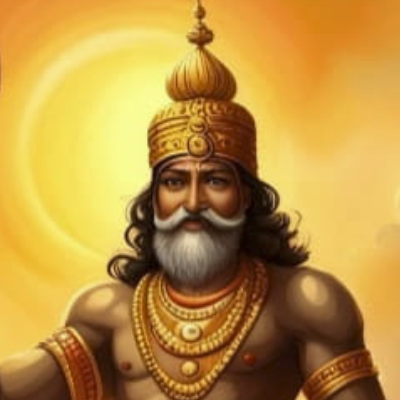
Shurasena — King of Mathura, Father of Vasudeva and Kunti
Shurasena · Shura · Surasena · son of Devamidhusha · Vrishni king of Mathura
Shurasena is a king of the Vrishni-Yadava lineage and one of the most genealogically significant figures in the Puranic tradition, recorded prominently in the Harivamsa Purana, the Vishnu Purana, the Bhagavata Purana, the Matsya Purana, and the Mahabharata. He is the son of Devamidhusha — himself a son of Vrishni I, the eponymous founder of the Vrishni clan, and his wife Madri — and the ruler of Mathura, the principal seat of the Yadava confederation in his era. Shurasena is the father of Vasudeva, who became the father of Krishna, the divine hero central to the Mahabharata and the Bhagavata Purana, making Shurasena the paternal grandfather of Krishna. He is also the father of Pritha, his eldest daughter, who was given in adoption to his childless cousin Kuntibhoja and thereafter known as Kunti — the mother of the three elder Pandava heroes Yudhishthira, Bhima, and Arjuna. Through these two children alone, Shurasena stands at the genealogical intersection of the Krishnaite Vrishni line and the Pandava maternal line, a position of extraordinary significance in the Puranic dynastic tradition.
✦ The Name
The name Shurasena is a Sanskrit compound of shura and sena. Shura means hero, brave man, or warrior of exceptional valour; sena means army or host. The compound therefore carries the meaning "he who has a heroic army" or "lord of brave warriors," a name entirely appropriate to a Kshatriya king of a major military clan. The shortened form Shura appears in some passages of the Bhagavata Purana and the Mahabharata as a colloquial or abbreviated reference to the same figure. The name Surasena — a slight phonological variant — appears in some recensions and in references to his kingdom, the Surasena janapada, which took its name from him and whose capital was Mathura.
✦ Lineage
- Paternal grandfather: Vrishni I, eponymous founder of the Vrishni clan, a king of the Yadava lineage; husband of Gandhari and Madri
- Paternal grandmother: Madri, younger wife of Vrishni I, mother of the Madri-born branch of the Vrishni line including Yudhajit, Devamidhusha, and Anamitra
- Father: Devamidhusha (also Devamidha), son of Vrishni I and Madri, king of the Vrishni line, identified in the Harivamsa, Vayu Purana, and Matsya Purana as Shurasena's direct progenitor
- Wife: Marisha (also given as Bhojya in some recensions), identified in the Harivamsa as Shurasena's principal queen and the mother of his children
- Son: Vasudeva (also known as Anakadundubhi), the eldest and most celebrated of Shurasena's sons, who became the husband of Devaki and the father of Krishna and Balarama; one of the foremost figures of the Vrishni clan in his generation
- Daughter: Pritha, Shurasena's eldest child, given in adoption to his paternal cousin Kuntibhoja — a childless king who had requested a child from Shurasena — and thereafter known as Kunti; she became the wife of King Pandu of the Kuru line and the mother of Yudhishthira, Bhima, and Arjuna
- Additional sons: The Harivamsa and Vishnu Purana record further sons of Shurasena including Devabhaga, Devasravas, Anadhrishti, Kanavaka, Vatsaka, Grihajit, Shyama, and Shamika, making Vasudeva one among a large cohort of Shurasena's male offspring
- Additional daughters: The Harivamsa records further daughters of Shurasena including Shrutadevi, Shrutakirti, Shrutashrava, and Rajadhidevi, several of whom married into other prominent Yadava and Kshatriya families
✦ His Kingdom: The Surasena Janapada
Shurasena ruled the kingdom known as the Surasena janapada, one of the sixteen major territorial units of the Mahabharata-era political world. Its capital was Mathura, situated on the Yamuna River, which served as the principal city of the Yadava confederation during this period. The kingdom took its name from Shurasena himself, reflecting his foundational role as the ruling king whose identity defined the political territory. Mathura under Shurasena's rule was the seat of Yadava power before the subsequent upheavals associated with Kamsa's usurpation of the throne from his father Ugrasena — Shurasena's kinsman within the broader Yadava genealogical network.
✦ The Adoption of Pritha
The adoption of Shurasena's eldest daughter Pritha by his cousin Kuntibhoja is one of the most consequential episodes associated with Shurasena in the primary sources, recorded in the Mahabharata and elaborated in the Bhagavata Purana and Harivamsa. Kuntibhoja, a king of the Bhoja clan and a close kinsman of Shurasena, was without children, and Shurasena — who had pledged his firstborn to Kuntibhoja — honoured that pledge by giving Pritha to him. Pritha took the name Kunti from her adoptive father and was raised in the Bhoja royal household. She subsequently became the wife of King Pandu of the Kuru line and, through the boon granted to her by the sage Durvasa, became the mother of the three elder Pandavas. The adoption thus created the genealogical bridge through which Shurasena's line connected directly to the Kuru dynasty and the Pandava heroes.
✦ Textual Variants and Inconsistencies
The primary sources are largely consistent on the core facts of Shurasena's identity, kingdom, and principal children. The main inter-textual variation concerns the number of generations between Devamidhusha and Shurasena. The Harivamsa and Matsya Purana treat the succession as direct — Devamidhusha's son is Shurasena without intermediate figures. Certain passages in the Bhagavata Purana and some secondary genealogical compilations introduce one or two additional generational links between the two, which would make Shurasena a grandson or great-grandson of Devamidhusha rather than his direct son. The majority primary-source tradition supports the direct succession, and that position is adopted here.
A minor variant concerns the name of Shurasena's wife. The Harivamsa gives her name as Marisha, while some recensions of the Vishnu Purana and secondary compilations give Bhojya. These may represent the same figure known by different names or titles, or they may reflect distinct women of Shurasena's household; the primary sources do not resolve this question definitively.
✦ Connection to the Wider Genealogy
Shurasena occupies the third generation of the Vrishni dynastic line in the majority primary-source tradition. His full patrilineal sequence runs: Vrishni I → Devamidhusha → Shurasena → Vasudeva → Krishna. Through his daughter Pritha-Kunti, his line also intersects with the Kuru dynastic tree: Shurasena → Pritha (Kunti) → Yudhishthira, Bhima, and Arjuna. This double connection — the Vrishni-Krishna line running through Vasudeva, and the Pandava maternal line running through Kunti — makes Shurasena one of the most genealogically pivotal figures in the entire Puranic dynastic record, linking the two great heroic lineages of the Mahabharata through a single generation of his own children.
✦ References
Primary Sources
- Harivamsa Purana, Harivamsa Parva, Chapter 34 and related genealogical chapters: The principal source for Shurasena's parentage, kingdom, wife, sons, and daughters; records the full enumeration of his children including Vasudeva and Pritha.
- Vishnu Purana, Book 4: Records the Yadava genealogical sequence placing Shurasena in the Devamidhusha line and identifying Vasudeva as his son; provides corroborating dynastic context.
- Bhagavata Purana, Canto 9, Chapter 24: Records Shurasena's place in the Vrishni genealogy and the birth of Vasudeva; source for some variant genealogical placements noted above.
- Matsya Purana, Chapter 45: Identifies Devamidhusha as the direct progenitor of Shurasena and places him within the line leading to Vasudeva and Krishna.
- Mahabharata, Adi Parva: Records the adoption of Pritha by Kuntibhoja and her subsequent history as Kunti; the principal epic source for this episode in Shurasena's family narrative.
Secondary and Reference Works
- Wisdomlib.org, Harivamsa Purana text and translation: Used for verification of the genealogical passages relating to Shurasena's parentage, children, and kingdom.
- Purankosh.in, entries for Shurasena and related figures: Consulted for cross-referencing Puranic genealogical details; not treated as an independent primary authority.
- Wikipedia, article on Shurasena: Consulted as a secondary orientation resource; individual claims verified against primary sources before inclusion.