
About
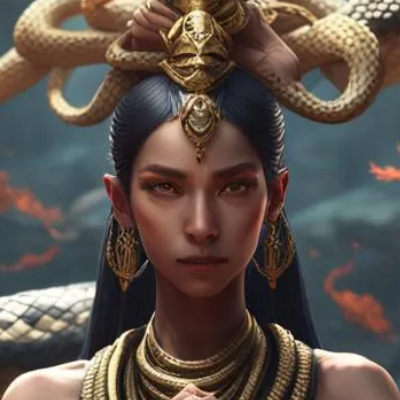
Marisha — Daughter of Aryaka the Naga, Wife of Shurasena
Marisha · Marisa
Marisha is a figure who appears in the genealogical framework of the Mahabharata as the daughter of Aryaka, a Naga elder of the subterranean serpent realm, and as the wife of Shurasena, a king of the Yadava clan and a significant figure in the lineage that leads directly to Krishna and the Pandavas. Through her marriage to Shurasena, Marisha becomes the mother of Vasudeva — the father of Krishna, the supreme deity of the Bhagavata tradition and the divine charioteer and guide of Arjuna in the Mahabharata — and of Pritha, who is later known as Kunti, the mother of the three elder Pandava brothers Yudhishthira, Bhima, and Arjuna. Marisha thus stands at one of the most consequential genealogical junctions in the entire Mahabharata tradition, her union with Shurasena producing children whose descendants shape the central narrative of the epic. Her Naga ancestry through Aryaka connects the lineage of the Yadavas and the Pandavas to the subterranean serpent world.
✦ The Name
The name Marisha does not carry a widely attested independent Sanskrit etymology in the primary sources as they pertain to this figure. It appears as a proper name rather than as a descriptive epithet or patronymic. A figure of the same name appears in the Vishnu Purana and the Bhagavata Purana in an entirely different narrative context — as a woman of miraculous birth raised by trees who becomes the shared wife of the ten Prachetasas and the mother of Daksha the progenitor — but that figure's narrative, origin, and genealogical position are wholly distinct from those of Marisha the daughter of Aryaka. The sharing of the name between these two figures across different textual and genealogical contexts is a source of potential confusion that the primary sources themselves do not address or resolve. This profile concerns exclusively the Marisha who is the daughter of Aryaka the Naga and the wife of Shurasena.
✦ Lineage
- Father: Aryaka — a Naga elder of considerable standing in the subterranean serpent realm, identified in the Mahabharata as the son of Kauravya, a Naga chief of the Airavata branch. Aryaka is the figure who, in the Adi Parva of the Mahabharata, recognises Bhima — the second Pandava — as kin when Bhima falls into the Naga world after being poisoned by Duryodhana, and who grants Bhima the divine strength-conferring drink of the Nagas. All Nagas trace their cosmological ancestry to Kashyapa, one of the seven primordial sages, and Kadru, a daughter of the progenitor Daksha, who is regarded as the mother of all serpent beings.
- Husband: Shurasena — a king of the Yadava clan, descended from the Yadava lineage of the lunar dynasty. Shurasena is the son of Devamidha and belongs to the branch of the Yadavas that would produce Krishna, regarded in the Bhagavata tradition as the supreme deity and an avatar of Vishnu. Shurasena is a figure of considerable importance in the Puranic genealogies as the father of the generation that connects the Yadava world directly to both the Pandava lineage and to Krishna himself.
- Son: Vasudeva — born of Marisha and Shurasena, Vasudeva is the father of Krishna. He is a Yadava prince who marries Devaki, a princess of the Bhoja clan, and it is to this couple that Krishna is born as the eighth child, in fulfilment of a divine plan to relieve the earth of its burden of unrighteousness. Vasudeva is also known as Anakadundubhi, a name given to him at the time of Krishna's birth.
- Daughter: Pritha — born of Marisha and Shurasena, Pritha is given in adoption to Shurasena's childless cousin Kuntibhoja and thereafter known as Kunti. She becomes the first wife of Pandu, king of the Kuru dynasty, and the mother of the three elder Pandava brothers: Yudhishthira, born through the grace of Dharma the god of righteousness; Bhima, born through the grace of Vayu the wind god; and Arjuna, born through the grace of Indra the king of the gods. Kunti is one of the most significant female figures in the entire Mahabharata.
- Other children: The Puranic sources record that Shurasena had additional sons and daughters beyond Vasudeva and Pritha, including Devabhaga, Devasravas, Anadhrishti, Karundhaka, Vatsaka, Ghrini, Shyama, Shamisravas, and others depending on the recension. The Vishnu Purana and the Bhagavata Purana vary somewhat in the precise enumeration of Shurasena's children, though Vasudeva and Pritha are consistent across all major accounts.
✦ Narrative Presence in the Primary Sources
Marisha does not feature as a protagonist in any extended narrative episode in the surviving primary sources. Her presence in the tradition is genealogical rather than episodic: she is recorded as the daughter of Aryaka and the wife of Shurasena, and her significance is established entirely through the identities of her children. The primary sources that name her do so in the course of tracing the lineage of Vasudeva and Kunti back through Shurasena to their maternal Naga ancestry. She is not given speech, action, or individual characterisation in the extant textual record. The brevity of her treatment in the sources reflects the genealogical function she serves in the texts rather than any judgment about her importance, since the lineage she transmits is among the most consequential in the epic and Puranic tradition.
✦ Textual Variants and Inconsistencies
The identification of Marisha as the daughter of Aryaka the Naga and the wife of Shurasena is not uniformly stated across all Puranic sources with equal clarity. Some recensions of the Bhagavata Purana and the Vishnu Purana, in their genealogical lists of Shurasena's family, name the wife of Shurasena without providing her full parentage, making it necessary to cross-reference different passages and texts to reconstruct the complete lineage. The Mahabharata itself, in its account of Aryaka's encounter with Bhima, identifies Aryaka as the great-great-grandfather of Nakula through a genealogical statement that implies the line runs through Marisha and Shurasena, but the text does not always make this chain explicit in a single continuous passage. Modern reference works, including the Puranic Encyclopaedia, consolidate these scattered references into a coherent genealogical statement, though readers of the primary sources must sometimes work across multiple passages and books to verify the full chain.
The potential conflation of this Marisha with the wholly different figure of Marisha who appears in the Vishnu Purana as the tree-born wife of the ten Prachetasas and mother of Daksha represents a separate and significant textual hazard. The two figures share a name but differ in every other particular — origin, parentage, husband, children, and narrative context. The primary sources do not connect them, and they should be treated as distinct individuals who happen to share the same name across different genealogical traditions within the larger Puranic corpus.
✦ Connection to the Wider Genealogy
Marisha occupies a position of extraordinary genealogical consequence in the wider tradition. Through her father Aryaka, she carries the ancestry of the Naga world, tracing through Kauravya and the Airavata branch back to Kashyapa and Kadru, the progenitors of all serpent beings. Through her husband Shurasena, she enters the Yadava lineage of the lunar dynasty, one of the two great royal lineages of the Puranic and epic tradition. Her son Vasudeva fathers Krishna, regarded in the Bhagavata Purana and the broader Vaishnava tradition as the supreme deity, the eighth avatar of Vishnu, and the teacher of the Bhagavad Gita. Her daughter Pritha, known as Kunti after her adoption, becomes the mother of Yudhishthira, Bhima, and Arjuna — three of the five Pandava brothers who are the protagonists of the Mahabharata. Through Kunti's sons, Marisha is the maternal great-grandmother of the Pandava generation. Through Vasudeva's son Krishna, she is the paternal grandmother of the deity who guides and sustains the Pandavas throughout the epic.
The genealogical chain connecting Marisha's Naga ancestry to the Pandavas is made explicit in the Mahabharata's account of Aryaka's recognition of Bhima in the Naga realm. When Aryaka identifies Bhima as the great-grandson of his own great-grandson Nakula, the implied lineage runs from Aryaka through his daughter Marisha, through her son or descendant in the Yadava-Pandava connection, to Nakula. The precise generational steps of this chain as articulated in the text confirm that Marisha is the critical human-world link through which the Naga ancestry of Aryaka enters the Pandava genealogy.
✦ References
- Primary Sources:
- Mahabharata, Adi Parva, Sambhava sub-parva — Contains the account of Aryaka's recognition of Bhima in the Naga realm, which implies the genealogical chain running through Marisha and Shurasena to the Pandava generation.
- Mahabharata, Adi Parva, Astika sub-parva — Provides the broader Naga genealogical framework within which Aryaka and his lineage, including Marisha, are situated.
- Vishnu Purana, Book IV — Contains the genealogical lists of the Yadava clan and the family of Shurasena, within which Marisha's role as wife of Shurasena and mother of Vasudeva and Pritha is recorded.
- Bhagavata Purana, Skandha IX — Provides a parallel genealogical account of the Yadava lineage and the family of Shurasena, against which the Vishnu Purana account may be compared and cross-referenced.
- Secondary Sources:
- Puranic Encyclopaedia by Vettam Mani — Consolidates the scattered references to Marisha across the Mahabharata and Puranic sources and provides a coherent genealogical entry identifying her as the daughter of Aryaka and the wife of Shurasena.
- The Mahabharata, critical edition published by the Bhandarkar Oriental Research Institute — The authoritative critical text against which the genealogical details connecting Aryaka, Marisha, and the Pandava lineage have been verified.
- Genealogy of the Gods by Cornelia Dimmitt and J. A. B. van Buitenen — Provides contextual discussion of the Yadava genealogies and the significance of the lineage of Shurasena within the broader Puranic cosmological scheme.