
About
Daksha — Prajapati, Son of Brahma, Father of All Creation's Mothers
Daksha · Prajapati · Manasaputra · Daksheshvara · Kan · Aja-Daksha · Prachetasa (second birth)
Daksha is one of the ten Manasaputras — mind-born sons of Brahma — and one of the foremost Prajapatis, the progenitors of all creation. He was appointed by Brahma as the chief of all the Prajapatis. He is the father of a vast number of daughters whose marriages to gods, sages, and cosmic beings made them the mothers of all living creatures — the Devas, the Danavas, the Nagas, the birds, and humanity. He is most widely known in the tradition for his grand yajna, his enmity with his son-in-law Shiva, the self-immolation of his daughter Sati, and his own beheading and resurrection. The Mahabharata records that he and his wife emerged from the right and left thumbs of Brahma respectively.
✦ The Name
The name Daksha means able, expert, skillful, honest, fit, and energetic in Sanskrit. It also carries the meaning of fire. The Bhagavata Purana states he received this name because he was supremely expert in begetting children — the very function his role as Prajapati demanded. He also bears the names Kan and Aja-Daksha. In the Rigveda, he appears as an Aditya — son of the goddess Aditi — and is described as associated with the skilled actions of sacrificers.
✦ Two Births
Many Puranic texts record that Daksha was born twice. In his first birth he was a Manasaputra of Brahma — mind-born, emerging directly from Brahma's creative thought. In this birth his wife was Prasuti, daughter of Svayambhuva Manu and Shatarupa. In his second birth, after the events of the Daksha Yajna, he was reborn as the son of the ten Prachetas and their wife Marisha. In this second birth his wife was Asikni (also called Panchajani or Virani), daughter of the Prajapati Virana. The Rigveda presents a more ancient cosmological version in which Daksha and Aditi arise from one another — making him simultaneously her son and her father.
✦ Lineage
- Father (first birth): Brahma — from whose mind Daksha was directly born
- Wife (first birth): Prasuti — daughter of Svayambhuva Manu and Shatarupa
- Wife (second birth): Asikni (Panchajani, Virani) — daughter of the Prajapati Virana
- Number of daughters: 16 (Vishnu Purana), 24 (Bhagavata Purana), or 60 (Adi Parva and Harivamsa) — depending on the scriptural source
- Notable daughters: Aditi (mother of the Adityas and the Devas), Diti (mother of the Daityas), Danu (mother of the Danavas), Kadru (mother of the Nagas), Vinata (mother of Garuda and Aruna), Svaha (goddess of sacrificial fire, wife of Agni), Rohini, and the 27 Nakshatras — all married to Soma (Chandra, the moon god), and Sati (Dakshayani) — youngest and most beloved, who became the first wife of Shiva
- Daughters given to Kashyapa: 13, including Aditi, Diti, Danu, Kadru, and Vinata — making Kashyapa the universal progenitor of all living beings through these unions
- Daughters given to Dharma: 10, including Arundhati, Vasu, Jami, Lamba, Bhanu, Marutvati, Sankalpa, Muhurta, Sadhya, and Vishva
- Son-in-law: Shiva — whom Daksha deeply opposed as a son-in-law, considering him an ascetic unworthy of his lineage
✦ Role as Prajapati
Brahma delegated Daksha to inhabit and populate the world. He initially created gods, sages, asuras, yakshas, and rakshasas from his mind, but found this insufficient for the scale of creation required. He then turned to procreation through his daughters, giving them in marriage to cosmic beings who became the progenitors of all species. Through Aditi and Kashyapa came the Devas; through Diti and Kashyapa came the Daityas; through Danu and Kashyapa came the Danavas; through Kadru came the Nagas; through Vinata came Garuda and Aruna. Daksha is therefore the linchpin of the entire genealogy of creation in the Hindu Puranic tradition. Brahma also appointed him to oversee and control the eleven Rudras created from Brahma's wrath.
✦ The Curse of Chandra
Of the 27 daughters given to Soma (Chandra, the moon god), Soma favoured Rohini excessively, neglecting the other 26. They complained to Daksha, who initially tried to counsel Chandra. When Chandra persisted, Daksha cursed him to wither and die. Since Chandra governed vegetation, plants began to die across the world. The other devas interceded. Daksha modified the curse: Chandra would suffer his illness every fortnight but gradually recover. This became the explanation for the waxing and waning of the moon each month.
✦ Enmity with Shiva
Daksha's hostility toward Shiva began at a great yajna performed by Brahma at Prayaga, where all present stood in reverence when Daksha arrived — except Brahma (his father) and Shiva (his son-in-law). Shiva's refusal to bow enraged Daksha, who regarded it as a personal insult. From that point, Daksha harboured profound enmity toward Shiva. He considered Shiva an unkempt wandering ascetic surrounded by ghosts and goblins, unworthy of the prestige of his family's lineage. Despite his initial opposition, Daksha had permitted Sati to marry Shiva — and after the marriage, he gave gifts to Shiva as dowry — but his personal antipathy never diminished.
✦ The Daksha Yajna and the Death of Sati
Brahma appointed Daksha as the chief of all Prajapatis, which further inflated his pride. Daksha then organised a grand yajna — the Vajapeya and Brihaspati Sava yajnas — deliberately excluding Shiva and Sati from the invitation. Shiva counselled Sati not to attend a ceremony where they had not been invited, knowing the intent behind the exclusion. Sati, moved by her maternal bond and her desire to see her family, attended regardless.
At the ceremony, Daksha publicly humiliated Sati and insulted Shiva in his absence. No portion of the yajna offerings had been reserved for Shiva. Sati, unable to bear the dishonour shown to her husband, and deeply shamed to be called by his name Dakshayani — the daughter of such a father — invoked her yogic powers and self-immolated in the sacrificial fire.
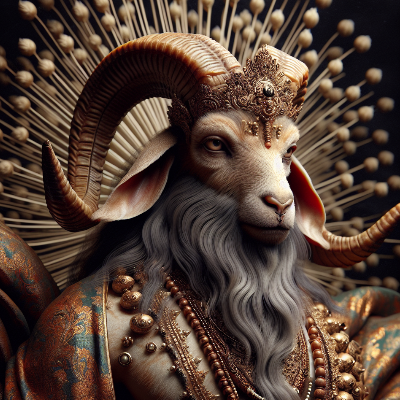
Upon learning of Sati's death, Shiva in his wrath tore a lock of his matted hair and created Virabhadra and Bhadrakali. They stormed the yajna, destroyed the sacrificial site, defeated the assembled devas and sages, and beheaded Daksha. The assembled deities, stricken with terror and remorse, appealed to Brahma and Vishnu to intercede with Shiva. Shiva, moved by their prayers, agreed to restore Daksha to life — but with the head of a goat, as the original head had been destroyed. Daksha, humbled and repentant, became thereafter one of Shiva's devoted attendants.
✦ Cosmic Significance of the Yajna
The Daksha Yajna is regarded as one of the most cosmically significant events in the Hindu tradition — a turning point that shaped the development of Shaivism, Shaktism, and their relationship. Sati's death and her subsequent rebirth as Parvati — who won Shiva through her own austerities and eventually married him — established the divine couple's permanent union. The destruction of the yajna became the basis for the origin of the Shakta Pithas: the tradition holds that Shiva, consumed by grief, carried Sati's body across the world performing the Tandava, his dance of destruction, until Vishnu dismembered the body with his Sudarshana Chakra to release Shiva from his grief. The fifty-one places where parts of Sati's body fell became the fifty-one Shakta Pithas — sacred sites of goddess worship across the subcontinent.
✦ Iconography
Daksha is depicted in two forms in temple and artistic traditions. Before the yajna episode, he appears as a man with a stocky body and a handsome face. After his resurrection, he is depicted with the head of a goat on a human body — the most widely recognised form in which he is represented in sculpture and painting. The Shri Daksheshvara Mahadeva Temple, approximately four kilometres from Haridwar in Uttarakhand, is identified across the tradition as the site of Daksha's yajna.
✦ References
- Rigveda — earliest mentions of Daksha as an Aditya associated with the skilled actions of sacrificers; the paradox of Daksha and Aditi arising from one another
- Taittiriya Samhita (Yajur Veda) — first textual record of key elements of Daksha's yajna and his ram/goat head iconography
- Mahabharata (Vyasa) — Adi Parva: records Daksha and his wife emerging from the right and left thumbs of Brahma; records the sixteen daughters of Daksha as mothers of all living beings; Adi Parva and Harivamsa: record sixty daughters born to Daksha by Virini; the destruction of Daksha's yajna is mentioned in the epic
- Bhagavata Purana — Skandha 4 and 6: the most detailed Puranic account of Daksha's two births, his daughters, his enmity with Shiva, the Daksha Yajna, Sati's self-immolation, the destruction by Virabhadra, and Daksha's resurrection with a goat's head
- Vishnu Purana — genealogical and cosmological accounts of Daksha's daughters and their marriages
- Shiva Purana — Daksha Yajna narrative from the Shaiva perspective; Daksha's beheading and restoration
- Linga Purana — records Virabhadra's beheading of Daksha
- Padma Purana (Srishti Khanda, Chapter 6) — records the sixty daughters of Daksha by Virini and their distribution in marriage
- Wikipedia — Daksha; Wikipedia — List of Daksha's daughters; Vyasa Online — Daksha: modern summaries drawing from the above primary sources