
About
Asikni (Panchajani / Virani) — Consort of Daksha, Mother of the Sixty Daughters, Mother of Sati in the Second Manvantara
Asikni · Asiknī · Panchajani · Virani · Virini · Virana-putri · Panchajana-suta · Daksha-patni-dvitiya · Sati-mata · Aditi-mata · Diti-mata · Danu-mata · Haryashva-janani · Shabalashva-janani
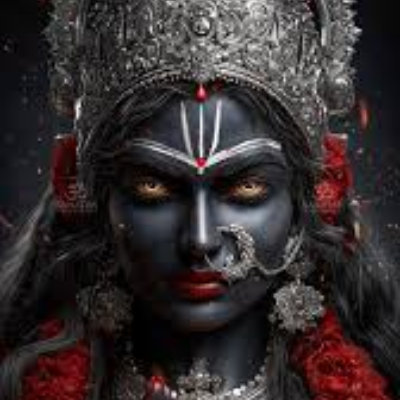
Asikni — also known as Panchajani and Virani — is the consort of Daksha in his second birth as the son of the ten Prachetasas and Marisha; the daughter of the Prajapati Virana (also called Panchajana); and one of the most generatively consequential figures in the entire Puranic cosmology. She is the mother of the five thousand Haryashvas — who were led away from the purpose of creation by Narada; the mother of the thousand Shabalashvas — who were similarly led away; the mother of the sixty daughters whose marriages to Kashyapa, Soma, Dharmadeva, Arishtanemi, Angiras, and Krisashva populated every species of being in the three worlds; and in the tradition that treats the two births of Daksha as a single continuous entity, the mother of Sati — the first wife of Shiva whose self-immolation at Daksha's yajna set in motion the entire Sati-Parvati cycle already profiled in this series. The Sanskrit name Asikni means simply the dark one or night — a name with ancient Vedic resonance, for the Rigveda uses the word Asikni for the Chenab River (the Aksini or Asikni of the Rigveda, known today as the Chenab) — and the river and the goddess share this ancient name across the tradition's oldest and newest layers simultaneously. She is described in the Vayu Purana as literally supporting the entire world — a brief but cosmologically precise statement of her function: she is the dark, fertile, generative ground from which all life pours forth, the night that contains the seeds of the day.
✦ The Names
The Sanskrit name Asikni — written Asiknī — means the dark one or night; the Monier-Williams Sanskrit-English Dictionary records it additionally as meaning a girl attending a woman's apartment. The Rigveda uses the word Asikni as the name of the Chenab River — the dark or black river, one of the five rivers of the Punjab — making the goddess-name and the river-name identical in the oldest layer of the tradition. The patronymic Panchajani means daughter of Panchajana — referring to her father the Prajapati Virana who is also called Panchajana in the Bhagavata Purana and Shiva Purana. The name Virani — also spelled Virini, Virana, Virini — means daughter of Virana, deriving from her father's most common name across the majority of the Puranas. The Devi Bhagavata Purana, Kalika Purana, and Garuda Purana present an entirely different origin account: in these texts Asikni emerged directly from the left thumb of Brahma — mirroring Daksha's birth from the right thumb — making the two a perfectly balanced pair of primordial generative forces brought simultaneously into being from Brahma's two hands. This version removes the patrilineal human ancestry of Virana entirely and makes Asikni herself a direct Brahma-creation, a figure of the same cosmic order as Daksha. The two accounts — daughter of Virana versus daughter of Brahma's left thumb — reflect the same two-birth framework in which Daksha himself exists: the first Daksha is Brahma's Manasaputra married to Prasuti; the second Daksha is the son of the Prachetasas married to Asikni; and Asikni may herself be either the daughter of Brahma (matching the first-birth Daksha's cosmic status) or the daughter of the Prajapati Virana (matching the second-birth Daksha's earthly lineage).
✦ The Two Births of Daksha — The Critical Genealogical Framework
The most important context for understanding Asikni's place in the tradition is the doctrine of Daksha's two births — a framework that resolves the apparent contradiction between Prasuti and Asikni both being named as Daksha's wife and the mother of his daughters. The Bhagavata Purana and most major Puranas record that Daksha was born twice in different Manvantaras. In his first birth, in the Svayambhuva Manvantara, he was born as one of Brahma's mind-born sons (Manasaputras) and married Prasuti — the daughter of Svayambhuva Manu and Shatarupa, both already profiled in this series — and with her produced sixteen daughters, twenty-four daughters, or sixty daughters depending on the scriptural source; these daughters include the abstract virtues-personified and the wives of the Saptarishis. In his second birth, in the Chakshusha Manvantara and the current Vaivasvata Manvantara, Daksha was born as the son of the ten Prachetasas and Marisha — a completely different set of parents — and it is in this second birth that he performed penance on the Vindhya mountains, received Asikni as his wife from Vishnu, produced the Haryashvas, the Shabalashvas, and the sixty daughters, and eventually organised the yajna at which Sati self-immolated. This two-birth doctrine explains why many texts appear to contradict each other about Daksha's wife: Prasuti is the wife of the first Daksha; Asikni is the wife of the second Daksha. It also explains why some texts name Sati as Asikni's daughter while others name her as Prasuti's daughter: in the first-birth tradition Sati is a daughter of Daksha and Prasuti; in the second-birth tradition she is the daughter of Daksha and Asikni. The Bhagavata Purana (Skandha 4 for the first Daksha, Skandha 6 and 8 for the second) is the primary canonical source that explicitly separates these two births. The Isvara.org source records this directly: Mahavishnu appeared before Daksha in the second birth and gave him Asikni as his wife; and the last of the sixty daughters born to Daksha and Asikni in this second birth was Sati, who became the wife of Shiva.
✦ Lineage
- Father (Bhagavata Purana, Shiva Purana tradition): Panchajana — also called Virana; a Prajapati; one of the co-creators entrusted with populating the world; the source of her patronymic Panchajani
- Father (Brahma Purana, Brahmanda Purana, Vayu Purana, and others tradition): Virana — the same Prajapati Virana already profiled in this genealogical series as a minor cosmic progenitor; Asikni as his daughter appears in multiple texts including those that use the name Virani as her patronymic from this father
- Alternative origin (Devi Bhagavata Purana, Kalika Purana, Garuda Purana): born from the left thumb of Brahma — the feminine counterpart to Daksha's birth from the right thumb; the primordial paired creation of masculine creative will and feminine generative power in a single cosmogonic act
- Husband: Daksha — in his second birth as son of the Prachetasas; Prajapati; already profiled in this series in the first-birth context; received by him as a boon from Vishnu after Daksha's penance on the Vindhya mountains
- Sons — Haryashvas (first generation): five thousand sons — also recorded as ten thousand in some sources — who were interested in populating the earth but were persuaded by Narada to discover the extent of the world instead; they went to discover whether the world had a bottom and an end, and never returned; the Bhagavata Purana and Shiva Purana record that they had already begun a penance at the confluence of the Sindhu river when Narada found them; they are sometimes called the Sahasras or the Pure Ones; Brahma consoled Daksha after their non-return
- Sons — Shabalashvas (second generation): one thousand sons — produced by Daksha and Asikni after the loss of the Haryashvas, with the same intention of populating the earth; Narada found them also at the Sindhu confluence and persuaded them similarly; they also went to discover the world's extent and never returned; Daksha, furious at Narada for a second time, cursed him to be a perpetual wanderer without a fixed dwelling — the Vayu Purana variant curses him to the perennial pain of staying in a womb; this curse is the canonical explanation for Narada's famous wandering through the three worlds as a bhakta without a fixed abode
- Daughters (sixty daughters — all Puranas agree on this number for the second Daksha):
- Ten to Dharmadeva: Maruvati, Vasu, Jami, Lamba, Bhanu, Urjja (Urja), Sankalpa, Muhurta (Mahurath), Sadhya, and Vishva — ten daughters who became the mothers of the divine classes of beings associated with dharmic cosmology; already profiled through the Dharmadeva entry in this series
- Twenty-seven to Soma (Chandra): the twenty-seven lunar mansions (Nakshatras) — Ashvini, Bharani, Krittika, Rohini, Mrigashira, Ardra, Punarvasu, Pushya, Ashlesha, Magha, Purva Phalguni, Uttara Phalguni, Hasta, Chitra, Svati, Vishakha, Anuradha, Jyeshtha, Mula, Purva Ashadha, Uttara Ashadha, Shravana, Dhanishtha, Shatabhisha, Purva Bhadrapada, Uttara Bhadrapada, and Revati — the twenty-seven wives of the moon god whose unequal treatment by Soma and Soma's subsequent curse and restoration forms the episode of Shiva's moon-crescent already profiled in the Shiva section of this series
- Thirteen to Kashyapa: Aditi (mother of the twelve Adityas including Vishnu, Indra, and Vivasvat — already profiled in this series), Diti (mother of the Daityas including Hiranyakashipu and Hiranyaksha — the founding figures of this entire genealogical series), Danu (mother of the Danavas), Arishta (mother of the Gandharvas), Surasa (mother of the Nagas), Surabhi (mother of the kine and the Rudras of one tradition), Vinata (mother of Garuda and Aruna), Tamra (mother of the birds of prey), Krodhavasha (mother of the flesh-eating demons), Ira (mother of trees and plants), Kadru (mother of the Nagas in the Vinata-Kadru tradition), Vishva, and Muni
- Four to Arishtanemi: their children became the Vasus and other divine classes
- Two to Angiras: Swadha (mother of the Pitrs in some traditions) and Sati (not Daksha's daughter Sati but another figure of this name in the Bhagavata Purana); the Manidvipa source records these two as additional wives of Angiras beyond his principal wife Surupa
- Two to Krisashva: who bore him daughters that became the weapons of the gods
- Two to Bahuputra
- Sati — the last of the sixty daughters per the Isvara.org source citing the second-Daksha tradition; who married Shiva; whose self-immolation at the Daksha Yajna is the pivotal event of the Shiva mythology; already profiled in full in this series
✦ The Haryashvas — The Sons Who Sought the World's End
The episode of the Haryashvas is one of the most philosophically resonant episodes attached to Asikni's name — though she herself appears only as their mother, not as an active participant in the events that followed. Daksha and Asikni produced five thousand sons with the purpose of populating the earth. The sons were pious, dedicated, and prepared to fulfil their parents' mandate. They went to the Sindhu river confluence to perform a penance before beginning the work of creation. There the wandering sage Narada came upon them and taught them a series of riddling questions: do you know the boundaries of the earth, which has no bottom? Do you know the height of the sky, which has no summit? Do you know the origin of the cosmic waters? Do you know the entry and exit of the wind? The riddles were designed to direct their attention outward — toward the vast unmeasurable extent of the cosmos — rather than inward toward the duty of domestic propagation. The Haryashvas, intrigued, set out to discover the answers to these cosmic questions. They went to the boundaries of the world and never returned. Brahma, moved by Daksha's grief, consoled him. Daksha and Asikni then produced another thousand sons — the Shabalashvas — with the same purpose. Narada found them too at the Sindhu confluence. He used the same approach — but this time with an additional argument recorded in the Bhagavata Purana: he asked them whether they would reproduce as their elder brothers had done (knowing that the Haryashvas had not in fact reproduced but had gone off seeking cosmic knowledge). The Shabalashvas, following the example of their elder brothers, set out similarly and also never returned. This double loss is the occasion of Daksha's famous curse of Narada — a curse that shaped the wandering sage's entire subsequent existence and explains his perpetual movement through the three worlds as a Vishnu-bhakta who sings everywhere and settles nowhere. The episode carries a sustained meditation on the tension between the dharma of household propagation — the duty Daksha and Asikni had assigned their sons — and the dharma of cosmic inquiry and renunciation that Narada represents. Narada wins both times. The tradition's implicit verdict is ambiguous: Narada's action deprived the world of its intended population but directed thousands of souls toward the highest spiritual inquiry. Daksha's grief and fury are entirely legitimate. Narada's action is entirely in keeping with his nature as the divine wanderer who loosens all earthly attachments. Both are right; both suffer the consequences of their rightness.
✦ The Sixty Daughters and the Peopling of the Three Worlds
After the double loss of the Haryashvas and the Shabalashvas, Daksha resolved to produce daughters rather than sons — female children who would be given in marriage and would produce the world's population through their own conjugal unions rather than through direct individual propagation. This change of strategy is precisely what the cosmic situation required: a matrix of generative relationships rather than individual male propagation. Asikni bore him sixty daughters. The marriages of these sixty daughters to Dharmadeva, Soma, Kashyapa, Arishtanemi, Angiras, Krisashva, and Bahuputra constitute the creation of every major category of being in the three worlds — the gods (Adityas through Aditi and Kashyapa), the demons (Daityas through Diti and Kashyapa, Danavas through Danu and Kashyapa), the Nakshatras (through Soma), the birds, serpents, cattle, plants, Gandharvas, and every other species through the remaining daughters. Through these sixty daughters Asikni is simultaneously the grandmother of Indra, Vishnu's solar avatar Vivasvat, Hiranyakashipu, Hiranyaksha, Vritra, Garuda, Aruna, the Nagas, the cattle of Surabhi, and every tree and plant in creation. The generative scope of her sixty daughters makes her arguably the most cosmologically consequential single female figure in the creation mythology — the woman whose children's children are the entire world.
✦ The Asikni River — The Vedic Identity
The Rigveda's Nadi Stuti hymn (Mandala 10, Hymn 75) — which lists the sacred rivers of the Vedic world from east to west — names the Asikni River among the central rivers of the Punjab, alongside the Vitasta (Jhelum), Parushni (Ravi), Vipash (Beas), Shutudri (Sutlej), and Sindhu (Indus). The Asikni is identified with the present-day Chenab River — one of the five rivers of Punjab. In the Vedic tradition the river was called Asikni because of its dark waters — the same meaning the goddess's name carries. The Hindu Blog source records this identification: the Asikni River, both in its ancient and modern identifications, continues to be a symbol of fertility, purity, and sacredness. Its veneration in the Rigveda alongside its later identification as Chandrabhaga (the river formed from Chandra's brightness, a post-Vedic renaming) and its modern name Chenab represents the full arc of the river's mythological history. The connection between the goddess and the river is not metaphorical but literal in the Vedic tradition: the dark, fertile, generative water of the Punjab's central river and the dark, fertile, generative mother of all species in the Puranic cosmology are the same divine principle expressed in two different forms — geographic and genealogical.
✦ Asikni's Supporting Role in the Shiva Purana
The Shiva Purana notes a remarkable additional detail: Shiva himself had himself reincarnated within Asikni's womb as a boon granted to Daksha much prior to his marriage, as the result of a long penance. This tradition — in which Shiva agrees to be born from Asikni and Daksha's union — is the Shiva Purana's explanation for why Sati, Shiva's own wife in her next birth, was in her original birth the last daughter of Asikni and Daksha: she was born from a womb that Shiva himself had sanctified with his own previous presence. The tradition thus makes the Sati-Shiva marriage not merely a cosmic accident but the fulfilment of a relationship that had been arranged in the very act of Sati's creation — Shiva sanctifying the womb from which his future wife would emerge. Asikni was widely respected and eulogised by all the deities during this period as a result of this sanctification. She held a special place in the divine hierarchy not merely as the grandmother of all species but as the sacred vessel through which the supreme deity himself had chosen to manifest.
✦ Connection to This Genealogical Series
Asikni's connection to this genealogical series is profound and multi-directional. Through her daughter Diti she is the grandmother of Hiranyakashipu and Hiranyaksha — the founding figures of the entire Daitya-devotional lineage traced through Prahlada, Mahabali, Banasura, Usha, Aniruddha, and Vajra that constitutes the central thread of this series. Through her daughter Aditi she is the grandmother of Vivasvat (Surya), Vamana, and all the Adityas — the divine figures whose stories have been profiled across many entries in this series. Through her daughter Kadru or Surasa she is the grandmother of the Nagas. Through her daughter Vinata she is the grandmother of Garuda — Vishnu's vehicle. Through her twenty-seven daughters given to Soma she is the grandmother of the Nakshatras that govern all of Vedic astrology. Through Sati she is the mother of Shiva's first wife and the origin-point of the Sati-Parvati cycle whose profiles occupy the most recent sections of this series. In the simplest possible formulation: Asikni is the genealogical mother of both sides of every conflict in the tradition — her daughters Aditi and Diti gave birth to the gods and the demons whose wars constitute the cosmological backbone of the Puranic world.
✦ References
- Rigveda (Mandala 10, Hymn 75 — the Nadi Stuti) — the Asikni River listed among the sacred rivers of the Vedic world; the oldest layer of the Asikni name in the tradition
- Bhagavata Purana (Skandha 6, Chapter 6; Skandha 8, Chapter 13) — Asikni as daughter of Prajapati Panchajana; Vishnu granting her to Daksha after his Vindhya penance; the Haryashvas episode; the Shabalashvas episode; Daksha's curse on Narada; the sixty daughters and their marriages; Sati as the last daughter; the foundational Vaishnava account of Asikni's role
- Shiva Purana — Asikni as daughter of Panchajana; the boon granted to Daksha: Shiva himself reincarnating within Asikni's womb before the marriage; the Haryashvas and Shabalashvas; the sixty daughters; Sati as the youngest; the eulogisation of Asikni by all the deities; the most elaborate Shaiva account of her sanctification
- Devi Bhagavata Purana (Skandha 7) — Asikni born from Brahma's left thumb; Daksha from Brahma's right thumb; the paired primordial creation; the Haryashvas and Shabalashvas; the sixty daughters; Daksha cursing Narada
- Vayu Purana — Asikni described as supporting the entire world; the longer list of creations including plants, human beings, ghosts, serpents, deer, flesh-eating demons, and birds produced through her daughters; Narada cursed to perennial pain of staying in a womb (Vayu Purana variant)
- Brahmanda Purana, Linga Purana, Garuda Purana, Kurma Purana, Padma Purana, Brahma Purana, Vishnu Purana — all record Asikni as Daksha's wife and mother of the Haryashvas, Shabalashvas, and sixty daughters with variations in her parentage (Virana vs Panchajana vs Brahma's left thumb), in the number of sons (five thousand, ten thousand, or one thousand), and in the precise assignment of daughters to specific sages
- Mahabharata (Harivamsa) — Asikni referred to as Virini; Daksha's sixty daughters listed with their husbands; the Harivamsa treating the two-birth Daksha as a single continuous figure
- Kalika Purana — Asikni born from Brahma's left thumb; the Asikni-as-Daksha's-maidservant variant (the one text that describes her this way, noted as an outlier)
- Wikipedia — Asikni (goddess); Wikipedia — Daksha; Wikipedia — List of Daksha's daughters; Grokipedia — Asikni (goddess); Grokipedia — List of Daksha's daughters; Isvara.org Vedic Library — Daksha the Prajapati; Manidvipa — Consorts Daughters and Female Characters; Hindu Blog — Story of Asikni River in Hinduism; HandWiki — Religion:Daksha: modern summaries drawing from the above primary sources