
About
Devahuti — Daughter of Svayambhuva Manu, Wife of Kardama, Mother of Kapila and the Nine Daughters
Devahuti · Devahuti Svayambhuveyi · Devahuti Kardama-patni
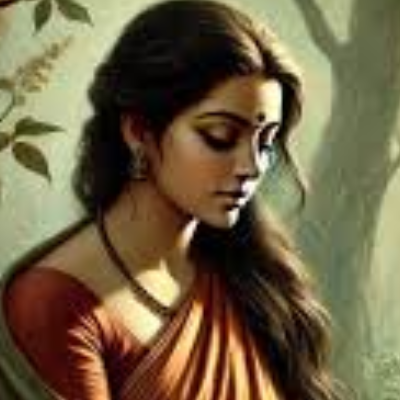
Devahuti is one of the most celebrated women of the Puranic tradition, identified as the second daughter of Svayambhuva Manu — the first Manu and mind-born son of Brahma — and his wife Shatarupa. She is the sister of Priyavrata and Uttanapada, the two great kings who governed the earth in the first Manvantara, and of Akuti and Prasuti, her two sisters. She is best known as the wife of the sage Kardama Prajapati and as the mother of Kapila — regarded in the Vaishnava tradition as an avatar of Vishnu and the founder of the Sankhya philosophical system — and of nine daughters who became the wives of the nine great primordial sages and the mothers of all the major classes of beings that populate the Puranic universe. Her narrative, extending through the Third Canto of the Bhagavata Purana across multiple chapters, is one of the most detailed and spiritually elaborated accounts of a female figure in the entire Puranic canon. She is remembered and venerated as an exemplar of devoted wifehood, patient service, spiritual aspiration, and ultimately of liberation through the knowledge imparted by her own divine son.
✦ The Name
The name Devahuti is a compound of deva, meaning divine or god, and huti, derived from the root hu meaning to pour oblations into the fire or to offer — yielding the meaning of she who offers to the divine, the one whose offering goes to the gods, or the divine oblation. The name thus carries a sacrificial and devotional connotation, identifying Devahuti from birth as one whose nature is oriented toward divine offering — a meaning that is fully realised in her life as a devoted wife who serves her husband as an act of worship, and as a seeker of divine knowledge who ultimately attains liberation through the teachings of the avatar born from her own womb.
✦ Lineage
- Paternal grandfather: Brahma — the creator deity, first of the Trimurti, from whose mind Svayambhuva Manu was born.
- Father: Svayambhuva Manu — the first Manu of the present cosmic cycle, mind-born son of Brahma and husband of Shatarupa; the first ruler appointed by Brahma to govern the created world and progenitor of the primary royal and sage lineages of the Puranic tradition.
- Mother: Shatarupa — wife of Svayambhuva Manu, born from Brahma's own body; her name means she of a hundred forms.
- Brothers: Priyavrata — eldest son of Svayambhuva Manu, the great devotee who accepted kingship under Brahma's instruction, whose chariot wheels created the seven oceans and established the seven dvipas of the Puranic earth; and Uttanapada — the younger son, father of the celebrated child-devotee Dhruva who was granted an immovable position as the Pole Star.
- Sisters: Akuti — the eldest daughter, given in marriage to the Prajapati Ruci under the Putrika dharma arrangement, through whom were born Yajna an avatar of Vishnu and Dakshina; and Prasuti — the youngest daughter, given in marriage to Daksha, whose daughters became the mothers of the gods, demons, sages, and all living beings populating the three worlds.
- Husband: Kardama — a Prajapati created directly from the shadow or from the body of Brahma; one of the foremost of Brahma's sons commissioned to beget progeny and extend creation; a sage of immense ascetic power who performed ten thousand years of tapas at the Bindusara lake on the banks of the Sarasvati river, receiving from Vishnu the promise that Devahuti would be his wife and that Vishnu himself would be born as their son.
- Son: Kapila — born of Devahuti and Kardama as a direct avatar of Vishnu; the founder of the Sankhya philosophical system, one of the six orthodox schools of Hindu philosophy; the teacher who instructed his own mother in the path of liberation after Kardama's departure to the forest; regarded in the Vaishnava tradition as one of the principal avatars of Vishnu and venerated independently as a great sage and philosopher.
- Daughters: Nine in number, born on the same day through Kardama's yogic power — Kala, Anasuya, Shraddha, Havirbhu, Gati, Kriya, Khyati, Arundhati, and Shanti. Each was given in marriage to one of the nine great primordial sages who came to Kardama's hermitage: Kala to Marichi, Anasuya to Atri, Shraddha to Angiras, Havirbhu to Pulastya, Gati to Pulaha, Kriya to Kratu, Khyati to Bhrigu, Arundhati to Vasishtha, and Shanti to Atharvan. Through these unions the nine daughters became the mothers of vast lineages of gods, sages, demons, and all other categories of beings — making Devahuti the maternal ancestress of a substantial portion of the Puranic universe's population.
✦ Devahuti's Attraction to Kardama and the Marriage
The Bhagavata Purana, Third Canto, Chapters 21 and 22, narrates that Devahuti, from her youth in the palace of Svayambhuva Manu, had heard of the sage Kardama's qualities and had set her heart upon him as her husband. This inner resolution of the princess was known to her parents, and Svayambhuva Manu, wishing to honour his daughter's desire and act on the divine instruction conveyed by Vishnu through Kardama's tapas, journeyed with Shatarupa and Devahuti to the sage's hermitage at Bindusara on the Sarasvati.
The Bhagavata Purana records a striking detail: as Devahuti stood before Kardama in her father's palace, she had seen him from a rooftop while playing with a ball, and the celestial Gandharva Vishvavasu, flying past in his aerial vehicle and catching sight of her beauty — with her tinkling ankle bells and eyes moving lively in all directions — was so overwhelmed that he fell from his craft. This detail establishes the extraordinary nature of Devahuti's beauty and the quality of the man her parents had to find to match her.
Kardama received Svayambhuva Manu with great honour and heard his proposal. He agreed to the marriage on a single stated condition: that once his progeny had been born, he would be permitted to renounce household life and return to the path of asceticism and devotion. Svayambhuva Manu and Shatarupa accepted this condition, and the marriage was celebrated with full Vedic rites. Shatarupa gave the couple costly gifts of jewels, garments, and household articles, and the parents departed tearfully, Manu embracing his daughter with deep affection before leaving.
✦ Service to Kardama and the Transformation at Bindusara
The Bhagavata Purana devotes considerable narrative attention to Devahuti's conduct in her husband's hermitage, presenting it as a model of devoted service that is simultaneously an act of spiritual practice. Though raised in royal comfort, she adapted entirely to the austere life of the hermitage — wearing bark garments, eating only fruits and roots, sleeping on the ground, and devoting herself entirely to Kardama's care and wellbeing. She served him so attentively and so selflessly — grinding fruits into paste and applying them to his skin when he was absorbed in meditation, bathing him, and attending to his every need — that over many years she became physically emaciated and pale, her body worn by the intensity of her service. The Bhagavata Purana compares her devotion to Kardama to the way Parvati worshipped Shiva, establishing it as the highest standard of wifely devotion in the tradition.
When Kardama finally emerged from his deep meditation and saw the condition to which Devahuti had reduced herself through her years of devoted service, he was deeply moved. Wishing to honour her and to fulfil his side of their agreement, he asked what she desired. Devahuti expressed her wish for children and for a dwelling suitable for that life. Kardama, employing the powers accumulated through his long yoga practice, created an extraordinary aerial palace — a vimana of immense beauty, adorned with every luxury, capable of travelling wherever its occupants willed.
Before entering the palace, Kardama instructed Devahuti to bathe in the sacred lake of Bindusara — the lake that had formed from Vishnu's tears shed out of compassion for his devotee Kardama. As Devahuti entered the waters in her gaunt and dishevelled condition, she found herself surrounded by a thousand divine maidens who adorned her, dressed her in brilliant garments and jewels, and restored her body to a state of radiant beauty. She emerged transformed — no longer the frail ascetic but a glowing and beautiful woman. Kardama, beholding her beauty and moved by it, accompanied her in the vimana on a journey through the cosmic regions, visiting the gardens of the gods, Mount Meru, the Gandharva realms, and the celestial heights, spending thousands of years together in joy and mutual companionship.
✦ The Birth of the Nine Daughters and of Kapila
The Bhagavata Purana narrates that when the time came for children to be born, Kardama divided his own being into nine parts through his yogic power and united with Devahuti. On the very same day, Devahuti gave birth to nine daughters — Kala, Anasuya, Shraddha, Havirbhu, Gati, Kriya, Khyati, Arundhati, and Shanti. The simultaneous birth of nine daughters in a single day through the sage's yogic division of himself is treated in the text as a supernatural event reflecting Kardama's extraordinary powers and the cosmic purpose of the progeny.
Devahuti, seeing that only daughters had been born and knowing that Kardama intended to depart for renunciation, was saddened — not only at the prospect of losing her husband but also at the concern that the nine daughters would need suitable husbands. As she tearfully reminded Kardama of Vishnu's promise that a divine son would also be born, Kardama reassured her and agreed to remain until the promised son arrived. Shortly thereafter, under auspicious cosmic signs — the gods assembled in the sky, celestial music played, flowers rained down — Kapila was born, shining with divine radiance. Brahma himself descended with the nine great primordial sages to venerate the newborn avatar. These nine sages — Marichi, Atri, Angiras, Pulastya, Pulaha, Kratu, Bhrigu, Vasishtha, and Atharvan — were each given one of Devahuti's nine daughters as their wife, completing the great cosmogonic purpose for which the children had been born. Kardama then bowed to his own divine son Kapila, circumambulated him in reverence, and departed for the forest to continue his austerities, leaving Devahuti in Kapila's care.
✦ The Teaching of Kapila and Devahuti's Liberation
After Kardama's departure, the Bhagavata Purana narrates that Devahuti, though honouring her son's divine status, continued to live in the hermitage with him. As time passed, she found herself consumed by grief — not merely at separation from her husband, but at the deeper weight of samsara, the cycle of birth and death from which she longed to be released. She approached Kapila and expressed this longing directly, requesting that he teach her the knowledge that would free her from ignorance and the bondage of material existence.
Kapila, pleased by his mother's sincere desire for liberation rather than for continued worldly comfort, agreed and proceeded to teach her the entire Sankhya philosophical system — the analysis of Prakriti and Purusha, the enumeration of the twenty-five elements of existence, the three gunas, the nature of the self, the path of devotion, and the methods of meditation and yoga that lead to liberation from the cycle of birth and death. These teachings, preserved in Bhagavata Purana Canto 3, Chapters 25 through 33, constitute the Kapila Gita or the Sankhya teachings of Kapila, and represent one of the most sustained philosophical discourses in the entire Bhagavata Purana. They are delivered not to a royal student or a rival sage but to Kapila's own mother — a narrative choice that the tradition uses to emphasise the universality of the path of liberation and the capacity of a devoted wife and mother, having fulfilled her worldly duties, to attain the highest knowledge.
Following Kapila's departure from the hermitage after imparting these teachings, the Bhagavata Purana records that Devahuti remained at Bindusara and practised the yoga and devotion her son had taught her. Through sustained meditation and inner realisation, she attained complete liberation — moksha — from the cycle of birth and death. The place where she attained this liberation, identified with the Bindusara hermitage on the banks of the Sarasvati, is described as being sanctified by her attainment and known thereafter as Siddhapada — the place of accomplished perfection.
✦ Theological Significance
Devahuti's narrative in the Bhagavata Purana is one of the tradition's most complete treatments of the spiritual life of a woman within the householder order. Several theological themes are concentrated in her story. The first is the nature of devoted service as a spiritual path: Devahuti's years of exhausting service to Kardama in the hermitage are not presented as mere domestic duty but as a form of tapas in their own right — a burning away of ego and attachment through selfless action — and the Bhagavata Purana treats her worn and emaciated body as the external sign of an inner purification achieved through that service.
The second is the relationship between worldly fulfilment and spiritual aspiration: Devahuti does not abandon one for the other but moves through both in sequence, fulfilling completely her role as wife and mother before turning wholly to liberation. The tradition's presentation of this as a valid and complete spiritual path — rather than as a compromise or a lesser route — is significant for what it says about the tradition's understanding of householder life and womanhood.
The third is the paradox of Devahuti's relationship with Kapila: she is the mother of an avatar of Vishnu, the creator of the Sankhya system, and she receives from him the highest philosophical teaching available in the tradition — but she receives it as a grieving, aging woman seeking relief from sorrow, not as a distinguished student seeking intellectual mastery. The Bhagavata Purana treats this grief as itself the doorway to spiritual teaching, presenting Devahuti's sorrow as the human condition in its most honest form, and Kapila's response as the tradition's answer to that condition.
✦ Textual Variants and Inconsistencies
The Bhagavata Purana is the principal and most detailed source for Devahuti's narrative, and her story is substantially consistent across its chapters. No major narrative variant from a competing primary source contradicts the main account. Minor variations appear in the names of the nine daughters across different manuscripts and in the assignment of each daughter to each sage, but the principal list — Kala to Marichi, Anasuya to Atri, Shraddha to Angiras, Havirbhu to Pulastya, Gati to Pulaha, Kriya to Kratu, Khyati to Bhrigu, Arundhati to Vasishtha, and Shanti to Atharvan — is the most consistently attested version across the primary sources.
The Vishnu Purana and the Markandeya Purana also mention Devahuti as the wife of Kardama and mother of Kapila but do not elaborate her narrative in the same detail as the Bhagavata Purana. The Devi Bhagavata Purana includes her within the genealogy of Svayambhuva Manu's daughters without adding materially different narrative content. The Bhagavata Purana's Third Canto thus stands as the authoritative primary source for her complete story.
✦ Connection to the Wider Genealogy
Devahuti occupies a position of extraordinary genealogical consequence in the Puranic system. As the mother of the nine wives of the nine great primordial sages, she is the maternal ancestress of virtually the entire population of the Puranic universe. Through her daughter Kala's marriage to Marichi — one of the Saptarishis and son of Brahma — she is connected to the Kashyapa lineage, since Kashyapa was born to Marichi and Kala; and through Kashyapa's many wives and their offspring she is the maternal great-grandmother of the Adityas, the Daityas, the Danavas, the Nagas, the birds, and all other categories of being that Kashyapa engendered. Through her daughter Anasuya's marriage to Atri, she is the grandmother of Soma the moon-god, Dattatreya an avatar of Vishnu, and Durvasa an avatar of Shiva. Through her daughter Khyati's marriage to Bhrigu, she is the grandmother of Lakshmi — the goddess of prosperity who was born as Bhrigu's daughter — and through Lakshmi's union with Vishnu she is connected to the supreme divine in its preserving aspect. Through her son Kapila's status as an avatar of Vishnu, she is also the mother of a direct manifestation of the supreme deity in the Vaishnava tradition. Her position as daughter of Svayambhuva Manu and granddaughter of Brahma, combined with her role as mother of Kapila and of the nine wives of the primordial sages, makes her one of the most genealogically pivotal figures in the entire Puranic tradition.
✦ References
- Bhagavata Purana, Canto 3, Chapters 21–33: The primary and most detailed source for the complete narrative of Devahuti — her marriage to Kardama, her years of devoted service, the transformation at Bindusara, the birth of the nine daughters and of Kapila, the teaching of the Sankhya system by Kapila, and her attainment of liberation; indispensable for any account of her life.
- Bhagavata Purana, Canto 4, Chapter 1: Provides the genealogical context of Svayambhuva Manu's children, naming Devahuti among his three daughters and situating her within the broader family.
- Vishnu Purana, Book I: Names Devahuti as wife of Kardama and mother of Kapila within the genealogical framework of Svayambhuva Manu's lineage.
- Markandeya Purana: Corroborating source for Devahuti's identification as daughter of Svayambhuva Manu and wife of Kardama.
- Devi Bhagavata Purana, Ashtama Skandha: Places Devahuti within the genealogy of Svayambhuva Manu's daughters alongside Akuti and Prasuti.
- Vettam Mani, Puranic Encyclopaedia (1975), Devahuti entry: Modern reference work consolidating Devahuti's narrative across primary sources and providing cross-references for the nine daughters and their husbands.
- Wikipedia, Kardama article: Secondary source consolidating the narrative of Kardama and Devahuti from the Bhagavata Purana with useful cross-references to their children's names and marriages.