
About
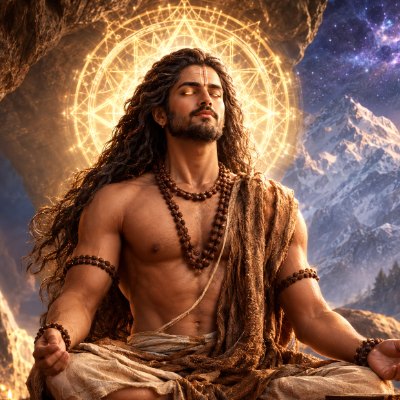
Kapila — Avatara Sage, Founder of Samkhya, Burner of the Sons of Sagara
Kapila · Kapila Muni · Kardama-putra · Devahuti-putra · Samkhya-pravartaka · Vishnu-avatara
Kapila is one of the most significant figures in the entire Hindu canonical tradition, standing at the intersection of cosmological genealogy, philosophical teaching, and divine incarnation. He is named in the Bhagavata Purana as the son of the Prajapati Kardama and his wife Devahuti — the daughter of the primordial sovereign Manu Svayambhuva — and is identified in that text as a direct avatara of Vishnu, born in fulfilment of a promise Vishnu made to Kardama during the Prajapati's long austerities. The Bhagavata Purana's third skandha devotes multiple chapters to the philosophical discourse Kapila delivers to his mother Devahuti after his father Kardama's departure into renunciation — this discourse, known as the Kapila-Devahuti samvada or the Kapila-Gita, expounds the Samkhya analysis of material existence, the categories of nature and consciousness, and the path to liberation through devotion, and is one of the most important philosophical passages in all of Puranic literature. Kapila is identified across a wide range of texts as the originary teacher or founder of the Samkhya darshana, one of the six classical schools of Hindu philosophy, and the Samkhyakarika of Ishvarakrishna — the earliest surviving systematic text of the Samkhya school — names him as its first teacher. He appears separately and crucially in the Valmiki Ramayana's Bala Kanda and in the Bhagavata Purana's ninth skandha in connection with the story of King Sagara's sixty thousand sons, whose destruction by Kapila's blazing gaze is the event that initiates the long chain of events leading to the descent of the river Ganga from heaven to earth — one of the most consequential narrative sequences in the entire Solar dynasty tradition. A critical textual problem runs through all engagement with this figure: the tradition contains material that may pertain to two distinct figures named Kapila, and the sources do not unanimously resolve whether the son of Kardama and Devahuti and the sage of the Sagara episode are one and the same being. This problem is addressed honestly below.
✦ The Name
The name Kapila is Sanskrit, derived from the root kapi, which refers to a tawny, reddish-brown, or golden-brown colour — the colour of fire, of certain animals, and of light. The name may be rendered as the tawny one, the golden-brown one, or one of a reddish-golden lustre — a colour associated in the Indian tradition with fire, with the sun, and with the energy of tapas, ascetic heat. This chromatic meaning is directly relevant to the Sagara episode, in which Kapila's fiery gaze — the concentrated tapas energy of his austerities — burns the sixty thousand sons of Sagara to ash. The name Kapila is also used in the tradition as a name for a tawny cow, and the divine cow Kapila appears in certain Puranic contexts as a being of great sanctity. The convergence of fire, austerity, and tawny golden light in the name's range of meaning makes it particularly appropriate for a figure who is simultaneously a philosophical illuminator and a being of devastating yogic power.
✦ Lineage
- Father: Kardama, one of the ancient Prajapatis — lords of creatures — described in the Bhagavata Purana as a mind-born son of Brahma who performed long austerities on the banks of the Sarasvati river at Bindu-sarovara. Kardama received a promise from Vishnu that the god would be born as his son. After marrying Devahuti, fathering nine daughters who were given to nine great sages, and finally fathering Kapila, Kardama renounced household life and departed as a wandering ascetic.
- Mother: Devahuti, daughter of Manu Svayambhuva — the first Manu and primordial sovereign of humanity in the current cosmic age — and of Shatarupa, herself said to be born from Brahma. Devahuti is thus the granddaughter of Brahma and is described in the Bhagavata Purana as a woman of great beauty, virtue, and spiritual aspiration. After Kardama's departure she remains with her son Kapila and receives from him the philosophical instruction that leads to her liberation.
- Maternal grandfather: Manu Svayambhuva, the first Manu, the self-born sovereign of the primordial age, himself a son of Brahma.
- Maternal grandmother: Shatarupa, the first woman of the tradition, born from Brahma.
- Sisters: Nine daughters of Kardama and Devahuti — Kala, Anasuya, Shraddha, Havirbhu, Gati, Kriya, Khyati, Arundhati, and Shanti — given in marriage respectively to the sages Marichi, Atri, Angiras, Pulastya, Pulaha, Kratu, Bhrigu, Vasishtha, and Atharvan. Through these marriages Kapila's sisters become the mothers of enormously significant lineages: Kala and Marichi are the parents of Kashyapa, the great progenitor of gods and demons; Khyati and Bhrigu are in certain accounts the parents of Lakshmi and Shukracharya; Arundhati and Vasishtha are the paradigmatic devoted couple of the tradition.
- Divine identity: Identified in the Bhagavata Purana as a direct avatara of Vishnu — the supreme deity in the Vaishnava theological framework — who took birth as Kardama's son in fulfilment of a promise made during Kardama's austerities. This identification is specifically the Bhagavata Purana's theological position and is most fully developed in that text.
✦ The Birth and the Promise of Vishnu
The Bhagavata Purana's third skandha narrates that when Vishnu appeared to Kardama at the culmination of the Prajapati's long austerities at Bindu-sarovara, Vishnu made two promises: that Kardama would receive a devoted and virtuous wife, and that Vishnu himself would be born as Kardama's son. The birth of Kapila is the fulfilment of this second promise. The text describes Kapila's birth as an event of cosmic significance, attended by auspicious signs and celebrated by the gods. Brahma himself is said to have visited Kardama's hermitage after Kapila's birth to confirm the child's divine identity and to instruct Kardama that his function as a householder was now complete and that he should pursue renunciation. The birth narrative establishes from the outset that Kapila is not merely a sage of great attainment but Vishnu himself in human form, descended into the world for the specific purpose of delivering the Samkhya teaching that will liberate all beings who receive it.
✦ The Instruction of Devahuti — The Kapila-Devahuti Samvada
Following Kardama's departure into renunciation, Devahuti remains at Bindu-sarovara with her son Kapila. The Bhagavata Purana describes her as grief-stricken at her husband's departure and at the departures of her nine daughters, now married and gone to their husbands' hermitages, and as turning her spiritual aspiration entirely toward her son. She approaches Kapila and requests from him instruction in the highest knowledge — the means by which the self can be freed from the bondage of material existence. Kapila's response constitutes one of the longest and most philosophically dense passages in the entire Bhagavata Purana, extending across several chapters of the third skandha.
The discourse Kapila delivers to Devahuti expounds the Samkhya analysis of reality: the distinction between Purusha — pure consciousness, the self — and Prakriti — primordial nature, the material principle — and the twenty-three evolutes of Prakriti that constitute the material world, from the great principle of cosmic intelligence through the ego-sense, the five subtle elements, the five gross elements, and the ten senses. Kapila explains the manner in which the Purusha becomes entangled with Prakriti through identification with its products, and the manner in which this entanglement can be dissolved through discriminative knowledge and through bhakti — devotional love directed toward Vishnu. The Bhagavata Purana's version of the Samkhya teaching is explicitly theistic, orienting the entire analytical framework of the Samkhya categories toward devotion to Vishnu as the ultimate means of liberation, which distinguishes it from the classical atheistic Samkhya of the Samkhyakarika. The discourse concludes with Devahuti's liberation — she attains the highest state through her son's teaching, and the site of her liberation at Bindu-sarovara is said to become a sacred tirtha.
✦ Kapila as Founder of the Samkhya School
Across a wide range of Hindu texts, Kapila is identified as the originary teacher or founder of the Samkhya philosophical system. The Samkhyakarika of Ishvarakrishna — composed approximately in the fourth or fifth century of the common era and the earliest surviving systematic exposition of the Samkhya school — names Kapila as the first teacher of Samkhya, stating that Kapila, out of compassion, transmitted the Samkhya knowledge to the sage Asuri, who transmitted it to Panchashikha, from whom it eventually reached Ishvarakrishna. The Mahabharata references Kapila as the great teacher of Samkhya on multiple occasions. The Bhagavad Gita, in the tenth chapter where Krishna enumerates his divine manifestations, identifies himself with Kapila among the perfected sages. The Vishnu Purana and Bhagavata Purana both treat Kapila's Samkhya teaching as a revelation rather than a philosophical construction — the knowledge of the categories of existence transmitted by Kapila is, in the Puranic frame, a divine disclosure of the structure of reality rather than the result of unaided human reasoning.
The classical Samkhya school as codified in the Samkhyakarika is dualistic and atheistic — it posits Purusha and Prakriti as the two ultimate realities without a creator god. The Bhagavata Purana's version of Kapila's teaching is theistic, placing Vishnu or the personal deity at the apex of the system. Scholarly discussion of this divergence has proposed that the Bhagavata Purana represents a later Vaishnava reinterpretation of an older non-theistic Samkhya tradition attributed to Kapila, but the sources themselves do not frame the relationship in these terms. Both versions claim Kapila as their authoritative source.
✦ The Burning of the Sons of Sagara
A Kapila who is distinct in narrative context — though whether distinct as a person is debated — plays a pivotal role in the Valmiki Ramayana's Bala Kanda and in the Bhagavata Purana's ninth skandha in connection with the story of King Sagara of Ayodhya and the descent of the Ganga. Sagara, a Solar dynasty king of great power, performs an Ashvamedha — a horse sacrifice — whose sacrificial horse is stolen and driven underground by the god Indra, who conceals it near the hermitage of the sage Kapila in the netherworld regions. Sagara sends his sixty thousand sons — born of his wife Sumati through a gourd — to search for the horse across the earth and beneath it. When the sons reach Kapila's hermitage and find the horse tethered there, they assume Kapila is the thief and attack him with weapons and abuse. Kapila, whose austerities have accumulated immense tapas energy, opens his eyes and the fire of his gaze burns the sixty thousand sons of Sagara to ash in an instant.
The ashes of Sagara's sons lie in the netherworld. Their spirits cannot attain liberation because they have not received the proper funeral rites, and the rites cannot be performed because there is no water to purify the ashes — ordinary water is insufficient; only the sacred water of the Ganga, the celestial river, can purify them. The Ganga however flows only in the heavens and has not yet descended to earth. The liberation of Sagara's sons therefore requires the descent of the Ganga from heaven to earth — an act that requires the most extreme austerities over multiple generations. Sagara's grandson Amsuman, then his son Dilipa the elder — an earlier Dilipa in the Solar line, distinct from the Dilipa who is the father of Raghu — and finally Amsuman's grandson Bhagiratha each undertake enormous austerities to propitiate Brahma and Shiva and secure the Ganga's descent. It is Bhagiratha who ultimately succeeds: through his austerities he brings the Ganga down from heaven, and the river flows to the netherworld and purifies the ashes of Sagara's sons, liberating them. The Ganga is therefore also called Bhagirathi in his honour.
The role of Kapila in this narrative is therefore not merely episodic but structurally foundational for the entire Solar dynasty tradition as the Ramayana tells it. The burning of Sagara's sons sets in motion the chain of events that brings the Ganga to earth, and the Ganga's descent is one of the most celebrated acts of filial piety and royal perseverance in the entire tradition. Without Kapila's burning gaze, there is no Ganga on earth; without the Ganga, there is no purification of the sons; and the narrative of Bhagiratha's extraordinary penance — which takes place in the same Solar dynasty that eventually produces Dilipa, Raghu, Dasharatha, and Rama — loses its occasion.
✦ The Question of One Kapila or Two
The most significant textual difficulty surrounding Kapila is whether the figure who appears in the Bhagavata Purana's third skandha as the son of Kardama and Devahuti and the teacher of Samkhya, and the figure who appears in the Bala Kanda of the Valmiki Ramayana and the ninth skandha of the Bhagavata Purana as the sage whose gaze burns Sagara's sons, are one and the same being or two distinct figures who share a name.
The Bhagavata Purana's ninth skandha, which narrates the Sagara episode, does not explicitly identify the Kapila of that story as the same Kapila son of Kardama and Devahuti narrated in the third skandha. The Valmiki Ramayana similarly does not make this identification explicit — it simply refers to the sage Kapila at his hermitage in the netherworld regions without stating his parentage. The Vishnu Purana includes both figures in its narrative framework but also does not explicitly collapse them into one. The devotional and commentarial tradition has generally treated them as the same being — the eternally present Vishnu avatara who manifests wherever the narrative requires his presence — and this identification is natural within the Bhagavata Purana's own theological framework, where Kapila as a Vishnu avatara transcends the normal constraints of a single human lifetime. However, from a strictly genealogical and textual standpoint, the identification rests on theological inference rather than on an explicit statement in the primary sources, and the possibility that two figures of the same name have been partially conflated in the tradition cannot be excluded. This profile presents both the traditional identification and the textual situation honestly, leaving the resolution to the reader's own judgment.
✦ Theological and Philosophical Significance
Kapila occupies a unique position in the Hindu tradition as a figure who is simultaneously a cosmological being of the primordial creation, a philosophical teacher of the highest order, and a divine incarnation. As the teacher of Samkhya he is the source of the most systematic and influential analytical framework for understanding material existence in the entire Indian philosophical tradition — the Samkhya categories of Purusha, Prakriti, and the twenty-three evolutes became foundational for virtually every subsequent school of Indian philosophy, including Yoga, which the Yogasutra of Patanjali explicitly builds upon the Samkhya metaphysical foundation. The Bhagavad Gita's identification of Krishna with Kapila among perfected beings places him at the apex of a lineage of wisdom. His role in the Sagara episode connects the world of philosophical teaching to the world of cosmic action — the sage whose inner fire is so absolute that it destroys sixty thousand warriors in an instant is the same being who delivers the most tender and compassionate instruction to a grieving mother seeking liberation.
In the Bhagavata Purana's theological framework, Kapila's descent as the son of Kardama and Devahuti is an act of divine grace directed simultaneously at Devahuti personally — securing her liberation through his teaching — and at the world at large, through the transmission of the Samkhya knowledge that liberates all who receive and practise it. The figure of Devahuti receiving instruction from her own son, whom she knows to be Vishnu himself, is one of the most poignant and theologically charged scenes in all of Puranic devotional literature.
✦ Connection to the Wider Genealogy
Through his mother Devahuti and her father Manu Svayambhuva, Kapila is genealogically connected to the primordial sovereign lineage at the very root of the human tradition. Through his sisters and their marriages to the nine great sages, his family network extends across the entire spectrum of divine and semi-divine genealogy in the Puranic system. Through the Sagara episode, his action — whether understood as the act of this same Kapila or of a homonymous sage — initiates the chain of events that brings the Ganga to earth and provides the occasion for Bhagiratha's great penance, one of the defining episodes in the Solar dynasty narrative that leads to Dasharatha and Rama. Kapila therefore connects the Prajapati lineage of Kardama to the Ikshvaku Solar dynasty narrative not through direct genealogical descent but through a causative narrative link of the highest consequence for the entire Solar dynasty tradition.
✦ References
Primary Sources
- Bhagavata Purana, Skandha 3, Chapters 24–33: The primary source for Kapila as the son of Kardama and Devahuti and as a Vishnu avatara; narrates his birth, his father's departure, and the Kapila-Devahuti samvada in full; the most philosophically extensive treatment of Kapila in any primary source.
- Bhagavata Purana, Skandha 9, Chapter 8: Narrates the Sagara episode including the burning of the sixty thousand sons by the sage Kapila at his netherworld hermitage; does not explicitly identify this Kapila as the son of Kardama.
- Valmiki Ramayana, Bala Kanda, Sargas 38–44: Narrates the Sagara episode, the theft of the horse, the sixty thousand sons, their burning by Kapila's gaze, and the long chain of austerities performed by Amsuman, Dilipa, and Bhagiratha to bring the Ganga to earth to liberate the sons' ashes; the sage Kapila is named but not identified by parentage.
- Mahabharata, Shanti Parva and Santi Parva philosophical sections: References Kapila as the great teacher of Samkhya on multiple occasions; provides important evidence for the tradition of Kapila as the originary Samkhya teacher outside the Puranic framework.
- Bhagavad Gita, Chapter 10, verse 26: Krishna identifies himself with Kapila among the perfected sages — one of the Gita's most direct textual attestations of Kapila's supreme standing in the tradition.
- Samkhyakarika of Ishvarakrishna: Names Kapila as the first teacher of the Samkhya lineage and the source of the Samkhya knowledge transmitted through Asuri and Panchashikha; the earliest surviving systematic Samkhya text and the primary evidence for Kapila's role as the school's founder.
- Vishnu Purana, Book 1, sections on Kardama and the primordial sages: Identifies Kapila as the son of Kardama and Devahuti and references his role as a teacher of Samkhya.
Modern Reference Works
- Vettam Mani, Puranic Encyclopaedia (Motilal Banarsidass, 1975), entry on Kapila: Synthesises the multiple textual traditions surrounding Kapila and addresses the question of one or two figures of that name.
- Gerald James Larson, Classical Samkhya (Motilal Banarsidass, 1979): The standard modern scholarly treatment of the Samkhya philosophical school; addresses Kapila's role as the attributed founder and the relationship between the Bhagavata Purana's theistic Samkhya and the classical atheistic Samkhya of the Samkhyakarika.
- Ganesh Vasudeo Tagare (trans.), Bhagavata Purana, Parts 2 and 4 (Motilal Banarsidass, 1976–1978): Critical translation of the third and ninth skandhas; the notes to the Kapila chapters address the avatara identification and the philosophical content of the Kapila-Devahuti discourse.
- Robert P. Goldman (trans.), Valmiki Ramayana, Vol. 1: Balakanda (Princeton University Press, 1984): Critical translation with annotation of the Sagara episode sargas; the notes address the figure of Kapila in the context of the Solar dynasty narrative and the Ganga descent story.
- Wendy Doniger O'Flaherty, The Origins of Evil in Hindu Mythology (University of California Press, 1976): Addresses the Sagara episode and the burning of the sons in the context of Puranic narratives of ascetic power and its consequences; provides comparative analysis relevant to Kapila's role in that story.