
About
Shraddha — Daughter of Kardama and Consort of Angiras
Shraddha · Sradha · Vasuda (in certain variant accounts) · not to be confused with Shraddha daughter of Daksha, nor with Shraddha wife of Vaivasvata Manu
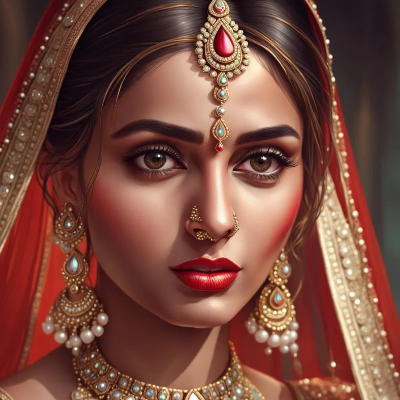
Shraddha is a figure in the Hindu Puranic tradition, identified in the Bhagavata Purana as the third of the nine daughters born to Kardama Prajapati — a mind-born son of Brahma and one of the progenitors of creation — and his wife Devahuti, herself the daughter of Svayambhuva Manu, the first man, and his wife Shatarupa. She is given in marriage to the sage Angiras, one of the seven great sages of the first Manvantara and a mind-born son of Brahma, and through him becomes the mother of two sons of considerable Puranic and Vedic significance — Utathya and Brihaspati, the preceptor of the gods — and of four daughters associated with the phases of the moon: Sinivali, Kuhu, Raka, and Anumati. Shraddha's principal textual source is the Bhagavata Purana, particularly its third and fourth skandhas, which describe the births and marriages of Kardama's daughters and the progeny of Angiras respectively. She is mentioned also in secondary and summary form in sources discussing the lineages of the Saptarishis. Her name is one of considerable theological resonance in the Hindu tradition, denoting faith, reverence, and devoted attention, and this significance must be understood as forming part of her identity as a figure in the Puranic genealogical scheme. This Shraddha must be carefully distinguished from at least two other prominent figures bearing the same name in Hindu scripture, as discussed below.
✦ The Name
The name Shraddha derives from the Sanskrit root shrad, an archaic form related to the heart or the inner being, combined with the causative of dha, meaning to place or to hold, yielding the sense of placing one's heart in something — heartfelt trust, devoted faith, and earnest reverence. Shraddha in its broadest Sanskrit usage denotes the quality of sincere and attentive faith directed toward a worthy object: a teacher, a deity, a sacred teaching, or a ritual act. It is distinguished from blind belief by its association with attentiveness, sincerity, and the full engagement of the inner being. The Bhagavad Gita discusses shraddha extensively in its seventeenth chapter, where it is classified according to the three gunas — sattvic, rajasic, and tamasic — and identified as the foundational disposition that determines the character of a person's worship, diet, and conduct. As the name of a daughter of Kardama and the wife of Angiras, the name carries the implication that she personifies or embodies this quality of devoted faith, making her a fitting ancestral figure for the lineage that includes Brihaspati, the divine preceptor and embodiment of sacred wisdom and priestly learning.
✦ Lineage
- Father: Kardama — a Prajapati and mind-born son of Brahma, the creator; born from the shadow of Brahma according to certain accounts, and born from his navel according to others; one of the progenitors of creation who undertook ten thousand years of tapas on the banks of the Sarasvati river at Bindusaras before being granted Devahuti as his wife by Vishnu's blessing.
- Mother: Devahuti — daughter of Svayambhuva Manu, the first progenitor of mankind, and of Shatarupa; renowned in the Puranic tradition for her devoted service to her husband Kardama and for being the mother of the avatar Kapila, who taught her the Sankhya philosophy and through that teaching liberated her from the cycle of rebirth.
- Sisters: Kala — given in marriage to Marichi, through whom Kashyapa was born; Anasuya — given to Atri, mother of Soma, Dattatreya, and Durvasa; Havirbhu — given to Pulastya, mother of Agastya and Vishrava; Gati — given to Pulaha; Kriya — given to Kratu; Khyati — given to Bhrigu; Arundhati — given to Vasishtha, celebrated across the tradition as the supreme exemplar of wifely virtue and devotion; and Shanti — given to Atharvan. All nine daughters were born on the same day through the yogic power of Kardama, who divided himself into nine forms for their generation.
- Brother: Kapila — the avatar of Vishnu born to Kardama and Devahuti; founder of the Sankhya philosophical system; the teacher who liberated his own mother through the exposition of discriminative wisdom.
- Husband: Angiras — one of the mind-born sons of Brahma and one of the seven great sages of the first Manvantara; a figure of immense Vedic antiquity credited alongside Atharvan with the formulation of the Atharva Veda; associated in Vedic literature with fire, priestly knowledge, and the ancestral rites; the progenitor of the Angirasa lineage, one of the most significant priestly and sage lineages in the Vedic and Puranic tradition.
- Son: Utathya — described in the Bhagavata Purana as a great knower of brahman; a sage of considerable significance in the Puranic tradition, identified in some accounts as a partial incarnation of the supreme lord; elder brother of Brihaspati.
- Son: Brihaspati — the preceptor and spiritual guide of the gods, particularly of Indra and the Devas; one of the most prominent sages in both the Vedic and Puranic traditions; identified with the planet Jupiter; author of a school of political thought and ethics; his birth as the son of Shraddha and Angiras makes Shraddha the mother of the divine preceptor, a genealogical distinction of considerable significance.
- Daughter: Sinivali — associated with the first day of the bright lunar fortnight; a deity connected with the moon's phases and propitious for conception and fertility; her name is attested in the Atharva Veda as a divine figure invoked for blessings.
- Daughter: Kuhu — associated with the new moon day; a lunar deity whose name denotes the day of the new moon and the cuckoo bird; invoked in Vedic ritual contexts connected with the lunar cycle.
- Daughter: Raka — associated with the full moon day; her name denotes the full moon itself; a deity invoked for abundance and blessings connected with the fullness of the lunar cycle.
- Daughter: Anumati — associated with the day before the full moon, the fourteenth lunar day of the bright fortnight; her name means divine permission or gracious assent; she is invoked in Vedic contexts as a goddess who bestows favour and consent for undertakings.
✦ Genealogical Context within the Kardama Lineage
Shraddha belongs to a generation of nine sisters whose marriages to the seven great sages of the first Manvantara — the Saptarishis — and to two other great sages constitute one of the principal mechanisms by which the Puranic tradition accounts for the origin of the major priestly and cosmic lineages of the created universe. Kardama, as a Prajapati charged with the propagation of creation, fulfils his cosmic function not only through his son Kapila — who represents the path of renunciation and liberation — but through his nine daughters, each of whom becomes the mother of a significant lineage of sages, seers, and cosmic beings. The marriages are described in the Bhagavata Purana as arranged by Brahma's instruction, with each daughter assigned to a specific sage in a divinely ordered pairing. Shraddha's assignment to Angiras, and through him her role as the mother of Brihaspati, places her at the genealogical origin of one of the most theologically and ritually significant lineages in the tradition — that of the divine preceptor through whom sacred wisdom and the science of ritual are transmitted to the gods themselves.
✦ The Daughters and Their Lunar Significance
The four daughters of Shraddha and Angiras — Sinivali, Kuhu, Raka, and Anumati — constitute a group of lunar goddesses associated with specific phases or days of the lunar month. Their collective significance is cosmological: they personify the moon's cycle at its most auspicious moments and are invoked in Vedic ritual for blessings connected with those phases. Sinivali presides over the first visible crescent of the waxing moon, a day considered particularly auspicious for conception; Kuhu presides over the new moon, when the moon is invisible; Raka presides over the full moon, the night of maximum lunar brilliance; and Anumati presides over the fourteenth day of the waxing fortnight, the night before the full moon, when the moon is nearly complete and the divine permission or grace that the full moon represents is already imminent. These four figures are attested in the Atharva Veda, the Rigveda, and the Shatapatha Brahmana, as well as in the Puranas, giving them a textual depth extending well back into the Vedic period. Their attribution in the Bhagavata Purana as daughters of Shraddha and Angiras integrates these ancient Vedic lunar goddesses into the Puranic genealogical framework.
✦ Disambiguation
The name Shraddha is borne by several distinct figures in the Puranic tradition and requires careful disambiguation. Three figures require particular attention. First, the Shraddha treated in this profile: the daughter of Kardama and Devahuti, wife of Angiras, and mother of Utathya, Brihaspati, Sinivali, Kuhu, Raka, and Anumati, as attested primarily in the Bhagavata Purana. Second, Shraddha daughter of Daksha and Prasuti: this is one of the thirteen or sixteen daughters of Daksha described in the Vishnu Purana and the Bhagavata Purana, given in marriage to Dharma — the personification of righteousness — and who in that context personifies the quality of faith as one of the virtues of the Dharmic household. This Shraddha is an entirely separate figure from the daughter of Kardama. Third, Shraddha wife of Vaivasvata Manu: certain texts refer to the wife of the seventh Manu, Vaivasvata Manu also called Shraddhadeva, by the name Shraddha; this figure is again distinct from both the above. The identity of Shraddha in any given Puranic passage must therefore be established from context, and no conflation of these three figures is supported by the primary texts.
✦ Textual Variants and Inconsistencies
The principal textual inconsistency concerning Shraddha as wife of Angiras lies in the naming of Angiras's consort across different sources. The Bhagavata Purana, Skandha 4, names his wife as Shraddha — daughter of Kardama — and records their children as Utathya, Brihaspati, Sinivali, Kuhu, Raka, and Anumati. Several other sources, including accounts summarised at the Isvara Vedic Library and in secondary scholarship, name Angiras's wife as Surupa — in some accounts the daughter of the sage Marichi — or as Vasuda, and record Utathya, Samvartana, and Brihaspati as his sons without mentioning daughters. The Puranic Encyclopaedia of Vettam Mani and the Isvara Library source explicitly note that Vasuda, the mother of Brihaspati, is called Shraddha also in some Puranas, suggesting that Shraddha and Vasuda may be alternate names for the same figure rather than two separate wives, though this identification is not consistent across all primary texts. The question of whether Samvartana is also a son of Shraddha or whether he belongs to a different union of Angiras is not resolved across the sources. These variant accounts should be acknowledged as reflecting genuinely divergent genealogical traditions rather than simple scribal errors.
✦ Theological Significance
Shraddha's significance within the Puranic genealogical scheme operates on two levels. At the level of cosmological function, she is the mother of Brihaspati, the divine preceptor, and through him the ancestral source of the tradition of sacred learning, ritual expertise, and priestly wisdom that Brihaspati embodies and transmits to the gods. The union of Shraddha — faith and devoted reverence — with Angiras — the fiery priestly sage born of Brahma — to produce the divine teacher Brihaspati carries a coherent theological implication: that the preceptor of the gods is born of the combination of priestly power and sincere devotional faith. At the level of the individual figure, Shraddha as a daughter of Kardama belongs to the generation of women who, in the Puranic account, transform the abstract creative mandate of the Prajapatis into the living lineages of sages and gods. In this sense the nine daughters of Kardama collectively function as the generative matrix through which the sage lineages of the first Manvantara propagate themselves into the subsequent history of creation.
✦ References
Primary Sources
- Bhagavata Purana, Skandha 3, Chapters 22–24 — the principal source for the birth of Kardama's nine daughters including Shraddha, and for their marriages to the Saptarishis and other great sages as arranged by Brahma's instruction.
- Bhagavata Purana, Skandha 4, Chapter 1 — the principal source recording Shraddha's children by Angiras: the sons Utathya and Brihaspati, and the daughters Sinivali, Kuhu, Raka, and Anumati.
- Vishnu Purana, Book 1, Chapter 10 — contains an account of the lineage of Angiras and his offspring relevant to assessing the variant naming of his wife.
- Atharva Veda — contains the earliest attested references to Sinivali, Kuhu, Raka, and Anumati as lunar goddesses, establishing the Vedic textual basis for these daughters of Shraddha independent of the Puranic genealogical attribution.
- Rigveda — contains references to Anumati and to the lunar phases she personifies, relevant to the Vedic background of Shraddha's daughters.
- Shatapatha Brahmana — contains ritual discussions of Sinivali, Raka, and Anumati as lunar deities invoked in sacrificial contexts.
- Bhagavad Gita, Chapter 17 — contains the most sustained Puranic discussion of shraddha as a theological and ethical category, providing essential background for understanding the significance of Shraddha as a personal name.
Modern Reference Works
- Vettam Mani, Puranic Encyclopaedia (1975), entries on Shraddha (daughter of Kardama), Angiras, and Brihaspati — collates the principal Puranic references and notes the variant naming of Angiras's wife across sources, including the identification of Vasuda with Shraddha.
- A.A. Macdonell and A.B. Keith, Vedic Index of Names and Subjects (1912), entries on Sinivali, Kuhu, Raka, and Anumati — provides the foundational scholarly analysis of these lunar goddesses in the Vedic literature, establishing their pre-Puranic textual history independent of their genealogical attribution to Shraddha.
- Wendy Doniger O'Flaherty, Women, Androgynes, and Other Mythical Beasts (1980) — discusses the role of the wives and daughters of the Prajapatis in the Puranic scheme of creation and genealogical propagation.
- Wisdom Library (wisdomlib.org), entries on Shraddha (daughter of Kardama), Angiras, Brihaspati, Sinivali, Kuhu, Raka, and Anumati — provides verse-level references to the relevant Bhagavata Purana passages and assists in distinguishing the multiple figures named Shraddha across the tradition.