
About
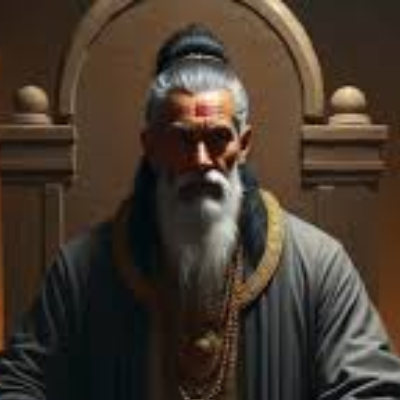
Subala — King of Gandhara, Father of Gandhari and Shakuni
Subala · Suvala · King of Gandhara · Father of Saubala
Subala was the king of the ancient northwestern kingdom of Gandhara — a realm that stretched from the river Sindhu to Kabul — and is significant in the Mahabharata tradition primarily as the father of two figures who shaped the course of the Kurukshetra War: Gandhari, who became the queen of the blind Kuru king Dhritarashtra and the mother of the hundred Kauravas, and Shakuni, the master strategist whose dice-game scheme precipitated the conflict between the Pandavas and Kauravas. Subala himself plays a limited but structurally important role in the epic's opening narrative, consenting to the marriage proposal of Bhishma despite knowing Dhritarashtra's blindness, and personally sending Gandhari to Hastinapura accompanied by Shakuni. He is attested in the Mahabharata (Adi Parva, Chapters 109–111) and in the Puranic Encyclopaedia, which identifies him as a descendant of Turvasu, the second son of Yayati of the Lunar Dynasty.
✦ The Name
The name Subala is a compound of su (well, good, very) and bala (strength, power), yielding the meaning of one who is greatly powerful or one possessed of excellent strength — a conventional royal honorific in the Kshatriya tradition. The variant form Suvala, used in some Mahabharata manuscripts and secondary sources, is an alternate transliteration of the same name. From his name is derived the patronymic Saubala — son of Subala — which is one of Shakuni's most consistently used epithets throughout the Mahabharata. Gandhari similarly bears the matronymic-equivalent epithets Saubaleyi and Subalaja — daughter of Subala — confirming the importance of his identity in defining the social and genealogical standing of both his famous children.
✦ Lineage
- Dynasty: The Puranic Encyclopaedia (drawing on Mahabharata, Adi Parva, Chapter 111) places Subala in the line of Turvasu, the second son of King Yayati of the Lunar Dynasty by his wife Devayani; Turvasu's line passed through Vahni, Gobhanu, Trishanku, Karandhama, and Marut before merging with the Puru dynasty and eventually giving rise to the Gandhara royal house; an alternate secondary account places Gandhara's foundation in the line of Druhyu, the third son of Yayati — a genuine textual variant unresolved across the sources
- Wife: Sudharma (also recorded as Sudarma in some sources) — the mother of Gandhari and Shakuni; attested in the Mahabharata Fandom compilation and secondary reference works; not named directly in the critical edition's principal passages on Subala
- Daughter: Gandhari — devoted worshipper of Shiva, recipient of Shiva's boon of a hundred sons, given in marriage to Dhritarashtra the blind king of Hastinapura; mother of the hundred Kauravas including Duryodhana, Dushasana, and Vikarna, and of the daughter Duhsala; known throughout the Mahabharata by the patronymics Saubaleyi, Subalaja, and Subalatmaja
- Sons: Shakuni — the most prominent, a master of dice and illusion, who accompanied Gandhari to Hastinapura and remained in the Kaurava court as Duryodhana's chief counsellor; Achala and Vrishaka — named in the Mahabharata (Shalya Parva) as prominent warriors who fought and died in the Kurukshetra War; Gaya, Gavaksha, Vrishava, Charmavat, Arjava, and Suka — named in the Karna Parva (6.91) as brothers of Shakuni who participated in the war; the Adi Parva (1.188) also names Vrihadvala among Subala's sons
✦ The Marriage of Gandhari to Dhritarashtra
The Mahabharata (Adi Parva, Chapter 109) records that when Bhishma, the patriarch of the Kuru dynasty, became aware that Gandhari had received Shiva's boon of a hundred sons, he dispatched a marriage proposal to Subala seeking her hand for Dhritarashtra, the eldest prince of Hastinapura. The proposal troubled Subala deeply — he knew that Dhritarashtra was born blind and was therefore effectively ineligible for the throne. The Puranic Encyclopaedia records that Subala weighed the blindness of the prospective groom against the extraordinary power, reputation, and lineage of the Kuru royal house and ultimately consented. He then arranged for Shakuni to accompany Gandhari to Hastinapura for the marriage, an act that placed the most consequential figure in the Kaurava court's subsequent history permanently within its walls.
✦ Presence at the Draupadi Swayamvara and Rajasuya
The Mahabharata records Subala's presence at two major inter-dynastic events: the swayamvara of Draupadi at Panchala, and the Rajasuya sacrifice of Yudhishthira at Indraprastha. His attendance at both confirms his standing as a recognised king of sufficient rank to be invited to or to attend the most significant ceremonial occasions of the age. Beyond these references, the primary text does not provide narrative detail about his individual actions at either event.
✦ Textual Variants and Inconsistencies
The most substantive genealogical inconsistency concerns Subala's dynastic origin. The Puranic Encyclopaedia places him in the line of Turvasu, Yayati's second son. A secondary account drawing on the Bhagavata Purana framework places the Gandhara kingdom's foundation in the line of Druhyu, Yayati's third son. These two attributions assign Subala to different branches of the Lunar Dynasty and cannot be reconciled from the primary sources.
A second point concerns the episode in which Bhishma imprisons Subala and all his sons on account of Gandhari having been previously married to a goat to nullify an inauspicious horoscope, and in which Subala orders his surviving food to be given entirely to Shakuni so that he alone survives to take vengeance. This episode is widely circulated in popular tradition and appears in certain Jain-derived and regional retellings. It is not attested in the critical edition of the Mahabharata, and the Puranic Encyclopaedia does not record it. It should be treated as secondary and folk tradition rather than primary epic canon.
✦ Connection to the Wider Genealogy
Subala connects the Gandhara royal house — a northwestern Kshatriya kingdom of the Lunar Dynasty — to the heart of the Kuru dynastic narrative through his daughter Gandhari's marriage to Dhritarashtra. Through Gandhari, Subala became the maternal grandfather of the hundred Kauravas, including Duryodhana — the principal antagonist of the Mahabharata — and through his son Shakuni, whose presence in the Kaurava court as counsellor and strategist was decisive in the events leading to the Kurukshetra War, Subala's family shaped the central conflict of the epic tradition. After Shakuni's death in the war at the hands of Sahadeva, Shakuni's surviving son inherited the Gandhara throne, and the kingdom was later conquered by Arjuna during the Ashvamedha campaigns of Yudhishthira.
✦ References
- Mahabharata, Adi Parva, Chapter 109, verse 11: Records Subala's consent to Bhishma's marriage proposal despite Dhritarashtra's blindness; primary source for the marriage negotiation episode
- Mahabharata, Adi Parva, Chapter 111: Identifies Subala as a king of Gandhara in the family of Turvasu; records his sending of Gandhari and Shakuni to Hastinapura
- Mahabharata, Adi Parva, Chapter 188: Lists Subala's sons including Shakuni, Achala, Vrishaka, and Vrihadvala as Gandhara chiefs
- Mahabharata, Karna Parva, Chapter 6, verse 91: Names additional sons of Subala — Gaya, Gavaksha, Vrishava, Charmavat, Arjava, and Suka — as warriors in the Kurukshetra War
- Mahabharata, Adi Parva, Chapter 63: Records that both Shakuni and Gandhari were experts in statecraft and economics, reflecting the cultural and intellectual heritage of Subala's kingdom
- Puranic Encyclopaedia (Vettam Mani), "Subala" and "Gandhari" entries: Secondary source providing the Turvasu-line genealogy for Subala; records his consent to Gandhari's marriage and his role in sending Shakuni to Hastinapura; notes the patronymics Saubaleyi and Subalaja for Gandhari
- Wikipedia, "Gandhari (Mahabharata)" and "Shakuni" articles: Secondary sources confirming Subala's dynasty, his wife Sudharma, his sons, and his presence at the Draupadi swayamvara and Rajasuya; noting the prison episode's absence from the critical edition
- Wisdomlib, Puranic Encyclopaedia — "Subala" entry: Secondary source citing Adi Parva Chapter 109 for the marriage consent and the genealogical placement in the Turvasu line