
About
Vatika (Pinjala) — Wife of Vyasa, Daughter of Jabali, Mother of Shuka
Vatika · Vātikā · Pinjala · Pinjalā · Jabali-putri · Vyasa-patni · Shuka-mata
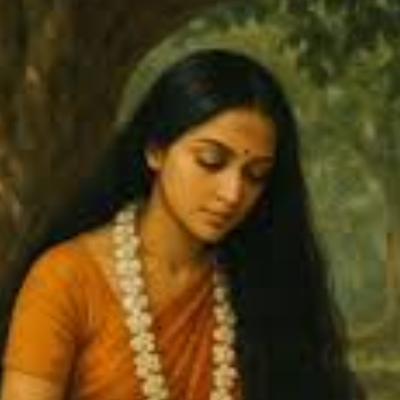
Vatika — also known as Pinjala — is the wife of Vyasa (Krishna Dvaipayana), the compiler of the Vedas and author of the Mahabharata; the daughter of the sage Jabali; and the mother of Shuka, Vyasa's true spiritual heir and the narrator of the Bhagavata Purana to the dying king Parikshit. Her existence is confirmed in the Skanda Purana, which records that Vyasa married Vatika, also known as Pinjala, the daughter of the sage Jabali, and that their union produced Shuka. Multiple modern sources drawing from the same Skanda Purana reference confirm her names and her father consistently — the Skanda Purana is the primary and essentially sole canonical authority for her identity. No primary text records any personal episode of her life, any description of her character, any account of how her marriage to Vyasa came about, or any narrative involving her beyond the fact of Shuka's birth. The extraordinary episode of Shuka's twelve-year residence in the womb — which the Skanda Purana's version of his birth associates with Vatika as his mother — is narrated in the Shuka profile below, where it belongs to the account of the son rather than the mother. Vatika's canonical record is confined entirely to her identification as Jabali's daughter and Shuka's mother, and this profile is proportionally brief.
✦ The Names
The name Vatika — written Vātikā — derives from the Sanskrit root vata (the banyan tree, also the wind, Vayu) with the feminine diminutive suffix; it means the small banyan, the one of the banyan tree, the wind-born one. Her alternate name Pinjala — written Pinjalā — is of uncertain primary etymology in the available sources; it appears as a personal name rather than a common Sanskrit noun in this context. The Animated Water source uses Pinjala as the primary form and Vatika as the alternate, while the Wikipedia Vyasa and Shuka articles use Vatika as the primary form and Pinjala as the alternate. Both names are used with equal frequency across the sources.
✦ Lineage
- Father: Jabali — a sage; his lineage and personal history are not recorded in primary canonical sources in connection with Vatika; he appears in the Valmiki Ramayana as a materialist philosopher who advises Rama to abandon dharma and accept the throne of Ayodhya, arguing that there is no afterlife and no binding moral obligation — advice Rama firmly rejects; his presence in the tradition as Vatika's father is confirmed in the Skanda Purana
- Husband: Vyasa — Krishna Dvaipayana; compiler of the Vedas; author of the Mahabharata and eighteen Puranas; son of the sage Parashara and the fisherwoman Satyavati; Chiranjivi; partial incarnation of Vishnu
- Son: Shuka — Vyasa's true spiritual heir; born already liberated; narrator of the Bhagavata Purana to King Parikshit; who surpassed his father in spiritual attainment
✦ References
- Skanda Purana — the primary and sole canonical source: Vyasa married Vatika also known as Pinjala the daughter of the sage Jabali; their union produced Shuka who repeated everything he heard and was named accordingly
- Wikipedia — Vyasa; Wikipedia — Shuka; Dharmapedia — Vyasa; Manavata — Vyasa; Animated Water — Shukamuni son of Veda Vyasa: modern summaries all drawing from the Skanda Purana account and confirming the names Vatika and Pinjala and the father Jabali