
About
Chyavana — Son of Bhrigu, Author of Chyavanaprasham, the Sage Who Won the Ashvins Their Share of the Sacrifice
Chyavana · Cyavana · Cyavāna · Chyavan · Bhrigu-putra · Puloma-suta · Sukanya-pati · Aurva-pita · Apnavana-pita · Dadhicha-pita · Pramati-pita · Ashvins-mitra · Mada-srashta
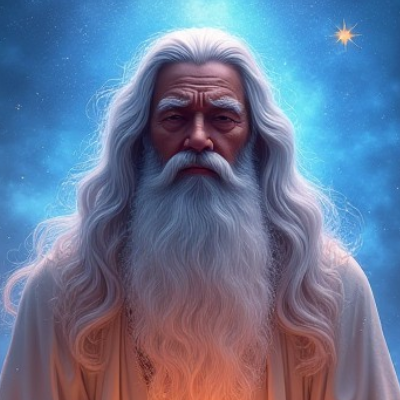
Chyavana is a great sage (Maharishi); the son of the Saptarishi Bhrigu and his wife Puloma; one of the earliest named sages in the Vedic tradition, already present in the Rigveda as an aged sage whose youth was restored by the twin divine physicians the Ashvini Kumaras; the husband of Sukanya, the devoted daughter of King Sharyati; the sage who created the demon Mada to compel Indra to accept the Ashvins' right to a share of the soma sacrifice; and the figure whose name is permanently embedded in the Ayurvedic tonic Chyavanaprasham (Chyawanprash) — the herbal preparation first made for him by the Ashvins to restore his youth and health, which remains one of the most widely consumed traditional health preparations in India. His canonical story spans the Rigveda, the Shatapatha Brahmana, the Mahabharata (Vana Parva Chapters 122–125 and Anushasana Parva Chapters 52–56), and the Bhagavata and Padma Puranas. His most celebrated episodes — the anthill meditation, Sukanya's piercing of his eyes, Sharyati's offering of his daughter in appeasement, the Ashvins' restoration of his youth, and the creation of Mada — are among the best attested biographical narratives attached to any pre-Mahabharata sage, present across texts spanning more than two thousand years. He is also described as the author of Vedic hymns — the Mahabharata identifies him as the author of some hymns — and as a Brahmarshi of great power who could paralise Indra's arm with his ascetic energy.
✦ The Name
The Sanskrit name Chyavana — written Cyavana — derives from the root chyu or cyu meaning to fall, to slip, to drop from, to be prematurely discharged. The Mahabharata (Adi Parva, Chapters 5–6) explains the name directly: when the Rakshasa Puloman carried Bhrigu's wife Puloma away while she was pregnant, her fright caused the child to slip prematurely from her womb — in Sanskrit, chyuta, the fallen, the prematurely discharged. This chyuta child was Chyavana. The radiance the infant emitted at birth immediately burned the Rakshasa Puloman to ashes. The name thus records both the unusual circumstances of his birth and the fierce spiritual power he was born with — the fire that destroyed a Rakshasa was present in him from the moment he emerged from the womb before his time. His name in the Rigveda appears as Chyavāna — a slightly variant spelling that the tradition treats as referring to the same figure.
✦ Lineage
- Father: Bhrigu — one of the seven Saptarishis; one of Brahma's ten mind-born sons; the first compiler of predictive astrology; the sage who tested the three members of the Trimurti and found Vishnu the greatest; whose wife Khyati bore him Dhata, Vidhata, and Lakshmi herself as their daughter Bhargavi
- Mother: Puloma — Bhrigu's wife at the time of Chyavana's birth; who was briefly carried away by the Rakshasa Puloman while pregnant; who returned with the infant after the Rakshasa was burned to ash by the child's radiance; a distinct figure from Bhrigu's other wife Khyati
- First wife (one tradition): Arushi — daughter of Vaivasvata Manu (the seventh and current Manu, progenitor of humanity); their son was Aurva — the fierce sage who was later born from his mother's thigh when enemies attacked the Bhrigu clan; who became the ancestor of the Bhargava line that produced Jamadagni and Parashurama
- Second wife (second tradition): Sukanya — daughter of King Sharyati (himself a son of Vaivasvata Manu); their sons were Apnavana and Dadhicha (the sage who gave his bones to the devas to make Indra's Vajra); Chyavana is also considered the father of Harita in some traditions, and of Pramati (whose son Ruru is also a celebrated sage) in others; both traditions may be correct if Chyavana married twice across a very long lifetime
- Descendants through Aurva: Aurva → Richika → Jamadagni → Parashurama; making Chyavana the ancestor of Parashurama, the sixth avatar of Vishnu
- Hermitage: at Dhosi Hill in the Vedic state of Brahmavarta on the present-day Haryana-Rajasthan border per the Satapatha Brahmana; and on the Satpura range near the river Payoshni per the Padma Purana
✦ Birth — The Fallen Child
The Mahabharata's Adi Parva (Chapters 5–6) narrates Chyavana's birth with precise attention. While Bhrigu had gone to bathe, a Rakshasa named Puloman — who had himself loved Puloma before her marriage to Bhrigu and had never given up his desire for her — came to the ashrama. He recognised her through the sacrificial fire's identification of her as Bhrigu's legitimate wife. He could not then take her by force without incurring the sin of disrupting a Brahmin's marriage, but he carried her away as a boar regardless, claiming she should have been his. The shock of the abduction caused Puloma to give birth prematurely — the child slipped from her womb while she was being carried. The infant's radiance was so intense that the Rakshasa was immediately burned to ash. Puloma, now free with her newborn, walked back to the ashrama. Bhrigu, upon hearing what happened, was furious with the fire god Agni for having identified Puloma to the Rakshasa — he cursed Agni to consume everything indiscriminately. The episode records that Chyavana arrived in the world in circumstances of abduction, flight, premature birth, and destructive radiance — the aggressive spiritual energy of his Bhrigu lineage present from his first breath.
✦ The Anthill, Sukanya, and the Marriage
The episode for which Chyavana is most widely known across the tradition occurs in the Shatapatha Brahmana (IV.1.5.1–13) and is elaborated in the Mahabharata's Vana Parva (Chapters 122–125). Chyavana had been performing intense austerities for so long — absorbed in meditation on the bank of a lake — that white ants had built their mound around his entire body. Only his eyes were left visible, gleaming in the earth like two bright embers. King Sharyati — a son of Vaivasvata Manu — arrived in that area with his army, his harem, and his daughter Sukanya. While exploring the area, Sukanya noticed two glowing lights in what appeared to be a termite mound and, not knowing they were a human being's eyes, poked them with a stick or twig. Chyavana was in great pain and became furious. He directed his curse at Sharyati's army — creating discord and obstruction within them, preventing the natural functions of the soldiers. Sharyati, alarmed at the sudden affliction of his people, investigated and discovered the cause. He went to Chyavana and offered his daughter Sukanya in marriage as appeasement. Chyavana agreed. Sukanya accepted, understanding the gravity of the situation and the dharmic implication of the inadvertent harm she had caused. Sharyati gave her in marriage and departed. Sukanya became the devoted wife of the ancient, afflicted sage who had been sitting motionless in a termite mound — and chose to remain with him through everything that followed, including the Ashvins' attempt to seduce her away.
✦ The Ashvins — Youth Restored, and Chyavanaprasham
The Ashvini Kumaras — the twin divine physicians, sons of Surya and Sanjna in her mare-form — came to Chyavana's ashrama. They saw Sukanya bathing and were struck by her beauty. They approached her and urged her to leave her old and disfigured husband and take one of them as her partner instead. They promised to first restore Chyavana's youth so she could make an unbiased choice between her husband and one of them. Sukanya refused the implicit suggestion of abandoning her husband but told Chyavana of the offer. Chyavana — seeing in the Ashvins' proposal an opportunity to fulfil his long-standing wish for youth, and also an opportunity to repay the Ashvins' medicine with a service — agreed to accept their treatment. He then instructed Sukanya to accept the Ashvins' offer of youth-restoration and to invite them to fulfil it. The Ashvins had Chyavana enter a sacred pond — the Chandra Koop — which had been prepared with specific herbs. All three — Chyavana and both Ashvins — entered the water. They emerged as three identical, radiant, youthful, divinely beautiful young men. Sukanya looked at all three and chose Chyavana from among them — recognised him through her devotion and insight. Chyavana was restored to youth, sight, and health. The herbal preparation used in this treatment — applied both externally as a paste and consumed internally — became the prototype of what is known today as Chyavanaprasham or Chyawanprash, the Ayurvedic tonic whose name directly records the sage for whom it was first prepared. In gratitude to the Ashvins, Chyavana promised to secure for them a share of the soma sacrifice — an honour that had been denied to them because they wandered among humans as physicians and were therefore considered too closely associated with the mortal world to receive a divine sacrifice's share.
✦ Mada — The Demon Created to Compel Indra
When Chyavana officiated at King Sharyati's soma sacrifice and offered the Ashvins their share of the sacred drink, Indra objected. He argued that the Ashvins were wandering physicians among humans and not eligible for the divine sacrifice's soma portion. He attempted to hurl his Vajra (thunderbolt) at Chyavana to stop the offering. Chyavana, by virtue of his concentrated ascetic energy, paralysed Indra's arm before he could complete the throw. He then, with that same power, created a massive demon named Mada — the embodiment of intoxication and loss of control — with four enormous fangs and an open mouth vast enough to devour the entire cosmos. Mada advanced toward Indra. Indra, terrified, surrendered. He accepted the right of the Ashvins to receive the soma portion. Chyavana dissolved Mada — distributing his four components into wine, women, gambling, and hunting — the four intoxicating distractions that in the tradition's ethical vocabulary represent the greatest dangers to discipline and judgement. The episode is the canonical explanation for why the Ashvins receive soma in Vedic sacrifices — a right they owe entirely to Chyavana's fierce advocacy.
✦ The King Kushika Episode
The Mahabharata's Anushasana Parva (Chapters 52–56) records another celebrated episode involving Chyavana. The sage visited the court of King Kushika — an ancestor of Vishvamitra — and demanded to be accommodated as a guest in the royal household. Kushika and his queen were made to perform twenty-one days of extraordinarily menial and humiliating domestic service for the sage — carrying him, fanning him, cleaning his rooms, obeying every instruction without complaint or question. The king and queen endured this with complete patience and equanimity, never showing frustration or resentment. At the end of the twenty-one days, Chyavana was pleased with their devotion and equanimity. He rewarded them by creating, through his yogic powers, a magical palace of gold; he then told them that their grandson would be a man of great spiritual energy who would attain the status of a Brahmin — the first recorded prophecy of Vishvamitra's eventual attainment of Brahmarshi status. The episode is Chyavana's testament to the lineage that would become his family's greatest rival through his father Bhrigu's connection to Vasishtha: even within the Chyavana-Kushika encounter, the Vishvamitra story is being set in motion.
✦ References
- Rigveda (Mandala 7, Hymn 68, Verse 6; Mandala 10, Hymn 61, Verses 1–3) — the earliest canonical references; Chyavana as an aged sage whose youth was restored by the Ashvins; his connection to Turvayana and the Paktha king; the Vedic root of the entire narrative
- Shatapatha Brahmana (IV.1.5.1–13) — the first full prose narrative: the anthill meditation; Sharyati's sons pelting the mound; the curse; Sukanya offered in marriage; the Ashvins' restoration of his youth; the soma offering episode
- Aitareya Brahmana (VIII.21.4) — the inauguration of Sharyata compared to Indra's coronation by Chyavana
- Mahabharata (Adi Parva, Chapters 5–6) — the birth narrative: Puloman abducting Puloma; the premature birth; the radiance burning the Rakshasa; Bhrigu's curse on Agni
- Mahabharata (Vana Parva, Chapters 122–125) — the fullest epic account: the anthill; Sukanya piercing his eyes; the Ashvins' attempt; Sukanya's faithfulness; the three-way immersion; the soma sacrifice; Mada created and distributed into four vices
- Mahabharata (Anushasana Parva, Chapters 52–56) — the Kushika episode; twenty-one days of menial service; the golden palace; the prophecy of Vishvamitra's Brahmarshi status
- Bhagavata Purana and Padma Purana — later versions of the Sukanya-Chyavana narrative; the Padma Purana locating the hermitage on the Satpura range near the Payoshni river
- Wikipedia — Chyavana; Vyasaonline.com — Sukanya; Chyavana Rishi (radha.name); Religion Fandom — Chyavana; Mythfolklore.net — Chyavana (Dowson's Classical Dictionary); Apam-Napat — Chyavana: modern summaries drawing from the above primary sources