
About
Vishvarupa — Three-Headed Son of Tvashtr, Priest of the Gods, Slain by Indra
Vishvarupa · Trishiras · Trisiras · Vishvarupa Tvashtriya · Vishvarupadeva
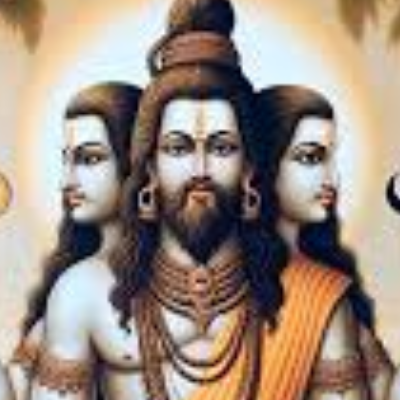
Vishvarupa, also known as Trishiras meaning the three-headed one, is a figure of considerable importance in the Vedic and Puranic tradition, identified as the son of Tvashtr — the divine craftsman and Aditya — and a mother of Asura lineage. He appears in the Rigveda as the guardian of cows and an adversary of Indra, and in the later Brahmana literature, the Mahabharata, the Bhagavata Purana, the Brahmavaivarta Purana, and the Devi Bhagavata Purana as the brahmin sage who was appointed priest of the gods after Brihaspati abandoned them, and who was subsequently beheaded by Indra on suspicion of divided loyalties. His death at Indra's hands constitutes the sin of Brahmahatya — the killing of a brahmin — which haunted Indra throughout subsequent mythology, and it directly precipitated his father Tvashtr's creation of the demon Vritra in revenge, setting in motion one of the most significant conflict narratives of the Vedic tradition. Vishvarupa should not be confused with Vishvarupa as a theological and iconographical concept — the cosmic universal form of Vishnu revealed to Arjuna in the Bhagavad Gita — which is an entirely separate usage of the same name.
✦ The Name
The name Vishvarupa is a compound of vishva, meaning all or universal, and rupa, meaning form or appearance, yielding the meaning of one who has all forms or the universally formed one. As applied to this figure, the name reflects his unusual physical nature — born with three heads, each with a different appearance and function, making him a being of plural and encompassing form. The name Trishiras, by which he is also consistently known, is a compound of tri, meaning three, and shiras, meaning head, thus designating him directly as the three-headed one. The two names are used interchangeably across the primary sources with no distinction of meaning intended. His Puranic patronymic Tvashtriya, meaning son of Tvashtr, identifies him by his father's lineage.
✦ Lineage
- Father: Tvashtr — the divine craftsman deity of the Vedic tradition, one of the twelve Adityas in the Puranic enumeration, son of Kashyapa and Aditi; fashioner of divine implements including Indra's thunderbolt, creator of forms, guardian of Soma, and a deity of great power who is identified in some texts with Vishvakarma. Tvashtr is described as the father of Brihaspati in some sources, and as a likely father of Indra himself in others, making the conflict between Tvashtr's family and Indra particularly fraught with the complexity of possible kinship.
- Mother: Named as Rechana or Virocana in different sources — identified as a daughter of Prahlada, the celebrated devotee of Vishnu and son of the demon Hiranyakashipu, placing her firmly within the Asura lineage. Through his mother Vishvarupa was thus the grandson of Prahlada and the great-grandson of Hiranyakashipu on the maternal side, giving him a genealogical connection to the most prominent Asura dynasty of the Puranic tradition.
- Paternal grandfather: Kashyapa — one of the Saptarishis, the seven great primordial sages, regarded as the progenitor of all categories of being; son of the sage Marichi, who was born directly from Brahma.
- Paternal grandmother: Aditi — daughter of Daksha; mother of all the Adityas including Tvashtr.
- Maternal grandfather: Prahlada — the celebrated Asura devotee of Vishnu, son of Hiranyakashipu; regarded as one of the greatest bhaktas in the Vaishnava tradition despite his demonic parentage.
- Sister (in one account): The Brihaddevata records that Vishvarupa and Saranyu — the daughter of Tvashtr who became the wife of Vivasvat the sun-god — were twins born of Tvashtr and his Asura wife. This account is not consistent across all sources.
✦ Vishvarupa in the Rigveda
The Rigveda presents Vishvarupa as the son of Tvashtr and as the guardian of cows — a role of considerable significance in the Vedic pastoral world, where cows represented wealth, sacred potency, and the sustaining abundance of the earth. In the Rigvedic account, Vishvarupa stands in a relationship of enmity with Indra, who steals his cattle. Indra is victorious in this conflict, and an ally of Indra known as Aptya kills Vishvarupa, after which Indra beheads him. The Rigvedic account is terse and does not elaborate the circumstances of the conflict in the same narrative detail as the later Brahmana and Puranic accounts. The stealing of cattle and the subsequent killing represent the Rigvedic form of the broader mythological pattern of conflict between the solar-craftsmanship tradition of Tvashtr and the storm-king Indra that runs through multiple layers of the tradition.
✦ The Three Heads and Divided Allegiance
The later Brahmana and Puranic accounts elaborate the significance of Vishvarupa's three heads in a manner that gives the myth a more explicit theological structure. Born with three heads as a consequence of his dual parentage — divine through his Aditya father Tvashtr, demonic through his Asura mother — each of Vishvarupa's three mouths served a different function in the sacrificial context. One head drank Soma on behalf of the gods; one consumed wine or Sura on behalf of a different group; and the third ate food on behalf of the Asuras. This threefold consumption made Vishvarupa's allegiances structurally plural and impossible to reduce to a single loyalty. When appointed as the priest of the gods, he performed the sacrificial rites correctly in their outward form but covertly directed a portion of the offerings to the Asuras — his mother's kin — through the third mouth.
This divided allegiance is treated in the primary sources not as mere treachery but as the consequence of his genealogical nature: born of two lineages that stood in fundamental opposition, Vishvarupa could not wholly belong to either. The Bhagavata Purana account in particular treats him as a figure whose spiritual qualities and priestly power were genuine and considerable, but whose dual inheritance made his loyalty structurally uncertain. Indra's suspicion, while ultimately leading to an act the texts condemn as sinful, is presented as reflecting a real ambiguity in Vishvarupa's situation.
✦ The Appointment as Priest of the Gods
The Bhagavata Purana, Canto 6, and the Shanti Parva of the Mahabharata narrate the circumstances that led to Vishvarupa's appointment as the gods' priest. Indra, puffed with pride at his prosperity and power, failed to rise from his throne and offer proper respect when Brihaspati — the preceptor and priest of the gods, son of the sage Angiras — entered the divine assembly. Brihaspati, deeply affronted by this failure of reverence, quietly departed and refused to continue in his role as the gods' officiant. Without their priest and preceptor, the gods were unable to perform the sacrifices that sustained their power and maintained the cosmic order. The Asuras, learning of this, seized the opportunity to attack, and the gods suffered repeated defeats.
On the advice of Brahma, the gods approached Vishvarupa — son of the Aditya Tvashtr and possessed of great ascetic power and brahminical qualification — and petitioned him to serve as their new priest. Vishvarupa, despite his dual parentage and the complexities of his position, agreed. He performed the Narayana Kavaca — a powerful protective recitation invoking Vishnu as the supreme refuge — on behalf of Indra, and through this recitation the gods regained their power and defeated the Asuras. The Bhagavata Purana preserves the text of the Narayana Kavaca as taught by Vishvarupa to Indra, presenting it as one of the most potent protective formulas in the tradition.
✦ The Beheading by Indra
Despite the service Vishvarupa rendered in teaching the Narayana Kavaca and assisting the gods to victory, Indra grew suspicious of his covert offering of sacrificial portions to the Asuras through his third mouth. Unable to contain his suspicion and acting without reflection on the grave consequences of the act, Indra beheaded Vishvarupa. The texts treat this act with consistent gravity: Vishvarupa was a brahmin, he was the guru and priest of the gods, and he had rendered them genuine service. His killing constituted the sin of Brahmahatya — the murder of a brahmin — one of the most serious moral transgressions recognised in the Hindu legal and theological tradition.
The Bhagavata Purana records that the three heads of Vishvarupa, upon being severed, were transformed into three different birds — reflecting the different substances that each mouth had consumed in life. The head that drank Soma became a bird associated with the sacred; the head that consumed wine became another bird; and the head that ate food on behalf of the Asuras became a third. The Brihaddevata gives a similar account of this transformation of the three heads into birds after beheading.
✦ Tvashtr's Revenge and the Creation of Vritra
Tvashtr, upon learning of his son's death at Indra's hands, was consumed by grief and fury. He resolved to avenge Vishvarupa by creating a being powerful enough to destroy Indra. Performing an intense sacrificial rite, he brought into existence the great demon Vritra — a being of immense power described in some sources as a serpentine or dragon-like creature of cosmic scale, capable of obstructing the flow of the cosmic waters and disrupting the order of the universe. In creating Vritra, Tvashtr made a crucial error of pronunciation in his sacrificial incantation: he intended to create a being who would be the slayer of Indra, but his mispronunciation of the accent in the Sanskrit formula inverted the intended meaning, producing instead a being who could be slain by Indra. This mispronunciation is noted in the Taittiriya Samhita and the Shatapatha Brahmana and is treated as a pivotal detail that ultimately allowed Indra to defeat Vritra despite Tvashtr's intent.
The subsequent killing of Vritra by Indra, accomplished with the thunderbolt fashioned from the bones of the sage Dadhichi, is one of the most celebrated narrative episodes of the Vedic tradition. But it too was regarded as a sin of Brahmahatya in the later tradition, since Vritra was held to have brahminical qualities. Indra thus accumulated two sequential instances of this sin — the killing of Vishvarupa and the killing of Vritra — and the texts record that the personification of Brahmahatya pursued Indra relentlessly afterward, forcing him into hiding for a thousand years in the stem of a lotus in the Manasarovar lake, until the sin was distributed among the earth, water, trees, and women who agreed to bear portions of it in exchange for boons.
✦ Textual Variants and Inconsistencies
The mother's identity: The Udyoga Parva of the Mahabharata and the Devi Bhagavata Purana name Vishvarupa's mother as Virocana or Rechana, daughter of Prahlada. The Brihaddevata names her simply as Tvashtr's Asura wife without specifying her personal name or her paternal lineage. The Bhagavata Purana Canto 6 account names her as Rechana, the daughter of Prahlada. These accounts are broadly consistent in identifying her as an Asura woman of Prahlada's lineage, though the precise name varies between Virocana and Rechana in different texts.
The agent of the killing in the Rigveda versus later texts: In the Rigveda, an ally of Indra named Aptya performs the actual killing of Vishvarupa, with Indra performing the beheading afterward. In the Brahmana and Puranic accounts, Indra himself both kills and beheads Vishvarupa without the mediation of an Aptya figure. The two accounts represent different traditions of the same event, with the later sources consolidating the act entirely upon Indra.
Vishvarupa as twin of Saranyu: The Brihaddevata records that Vishvarupa and Saranyu — the daughter of Tvashtr who became the wife of Vivasvat the sun-god and the mother of Manu, Yama, and the Ashvins — were twins born of Tvashtr and his Asura wife. This twinship is not confirmed in the Bhagavata Purana or the Mahabharata accounts, which do not mention Saranyu in connection with Vishvarupa's birth narrative. The relationship between Vishvarupa and Saranyu as twins is therefore attested in the Brihaddevata tradition but not universally across the primary sources.
The Narayana Kavaca episode: The detailed account of Vishvarupa teaching the Narayana Kavaca to Indra is found in the Bhagavata Purana Canto 6 and is corroborated by the Brahma Vaivarta Purana. The Mahabharata Shanti Parva account of Vishvarupa as the gods' priest does not include this specific episode in the same form, focusing instead on the broader narrative of his appointment and death. The Bhagavata Purana thus provides the richest treatment of Vishvarupa's positive contribution to the divine order before his death.
✦ Theological Significance
Vishvarupa's story explores several of the most persistent themes of the Vedic and Puranic tradition. His three heads and divided allegiance give mythological form to the theological problem of beings who belong simultaneously to two opposing cosmic orders — the divine and the demonic — by virtue of their genealogy. The tradition does not resolve this problem by condemning Vishvarupa as simply treacherous; instead it presents his dual nature as a structural fact of his birth that made complete loyalty to either side impossible. The tragedy of his death arises from Indra's failure to understand or accept this complexity, and the guilt that follows is proportional to the gravity of destroying a brahmin who was genuinely rendering service.
His teaching of the Narayana Kavaca — a supreme devotional and protective formula invoking Vishnu — while simultaneously feeding the Asuras through his third mouth presents a figure whose spiritual contributions to the cosmic order were real and lasting even as his personal allegiances remained divided. The Bhagavata Purana's preservation of the Narayana Kavaca as his teaching to Indra gives Vishvarupa a permanent positive legacy within the Vaishnava devotional tradition that transcends the tragedy of his death.
The chain of consequences that follows his death — Tvashtr's grief, the creation of Vritra, Indra's second Brahmahatya, his thousand-year exile in a lotus stem, and the eventual distribution of his guilt among the elements — constitutes one of the most elaborated karma narratives in the tradition, illustrating how a single act of violence born of pride and suspicion can set in motion a cascading series of cosmic disruptions that require immense effort and suffering to resolve.
✦ Connection to the Wider Genealogy
Vishvarupa stands at the intersection of two major divine lineages. Through his father Tvashtr, an Aditya and son of Kashyapa and Aditi, he belongs to the Kashyapa-Aditi solar lineage — the most cosmologically significant divine genealogical group in the Puranic tradition, whose members include Indra the king of the gods, Vivasvat the sun-god, Aryaman, Savitr, Mitra, Varuna, and the other Adityas. Through his mother Rechana, daughter of Prahlada and granddaughter of Hiranyakashipu, he belongs to the Daitya lineage descended from Kashyapa's wife Diti — the principal adversarial lineage of the Puranic tradition, which includes the great demons Hiranyakashipu, Hiranyaksha, and the armies of Asuras who contested the gods for dominion over the cosmos. Vishvarupa is therefore genealogically a cousin of Indra within the Aditya lineage through their shared ancestor Kashyapa, and simultaneously a great-grandson of Hiranyakashipu on his mother's side — a genealogical position that makes him one of the most structurally complex figures in the entire Puranic family tree. His death at Indra's hands and the creation of Vritra from Tvashtr's grief further connect Vishvarupa's story to the subsequent mythology of the Dadhichi sacrifice and the fashioning of the vajra, which extend its consequences deep into the Vedic heroic tradition.
✦ References
- Rigveda, relevant hymns involving Tvashtr and Indra: The earliest primary source for Vishvarupa as guardian of cows and adversary of Indra; establishes the foundational narrative of the conflict and killing in its oldest attested form.
- Brihaddevata: Vedic exegetical text providing the account of Vishvarupa as son of Tvashtr and an Asura wife, his twin relationship with Saranyu, and the transformation of his three heads into birds after beheading; an important early elaboration of the Rigvedic narrative.
- Taittiriya Samhita and Shatapatha Brahmana: Brahmana texts narrating Vishvarupa's killing by Indra, Tvashtr's consequent exclusion of Indra from the Soma sacrifice, Indra's theft of the Soma, and Tvashtr's creation of Vritra with the crucial mispronunciation; foundational for the causal chain leading from Vishvarupa's death to the Vritra episode.
- Mahabharata, Shanti Parva (Mokshadharma section) and Udyoga Parva: Epic sources for the narrative of Vishvarupa's appointment as priest of the gods following Brihaspati's departure, his divided allegiance, and his death at Indra's hands; the Udyoga Parva names his mother as a daughter of Prahlada.
- Bhagavata Purana, Canto 6, Chapters 7–12: The most detailed and theologically elaborated primary account of Vishvarupa; includes the Narayana Kavaca episode, the naming of his mother as Rechana daughter of Prahlada, the description of his three mouths and their different consumptions, the beheading by Indra, and the full chain of consequences through Vritra's creation and Indra's guilt.
- Devi Bhagavata Purana: Corroborating source for the narrative of Vishvarupa's appointment, his dual lineage, and the circumstances of his death; names his mother as Virocana daughter of Prahlada.
- Brahmavaivarta Purana, Krishna Janma Khanda, Chapter 47: Additional Puranic source corroborating the Bhagavata Purana account of the Vishvarupa episode and Indra's subsequent guilt.
- Vettam Mani, Puranic Encyclopaedia (1975): Modern reference work consolidating the Vishvarupa narrative across primary sources; directs the reader to the Indra entry for further detail on the connected episodes.
- A. A. Macdonell, Vedic Mythology (1897): Scholarly analysis of the Vishvarupa narrative in its Rigvedic form and its development into the Brahmana period; essential for tracing the evolution of the myth across the textual layers.
- Wikipedia, Trisiras article: Secondary source consolidating references across primary texts for the Vishvarupa-Trishiras figure; useful for cross-referencing variant source attributions.