
About
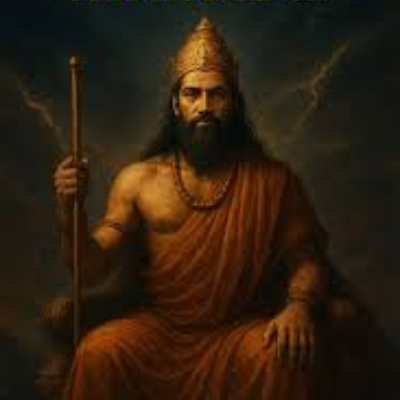
Savarni Manu — The Eighth Manu, Future Sovereign of the Next Manvantara, Son of Surya and Chhaya
Savarni Manu · Sāvarṇi · Sāvarṇimanu · Suratha-punarjanma · Chhaya-suta · Ashtama-Manu · Brahma Vaivarta Purana kartri
Savarni Manu is the eighth of the fourteen Manus — the archetypal progenitors, lawgivers, and sovereigns who rule humanity during successive cosmic ages called Manvantaras. He is the son of Vivasvat (Surya) and Chhaya, making him the full brother of Shani and Tapati, and the half-brother of Vaivasvata Manu — the seventh and current Manu who rules the present age. His name derives from his mother's nature: Savarni means of the same appearance or of the same varna — recording both his derivation from Savarna (Chhaya) and his striking physical resemblance to his father Surya. He is the future Manu: at present he performs intense tapas on the slopes of Mount Meru or Mount Sumeru, awaiting the end of the current seventh Manvantara and the beginning of the eighth. The Devi Bhagavata Purana identifies him as the reincarnation of King Suratha — a righteous king of an earlier age who attained this exalted rebirth through devotion to the goddess Durga. The Bhagavata Purana records his sons as Nirmoka, Virojaksha, and others. The authorship of the Brahma Vaivarta Purana is attributed to him — he is said to have narrated its contents to Narada. During his future Manvantara reign, the tradition records that Mahabali — already profiled in this series — will be the Indra; Ashvatthama and Parashurama will be among the seven Saptarishis; and Vishnu will incarnate in a specific form appropriate to that age.
✦ The Name and Its Meaning
The Sanskrit name Savarni — written Sāvarṇi — is a metronymic: it derives from his mother's identity as Savarna (Chhaya, the shadow who was of the same appearance as Sanjna) and means son of Savarna. The Monier-Williams Sanskrit-English Dictionary records the name precisely as a metronymic of the eighth Manu — son of the sun by Savarna — and notes that the names of the eighth through twelfth Manus all carry the Savarni suffix, differentiating them by their respective fathers (Daksha-Savarni, Brahma-Savarni, Dharma-Savarni, Rudra-Savarni, Deva-Savarni, Indra-Savarni). The eighth Manu's epithet is simply Savarni — named after his mother alone, without a qualifying prefix — because he is the prototype of this naming convention. The Vishnu Purana notes that he was named Savarni because he shared the same varna (appearance, class, quality) as his half-brother Vaivasvata Manu, born of the true wife Sanjna, making the shadow-son equal to the true-wife-son in cosmic standing.
✦ Lineage
- Father: Vivasvat (Surya) — sun god; seventh Aditya; son of Kashyapa and Aditi
- Mother: Chhaya — shadow-wife of Surya; also called Savarna; the being from whose name the title Savarni derives
- Full siblings: Shani (the planet Saturn); Tapati (the river Tapti); Vishti (dark personification of Kala) per the Matsya Purana
- Half-siblings: Vaivasvata Manu (seventh Manu; son of Sanjna); Yama and Yami (twins; sons of Sanjna); Ashvini Kumaras (sons of Sanjna in mare-form); Revanta (per most texts, son of Sanjna)
- Previous birth (Devi Bhagavata Purana): King Suratha — a righteous king of the Svayambhuva Manvantara era who lost his kingdom, took refuge in the forest with a merchant named Samadhi, encountered the sage Medhas, heard the recitation of the Devi Mahatmya (the Durga Saptashati) for the first time, performed tapas to Durga at the banks of the river, and received a boon from the goddess — Suratha asked for the recovery of his kingdom in this life, and for the status of the eighth Manu in his next birth. He was reborn as Savarni Manu.
- Sons: Nirmoka and Virojaksha (named in the Bhagavata Purana); Viraja, Sumedhas, Satarupa, Satya, Jaya, Purnabhadra, and Nirmoka (Vishnu Purana's list for the Saptarishis of his era — some of these are sages of his Manvantara rather than his children)
- Pupil relationship: initiated by Narada into the glories of Narayana; performs tapas on the slopes of Meru as a devotee of Vishnu; described as a master of the Puranas
✦ The Previous Birth — King Suratha and the Devi Mahatmya
The Devi Bhagavata Purana and the Markandeya Purana's Devi Mahatmya section record the previous birth of Savarni Manu as King Suratha of the Svayambhuva era. The Markandeya Purana's framing is particularly significant: it was to King Suratha that the Devi Mahatmya — the Chandi, the Durga Saptashati, the foundational text of the Shakta tradition — was first narrated by the sage Medhas. Suratha had been a just and prosperous king who was driven from his kingdom by enemies and treacherous ministers, and wandered in the forest. There he met a merchant named Samadhi who had similarly been driven from his home by his own family. Both men, though they had lost everything, found themselves unable to free their minds from attachment to the things and people they had lost. The sage Medhas explained to them the nature of the goddess Mahamaya — the divine power of illusion — as the source of both their attachment and their suffering, and narrated the three great battles of the goddess against the demons Madhu-Kaitabha, Mahishasura, and Shumbha-Nishumbha. Suratha and Samadhi then performed three years of penance on the banks of the river, fashioning an image of the goddess from earth and worshipping her with flowers, fire, and abstinence. The goddess appeared before them. Suratha asked for his kingdom back in this life, and for the status of Manu — progenitor of humanity in the next great age — in his next birth. Samadhi asked for liberation from attachment entirely. Both boons were granted. Suratha was reborn as Savarni Manu.
✦ The Eighth Manvantara — His Future Reign
The Bhagavata Purana (Canto 8, Chapter 13) describes the eighth Manvantara — Savarni's future reign — in detail. The Indra of that era will be Bali — Mahabali, the Asura emperor whose story is already profiled in this series, currently residing in Sutala as Vishnu's gatekeeper, having received Vishnu's promise that he would be the next Indra as the fruit of his extraordinary sacrifice to Vamana. This means the eighth Manvantara will see the simultaneous enthronement of Savarni Manu as the lawgiver-progenitor of humanity and Mahabali as the king of the gods — the descendant of Prahlada ruling Svarga, and the son of Chhaya governing the human world, in the same cosmic age. The Saptarishis of the eighth Manvantara vary across texts. The Bhagavata Purana lists Galava, Diptiman, Parashurama, Ashvatthama, Kripa, Rishyashringa, and Vyasa. The Matsya Purana and Vishnu Purana list Viraja, Sumedhas, Satarupa, Satya, Jaya, Purnabhadra, and Nirmoka. The classes of gods include the Sutapas, Virajas, and Amritaprabhas. Vishnu's Manvantara-avatar for that age is Sarvabhauma — born of Devaguhya and Saraswati.
✦ As Author of the Brahma Vaivarta Purana
The tradition attributes the authorship of the Brahma Vaivarta Purana to Savarni Manu — recording that he narrated its contents to the sage Narada. The Brahma Vaivarta Purana is one of the eighteen major Mahapuranas and focuses principally on Krishna's birth, childhood, and the Radha-Krishna mythology. Its attribution to Savarni Manu — the shadow-son of Surya who will rule the next age; who is currently performing penance on Mount Meru; who was in a previous life the first mortal to hear the Devi Mahatmya — establishes him as both a future lawgiver and a present sage of cosmic scope.
✦ In the Mahabharata
The Mahabharata records Savarni as a hermit who shone in the council of Indra (Sabha Parva, Chapter 7, Verse 10) and as having performed penance for six thousand years in the Satya Yuga (Anushasana Parva, Chapter 14, Verse 103). These references establish him as an active presence in the current Manvantara as well as a future Manu — a sage of great antiquity who is simultaneously awaiting his future cosmic role. His residence is on the slopes of Mount Meru; he is a student of the sage Suki (Brahmanda Purana / Wisdomlib); and one text (Vayu Purana cited by Wisdomlib) records his wife as Samudri.
✦ References
- Bhagavata Purana (Canto 8, Chapter 13) — the fullest canonical account of the eighth Manvantara: Savarni as Surya and Chhaya's son; his sons Nirmoka, Virojaksha, and others; the Indra, Saptarishis, devas, and Vishnu-avatar of his era; Mahabali as the Indra of the eighth Manvantara
- Markandeya Purana (Devi Mahatmya section) — Savarni's previous birth as King Suratha; his meeting with Samadhi and the sage Medhas; the first narration of the Devi Mahatmya; Durga's boon; the previous birth framework establishing the karmic path to Manuship
- Devi Bhagavata Purana — Savarni as the reincarnation of King Suratha; devotion to Durga as the path to his exalted rebirth
- Vishnu Purana (Book 3, Chapter 2) — Savarni as son of Surya and Chhaya; named for sharing the same varna as Vaivasvata Manu; his future Manvantara; the Saptarishis of his era listed as Viraja, Sumedhas, Satarupa, Satya, Jaya, Purnabhadra, and Nirmoka
- Matsya Purana — Savarni's birth alongside Shani and Tapati as Chhaya's children; his destined role in upholding dharma through ascetic practices on Mount Sumeru; the Saptarishis of his era
- Brahmanda Purana — Savarni as son of Martanda (Surya) and Chhaya; pupil of Suki; residence on the slopes of Meru
- Mahabharata — Sabha Parva 7.10: Savarni as hermit in Indra's council; Anushasana Parva 14.103: penance of six thousand years in Satyayuga
- Brahma Vaivarta Purana — authorship attributed to Savarni Manu; narrated to Narada
- Wikipedia — Savarni Manu; Grokipedia — Savarni Manu; Wisdomlib — Savarni (nine definitions); Sacred Texts — Vishnu Purana Book III Chapter II; Decode Hindu Mythology Blog — Manu the First Man: modern summaries drawing from the above primary sources