
About
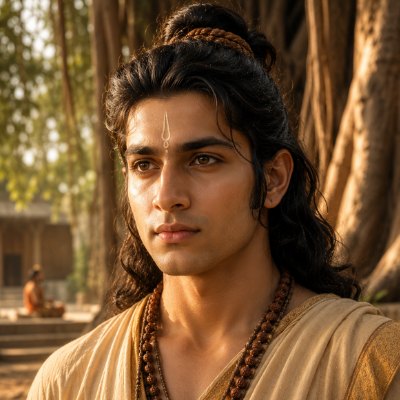
Kacha — Son of Brihaspati, Student of Shukracharya, Acquirer of the Mritasanjivani, and Figure of the Devayani Episode
Kacha · Brihaspatinandana · Angirasakula · Devayani-bhrata · Sanjivani-labdhakari · Shukra-shishya · Devaduta
Kacha is the son of Brihaspati — the divine preceptor of the gods, son of Angiras, lord of sacred speech and the deity identified with Jupiter — and is identified in the Wikipedia article on Kacha and in the DBpedia source as the son of Brihaspati and Tara, making him the son of the same Tara whose abduction by Chandra the moon god caused the Tarakamaya war and whose subsequent union with Chandra produced Budha the progenitor of the Chandravamsha. He is one of the most celebrated figures of the Mahabharata's Adi Parva — his narrative being an extended account of patience, strategic intelligence, devotion to his mission, repeated death and restoration, and the ethics of the guru-shishya relationship and its limits. He was sent by his father Brihaspati and by the gods to the ashrama of Shukracharya — the divine preceptor of the demons and Brihaspati's great rival — with the covert mission of acquiring the Mritasanjivani vidya, the knowledge of restoring the dead to life, which the gods' side lacked and whose absence gave the demons a decisive military advantage. He succeeded in this mission through a combination of devoted studentship, Devayani's repeated intercession on his behalf when the demons killed him, and ultimately the extraordinary circumstance of being killed and mixed into Shukracharya's wine — lodging within the teacher's own body and receiving the Mritasanjivani from within — before being reborn by tearing through Shukracharya's belly and immediately reviving his teacher with the very knowledge he had just been taught. His refusal to marry Devayani on his departure — on the grounds that his rebirth from Shukracharya's body had made him Shukracharya's son and therefore Devayani's brother — led to the mutual cursing between the two that defined both their subsequent fates. Kacha appears in the Mahabharata's Adi Parva, the Matsya Purana, and the Agni Purana.
✦ The Names
The name Kacha derives from the Sanskrit kacha — meaning hair, specifically the hair of the head in its loose or unbound form, or by extension brightness and splendour. The Mahabharata describes Kacha as handsome — kacha as a name thus encodes his physical beauty and the luminous quality that the tradition associates with him. The name is also read in some commentarial traditions as connected to a root meaning a shining or radiating quality — consistent with his identity as the son of Brihaspati the lord of sacred light and speech. The patronymic Brihaspatinandana means "son of Brihaspati." The epithet Devayani-bhrata means "brother of Devayani" — the relationship that defined his departure and the subsequent mutual cursing. Sanjivani-labdhakari means "the one who acquired the Sanjivani." Shukra-shishya means "student of Shukra."
✦ Lineage
- Father: Brihaspati — the divine preceptor of the gods, son of Angiras, lord of sacred speech and the deity identified with Jupiter in the Navagraha system. His profile is given separately in this series. Brihaspati's strategic intent in sending Kacha to Shukracharya was to acquire the Mritasanjivani — the knowledge he himself did not possess and whose absence gave the demons a decisive advantage over the gods in their perpetual conflict. Some sources identify Kacha as Brihaspati's eldest son.
- Mother: Tara — identified in the Wikipedia article and DBpedia source as Kacha's mother, making him born of Brihaspati's principal wife Tara rather than of another union. If this identification is accepted Kacha was born before Tara's abduction by Chandra and the Tarakamaya war — or after her return — placing his birth within the legitimate conjugal relationship of Brihaspati and Tara. The tradition does not always specify Kacha's mother with consistency, and certain accounts simply identify him as Brihaspati's son without naming the mother.
- Paternal grandfather: Angiras — the primordial sage, mind-born son of Brahma.
- Half-sister (through Shukracharya's rebirth logic): Devayani — the daughter of Shukracharya who fell in love with Kacha during his studentship and whose repeated intercessions saved his life. After Kacha emerged from Shukracharya's belly — having been killed by the demons, mixed into wine, and swallowed by Shukracharya — he was reborn through Shukracharya's body. Shukracharya declared that this rebirth made Kacha his son and therefore Devayani's brother. Kacha accepted this reasoning and refused to marry Devayani on this basis when she asked him upon his departure.
- The primary texts do not record Kacha's wife or children. His narrative is complete within the studentship episode and its consequences, and the tradition does not trace his subsequent genealogical line.
✦ The Strategic Context — Why Kacha Was Sent
The Mahabharata's Adi Parva establishes the context for Kacha's mission with clarity. In the endless conflict between the gods and the demons for sovereignty over the three worlds, the demons held one decisive advantage: Shukracharya, their preceptor, possessed the Mritasanjivani vidya — the knowledge of restoring the dead to life. With this knowledge Shukracharya could bring back every demon killed in battle against the gods, replenishing the demon army's numbers indefinitely. The gods' side had no equivalent knowledge — Brihaspati did not possess the Mritasanjivani — and the result was an asymmetry of attrition that steadily weakened the gods. No matter how many demons the gods killed, Shukracharya restored them. The demons could not be permanently defeated.
The solution devised was to send Kacha — Brihaspati's son, a figure of exceptional learning and personal quality — to Shukracharya's ashrama as a devoted student with the concealed intention of acquiring the Mritasanjivani. The choice of Kacha as the agent reflected several considerations: he was of the highest brahminical lineage, making him a credible and appropriate student for Shukracharya to accept; he was possessed of the personal qualities of patience, devotion, and intelligence necessary for sustained studentship under difficult conditions; and Brihaspati knew that Shukracharya's attachment to his daughter Devayani could be a resource if other means of acquiring the knowledge failed.
✦ The Three Deaths of Kacha
The Mahabharata's Adi Parva narrates that Shukracharya accepted Kacha as his student — recognising his exceptional quality and his lineage — and that the student applied himself to his duties with complete devotion. He tended the sacred fires, gathered flowers and wood for rituals, served Shukracharya with care and respect, and won the teacher's genuine regard. He also won the love of Devayani — Shukracharya's daughter — who became deeply attached to him and who regarded him as her companion and eventually as the object of her affection.
The demons, suspicious of Kacha's presence in Shukracharya's household and correctly guessing his true mission, resolved to kill him and prevent the Mritasanjivani from reaching the gods. They killed Kacha on three separate occasions, each time with a more elaborate and apparently final method of disposal.
In the first killing, the demons killed Kacha in the forest and fed his body to wolves. Devayani, noticing his absence, asked Shukracharya where Kacha was. Shukracharya used the Mritasanjivani to locate and restore Kacha to life. Kacha returned to the ashrama. In the second killing, the demons killed Kacha again, this time pounding his body to a paste and mixing it with the salt water of the sea. Again Devayani pleaded with her father; again Shukracharya used the Mritasanjivani to restore Kacha. In the third and most elaborate killing, the demons burnt Kacha's body to ash, mixed the ash with wine, and served the wine to Shukracharya himself. Shukracharya drank it without knowing what it contained.
When dusk came and Kacha had not returned, Devayani went again to her father. Shukracharya called for Kacha internally and heard him answer — from within his own belly. He told Devayani that Kacha was inside him, that he had been killed and mixed into wine which he had unknowingly drunk, and that Kacha could only come out by tearing through his stomach — which would kill Shukracharya. Devayani wept. Shukracharya, in the dilemma — either lose his disciple or lose his own life — found the only possible resolution: he would teach Kacha the Mritasanjivani from within so that Kacha, upon emerging, could immediately use it to restore Shukracharya to life. He transmitted the Mritasanjivani to Kacha from within his own body. Kacha emerged through Shukracharya's side, killing him in the process. He then used the Mritasanjivani — learned moments before — to restore Shukracharya to life. Shukracharya lived. Kacha had the knowledge. The mission was complete.
✦ Shukracharya's Response and the Completion of Education
The Mahabharata records that Shukracharya — restored to life and now fully aware of what had occurred — did not respond with rage at having been used. He was pleased with Kacha's noble conduct in immediately reviving him rather than simply leaving with the knowledge. He blessed Kacha and declared that what had happened was the result of the gods' and demons' own conflicting destinies rather than of any personal wrongdoing. He also — in a noted passage — proclaimed that from that day forth no brahmin should drink wine, since it had been the vehicle of the deception that had brought a student into his belly. This proclamation gave the Kacha episode an additional function in the tradition: it served as the mythological origin of the brahminical prohibition against wine.
Kacha continued his studentship for the remainder of the prescribed period and then took his formal leave of Shukracharya with all the appropriate honours and rituals. His studentship — measured in the tradition as a period of one thousand years — was complete. He was ready to return to the gods with the Mritasanjivani.
✦ Devayani's Proposal, Kacha's Refusal, and the Mutual Cursing
When Kacha was preparing to depart, Devayani — who had loved him throughout his studentship and who had saved his life through her repeated intercessions with her father — came forward and asked him to marry her. The Mahabharata records that she expressed her love clearly and told him that she had waited through all his deaths and restorations for this moment.
Kacha's response was gentle in tone but absolute in substance. He told Devayani that he could not marry her — not because he held her in low regard but because his rebirth from Shukracharya's body had changed his relationship to the teacher's household irrevocably. Having emerged from Shukracharya's womb — having been reborn through the body of his guru — he was in the tradition's understanding Shukracharya's son through that second birth. If Shukracharya was his father by rebirth, then Devayani was his sister. A brother could not marry his sister. The dharmic impossibility was not a personal rejection but a structural fact of the extraordinary circumstances of his third restoration to life.
Devayani, hearing this — the man she loved explaining with careful logic why he could not love her back — was furious. She pronounced a curse on Kacha: that the Mritasanjivani, which he had acquired through her intercessions and at such cost, would not work when he attempted to use it himself. He would have the knowledge but be unable to employ it personally. Kacha, stung by this curse which he felt was unjust given that his refusal was not a choice but a dharmic necessity, pronounced a counter-curse on Devayani: that no son of a rishi — no brahminical student — would ever marry her. The two curses together defined both their subsequent fates. Kacha returned to the gods and transmitted the Mritasanjivani to others — unable to use it himself but able to teach it — fulfilling his mission. Devayani eventually married Yayati — a king, not a brahmin's son — fulfilling Kacha's curse with precise irony.
✦ The Significance of Kacha's Mission for the Chandravamsha
Kacha's counter-curse — that no rishi's son would marry Devayani — directly shaped the subsequent history of the Lunar dynasty. Devayani eventually married Yayati — the great Lunar dynasty king — and from this union bore Yadu and Turvasu. Yadu is the ancestor of the Yadava line from which Krishna descends. Turvasu is the ancestor of another significant dynastic branch. The entire subsequent Chandravamsha in its Yadava dimension — the line that produced Krishna and through him shaped the Mahabharata's outcome — traces one of its founding marital connections to the curse that Kacha pronounced at Shukracharya's ashrama gate. Kacha is thus, through his curse, an indirect agent of the genealogical arrangements that produced the Mahabharata's most consequential divine figure.
✦ Textual Variants and Inconsistencies
The mother of Kacha: The Wikipedia article and DBpedia identify Kacha as the son of Brihaspati and Tara. Some other sources simply identify him as Brihaspati's son without specifying the mother. If Tara is accepted as his mother, Kacha was born of the same woman whose subsequent abduction by Chandra caused the Tarakamaya war — making his existence in Shukracharya's ashrama a biographical detail occurring after the resolution of a cosmic crisis that his own mother was the centre of.
Whether Kacha's mission was known to Shukracharya: The Mahabharata's account implies that Shukracharya gradually became aware of Kacha's true intentions during the studentship — the demons' repeated attempts to kill Kacha, and their eventual success in a method that placed Kacha inside Shukracharya himself, made the situation impossible to conceal. The degree to which Shukracharya actively colluded in the final resolution versus was compelled by circumstances is a question different commentarial traditions answer differently.
✦ Theological and Philosophical Significance
Kacha's episode in the Mahabharata is one of the tradition's most concentrated explorations of the ethics of the guru-shishya relationship — its obligations, its limits, and the specific condition under which a student's covert mission can be understood as compatible with genuine devotion to the teacher. Kacha served Shukracharya with complete devotion throughout his studentship — his service was genuine, not merely tactical. The tradition presents this genuine devotion as the moral foundation that made his mission's success possible: it was because Kacha truly served that Devayani loved him and Shukracharya regarded him as a son, and these relationships were the mechanism by which his mission was accomplished. The deception was not in the service itself but in the concealment of purpose — and the tradition's treatment of this distinction, without fully resolving it, is one of the episode's most philosophically generative features.
✦ Connection to the Wider Genealogy
Through his father Brihaspati and grandfather Angiras, Kacha descends from the primordial creative line of Brahma through the Angirasa lineage. Through his counter-curse on Devayani — which directed her toward Yayati's marriage rather than a rishi's son — he is an indirect agent in the genealogical arrangements that produced the Yadava line and through it Krishna. Through his acquisition and transmission of the Mritasanjivani he changed the strategic balance of the gods' and demons' conflict — the knowledge that Shukracharya had possessed exclusively was now available to the gods' side, fundamentally altering the cosmic military situation that had motivated his mission.
✦ References
Primary Sources
- Mahabharata, Adi Parva, sections 71–80 (Kacha-Devayani episode): The primary and most complete source for Kacha's biography — the strategic context of the mission, Shukracharya's acceptance of Kacha as a student, Devayani's love, the three killings by the demons and the three restorations, the final killing mixed into wine, the transmission of the Mritasanjivani from within Shukracharya's body, Kacha's emergence and his restoration of Shukracharya, the completion of the studentship, Devayani's proposal, Kacha's refusal and its reasoning, and the mutual cursing. The foundational canonical text for the entire episode.
- Matsya Purana: Confirms the Kacha narrative in a Puranic context; identified by the Wikipedia article as one of the primary sources for the episode alongside the Mahabharata.
- Agni Purana: Also cited as a primary source for the Kacha narrative alongside the Mahabharata and Matsya Purana.
Modern Reference Works
- Vettam Mani, Puranic Encyclopaedia (1975): Entry on Kacha; collates primary references and summarises the principal episodes of his biography including the three deaths, the Mritasanjivani acquisition, and the Devayani cursing.
- J. A. B. van Buitenen (translator), The Mahabharata, Volume 1 (1973): Critical translation of the Adi Parva with scholarly notes on the Kacha-Devayani episode; the most authoritative English-language treatment of the primary source.
- Wendy Doniger O'Flaherty, Women, Androgynes, and Other Mythical Beasts (1980): Contains analysis relevant to the pattern of the student who is killed and restored, and the relationship between Kacha's mission, Devayani's love, and the tradition's treatment of the guru-shishya relationship's limits.