
About
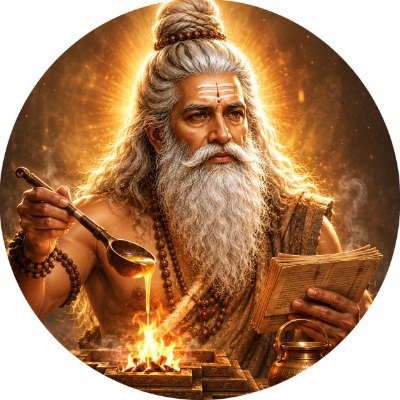
Sage Angiras — Mind-Born Son of Brahma, Father of Brihaspati, Author of the Atharvaveda
Angiras · Angira · Manasaputra · Saptarishi · Prajapati · Brahmarishi · Brihaspati-pita · Agnideva
Angiras is one of the Saptarishis — the seven great sages of the first Manvantara — and one of the ten Manasaputras, the mind-born sons of Brahma. He is credited alongside sage Atharvan with formulating the Atharvaveda — the fourth and final Veda. He is mentioned in all four Vedas. In the Rigveda he is described as a teacher of divine knowledge and a mediator between men and gods, and is identified in some hymns as the first of the Agni-devas — the fire gods. He is the father of Brihaspati, the preceptor of the gods and one of the Navagrahas. His descendants are known as the Angirasas — an ancient and prolific Vedic family. In the Bhagavad Gita (Chapter 10, Verse 25), Krishna identifies himself as Brihaspati among the priests — the son of Angiras — placing Angiras' lineage among the divine manifestations of the universe. In Buddhist texts, some traditions refer to the Buddha as Angirasa or Angirasa Kumara due to his connection to the Angirasa tribe.
✦ The Name
The name Angiras is connected to the Sanskrit word angara — live coal, burning ember, radiant fire. The Taitriya Brahmana explains: those who were like the cinder or agni — they became the Angirases. The Nirukta of Yaska offers an additional etymology: one who creates a lasting impression in others. The Chandogya Upanishad interprets the name through the body's vital force: because all limbs (angas) of the body are controlled by the primary prana, that prana itself is called Angirasa — the essence (rasa) of the limbs (anga). He was born from the glowing embers (angara) of a sacrificial fire from Brahma's creative energy, according to the Brihaspati entries in the Isvara Vedic Library.
✦ Lineage
- Father: Brahma — born from the live coals of Brahma's sacrificial fire or directly from his mouth
- Primary wife: Surupa — their sons are Utathya, Samvartana (Samvarta), and Brihaspati
- Second wife (some traditions): Smriti — daughter of Prajapati Daksha; their daughters are Sinivali, Kuhu, Raka, and Anumati
- Third wife (some traditions): Shraddha — upon Brahma's desire, seven sons were born: Brihat Keerti (also called Utathya), Brihat Jyoti (also called Samvarta), Brihat Brahma, Brihan Manas, Brihan Mantra, Brihat Bhanu, and Brihaspati
- Fourth wife (some traditions): Vasuda (also called Subha) — eight sons including Utathya, Brihaspati, Vayasya, Shanti, Ghora, Virupa, Samvarta, and Sudhanva (per the Isvara Vedic Library drawing from the Bhagavata Purana and Mahabharata)
- Daughters named in the Mahabharata: Bhanumati, Raka, CineeVali, Mahishmati, Guhu, Mahamati, Archishamati, and Yogasiddhi
- Sister of Brihaspati: Angirasi (also called Bhanumati) — who became the wife of Prabhasa, the last of the eight Vasus; their son was Vishvakarma, the divine architect
- Notable grandson: Dirghatamas — born blind, a great sage; father of Gautama Maharishi
✦ As a Fire-God and Mediator
The Rigveda describes Angiras as the first of the Agni-devas. In the Mahabharata (Vana Parva, Chapter 217), Agni himself appeared before Angiras and acknowledged that Angiras' brilliance of tapas had surpassed the brilliance of the actual fire. Agni declared: from this day onwards you are the real fire; you shall be the first fire and I will be the fire of Prajapati, which is the second fire. Because of this boon, the Devas recognised Angiras also as a fire-god. This is the Puranic explanation for why Brihaspati, Angiras' son, is in some texts described as the son of Agni rather than of Angiras — the two having become identified through this episode.
Brahma, speaking through Angiras, declared to him at the time of his creation: O Angirasa, you are my third manasaputra. My creation is multiplying with several worlds and species. The welfare of this creation is your purpose. Your mission is to come to me whenever I remember or recall you and fulfil my word from time to time. The Rigveda records that Indra presented all the cows to Angiras after freeing them from the Asura named Vala and the Panis who had held them captive — one of the earliest narratives of the Vedic tradition preserved in Mandala 10.
✦ The Atharvaveda and Vedic Contributions
Angiras and Atharvan are jointly credited with formulating — or hearing — the Atharvaveda, the fourth Veda. Some manuscripts of the Atharvaveda are attributed to Atharvangirasah — the compound of both sages' names. The student family of Angiras — the Angirasas — are credited with authoring hymns in the first, second, fifth, eighth, ninth, and tenth books of the Rigveda. Angiras is also mentioned in the Yajurveda and the Samaveda. The Mundaka Upanishad records a teaching lineage that begins with Brahma and passes through Angiras to the householder Saunaka — establishing the Upanishadic knowledge of Brahman within the Angiras transmission.
✦ References
- Rigveda — Mandala 6 (the sixth Mandala is associated with Angiras' family); Mandala 10.108: Indra presents cows to Angiras after freeing them from Vala and the Panis; Rigveda 6.73.1–3: Brihaspati as first-born son of Angiras
- Atharvaveda — attributed in many manuscripts to Atharvangirasah (Atharvan and Angiras jointly)
- Chandogya Upanishad — Angirasa as the prana — the essence of the body's limbs
- Mundaka Upanishad — teaching lineage from Brahma through Angiras to Saunaka
- Mahabharata (Vyasa) — Adi Parva: Angiras among the Manasaputras and Saptarishis; Adi Parva, Chapter 66: Brihaspati born of Angiras; Vana Parva, Chapter 217–218: Agni's acknowledgment of Angiras' superior brilliance; the brothers of Brihaspati; his daughter Angirasi as wife of Prabhasa and mother of Vishvakarma; daughters listed in the Mahabharata
- Bhagavata Purana — Skandha 4: Angiras's wife Vasuda (Subha) and their eight sons including Brihaspati
- Taitriya Brahmana — etymology of Angirasa as those born of live coals
- Wikipedia — Angiras; Dharmawiki — Angirasa; Isvara Vedic Library — Brihaspati: modern summaries drawing from the above primary sources