
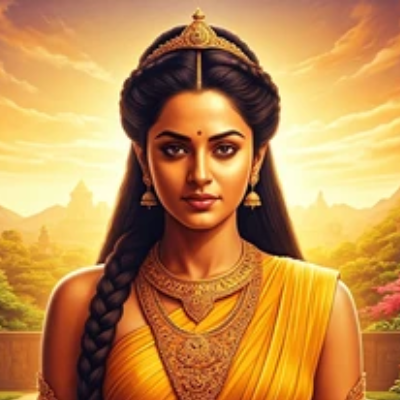
About
Surupa — Daughter of Marichi and Consort of Angiras
Surupa · Surupa (daughter of Marichi) · not to be confused with Surupa wife of Priyavrata, nor with Vasuda or Shraddha named as alternate wives of Angiras in other accounts
Surupa is a figure in the Hindu Puranic tradition, identified in sources drawing on the Bhavishya Purana and Brahmanda Purana material as a daughter of Marichi — one of the seven great sages of the first Manvantara, a mind-born son of Brahma, and father of Kashyapa the great ancestral progenitor — and as the consort of Angiras, another of the seven great sages of the first Manvantara and a fellow mind-born son of Brahma. Through Angiras she is the mother of the sons Utathya, Samvartana, and Brihaspati — the last of whom is the divine preceptor of the gods and one of the most prominent figures in both Vedic and Puranic literature. An extended tradition recorded in the Sanatani Sri Vaishnava gotra literature attributes to Surupa thirteen sons by Angiras, including Utathya, Samvartana, Brihaspati, and ten further named sons. Surupa's textual attestation is narrower than that of certain other figures in this genealogical series — her parentage from Marichi is stated in sources that draw on the Bhavishya Purana and Brahmanda Purana traditions rather than the Bhagavata Purana's primary account, which names Shraddha daughter of Kardama as Angiras's wife in the Svarochisha Manvantara context. The relationship between Surupa and Shraddha as wives of Angiras — whether they are two distinct wives, or alternate names for the same figure in different textual traditions, or wives of Angiras in different Manvantaras — is a textual question of some complexity and is discussed below. This Surupa must be clearly distinguished from the Surupa who is the wife of Priyavrata, the eldest son of Svayambhuva Manu, described as a daughter of Vishvakarma, who is an entirely different figure.
✦ The Name
The name Surupa is a Sanskrit compound formed from su-, a prefix denoting excellence, beauty, or auspiciousness, and rupa, meaning form, appearance, or beauty. Surupa therefore means one of beautiful or excellent form — a name of positive aesthetic and auspicious connotation widely applied across Sanskrit literature to divine or semi-divine women of great beauty. The name is not semantically charged with the same theological weight as names such as Shraddha (faith) or Mithya (falsehood), but rather designates a quality of outward excellence and beauty that is frequently attributed to the wives of the great sages and seer-progenitors in the Puranic tradition. As a daughter of Marichi — whose name means a ray of light — the name Surupa for his daughter carries a coherent thematic resonance, suggesting that beauty of form emanates from the luminous quality of her father.
✦ Lineage
- Father: Marichi — one of the ten mind-born sons of Brahma the creator; one of the seven great sages of the first Manvantara; a Prajapati of the first order whose most prominent son is Kashyapa, the ancestral progenitor of all living beings. Marichi's name means a ray of light from the sun or moon.
- Brothers: Kashyapa — the most celebrated son of Marichi, born of his wife Kala, daughter of Kardama; husband of the thirteen daughters of Daksha and father of all major categories of created beings; and Purniman — born of the same mother Kala, a less prominent figure in the tradition whose children include the daughter Devakulya, identified in the Bhagavata Purana with a former birth of the river Ganga.
- Half-brother: Paurnamasa — son of Marichi by his other wife Sambhuti; father of Virajas and Sarvaga according to the Vishnu Purana.
- Husband: Angiras — one of the mind-born sons of Brahma; one of the seven great sages of the first Manvantara; credited alongside Atharvan with the formulation of the Atharva Veda; born, according to the Bhagavata and Linga Puranas, from the mouth of Brahma; a figure of enormous Vedic and Puranic significance as the father of Brihaspati and as the progenitor of the entire Angirasa lineage of priests, sages, and gods.
- Son: Utathya — a great Brahma-jnani or knower of brahman; identified in certain Puranic accounts as a partial incarnation of the supreme lord; elder brother of Brihaspati; attained great fame in the Svarochiша Manvantara according to the Bhagavata Purana.
- Son: Samvartana — also known as Samvarta; a sage of the Angirasa lineage; brother of Brihaspati; mentioned in Puranic accounts as a figure of significant though secondary prominence compared to Utathya and Brihaspati.
- Son: Brihaspati — the preceptor and spiritual guide of the gods, particularly Indra and the Devas; identified with the planet Jupiter; one of the most prominent sages in both the Vedic and Puranic traditions; author of the Brihaspatya school of political thought and priestly learning; his birth as the son of Surupa and Angiras makes Surupa the mother of the divine preceptor.
- Further sons (in the extended tradition): The Sanatani Sri Vaishnava gotra literature attributes to Surupa and Angiras a total of thirteen sons, naming in addition to the above: Atma, Ayu, Daksha, Damana, Havishman, Gavishtha, Prana, Ritu, Sada, and Satya. These additional names are not consistently attested across all primary Puranic sources and belong principally to the gotra-lineage tradition.
✦ Surupa as Mother of Brihaspati
The most theologically significant aspect of Surupa's identity is her role as the mother of Brihaspati, the divine preceptor of the gods. Brihaspati occupies a position of supreme importance in both the Vedic ritual tradition — where he is the lord of sacred speech, the master of the brahman power, and the priest of the gods — and in the Puranic tradition, where he functions as the guru of Indra and the Devas, the embodiment of priestly and philosophical wisdom, the presiding deity of the planet Jupiter, and a figure in numerous major narrative episodes including the Tarakamaya war and the episodes involving the abduction of his wife Tara by Chandra. As the mother of Brihaspati, Surupa is placed at the genealogical origin of the tradition of divine learning and priestly wisdom that Brihaspati embodies. Her position as a daughter of Marichi — himself the father of Kashyapa, the progenitor of all created beings — means that Surupa connects two of the most significant generative lineages of the first Manvantara: the cosmic-biological lineage of Kashyapa and the intellectual-priestly lineage of Brihaspati.
✦ Textual Variants and Inconsistencies
The textual situation concerning the wife or wives of Angiras is among the more complex in the genealogical tradition of the first Manvantara sages, and must be stated honestly. Multiple figures are named as the wife or a wife of Angiras in different primary and secondary sources, and these accounts cannot always be harmonised. The Bhagavata Purana, Skandha 4, names Shraddha — daughter of Kardama Prajapati and Devahuti — as the wife of Angiras who bore the daughters Sinivali, Kuhu, Raka, and Anumati, and the sons Utathya and Brihaspati, in the Svarochiша Manvantara context. The Wisdomlib compilation of Marichi's attributes, drawing on the Bhavishya Purana and Brahmanda Purana tradition, states that Marichi had a daughter Surupa whom Angiras married, and the Sanatani Sri Vaishnava gotra tradition attributes thirteen sons to Surupa and Angiras including Utathya, Samvartana, and Brihaspati. The Mahabharata, Adi Parva, and certain Puranic sources name Smriti — a daughter of Daksha — as another wife of Angiras. Other accounts name Svadha and Sati as wives of Angiras. The Puranic Encyclopaedia of Vettam Mani notes that Vasuda, named as mother of Brihaspati in some sources, is also called Shraddha in some Puranas.
The most plausible scholarly reading of these divergent accounts is that different texts assign Angiras different wives for different births or Manvantaras, and that the attribution of Brihaspati's mother alternates between Surupa and Shraddha depending on the source tradition and the Manvantara being described. The Manidvipa source explicitly notes that in some texts Surupa is replaced by Shraddha as the mother of Utathya and Brihaspati, suggesting awareness in the tradition itself of these as variant rather than identical accounts. Whether Surupa and Shraddha are two distinct wives of Angiras, alternate names for the same figure in different text-traditions, or wives in different Manvantaras, is not definitively resolved in any single primary source. Each account should be read on its own terms without forcing harmonisation.
✦ Disambiguation
The name Surupa is borne by at least two entirely distinct figures in the Puranic tradition, and careful separation is essential. The Surupa treated in this profile is the daughter of Marichi and wife of Angiras, attested in the Bhavishya Purana and Brahmanda Purana traditions and in the gotra literature of the Angirasa lineage. She must be distinguished from Surupa, the wife of Priyavrata — eldest son of Svayambhuva Manu — who is described in the Bhagavata Purana as a daughter of Vishvakarma and as the mother of ten sons and one daughter. These two figures share only a name and have entirely separate parentages, husbands, and genealogical positions.
✦ Connection to the Wider Genealogy
Surupa is a daughter of Marichi and thus a granddaughter of Brahma the creator. She is the sister of Kashyapa — progenitor of all created beings — and of Purniman, and the half-sister of Paurnamasa. As the wife of Angiras and the mother of Brihaspati, she stands at the intersection of two of the most significant sage-lineages of the first Manvantara. Through Brihaspati she is the ancestral mother of the entire tradition of divine preceptorship and Vedic priestly learning. Through Utathya and Samvartana she is the mother of two further sages of the Angirasa line.
✦ References
Primary Sources
- Bhavishya Purana and Brahmanda Purana — the primary textual basis, as cited at Wisdomlib under the Marichi entry, for the statement that Marichi had a daughter Surupa whom Angiras married.
- Bhagavata Purana, Skandha 4, Chapter 1 — names Shraddha daughter of Kardama as the wife of Angiras in the Svarochiша Manvantara account, providing the principal variant against which Surupa's attribution must be considered.
- Mahabharata, Adi Parva, Chapter 66 — contains genealogical references to Angiras and his sons relevant to establishing the broader textual context for the multiple-wife tradition.
- Vishnu Purana, Book 1, Chapter 10 — names Surupa as the wife of Angiras and Utathya, Samvartana, and Brihaspati as their sons in the principal Vishnu Purana genealogical account of the Saptarishi lineages.
Modern Reference Works
- Vettam Mani, Puranic Encyclopaedia (1975), entries on Angiras and Marichi — collates the principal references to Surupa as wife of Angiras and notes the identification of Vasuda with Shraddha as a variant in the naming of Brihaspati's mother.
- Wisdom Library (wisdomlib.org), entry on Marichi — provides the explicit statement, with source references to the Bhagavata Purana reference chain and Brahmanda Purana material, that Marichi had a daughter Surupa whom Angiras married.
- Sanatani Sri Vaishnava gotra literature — preserves the extended tradition attributing thirteen sons to Surupa and Angiras, naming all thirteen and identifying Surupa explicitly as a daughter of Marichi Maharshi.
- Manidvipa source (manidvipa.in) — notes explicitly that in some texts Surupa is replaced by Shraddha as the wife of Angiras and mother of Utathya and Brihaspati, providing the secondary-source acknowledgement of the textual variant discussed in this profile.