
About
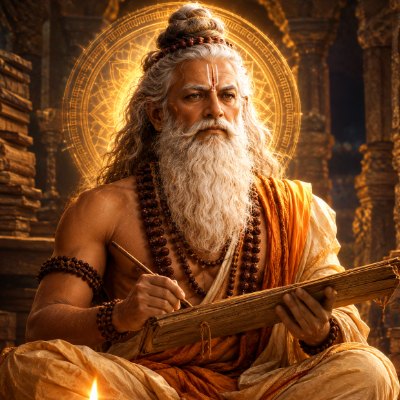
Sage Pulastya — Mind-Born Son of Brahma, Grandfather of Ravana and Kubera, Medium of the Puranas
Pulastya · Manasaputra · Saptarishi · Prajapati · Brahmarishi · Vishrava-pita · Ravana-pitamaha
Pulastya is one of the Saptarishis — the seven great sages of the first Manvantara — and one of the ten Manasaputras, the mind-born sons of Brahma. He is one of the ten Prajapatis. He was born through Brahma's ear — as recorded in the 65th chapter of the Adi Parva of the Mahabharata and confirmed in the Bhagavata Purana. He is celebrated in the tradition as the primary medium through which several of the great Puranas were transmitted to humanity. He received the Vishnu Purana directly from Brahma and communicated it to Parashara, who then made it known to mankind. He is the grandfather of Ravana and Kubera — the former the great antagonist of the Ramayana, the latter the god of wealth and guardian of the north — through his son Vishrava. He is also the father of Agastya — one of the most celebrated sages of the tradition — in some Puranic accounts.
✦ The Name
The name Pulastya is interpreted in the tradition as meaning one whose hair is straight or one of smooth, cultivated appearance — from pula (standing straight) and stya (hair). The Shiva Purana records an alternate account of his birth: he was formed from Brahma's breath called Udana — the upward-moving vital air — rather than from his ear. Both accounts are recorded in different traditions. In the Thai national epic Ramakien — the Thai adaptation of the Ramayana — Pulastya is called Latsatian, indicating the spread of his identity across Southeast Asian Puranic traditions.
✦ Lineage
- Father: Brahma — born from his ear (Adi Parva) or from his Udana breath (Shiva Purana)
- Wife: Havirbhu — daughter of Kardama Prajapati and Devahuti; one of Kardama's nine daughters
- Wife: Manini — daughter of Trinabindu — Solar Dynasty King of the Nedishtha Branch
- Son by Manini: Vishrava — a great sage, father of Kubera and Ravana
- Son by Havirbhu (Bhagavata Purana account): Agastya — the celebrated sage who subdued the Vindhya mountains and drank the ocean; other accounts in the Mahabharata give Agastya a different origin (born from a pot by Mitra and Varuna)
- Wife of Vishrava (first): Ilavida — daughter of the sage Bharadvaja; their son was Kubera (Vaishravana) — god of wealth and lord of the Yakshas
- Wife of Vishrava (second): Kaikesi — Rakshasa princess, daughter of Sumali; their children were Ravana, Kumbhakarna, Vibhishana, and Shurpanakha
- Notable grandchildren: Kubera (god of wealth, guardian of the north), Ravana (king of Lanka, primary antagonist of the Ramayana), Kumbhakarna, Vibhishana, and Shurpanakha
- Other progeny (Mahabharata account): The Rakshasas, Yakshas, Kinnaras, and Vanaras — recorded in the Mahabharata as collectively descended from Pulastya
✦ The Birth of Vishrava
The Ramayana records the origin of Vishrava in detail. Pulastya was performing austerities at the hermitage of Trinabindu on the slopes of Mount Meru. Disturbed by the daughters of other sages, Naga maidens, and apsaras who played music and danced near him, he declared in his wrath that whoever fell under his gaze would instantly conceive. The girls fled. Manini — daughter of the sage Trinabindu — was not present when the curse was invoked and wandered near Pulastya searching for her friends. She found herself suddenly pregnant and informed her father. Trinabindu requested Pulastya to marry her, and Pulastya agreed. Pleased by her virtuous conduct, he declared that their child would inherit her virtues and named him Vishrava — meaning renowned. Vishrava grew into a great sage. When Bharadvaja gave his daughter Ilavida to Vishrava in marriage, their son Kubera was born and subsequently appointed by Brahma as the guardian of the north and the treasurer of the gods.
✦ Pulastya and Bhishma — Transmitter of Sacred Knowledge
The Mahabharata and the Padma Purana record a celebrated encounter between Pulastya and Bhishma. When Bhishma was performing intense spiritual practice at Gangadvara — the sacred source of the Ganga — Brahma was greatly pleased by his austerities and sent Pulastya to bless him. Pulastya appeared before Bhishma, who offered him water libations and paid his respects. Bhishma asked Pulastya for the knowledge of how Brahma created the world. Pulastya narrated to Bhishma the cosmological knowledge Brahma had entrusted to him — and this narration forms the basis of the Padma Purana. Pulastya is further recorded as the narrator who responded to Narada's questions in the Vamana Purana. He received the Vishnu Purana from Brahma and transmitted it to Parashara, who propagated it to humanity.
✦ Pulastya and Ravana
The tradition records an episode in which Pulastya personally intervened to save his grandson Ravana. When Ravana was bathing in the Narmada River, he was captured by Sahastrabahu — the powerful king of Mahishmati, the same king who later killed Jamadagni (Parashurama's father). Pulastya arrived and interceded on Ravana's behalf, advocating for his release. Moved by the sage's wisdom and his respect for the lineage, Sahastrabahu freed Ravana and honoured Pulastya with gifts of gems and garments.
✦ References
- Mahabharata (Vyasa) — Adi Parva, Chapter 65: Pulastya born from Brahma's ear; names him among the Saptarishis and Prajapatis; records Rakshasas, Yakshas, Kinnaras, and Vanaras as his collective progeny; the encounter with Bhishma at Gangadvara
- Valmiki Ramayana — Uttarakanda: the birth of Vishrava through the encounter of Pulastya with Manini at Trinabindu's hermitage; the lineage of Kubera and Ravana through Vishrava
- Bhagavata Purana — Skandha 3–4: Pulastya's wife Havirbhu as daughter of Kardama; his sons Vishrava and Agastya
- Vishnu Purana — records Pulastya as the sage who received the Vishnu Purana from Brahma and transmitted it to Parashara
- Padma Purana — Pulastya's narration to Bhishma at Gangadvara forms the basis of this Purana
- Vamana Purana — Pulastya responds to Narada's questions by reciting legends
- Shiva Purana — alternate account of Pulastya's birth from Brahma's Udana breath
- Wikipedia — Pulastya; Wikipedia — Vishrava; Mythoworld — Pulastya; Grokipedia — Pulastya: modern summaries drawing from the above primary sources