
About
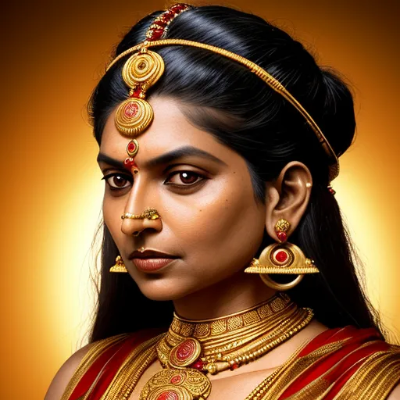
Ketumati — Daughter of the Gandharvi Narmada, Wife of Sumali
Ketumati · daughter of Narmada · wife of Sumali · mother of Kaikasi and Prahasta
Ketumati is a figure in the Hindu epic tradition, identified in the Valmiki Ramayana's Uttara Kanda as the second of three daughters of Narmada — a Gandharvi, that is, a female being of the Gandharva order of semi-divine celestial musicians — and as the wife of Sumali, one of the three great Rakshasa brothers and the most consequential of the early Rakshasa patriarchs in genealogical terms. Her marriage to Sumali is part of a triple alliance narrated in Uttara Kanda Sarga 5, in which all three daughters of Narmada were given simultaneously to the three brothers: Sundari to Malyavan, Ketumati to Sumali, and Vasudha to Mali. Through her union with Sumali, Ketumati became the mother of a large number of children — sons and daughters of the Rakshasa lineage — of whom the most genealogically significant is Kaikasi, who became the wife of the sage Vishrava and the mother of Ravana, the ten-headed demon king of Lanka and the principal antagonist of the Valmiki Ramayana. Ketumati is thus the maternal grandmother of Ravana, Kumbhakarna, Vibhishana, and Shurpanakha. The account of her parentage and marriage is narrated by the sage Agastya to Rama — the seventh avatar of Vishnu and hero of the Ramayana — as part of the primordial history of Lanka and the Rakshasa lineage.
✦ The Name
The name Ketumati is a Sanskrit feminine form derived from ketu — meaning a banner, flag, or bright ray of light, and in the Vedic and Puranic tradition also a comet or the descending lunar node — with the suffix mati indicating possession, intelligence, or association. The name therefore carries the sense of "she who bears the banner" or "she who is radiant as a bright light," a name of celestial splendour consistent with her semi-divine maternal origins among the Gandharvas. The Gandharvas are described across the Vedic and Puranic tradition as celestial beings associated with music, beauty, the atmospheric realm between earth and heaven, and the guardianship of the soma plant — their female counterparts, the Gandharvis, share these qualities and are frequently described as beings of extraordinary beauty. That Ketumati and her sisters are presented in the Uttara Kanda as exceptionally beautiful daughters of such a mother reflects the Gandharva tradition's consistent association with aesthetic and physical splendour.
✦ Lineage
- Mother: Narmada — identified in the Uttara Kanda Sarga 5 explicitly as a Gandharvi, a female being of the Gandharva order of semi-divine celestial musicians; the primary source names her as the mother of the three daughters given in marriage to the Rakshasa brothers; her own parentage and the identity of the father of her three daughters are not elaborated in the primary text.
- Sister: Sundari — the eldest of the three daughters of Narmada, given in marriage to Malyavan, the eldest of the three Rakshasa brothers and a figure of great power and learning in the Rakshasa tradition.
- Sister: Vasudha — the third of the three daughters of Narmada, given in marriage to Mali, the youngest of the three Rakshasa brothers.
- Husband: Sumali — the second of the three great Rakshasa brothers, son of Suketu, and the most genealogically consequential of the early Rakshasa patriarchs; a being of immense strength and ambition who sought dominion over the three worlds; his lineage through Kaikasi produces Ravana, making Sumali the maternal grandfather of the demon king of Lanka.
- Son: Prahasta — a powerful Rakshasa warrior, one of the foremost commanders of Ravana's Lanka forces in the Ramayana war narrative.
- Daughter: Kaikasi — the most genealogically significant of Ketumati's children; she became the wife of the brahminical sage Vishrava — son of the great sage Pulastya, one of the ten mind-born sons of Brahma the creator — and through this union became the mother of Ravana, the ten-headed demon king of Lanka and the principal antagonist of the Ramayana; also the mother of Kumbhakarna, Vibhishana, and Shurpanakha.
- Daughter: Pushpotkata — a daughter of Sumali and Ketumati attested in the Rakshasa genealogical lists of the Uttara Kanda.
- Daughter: Raka — a daughter of Sumali and Ketumati attested in the Rakshasa genealogical lists.
- Daughter: Kumbhinasi — a daughter of Sumali and Ketumati attested in the Rakshasa genealogical lists.
✦ The Triple Marriage Alliance
The Valmiki Ramayana's Uttara Kanda Sarga 5, verses 35 to 40 — narrated by the sage Agastya to Rama as part of the primordial history of Lanka — records the simultaneous marriage of all three daughters of Narmada to the three Rakshasa brothers Malyavan, Sumali, and Mali. The Sanskrit text specifies that there was a Gandharvi named Narmada who had three daughters, and that these three daughters were given in marriage to the three brothers as a single diplomatic and social alliance. This triple marriage is characteristic of the Puranic and epic tradition's handling of significant lineage-founding unions — the simultaneous marriage of multiple sisters to multiple brothers of the same family consolidating a bond between two lineages at a single moment rather than across separate negotiations.
The context in which this alliance is narrated is significant. Agastya's account places the three Rakshasa brothers at the height of their power — they had received boons from Brahma through intense austerities, had established their dominion over Lanka, and were at a point of expansion and confidence that would eventually lead them into direct conflict with Vishnu. The marriages to Narmada's daughters belong to this period of Rakshasa ascendancy, when the three brothers were seeking to consolidate their lineage and establish households worthy of their ambitions. The beauty of the three daughters, emphasised in the Uttara Kanda's account, reflects the Gandharva mother's nature as a being of celestial aesthetic splendour.
✦ Textual Variants and Inconsistencies
The principal textual complexity surrounding Ketumati's mother Narmada is the potential for conflation with the sacred river Narmada — one of the seven sacred rivers of the Hindu tradition, flowing westward across the Indian subcontinent and regarded as a goddess in her own right. The Uttara Kanda passage identifies Narmada explicitly as a Gandharvi rather than as the river deity, and the two figures share only a name. Secondary sources and regional traditions have on occasion conflated the two, leading to readings in which Ketumati is described as the daughter of the river goddess. The primary Sanskrit text as recorded in the Uttara Kanda Sarga 5 does not support this conflation — the mother is specified as a Gandharvi, and the river goddess Narmada belongs to an entirely separate devotional and geographical tradition.
The Uttara Kanda of the Valmiki Ramayana, in which Ketumati's entire account appears, is regarded by a significant portion of the scholarly tradition as a later addition to the core six kandas of the Ramayana. The critical edition of the Valmiki Ramayana produced by the Oriental Institute, Baroda, treats the Uttara Kanda with textual caution. This affects the broader evidential weight of the Rakshasa genealogical material as a whole while not altering the internal consistency of the account within the Uttara Kanda itself.
The exact verse numbers for the relevant Sarga 5 passage vary between recensions — the Baroda Critical Edition and the Gita Press recension number the verses differently, with the relevant material falling between verses 35 and 43 depending on the edition consulted. This is a standard recension variant and does not affect the substance of the account.
✦ Theological and Genealogical Significance
Ketumati's theological significance is carried primarily through her position as the maternal grandmother of Ravana — the most powerful and complex antagonist of the Ramayana tradition, whose multi-layered identity as a learned brahminical scholar, a devoted worshipper of Shiva, and a king of extraordinary capabilities is consistently acknowledged even as his abduction of Sita precipitates his destruction at the hands of Rama. The Uttara Kanda's genealogical account establishes that Ravana's lineage on the maternal side runs through a semi-divine heritage — Ketumati's Gandharvi mother Narmada introducing celestial blood into the Rakshasa lineage — while on the paternal side Ravana descends from the brahminical sage Pulastya through Vishrava. This dual heritage of semi-divine Gandharva ancestry through Ketumati and brahminical sage ancestry through Vishrava gives Ravana's character its characteristic complexity in the tradition.
✦ Connection to the Wider Genealogy
Ketumati stands at the genealogical intersection of the Gandharva semi-divine order — through her mother Narmada — and the Rakshasa lineage — through her husband Sumali and her children. Through her daughter Kaikasi's marriage to the sage Vishrava, the Rakshasa and brahminical traditions converge in Ravana's own person. Through her son Prahasta the Rakshasa military tradition is represented, Prahasta serving as one of Lanka's foremost commanders. Through her daughters Pushpotkata, Raka, and Kumbhinasi the Rakshasa lineage extends into further branches of the tradition. Her sisters Sundari and Vasudha, through their marriages to Malyavan and Mali respectively, similarly anchor the Gandharvi maternal heritage across all three of the great Rakshasa brotherhoods, making Narmada's three daughters the mothers of the three principal founding lines of the Rakshasa aristocracy as narrated in the Uttara Kanda.
✦ References
- Valmiki Ramayana, Uttara Kanda, Sarga 5, verses 35–43 (verse numbering varies by recension): The sole primary source for Ketumati's identity, parentage, and marriage; records Narmada as a Gandharvi with three daughters; names Ketumati as the daughter given to Sumali as part of the triple marriage alliance; the narrating voice is the sage Agastya speaking to Rama; the textual status of the Uttara Kanda as a potentially later addition to the core Ramayana is noted.
- Valmiki Ramayana, Uttara Kanda, Rakshasa genealogical sargas: Provides the broader context of Sumali's lineage, his children by Ketumati including Kaikasi and Prahasta, and the downstream genealogy leading to Ravana.
- Vettam Mani, Puranic Encyclopaedia (1975): Secondary reference consolidating the Uttara Kanda data on Ketumati, her maternal origins through Narmada the Gandharvi, and her place in the Rakshasa genealogical tradition; notes the distinction between Narmada the Gandharvi and the river goddess of the same name.
- Wisdomlib, entry on Ketumati: Secondary reference providing collated data on Ketumati's lineage and her identification as daughter of Narmada the Gandharvi; cites the Uttara Kanda as the primary source.