
About
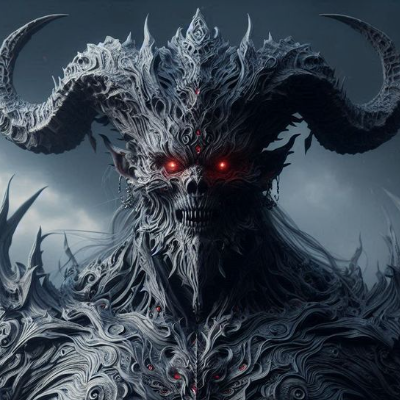
Vyomasura — Danava Sky-Demon, Slain by Krishna
Vyomasura · Vyoma · Divi putra · Mayadanava putra
Vyomasura is a Danava recorded in the Bhagavata Purana and the Vishnu Purana as a demon slain by Krishna — the eighth avatar of the god Vishnu, son of Vasudeva of the Yadava clan and Devaki, and raised by the cowherd Nanda and his wife Yashoda in the village of Vrindavana. The demon's episode belongs to the cycle of Krishna's childhood and adolescent exploits at Vrindavana and its surrounding region, a cycle known collectively as the Krishna lila. Vyomasura is identified in the Bhagavata Purana as the son of the demon Maya — the same Mayasura who is celebrated elsewhere as the foremost architect among the Asuras, builder of the triple city Tripura and the assembly hall of the Pandava king Yudhishthira. Vyomasura's episode is brief in the primary sources but noteworthy as one of the final demonic adversaries Krishna overcomes before the narrative shifts away from the Vrindavana period of his life. The demon's method — infiltrating a children's game by disguise and abducting cowherd boys — and his defeat at Krishna's hands are the substance of his entire narrative presence in the textual record.
✦ The Name
The name Vyomasura is a compound of two Sanskrit elements: vyoma, meaning sky, space, or the aerial region, and asura, the general designation for a class of powerful supernatural beings understood to stand in opposition to the divine order sustained by the gods. The name thus designates a demon of the sky or a demon who operates through or within the aerial realm. This is consistent with the method of his attack in the narrative, where he descends upon the cowherd boys from above and carries them away — an act that reflects his identity as a sky-born or sky-moving demon. The shorter form Vyoma is used in some passages as an alternate designation for the same figure.
✦ Lineage
- Father: Mayasura — the foremost architect among the Danavas, son of the progenitor sage Kashyapa and his wife Danu; celebrated across the Mahabharata and the Puranas for constructing the Asura triple-city of Tripura, which was subsequently destroyed by the god Shiva, and the magnificent assembly hall built for the Pandava king Yudhishthira at Indraprastha; also identified in the Surya Siddhanta tradition as a recipient of astronomical revelation.
- Paternal grandfather: Kashyapa — the great progenitor sage, son of the Prajapati Marichi who was himself born of Brahma the creator; Kashyapa's unions with the daughters of Daksha gave rise to all the principal classes of beings in the Hindu cosmological order, including the Devas through Aditi and the Danavas through Danu.
- Paternal grandmother: Danu — daughter of the progenitor Daksha; the Danavas as a class take their collective name from her.
The primary sources do not record a mother, spouse, or children for Vyomasura. No siblings are named in the texts that describe his episode, though Mayasura is elsewhere identified as the father of Mandodari — the virtuous queen of Ravana, demon king of Lanka — and of the Danavas Mayavi and Dundubhi, who were slain by Bali, monkey-king of Kishkindha. Whether the primary sources intend these figures to be understood as siblings of Vyomasura is not explicitly stated.
✦ The Abduction of the Cowherd Boys
The Bhagavata Purana, in its tenth book — the book devoted to the life and exploits of Krishna — narrates the episode of Vyomasura as one of the final demonic encounters of the Vrindavana period. Krishna and the cowherd boys, his companions and playmates among the community of cowherds settled near Vrindavana, were engaged in a game on the hillside. The game in question was one in which the boys divided themselves into roles — some acting as shepherds, some as wolves or thieves, and some as sheep or cattle — a children's pastime common in pastoral communities.
Vyomasura, sent by or acting in the tradition of demonic adversaries who sought to harm Krishna during his Vrindavana sojourn, assumed the disguise of a cowherd boy and joined the game undetected, mingling among the children. In the course of the game, playing the role of a thief, he began to remove boys from the group one by one — carrying them off and concealing them inside a cave in a mountain. Each time he seized a boy he deposited him in the cave and returned to seize another, continuing the abductions incrementally while the game proceeded. By this method he had removed a substantial number of the cowherd boys before Krishna perceived what was occurring.
When Krishna recognised the demon — the Bhagavata Purana indicates that Krishna's divine perception was not deceived despite the disguise — he acted immediately. He seized Vyomasura as the demon attempted to carry off yet another boy. Vyomasura revealed his true form, expanding to a vast and terrifying size in an attempt to overpower Krishna through sheer physical force. Krishna held him fast, wrestled him to the ground, and killed him by striking him against the earth — an act described in the manner of a hunter dispatching an animal. Having killed the demon, Krishna released the imprisoned cowherd boys from the cave, restoring them unharmed to their companions.
✦ Theological and Philosophical Significance
Within the devotional and theological framework of the Bhagavata Purana, the episode of Vyomasura belongs to the extended demonstration of Krishna's nature as the supreme divine being who, though appearing in the form of a child and adolescent among the cowherds of Vrindavana, effortlessly overcomes every demonic force sent against him. The sequence of demonic adversaries in the tenth book — Putana, Trinavarta, Bakasura, Aghasura, Dhenukasura, Keshi, Vyomasura, and others — is understood in the Vaishnava theological tradition as a progressive manifestation of divine protection over the community of devotees represented by the cowherds, and as a demonstration that no form of evil, however powerful or cunningly disguised, can ultimately prevail against the presence of the divine.
The particular method of Vyomasura — disguise, infiltration, and incremental abduction — gives his episode a distinctive quality among the Vrindavana demons. Where many of Krishna's adversaries attack openly and are defeated by direct confrontation, Vyomasura operates through stealth and deception, entering through the cover of an innocent game. In this respect his narrative resonates with the broader concept of maya — illusion and deceptive appearance — that is also the defining attribute of his father Mayasura. That a son of the lord of illusion should himself employ disguise and subterfuge as his primary weapon, and that he should nonetheless be seen through and destroyed by Krishna, carries a theological implication: that the divine awareness of Krishna penetrates all illusion, including that wielded by its supreme Asura practitioner's own offspring.
✦ Textual Variants and Inconsistencies
The Bhagavata Purana is the fullest and most detailed source for the Vyomasura episode. The Vishnu Purana also contains a reference to the episode, though in a more compressed form that does not substantially alter the core narrative. Across these two sources the essential facts — Vyomasura's identity as a son of Maya, his disguise as a cowherd boy, his method of abducting children into a cave, and his death at Krishna's hands — are consistent.
The identification of Vyomasura as a son of Mayasura creates a potential point of intersection between the Bhagavata Purana's Krishna narrative and the Mahabharata's and Ramayana's accounts of Mayasura's other offspring — Mayavi, Dundubhi, and Mandodari. However, the primary sources do not explicitly draw this connection or address the relationship between Vyomasura and his named siblings in those other texts. The genealogical link rests on the shared identification of their father as Maya the Danava architect, and the inference that they are therefore siblings is reasonable but not directly stated in any single primary source that names all of them together.
Some later and popular retellings of the Krishna lila expand the Vyomasura episode with additional detail regarding the number of boys abducted, the size of the cave, and the duration of the demon's infiltration of the game, but these elaborations are not present in the critical text of the Bhagavata Purana and should be treated as secondary accretions rather than primary testimony.
✦ Connection to the Wider Genealogy
Through his father Mayasura and paternal grandmother Danu, Vyomasura belongs to the Danava lineage descending from the progenitor sage Kashyapa, whose multiple wives produced all the principal orders of beings in Hindu cosmology. The Devas — including Vishnu himself, whose avatar Krishna is the instrument of Vyomasura's destruction — are descended from Kashyapa through his wife Aditi, making gods and Danavas genealogical half-siblings through their common paternal ancestor. The destruction of Vyomasura by Krishna thus participates in the same structural pattern that governs much of Hindu mythological conflict: the descendants of Kashyapa through Danu perpetually coming into conflict with and being overcome by the descendants of Kashyapa through Aditi.
If the textual identification of Mayasura as Vyomasura's father is accepted as placing him within the same family as Mandodari — the virtuous queen of Ravana, demon king of Lanka — then Vyomasura stands in a remarkable genealogical proximity to two of the greatest narrative arcs in Hindu scripture: the Ramayana, through his sister Mandodari's marriage into the house of Lanka, and the Mahabharata, through his father Mayasura's construction of the Pandava assembly hall at Indraprastha. His own episode in the Bhagavata Purana adds the Krishna cycle as a third epic context in which his family's presence is registered, making the lineage of Mayasura one of the most widely distributed Danava families across the Hindu canonical tradition.
✦ References
- Bhagavata Purana, Skandha 10 (Tenth Book), Chapter 37: Primary and most detailed source for the Vyomasura episode; narrates the demon's infiltration of the cowherd boys' game, the abduction of the children into a cave, Krishna's recognition of the demon, the combat, and Vyomasura's death.
- Vishnu Purana, Book 5: Contains a compressed reference to the Vyomasura episode within the broader account of Krishna's Vrindavana exploits; consistent with the Bhagavata Purana account in its essential facts.
- Bhagavata Purana, translated by C. L. Goswami and M. A. Shastri (Gita Press, Gorakhpur): Standard Hindi and English rendering of the tenth book consulted for the Vyomasura passage.
- Bhagavata Purana, translated by A. C. Bhaktivedanta Swami Prabhupada (Bhaktivedanta Book Trust): English translation with Vaishnava theological commentary; consulted for the Vyomasura episode and its devotional interpretation.
- Puranic Encyclopaedia by Vettam Mani (Motilal Banarsidass, 1975): Modern reference work providing a consolidated entry on Vyomasura, his parentage, and his place within the Krishna lila narrative sequence.
- Vishnu Purana, translated by H. H. Wilson (Trubner and Co., 1864): Classical English translation consulted for cross-referencing the Vyomasura reference in the fifth book.