
About
Mayavi — Danava Son of Mayasura, Slain by Bali
Mayavi · Mayadanava putra
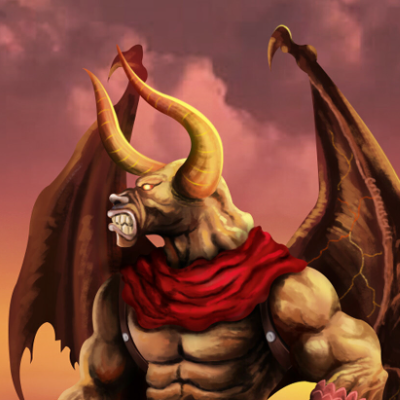
Mayavi is a Danava — a member of the class of demonic beings descended from the sage Kashyapa and his wife Danu — recorded in the Valmiki Ramayana as a son of Mayasura, the celebrated Asura architect and master of illusion. His narrative appears in the Kishkindha Kanda of the Ramayana, where he figures as an antagonist of Bali, the immensely powerful monkey-king of Kishkindha. Mayavi's conflict with Bali and his death inside a subterranean cave set in motion a chain of events that led directly to the estrangement of Bali from his younger brother Sugriva — an estrangement that later became consequential for the alliance between Sugriva and the prince Rama of Ayodhya, avatar of the god Vishnu, in the war against the demon king Ravana of Lanka. Mayavi's role in the primary sources is confined to this single episode; he is a minor figure whose significance is primarily genealogical and narratively catalytic rather than independent.
✦ The Name
The name Mayavi is a Sanskrit adjectival formation derived from the same root as his father's name — maya, meaning illusion, supernatural creative power, and deceptive artifice. As a name it designates one who possesses or wields maya. The name thus directly reflects his paternal inheritance, linking him conceptually to Mayasura, whose own identity was built around mastery of illusion and magical construction. Beyond this etymological connection, the name carries no independent epithet tradition in the primary sources.
✦ Lineage
- Father: Mayasura — the foremost architect among the Danavas, son of the sage Kashyapa and Danu, celebrated for building the Asura triple-city of Tripura and the assembly hall of the Pandava king Yudhishthira at Indraprastha.
- Paternal grandfather: Kashyapa — the great progenitor sage, son of the Prajapati Marichi who was himself born of Brahma the creator; through Kashyapa's wife Danu, the entire Danava lineage descends.
- Paternal grandmother: Danu — daughter of the progenitor Daksha; the Danavas as a class take their collective name from her.
- Brother: Dundubhi — also a son of Mayasura; a mighty buffalo-demon who challenged and was slain by Bali, the monkey-king of Kishkindha, in a separate episode also recorded in the Kishkindha Kanda of the Ramayana.
- Sister: Mandodari — daughter of Mayasura and the Apsara Hema; she became the foremost queen of Ravana, the ten-headed demon king and ruler of Lanka, and is counted among the five most virtuous women in the Hindu tradition.
✦ The Conflict with Bali and Death in the Cave
The Valmiki Ramayana, in the Kishkindha Kanda, recounts that Mayavi came at night to the gates of Kishkindha — the mountain kingdom of the monkeys — and issued a challenge to Bali, the reigning monkey-king. Bali was the son of Indra, king of the gods, and was regarded as the mightiest of all monkeys by virtue of a divine boon that granted him half the strength of any opponent who faced him in direct combat. Hearing the challenge, Bali rose immediately to meet Mayavi despite the pleas of his wife Tara, who counselled caution. Sugriva, Bali's younger brother and son of the sun-god Surya, accompanied Bali in pursuit of the Danava.
Mayavi, upon seeing Bali emerge to accept the challenge, turned and fled. Bali and Sugriva gave chase. The pursuit led across the countryside until Mayavi fled into the mouth of a vast cave set within the earth. Bali, unwilling to abandon the pursuit, prepared to enter the cave and instructed Sugriva to wait at its entrance. Before entering, Bali told Sugriva that if he did not return within a month, Sugriva should consider him dead and return to Kishkindha. Sugriva waited at the mouth of the cave for an extended period. When blood began to flow out from the cave's entrance and no sound of Bali was heard, Sugriva concluded that his brother had been killed by the Danava. Fearing that Mayavi might next emerge and attack him, Sugriva sealed the cave's entrance with a great boulder and returned to Kishkindha, where the monkey councillors eventually persuaded him to accept the kingship in Bali's presumed absence.
In fact, Bali had succeeded in killing Mayavi within the cave. When Bali emerged and found the entrance sealed, he broke through the boulder and returned to Kishkindha, where he discovered Sugriva installed as king. Bali, interpreting Sugriva's actions as deliberate usurpation rather than a reasonable conclusion from the available evidence, was consumed by fury. He expelled Sugriva from the kingdom, seized his wife Ruma, and subjected him to a sustained persecution that drove Sugriva to take refuge on the mountain Rishyamuka — a place Bali was prohibited from entering by a curse — where Sugriva eventually encountered Rama and formed the alliance that would prove decisive in the war against Ravana.
✦ Narrative Significance
Mayavi's significance in the Ramayana is almost entirely catalytic. He is not developed as a character of independent depth, and the text devotes no attention to his motivations for challenging Bali or to his prior history beyond his paternal identity. His function is to precipitate the rupture between Bali and Sugriva — a rupture that is structurally essential to the Ramayana's larger plot, since it is Sugriva's dispossession and his need for Rama's assistance that draws the monkey kingdom into alliance with Rama and makes the assault on Lanka possible. Without the estrangement caused by the misunderstanding at the cave's entrance, Sugriva would have had no need to seek Rama's help and no reason to mobilise the monkey armies in his cause. Mayavi's death, and the ambiguous circumstances surrounding it, are thus the hinge on which a major portion of the epic's action turns.
✦ Textual Variants and Inconsistencies
The core episode of Mayavi's conflict with Bali is consistent across the principal recensions of the Valmiki Ramayana. However, later retellings and regional versions of the epic occasionally alter minor details — the duration of Sugriva's wait, the precise nature of the signs he interpreted as indicating Bali's death, and the extent of Bali's subsequent anger. The Adhyatma Ramayana and several regional vernacular Ramayanas follow the essential outline without substantial deviation on the facts of Mayavi's identity or death. No primary source attributes to Mayavi any episodes beyond this single narrative, and no independent cult, iconographic tradition, or theological elaboration is associated with him in the textual record.
✦ Connection to the Wider Genealogy
Through his father Mayasura and paternal grandmother Danu, Mayavi belongs to the Danava lineage descending from the progenitor sage Kashyapa, whose multiple wives gave rise to virtually all classes of beings in the Hindu cosmological order — gods through Aditi, Danavas through Danu, serpents through Kadru, and birds through Vinata. This places Mayavi within the same vast genealogical framework as the Devas themselves, all sharing Kashyapa as their common paternal ancestor.
Through his sister Mandodari's marriage to Ravana — a descendant of the sage Pulastya, one of the mind-born sons of Brahma — Mayavi is connected by kinship to the royal house of Lanka. Through his brother Dundubhi, whose death at Bali's hands preceded and mirrored his own fatal encounter with the monkey-king, Mayavi shares in a pattern of Danava-monkey conflict that the Kishkindha Kanda uses to establish the scale of Bali's legendary power and the historical grievances that shaped the politics of Kishkindha. The account of Dundubhi's bones, encountered by Rama and Sugriva on Rishyamuka, serves as part of the same narrative sequence in which Mayavi's cave episode is also recounted by Sugriva as testimony to Bali's might and the injustice of his own expulsion.
✦ References
- Valmiki Ramayana, Kishkindha Kanda, Chapters 8–9 (approximate): Primary source for the episode of Mayavi's challenge to Bali, the pursuit into the cave, Mayavi's death, Sugriva's misunderstanding, and the consequent estrangement of the two brothers.
- Valmiki Ramayana, Kishkindha Kanda, Sugriva's narration to Rama: Sugriva recounts the cave episode and the circumstances of his expulsion; this passage identifies Mayavi by name and parentage as a son of Maya.
- Adhyatma Ramayana, Kishkindha Kanda: Later Sanskrit retelling that follows the main outline of the Mayavi episode without significant deviation; useful for confirming the stability of the core narrative across recensions.
- Puranic Encyclopaedia by Vettam Mani (Motilal Banarsidass, 1975): Modern reference work providing a consolidated entry on Mayavi and his place within the Danava genealogy and the Ramayana narrative.
- Valmiki Ramayana, translated by Robert P. Goldman et al. (Princeton University Press): Critical edition translation used for verifying the Kishkindha Kanda passages relating to Mayavi, Dundubhi, Bali, and Sugriva.
- Valmiki Ramayana, translated by Desiraju Hanumanta Rao and K. M. K. Murthy (online critical edition): Additional English rendering consulted for cross-referencing chapter and verse details of the cave episode.