
About
Ikshvaku — Son of Vaivasvata Manu, Founder of the Solar Dynasty, and First King of Ayodhya
Ikshvaku · Vaivasvataputra · Suryavamshajanaka · Treta-adi-raja · Manuputra
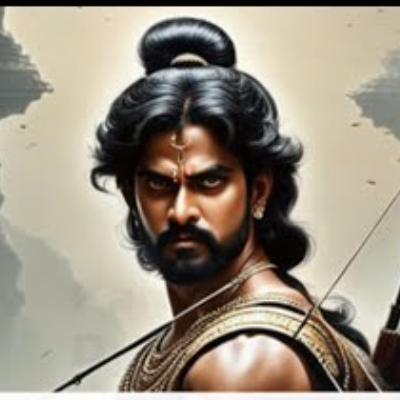
Ikshvaku is the eldest son of Vaivasvata Manu — the seventh and current Manu, progenitor of the present human race and son of Vivasvat the solar deity — and is the founder and first king of the Solar dynasty, the Suryavamsha, which is the most celebrated of the two great royal lineages of the Hindu epic and Puranic tradition. From Ikshvaku and his descendants the Solar dynasty descends through many generations to produce Rama — the seventh avatar of Vishnu and the hero of the Valmiki Ramayana — and through other branches the many royal lines of the northern Indian subcontinent recorded in the Puranas. Ikshvaku is further the first king of Ayodhya — the sacred city on the Sarayu river that serves as the seat of the Solar dynasty throughout the tradition — and is credited with establishing the righteous governance of the Solar line that becomes the paradigm of dharmic kingship against which all subsequent Suryavamsha kings are measured. Ikshvaku appears in the Vishnu Purana, the Bhagavata Purana, the Mahabharata, the Valmiki Ramayana, the Harivamsa, and several other primary texts.
✦ The Name
The name Ikshvaku is of uncertain but ancient etymology. The most widely cited derivation connects the name to iksha or ikshu, meaning sugarcane — giving the compound the sense of "one who was born of or associated with sugarcane" — combined with the suffix u. This sugarcane etymology is the one most commonly offered within the tradition itself, and it is supported by an origin story — narrated in some texts — in which Ikshvaku was born from or through the nostrils of Vaivasvata Manu, the sugarcane perhaps functioning as an implement or symbol in the sacrificial context of his birth. The Vishnu Purana and Bhagavata Purana do not elaborate the etymology in detail. An alternative reading connects the name to an older pre-Sanskrit root and treats the etymology as opaque. The name Vaivasvataputra identifies him as the son of Vaivasvata Manu. Suryavamshajanaka means "the one who gave birth to the Solar dynasty." The name Treta-adi-raja means "the first king of the Treta Yuga" — a designation reflecting the tradition's placement of Ikshvaku's reign at the beginning of the second great cosmic age, immediately following the Krita or Satya Yuga of primordial perfection.
✦ Lineage
- Father: Vaivasvata Manu — the seventh Manu of the current cosmic cycle, son of Vivasvat the solar deity and the goddess Saranyu. Vaivasvata Manu is the survivor of the great flood narrated in the Shatapatha Brahmana, the Mahabharata, and the Bhagavata Purana, in which Vishnu — in the form of a great fish — guided Manu's boat through the waters of the deluge to preserve human life. He is the progenitor of the present human race and the patriarch from whose sons the major royal dynasties of the post-diluvian world descend.
- Paternal grandfather: Vivasvat — the solar deity, one of the twelve Adityas and son of Aditi and the sage Kashyapa. Vivasvat is the presiding deity of the sun, the father of Vaivasvata Manu, Yama (the god of death), Yami, and the Ashvins, and the progenitor of the entire Solar dynasty through Manu and Ikshvaku. His identity as one of the Adityas connects the Solar dynasty ultimately to the cosmic household of Aditi and Kashyapa.
- Paternal grandmother: Saranyu — the daughter of Tvashtr the divine craftsman and the wife of Vivasvat. Mother of Vaivasvata Manu by Vivasvat directly; also the figure who created her shadow-duplicate Chhaya to remain with Vivasvat while she fled, generating parallel lineages through each.
- Siblings: Ikshvaku is the eldest of the ten sons of Vaivasvata Manu enumerated in the Vishnu Purana and Bhagavata Purana. His brothers are Nabhaga, Dhrishta, Sharyati, Narishyanta, Pransu, Nabhaga (a second of this name), Dis, Karushaka, and Prishadhra. Each of these brothers is the founder of his own royal line, and several of their descendants appear in later Puranic genealogies. Ila — the figure who becomes the ancestress of the Lunar dynasty through Budha and Pururavas — is also associated with Vaivasvata Manu's household, whether as a daughter or as a transformation of one of the sons depending on the source consulted, as discussed in the Ila profile.
- Sons: Ikshvaku had a large number of sons, of whom the Vishnu Purana and Bhagavata Purana give both a list of the most significant and a general statement that his total progeny were very numerous. The most important sons for the main Solar dynasty lineage are Vikukshi (also called Shashada in some texts), Nimi, and Danda. Of these, Vikukshi-Shashada is the one through whom the main Solar line continues to the kings of Ayodhya and ultimately to Rama. Nimi founded his own separate royal line in Videha — the kingdom of which Janaka, the father of Sita, is a later king — after a celebrated conflict with his father described below. Danda founded a third line. Several other sons are named in the Puranas as founders of minor regional dynasties.
✦ The Birth of Ikshvaku
The Bhagavata Purana's ninth book and the Vishnu Purana both record that Vaivasvata Manu's sons were born through a sacrifice performed with the assistance of the sage Vasistha. The Bhagavata Purana specifies that Ikshvaku, the eldest son, was born from Manu's sneeze — the word ikshvaku being connected in the text's own gloss to the act of sneezing — a statement that serves as an internal folk etymology whether or not it reflects the true derivation of the name. The Ramayana's Bala Kanda, in the genealogical narration given by the sage Vishvamitra to Rama prior to their journey, simply introduces Ikshvaku as the eldest son of Manu and the first king of Ayodhya without elaborating the birth narrative. The Puranic accounts provide slightly more genealogical context while the epic account is more concerned with the dynastic line that follows.
✦ Ikshvaku as the First King of Ayodhya
The primary texts consistently identify Ikshvaku as the first king of Ayodhya — the sacred city on the banks of the Sarayu river in the region of Kosala in northern India — and as the establisher of the Solar dynasty's seat of power. Ayodhya occupies a position of supreme sacred and narrative importance in the tradition as the city of the Solar kings and as the birthplace of Rama, the seventh avatar of Vishnu. The Valmiki Ramayana's Bala Kanda opens with a celebrated description of Ayodhya's magnificence and traces the Solar dynasty from Brahma through Vivasvat, Vaivasvata Manu, and Ikshvaku down to Dasharatha and Rama in an unbroken genealogical succession. Ikshvaku is thus presented in the Ramayana as the figure at whose point the abstract solar lineage becomes a specific terrestrial kingdom with a named seat of power.
The Vishnu Purana and Bhagavata Purana elaborate Ikshvaku's reign in the context of righteous Vedic kingship — he is presented as a ruler who governed in accordance with dharma, maintained the Vedic sacrificial order, and treated his subjects with justice and care. The tradition does not record specific wars or conquests attributed to Ikshvaku beyond the general characterisation of a righteous king; his significance is primarily that of the founding patriarch who establishes the Solar dynasty's royal seat rather than a figure of dramatic individual narrative.
✦ The Episode of Vikukshi and the Forbidden Flesh
One narrative episode involving Ikshvaku and his son Vikukshi is recorded in the Vishnu Purana and Bhagavata Purana. Ikshvaku directed his son Vikukshi to go to the forest to collect pure meat — specifically pure game — for use in a Shraddha ceremony, the ritual feeding of the ancestors. Vikukshi went to the forest and hunted the required animals. On his return, however, he was hungry and ate a hare from the collection himself before returning to his father with the remainder. Ikshvaku presented the meat to the sage Vasistha — the family preceptor — for ritual examination before use in the Shraddha. Vasistha, perceiving through his spiritual knowledge that the meat had been rendered impure by Vikukshi's prior consumption of a portion of it, declared the entire collection contaminated and therefore unfit for the sacred rite. He also revealed to Ikshvaku what Vikukshi had done. Ikshvaku, deeply troubled by this violation of ritual purity at the hands of his own son and in the context of a ceremony meant to honour the ancestors, banished Vikukshi from the kingdom. Vikukshi went into exile. Later, after Ikshvaku's death, Vikukshi returned and became king — and from him the Solar dynasty's main Ayodhya line continued. Vikukshi acquired the epithet Shashada — "the hare-eater" — from this episode, a name by which he is also known in the genealogical lists.
✦ The Conflict with Nimi and the Founding of the Videha Line
A second narrative episode involving Ikshvaku and one of his other sons — Nimi — is recorded in the Vishnu Purana, the Bhagavata Purana, and several other Puranic texts, and is of considerable genealogical significance because it explains the origin of the Videha dynasty whose most celebrated king is Janaka, the father of Sita. Nimi, a son of Ikshvaku, wished to perform a great sacrifice and requested the services of the sage Vasistha as the chief officiant. Vasistha, who was already committed to a sacrifice being performed by Indra, told Nimi that he would attend to his sacrifice after completing the one for Indra and asked Nimi to wait. Nimi did not wait — whether from impatience or from his own assessment that the occasion was auspicious and could not be delayed — and engaged other sages to officiate at his sacrifice in Vasistha's absence.
When Vasistha returned and discovered that Nimi had proceeded without him, he was furious at what he regarded as a breach of the agreement and a disrespect to his authority as family preceptor. He cursed Nimi that his body would fall — that is, that he would die. Nimi, who was himself a sage of great power, pronounced a counter-curse in return: that Vasistha would also lose his body. Both curses took effect. Nimi died and his body was preserved in fragrant oils by his sages while his spirit remained present. Vasistha also lost his body but was subsequently reborn as the son of Mitra and Varuna through the Apsara Urvashi — this being one of the accounts of how the sage Vasistha came to have a second birth, a narrative also told differently in other contexts. Nimi's spirit, when the sacrifice was completed, was offered a boon by the assembled gods, who asked him to choose a new body. Nimi refused embodied existence and asked instead to dwell in the eyes of all living beings — which is why, the tradition says, eyes flutter and blink. Subsequently, through the churning of Nimi's preserved body by the sages, a son was born from the friction — this son was Janaka (the original Janaka, founder of the Videha line), also called Mithi, from whose line the later king Janaka — father of Sita — descends. This episode thus provides the origin of the entire Videha dynasty, which is genealogically descended from Ikshvaku through Nimi.
✦ Ikshvaku in the Buddhist and Jain Traditions
Ikshvaku's significance extends beyond the Hindu canonical texts into the Buddhist and Jain traditions, both of which claim lineage connections to the Solar dynasty of Ikshvaku. The Buddhist tradition records that Siddhartha Gautama — the historical Buddha — was a member of the Shakya clan, whose royal lineage is traced in Buddhist texts to the Solar dynasty descending from Ikshvaku. The Pali Buddhist texts name the Shakyas as descendants of Okkaka — the Pali form of Ikshvaku — making the Buddha a descendant of the same Solar line that produces Rama in the Hindu tradition. The Jain tradition similarly traces the lineage of the Tirthankara Rishabhanatha to the Ikshvaku line. These external traditions are noted here because they establish the broader cultural and religious importance of Ikshvaku as a founding patriarch across multiple Indic religious systems, though the specific genealogical claims of the Buddhist and Jain texts differ from those of the Hindu Puranas and are not taken up in this profile's primary analysis.
✦ Textual Variants and Inconsistencies
The birth narrative: The Bhagavata Purana's account of Ikshvaku being born from Manu's sneeze — the folk etymology connecting the name to the act of sneezing — is not replicated in the same terms in the Vishnu Purana or the Ramayana, which introduce Ikshvaku as the eldest son of Manu without the sneeze detail. This is a minor variant but worth noting as the Bhagavata Purana's distinctive contribution to the birth narrative.
The number of Ikshvaku's sons: The Vishnu Purana and Bhagavata Purana agree on the three principal sons — Vikukshi, Nimi, and Danda — as the most significant, but they give different total numbers for Ikshvaku's sons overall. The Vishnu Purana states that Ikshvaku had one hundred sons while the Bhagavata Purana records a different enumeration. In both cases the principal three are consistently named and their descending lines are consistently traced. The discrepancy in total numbers is characteristic of Puranic genealogical lists and does not affect the main dynastic narrative.
The genealogy from Ikshvaku to Rama: The Valmiki Ramayana's Bala Kanda and the Vishnu Purana both provide detailed genealogies of the Solar dynasty from Ikshvaku to Dasharatha and Rama, but the two lists are not identical in every generation. Several names appear in the Ramayana genealogy that are not present in the Vishnu Purana's enumeration, and the order or placement of certain kings differs between the two texts. These discrepancies are well known in the scholarship on Indian dynastic genealogies and reflect the independent compositional traditions of the two texts rather than fundamental disagreements about the dynasty's existence or general character.
Danda and his line: Ikshvaku's son Danda is associated in some Puranic texts with a narrative of transgression — he is said to have violated the daughter of the sage Shukra, who cursed his kingdom to become a desolate forest. This narrative is narrated in the Ramayana's Uttara Kanda and in certain Puranas as an explanation for the desolation of a specific region. The Vishnu Purana does not give this narrative in the same terms. The episode illustrates how individual sons of Ikshvaku generated their own specific narrative traditions, only some of which are preserved across multiple texts.
✦ Theological and Philosophical Significance
Ikshvaku's theological significance is primarily that of the founding patriarch of the tradition of dharmic solar kingship. The Solar dynasty — the Suryavamsha or Ikshvaku vamsha — is presented across the Ramayana, the Puranas, and the Mahabharata as the paradigmatic royal line of righteousness, whose kings rule in accordance with cosmic law, uphold the Vedic sacrificial order, protect the weak, and govern their kingdoms as sacred trusts rather than personal possessions. This tradition of solar kingship reaches its apex in the person of Rama — the ideal king, the seventh avatar of Vishnu, whose reign in Ayodhya becomes the model of the just kingdom (Ramarajya) against which all subsequent governance is measured in the tradition. Ikshvaku, as the first king of this dynasty and the first occupant of Ayodhya's throne, is the originating point from which this entire tradition of dharmic kingship radiates forward through the generations.
The episode of Vikukshi's banishment for ritual impurity illustrates, in compressed form, the values that define the Solar dynasty's royal character from Ikshvaku forward: strict adherence to the requirements of sacred ritual, deference to the judgment of the Brahmin preceptor, and willingness to enforce ritual purity even when it means punishing one's own son. These values — the subordination of personal sentiment to dharmic obligation — are precisely the values that the tradition attributes to Rama at the climactic moments of the Ramayana, suggesting that Ikshvaku's founding acts encode in miniature the ethical DNA that the Solar dynasty will express most fully many generations later in its greatest king.
✦ Connection to the Wider Genealogy
Through his father Vaivasvata Manu, Ikshvaku connects upward to Vivasvat the solar deity — one of the twelve Adityas — and through Vivasvat to Aditi and Kashyapa, the universal progenitive household of the Puranic tradition. Aditi is a daughter of Daksha the Prajapati, and Daksha is a son of Brahma — making Ikshvaku Brahma's descendant at six generations through the solar line. Through his sister Ila — who becomes the mother of Pururavas and thus the ancestress of the entire Lunar dynasty — Ikshvaku is the brother of the founding figure of the rival great dynasty, making him the solar counterpart to the lunar founding line at precisely the generation where the two streams diverge. Through his son Vikukshi-Shashada the main Ayodhya Solar dynasty continues, descending through many generations including Mandhata, Harishchandra, Sagara, Bhagiratha, Dilipa, Raghu, Aja, and Dasharatha to Rama and his brothers — a line of sixty or more generations depending on the source consulted. Through his son Nimi the Videha line is established, from which Janaka — father of Sita, who is Rama's wife — descends, creating the genealogical circumstance in which the Solar dynasty's two branches, descending from Vikukshi and Nimi respectively, are united in the marriage of Rama and Sita. Ikshvaku is thus the common ancestor of both bridegroom and bride in the Ramayana's central relationship — a genealogical fact that the Valmiki Ramayana acknowledges implicitly through its presentation of the Solar dynasty's founding in the Bala Kanda.
✦ References
Primary Sources
- Valmiki Ramayana, Bala Kanda, chapters 70–71: The solar dynasty genealogy from Brahma through Vivasvat, Vaivasvata Manu, and Ikshvaku down to Dasharatha and Rama, given by Vishvamitra during the Ayodhya visit; the primary epic source for the Ikshvaku lineage as it functions in the Ramayana tradition.
- Vishnu Purana, Book 4, chapters 2–3: The primary Mahapuranic source for Ikshvaku's position as eldest son of Vaivasvata Manu, the account of Vikukshi's banishment, the conflict with Nimi and the founding of the Videha line, and the genealogy of the Solar dynasty descending from Ikshvaku through Vikukshi.
- Bhagavata Purana, Book 9, chapters 1 and 6–7: Chapter 1 introduces Vaivasvata Manu's sons including Ikshvaku and the Ila-Sudyumna narrative. Chapters 6–7 give the Bhagavata Purana's account of Ikshvaku's birth from Manu's sneeze, the Solar dynasty's foundation, the Vikukshi episode, the Nimi-Vasistha conflict, and the Videha line's origin.
- Mahabharata, Adi Parva, sections 67–70: The epic's genealogical passages on the Solar dynasty including Ikshvaku's position at its foundation; comparative material for the Ramayana and Puranic accounts.
- Harivamsa, chapters 1 and 10–12: The Harivamsa as a supplement to the Mahabharata contains genealogical material on the Solar dynasty from Ikshvaku forward; provides comparison with the main Puranic accounts.
- Valmiki Ramayana, Uttara Kanda: Contains the narrative of Danda — Ikshvaku's son — his transgression against Shukra's daughter, and the desolation of his kingdom; the primary source for this episode in Ikshvaku's son's line.
- Matsya Purana, chapters 11–12: Contains the Solar dynasty genealogy from Vaivasvata Manu and Ikshvaku with its own enumeration of the Ayodhya kings.
- Vayu Purana, chapters 86–88: Contains the Solar dynasty genealogy with detailed enumeration of Ikshvaku's descendants through the Ayodhya line.
- Brahma Purana, chapters 7–8: Contains the account of Vaivasvata Manu's sons and the foundation of the Solar dynasty through Ikshvaku.
Modern Reference Works
- Vettam Mani, Puranic Encyclopaedia (1975): Entries on Ikshvaku, Vikukshi, Nimi, and the Suryavamsha; comprehensive collation of all primary references and enumeration of the Solar dynasty's principal kings from Ikshvaku onward.
- Robert P. Goldman (general editor), The Ramayana of Valmiki — Bala Kanda, translated by Robert P. Goldman (1984): Critical edition and translation of the Bala Kanda with detailed notes on the Solar dynasty genealogy; the most authoritative scholarly treatment of the Ramayana's account of the Ikshvaku lineage.
- F. E. Pargiter, Ancient Indian Historical Tradition (1922): A foundational scholarly work on the Puranic dynastic genealogies including the Solar dynasty from Ikshvaku; attempts a critical reconstruction of the dynastic lists across multiple Puranic sources and remains an important reference despite its age.
- Sukumari Bhattacharji, The Indian Theogony (1970): Examines the Solar dynasty's genealogical framework and Ikshvaku's position as its founding patriarch within the broader Puranic cosmological system.
- Alf Hiltebeitel, Dharma: Its Early History in Law, Religion, and Narrative (2011): Contains discussion of the tradition of dharmic solar kingship and its genealogical grounding in the Ikshvaku line, relevant to understanding the theological significance of Ikshvaku as the dynasty's founding figure.
- A. A. Macdonell and A. B. Keith, Vedic Index of Names and Subjects (1912): Entry on Ikshvaku; establishes the Vedic and early textual background of the name and its earliest references in the tradition.