
About
Amavasu — Son of Pururavas and Urvashi, Ancestor of Vishvamitra, and Founder of the Kanyakubja-Kannauj Line
Amavasu · Vijaya · Pururavas-putra · Vishvamitra-purvajanin · Kanyakubja-vamsha-mula · Achchoda-pati · Chandravamsha-shakha
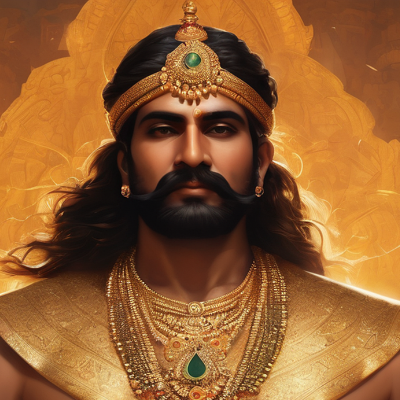
Amavasu is the son of Pururavas and Urvashi — confirmed by the Mahabharata's Adi Parva chapter 75 verse 24 — and the founder of a significant collateral branch of the Chandravamsha whose most celebrated descendant was the brahmarshi Vishvamitra, one of the most important and narratively active sages in the entire Ramayana tradition. He is sometimes identified with Vijaya — one of the names given in certain Puranic son-lists for Pururavas's children — though the identification is not universal across all primary sources. His son was Kanyakubja — the founder of the city of Kannauj (Kanyakubja) in what is now Uttar Pradesh — and the dynastic line he founded extended through Kushambha, Kushanabha, and Gadhi to Vishvamitra. The Amavasu dynasty encyclopedia source notes that his most notable descendants were Vishvamitra and Uparichara Vasu — making the Amavasu collateral branch of the Chandravamsha one of the most consequential sub-lines of the Lunar dynasty in terms of the narrative weight of its members' biographies. He also married his stepsister Achchoda — a detail recorded in the Amavasu dynasty sources — whose identity as a stepsister rather than a full sibling requires that she be the daughter of Pururavas by a different mother than Urvashi, and whose marriage to Amavasu represents an intra-family alliance of the type documented in several Puranic genealogical traditions.
✦ The Name
The name Amavasu is a compound of ama — home, one's own place, raw or unprocessed — and vasu — wealth, the good, a class of divine beings — yielding the sense of "he whose wealth is at home," "the possessor of native wealth," or "the one with the Vasus' quality at source." The alternative name Vijaya — meaning "victory" — is used for this same genealogical position in certain Puranic son-lists. The patronymic Pururavas-putra means "son of Pururavas." Vishvamitra-purvajanin means "the ancestor of Vishvamitra." Kanyakubja-vamsha-mula means "the root of the Kanyakubja dynasty."
✦ Lineage
- Father: Pururavas — profiled above.
- Mother: Urvashi — confirmed by the Mahabharata's Adi Parva chapter 75 verse 24 for Amavasu specifically.
- Wife: Achchoda — described in the Amavasu dynasty sources as his stepsister, meaning the daughter of Pururavas by a different mother. The Manuscrypts source on Amavasu confirms this relationship. Achchoda as Amavasu's wife is not widely elaborated across the major Mahapuranic sources — her primary attestation is in the dynasty-specific sources rather than in the pan-canonical texts.
- Son: Kanyakubja — the founder of the ancient city of Kannauj, one of the most important cities of classical India, located on the Ganga in what is now Uttar Pradesh. The city's name Kanyakubja — meaning "the hunchbacked maiden" — has its own mythological etymology distinct from Amavasu's genealogy, but its founder in the tradition's dynastic accounts is this Kanyakubja son of Amavasu.
- Later descendants in the Amavasu line: From Kanyakubja descended Kushambha, Kushanabha, and Gadhi. Gadhi's son was Vishvamitra — born Vishvaratha, the kshatriya king whose extraordinary austerities eventually earned him the rank of brahmarshi, whose rivalry with Vasistha is one of the Ramayana tradition's most important background narratives, and whose daughter Shakuntala was the mother of Bharata the emperor from whom the Bharata dynasty takes its name. Also descended from the Amavasu line was Uparichara Vasu — the Chedi king who is the father of Satyavati in the Mahabharata's genealogical framework — giving the Amavasu branch a direct connection to the Kuru dynasty's founding marriage through Satyavati's union with Shantanu.
✦ The Amavasu Dynasty's Significance
The dynasty that descends from Amavasu through Kanyakubja is one of the most historically resonant collateral branches of the Chandravamsha. Kannauj — the city founded by Kanyakubja son of Amavasu — became one of the most important cities of the Ganga plain in classical and medieval India, serving as the capital of the Maukhari, Pushyabhuti (Harsha's dynasty), Gurjara-Pratihara, and Gahadavala dynasties at various points in Indian history. The association of this historically documented city with Amavasu through his son Kanyakubja gives Amavasu's biography a geographic-historical anchor that is unusual among the figures of the early Chandravamsha generation. Vishvamitra as his descendant through the Gadhi-Kushanabha line gives the Amavasu branch its most celebrated member — the sage whose conflict with Vasistha, whose composition of the Gayatri Mantra, and whose guidance of Rama in the Bala Kanda of the Valmiki Ramayana are among the tradition's most consequential biographical episodes.
✦ Textual Variants and Inconsistencies
Amavasu versus Vijaya: The Amavasu dynasty encyclopedia source identifies Amavasu with Vijaya — one of the names given in Urvashi's Wikipedia article's son-list. Not all sources make this identification consistently, and the Mahabharata's Adi Parva chapter 75 verse 24 names Amavasu specifically in its list without identifying him with Vijaya. The two may be the same genealogical position under different names in different textual traditions, or they may be two distinct sons whose lines have been conflated in certain secondary sources.
The Achchoda marriage: The stepsister marriage of Amavasu and Achchoda is documented in the dynasty-specific sources but not elaborated in the major Mahapuranas with the same detail. The identity of Achchoda's mother — the other wife of Pururavas whose daughter she was — is not specified in the sources consulted.
The specific genealogical steps from Amavasu to Vishvamitra: Different sources give slightly different numbers of intermediate generations between Amavasu and Gadhi (Vishvamitra's father). The sequence Amavasu — Kanyakubja — Kushambha — Kushanabha — Gadhi — Vishvamitra is the most widely attested account across the sources consulted.
✦ References
- Mahabharata, Adi Parva, chapter 75, verse 24: The primary canonical source naming Amavasu specifically as a son of Pururavas and Urvashi.
- Valmiki Ramayana, Bala Kanda, sargas 32–34: The account of Kushanabha and his hundred daughters by Ghritachi — narrated by Vishvamitra to Rama — which includes the genealogical context tracing Vishvamitra's descent from the Amavasu line through Kanyakubja and Kushambha. This passage, given in the Ramayana itself, is the primary literary source for the Amavasu-to-Vishvamitra genealogical chain.
- Vishnu Purana, Book 4, chapter 7: The genealogical account of the Chandravamsha's collateral branches including the Amavasu line.
- Manuscrypts.com, Amavasu entry: Citing Mahabharata Adi Parva chapter 75 verse 24 — "The son of Pururavas and Urvashi, as per Mahabharata Adiparva Chapter 75 verse 24. Antecedents: Vishnu – Brahma – Atri – Chandra – Budha – Pururavas – Amavasu."
- Vettam Mani, Puranic Encyclopaedia (1975): Entry on Amavasu; identifies him as Pururavas's son and gives the principal genealogical facts of his line.