
About
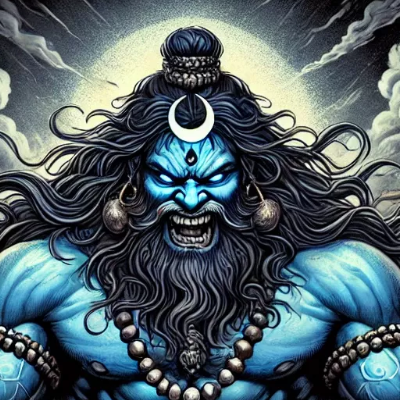
Rishyashringa Rakshasa — Rakshasa Leader, Father of the Warrior Alambusha
Rishyashringa · Rishyasringa · Rikshashringa
Rishyashringa Rakshasa is a figure from the Mahabharata identified as a Rakshasa — a class of powerful supernatural beings often characterised in the epics as warriors of demonic nature — and as the father of Alambusha, one of the notable Rakshasa warriors who fought on the Kaurava side during the great Kurukshetra war. He is introduced by name in the Udyoga Parva of the Mahabharata, where Alambusha is explicitly identified as his son. Beyond this paternal identification, the primary sources do not preserve an independent narrative for Rishyashringa Rakshasa himself. He must be carefully distinguished from the celebrated brahmin sage Rishyashringa, son of the ascetic Vibhandaka, who appears in the Aranyaka Parva of the Mahabharata and in the Bala Kanda of the Valmiki Ramayana as a figure central to the birth of the four princes of Ayodhya. The two figures share a name but are wholly distinct beings of entirely different nature, lineage, and narrative context.
✦ The Name
The name Rishyashringa is a compound of rishya, meaning a type of antelope or male deer, and shringa, meaning horn, yielding the sense of deer-horned or one bearing the horn of an antelope. This name is most famously associated with the brahmin sage of the same name, whose birth involved the intervention of an Apsara before his father the ascetic Vibhandaka, and whose deer-horn epithet arose from his unusual circumstances of birth and upbringing in the forest. The sharing of this name between the Rakshasa and the sage is a genuine textual coincidence preserved in the Mahabharata and is acknowledged in scholarly commentary as a source of potential confusion. The primary texts provide no etymology or explanation for why this particular Rakshasa bore a name so strongly associated with the brahmin ascetic tradition. The coincidence of names has led to occasional conflation of the two figures in later retellings, which the textual evidence does not support.
✦ Lineage
- Class of being: Rakshasa — a category of supernatural beings in the Hindu epic tradition, capable of assuming various forms and possessed of great martial power
- Son: Alambusha — also known by the epithet Shalakatanka; a prominent Rakshasa warrior who fought on the side of the Kauravas in the Kurukshetra war, known particularly for his role in the death of Iravat, the son of the Pandava hero Arjuna by the Naga princess Ulupi
✦ Textual Attestation and Limits of the Record
Rishyashringa Rakshasa is attested in the Mahabharata solely through the identification of his son Alambusha. The Udyoga Parva, Book 5, Chapter 167, verse 33, names Alambusha as the son of Rishyashringa in the context of the enumeration of Kaurava allies and warriors assembled before the war. No further detail about Rishyashringa Rakshasa himself — his deeds, his role in any narrative episode, his own parentage, or his place within the Rakshasa genealogical tradition — is provided in this passage or elsewhere in the surviving text of the Mahabharata. His presence in the record is thus entirely defined by his paternal relationship to Alambusha. This is consistent with the Mahabharata's frequent practice of identifying warriors by their patronymics in the muster-roll passages of the Udyoga Parva without elaborating on the parents themselves.
✦ Distinction from the Sage Rishyashringa
The sage Rishyashringa, with whom this figure shares a name, is an entirely separate being. The sage Rishyashringa is the son of the brahmin ascetic Vibhandaka — himself the son of the great sage Kashyapa — and was born under extraordinary circumstances when the Apsara Vishvachi appeared before Vibhandaka during his austerities. The sage Rishyashringa grew up in complete isolation in the forest, was brought to the kingdom of Anga by a courtesan, performed austerities that ended a great drought, and later officiated at the Putrakameshti fire sacrifice for King Dasharatha of Ayodhya that resulted in the births of Rama, Bharata, Lakshmana, and Shatrughna. This sage's story is narrated in the Aranyaka Parva of the Mahabharata and in the Bala Kanda of the Valmiki Ramayana. He is a brahmin of entirely human and divine ascetic lineage, bears no connection to the Rakshasa class, and is separated from the Rakshasa Rishyashringa by every dimension of identity, lineage, and narrative. The Mahabharata itself does not invite or suggest any connection between the two figures beyond the accident of the shared name.
✦ References
- Primary Sources
- Mahabharata, Udyoga Parva, Book 5, Chapter 167, verse 33: The sole primary source passage that names Rishyashringa as the father of the Rakshasa warrior Alambusha, in the context of the enumeration of Kaurava forces before the Kurukshetra war.
- Secondary Sources
- Mani, Vettam. Puranic Encyclopaedia. Motilal Banarsidass, 1975: Notes the identification of Alambusha as son of Rishyashringa and the distinction between the Rakshasa and the brahmin sage of the same name.
- Manuscrypts.com, Alambusha entry (2010): A secondary reference consolidating the Mahabharata passages relevant to Alambusha's identity and his father Rishyashringa, useful for locating the specific verse references within the critical edition.