
About
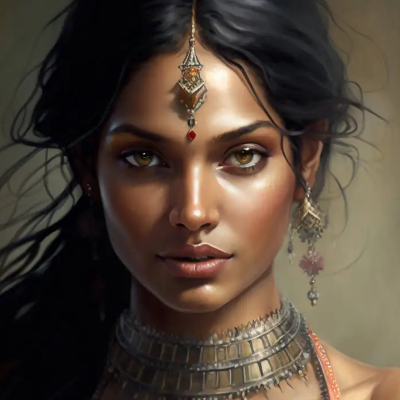
Vajrajvala — Daughter of Mahabali, Wife of Kumbhakarna, Mother of Kumbha and Nikumbha
Vajrajvala · Vajrajvālā · Vajrajwala · Mahabali-putri · Kumbhakarna-patni · Kumbha-Nikumbha-mata
Vajrajvala is the daughter of Mahabali and the wife of Kumbhakarna — the mighty younger brother of Ravana in the Valmiki Ramayana. She is the mother of Kumbha and Nikumbha, two of the most powerful Rakshasa warriors of Lanka, who fought in the great war against Rama and were killed by Angada and Rama respectively. Her name is confirmed in the primary tradition by the Wisdomlib source citing the Uttara Ramayana, and her identity as Mahabali's daughter is confirmed by the Quora, HinduPad, and Wikipedia sources drawing from the Puranic genealogy. Her marriage to Kumbhakarna — the second incarnation of the Vaikuntha gatekeeper Vijaya, who in his first birth had been her own ancestor's guardian Hiranyaksha — creates one of the most striking genealogical convergences in the tradition: the granddaughter of the supreme Asura devotee Prahlada married to the second birth of the very being whom Prahlada's grandfather Kashyapa had fathered as Hiranyaksha. She is described in the HinduPad source as beautiful, virtuous, devoted to her husband, and a woman of kind character who also maintained a cordial relationship with Kumbhakarna's second wife Karkati. She is recorded as having participated in the battle against Rama.
✦ The Name
The Sanskrit name Vajrajvala — written Vajrajvālā — is formed from vajra — thunderbolt, diamond, the indestructible — and jvala — flame, blaze, burning light. Together: the blaze of the thunderbolt or she who burns like the lightning-strike. The Monier-Williams Sanskrit-English Dictionary records the compound as meaning a clap of thunder or lightning flame. The name records both her royal Asura heritage — the diamond-strength lineage of Mahabali and Prahlada — and the fierce, brilliant energy associated with her husband's family, the Rakshasa warriors of Lanka.
✦ A Critical Genealogical Note — Daughter or Niece?
Two distinct genealogical identifications exist in the tradition for Vajrajvala. The primary and most widely cited tradition — confirmed by the Wisdomlib entry citing the Uttara Ramayana, by the Quora source, by the Mythlok and HinduPad sources, and by the Monier-Williams Sanskrit-English Dictionary — identifies her as the daughter of Mahabali and thus the granddaughter of Virochana. The VedaPurana.org source, however, presents a divergent account: she is a granddaughter of Virochana and the wife of Kumbhakarna; her mother is Manthara and Mahabali is her uncle. In this version she is Virochana's daughter through a woman named Manthara — making her Mahabali's niece rather than his daughter, and a member of a different branch of Virochana's family. The Brahmanda Purana records a daughter of Virochana named Manthara — who was killed by Indra for attempting to destroy the earth — as distinct from the Manthara of the Ramayana (Kaikeyi's maid). If this Manthara is Vajrajvala's mother, then Vajrajvala belongs to this doomed branch of the Virochana lineage rather than to Mahabali's direct line. The primary tradition of the Uttara Ramayana identifying her as Mahabali's daughter is followed as the principal account in this profile, with the VedaPurana.org variant recorded here for accuracy.
✦ Lineage
- Father: Mahabali — Asura emperor; Chiranjivi; future Indra of the Savarni Manvantara (per the primary Uttara Ramayana tradition)
- Mother: Vindhyavali — daughter of Himavat; sister of Parvati and Ganga (per the primary tradition)
- Alternate parentage (VedaPurana.org): daughter of Manthara (daughter of Virochana) — making Mahabali her uncle rather than her father
- Brothers: Banasura, Namasu, and ninety-eight others (per the primary tradition in which she is Mahabali's daughter)
- Sister: Ratnamala — who witnessed the Vamana episode and was reborn as Putana
- Grandfather: Virochana — in both traditions (whether as Mahabali's father or as her maternal grandfather)
- Great-grandfather: Prahlada — supreme devotee of Vishnu
- Husband: Kumbhakarna — the mighty Rakshasa, younger brother of Ravana; son of Vishrava and Kaikasi; second incarnation of the Vaikuntha gatekeeper Vijaya (whose first birth was Hiranyaksha, and whose third birth was Dantavaktra); slain by Rama in the Lanka war
- Co-wife: Karkati — Kumbhakarna's second wife, whose son Bhima fled to the Sahyadri mountains after the Lanka war and later undertook a campaign against Vishnu, slain ultimately by Kartikeya
- Sons by Kumbhakarna: Kumbha and Nikumbha — both great Rakshasa warriors who fought in the Lanka war; Kumbha was killed by Angada; Nikumbha was killed by Hanuman per some accounts or by Rama per others
✦ Character and Marriage
The HinduPad source records the tradition that preserves Vajrajvala's character in the most detail. Vajrajvala was the pious consort of Kumbhakarna. She was mentioned in the Ramayana as a beautiful and good-mannered lady, and she was considered a chaste and kind-hearted lady who showered her sincere love and affection towards her husband Kumbhakarna. She also maintained a cordial relationship with the second wife of Kumbhakarna, whose name was Karkati. This last detail — her harmonious relationship with Karkati — establishes her as a woman of generous temperament, able to maintain domestic dignity and warmth in a household shared with another wife. She considered Ravana as her own father and maintained good relationships with him. She also tried her level best to secure the release of Sita from Lanka and had spoken to Ravana about this matter several times. This is a remarkable detail: Vajrajvala — the great-granddaughter of Prahlada, whose entire lineage was marked by an orientation toward dharma and devotion — actively advocated for Sita's release from within Ravana's own household, continuing the pattern of moral dissent from within demonic power that her ancestor Kayadhu had established in Hiranyakashipu's palace thousands of years earlier.
✦ In the Lanka War
Multiple sources confirm that Vajrajvala participated directly in the war against Rama. Vajrajvala also fought in the war against Rama and his army. The Ramayana tradition records that her sons Kumbha and Nikumbha also fought and were killed. Kumbhakarna had two sons, Kumbha and Nikumbha, from his wife Vajrajvala who too fought in the war against Rama and were killed. The exact circumstances of Vajrajvala's own fate in the war — whether she survived or died — are not recorded in the primary sources available for this profile.
✦ Genealogical Significance — Two Great Lineages Converging
The marriage of Vajrajvala to Kumbhakarna unites two of the most celebrated lineages in the Puranic tradition in a single union. Vajrajvala carries the Daitya-devotional lineage: Kashyapa and Diti — Hiranyakashipu — Prahlada — Virochana — Mahabali — Vajrajvala. Kumbhakarna carries the Rakshasa-Pulastya lineage: Brahma — Pulastya — Vishrava — Kumbhakarna. Through their sons Kumbha and Nikumbha, both lineages are combined — the great-granddaughter of Prahlada and the second incarnation of Vijaya (whose first birth was Hiranyaksha, her own great-great-granduncle through the Diti line) producing the Rakshasa princes of Lanka. This convergence is one of the most intricate genealogical knots in the tradition — binding together the Vaikuntha gatekeeper story, the Daitya devotional lineage, the Pulastya Rakshasa cycle, and the Ramayana's war narrative into a single family tree.
✦ References
- Uttara Ramayana — the primary canonical source cited by the Wisdomlib entry: Vajrajvala is a daughter of Mahabali and the wife of Kumbhakarna; the foundational genealogical identification in the primary textual tradition
- Valmiki Ramayana (Yuddha Kanda) — Kumbhakarna's sons Kumbha and Nikumbha as warriors in the Lanka war; killed in battle against Rama's army; Kumbhakarna slain by Rama; Vajrajvala's role as their mother implied throughout
- Monier-Williams Sanskrit-English Dictionary — Vajrajvala defined as a granddaughter of Vairocana and wife of Kumbhakarna, citing the Ramayana tradition
- Wisdomlib — Vajrajvala (eight definitions) — the most authoritative modern reference: daughter of Mahabali, wife of Kumbhakarna, per the Uttara Ramayana; the Puranic and Sanskrit dictionary definitions of the name
- VedaPurana.org — Vajrajvala — the divergent identification: granddaughter of Virochana, daughter of Manthara, niece of Mahabali; recorded as an alternate tradition requiring further primary-text verification
- HinduPad — Vajrajwala, Wife of Kumbhakarna (Naveen Sanagala, May 2022) — Vajrajvala's character; her advocacy for Sita's release; her relationship with Karkati; her sons Kumbha and Nikumbha
- Religion Fandom Wiki — Kumbhakarna; AstroVed — Story of Kumbhakarna; Apnisanskriti — Story of Kumbhakarna; VedicFeed — Kumbhakarna; Quora — Who is the wife of Kumbhakarna: modern summaries drawing from the above primary sources