
About
Gramani — Gandharva Father of Devavati
Gramani · Grahmin · Grāmaṇī · gandharva of the Lanka lineage
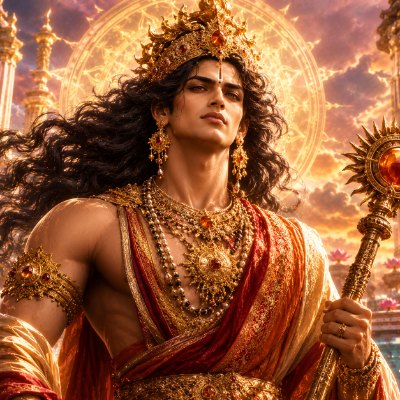
Gramani is a gandharva who appears in the fifth sarga of the Uttara Kanda of the Valmiki Ramayana as the father of Devavati, the wife of the rakshasa Sukesa and the mother of Malyavan, Sumali, and Mali — the three brothers who established the rakshasa kingdom of Lanka. He is described in the primary text as effulgent as fire. His significance in the tradition is entirely genealogical: by giving his daughter Devavati to Sukesa, Gramani introduced a major gandharva admixture into the lineage that would eventually produce Ravana. The gandharvas as a class are in the Vishnu Purana descended from the sage Kashyapa and his wife Arishta, a daughter of Daksha. A variant tradition found in the Puranic Encyclopaedia of Vettam Mani names Devavati's father as Manimaya rather than Gramani; this is discussed below.
✦ The Name
The name Gramani is Sanskrit, from grama meaning village or community and the suffix ni indicating a leader or chief — the compound thus meaning a village chief, community leader, or leader of a group. In the context of a gandharva figure it functions as a personal designation rather than a title, though the sense of leadership it carries is notable. Secondary accounts render the name as Grahmin or Gramani without distinguishing whether this reflects different manuscript readings or simply transliteration variations. The Wisdomlib definition for Ketumati uses the form Daivavatī and identifies her father as Maṇimaya; the Puranic Encyclopaedia similarly uses Manimaya. These variant attributions are addressed under Textual Variants.
✦ Lineage and Role
- Class origin: Gandharva — a celestial musician, belonging to the class born of Kashyapa and Arishta in the Vishnu Purana tradition.
- Daughter: Devavati — described in the Uttara Kanda primary text as a beauty celebrated in the three worlds and comparable to the goddess Shri. She was given by Gramani to Sukesa and bore him three sons who founded the Lanka rakshasa dynasty.
The Uttara Kanda account, in the Hari Prasad Shastri translation, records that Gramani, perceiving Sukesa's greatness and the divine boons he had received, recognised him as a worthy match for Devavati and gave her to him. The text describes Gramani as a virtuous gandharva who reflects that his daughter must be given to some stranger — a sentiment echoing the same reflection made by Sandhya when giving her daughter Salakatanka to Vidyutkesa. This parallel framing across both marriages in the primordial rakshasa genealogy gives Gramani a structural role symmetrical to that of Sandhya in the preceding generation. Beyond the act of giving Devavati in marriage, Gramani plays no further narrative role in the text.
✦ Textual Variants
The Puranic Encyclopaedia compiled by Vettam Mani, as cited in the Tamil Brahmins Community thread on rakshasa origins, gives Devavati's father as the gandharva Manimaya rather than Gramani. The Wisdomlib Ketumati entry uses the form Daivavatī for Sukesa's wife and attributes her to Maniman. The Curiousport and Quora Gandharva Kanyas accounts similarly use Gramani/Grahmin for Devavati's father, consistent with the Valmiki primary text as translated by Shastri. Given that the Valmiki Ramayana Uttara Kanda Chapter 5 primary text is the oldest source available and uses Gramani, this is treated here as the principal tradition. The Manimaya reading may reflect a variant in specific manuscript traditions of the Puranic Encyclopaedia or a corruption of the name across transmission, but cannot be resolved from available sources.
✦ References
Primary Sources
- Valmiki Ramayana, Uttara Kanda, Sarga 5 — the primary source; names Gramani as an effulgent gandharva who gave his daughter Devavati to Sukesa.
- Vishnu Purana — establishes the class genealogy of gandharvas as descendants of Kashyapa and Arishta.
Modern Reference Works
- Wisdomlib, Valmiki Ramayana, Uttara Kanda, Chapter 5 (Hari Prasad Shastri translation) — direct translation of the primary passage naming Gramani as the father of Devavati.
- Wisdomlib, "Ketumati: 12 definitions" — uses the form Daivavatī and attributes her to Maniman, representing the Puranic Encyclopaedia variant.
- Tamil Brahmins Community thread (citing Puranic Encyclopaedia, Vettam Mani) — records Manimaya as Devavati's father in the Puranic tradition, noting the variant directly.
- VedaPurana, "Sukesa" entry — records Gramani as the father of Devavati, consistent with the Valmiki text.