
About
Shambhri — Son of Shurpanakha and Vidyutjihva
Shambhri · Shambhu Kumara (variant) · Shambri
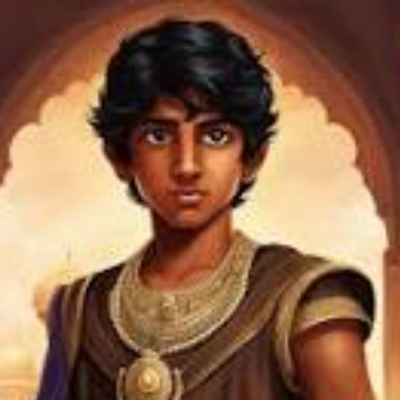
Shambhri is among the most thinly attested figures in the entire Pulastya-Lanka genealogy. He is identified in a subset of secondary sources drawing on the Uttara Kanda tradition as the son of Shurpanakha — youngest daughter of Vishrava and Kaikesi, and full sister of Ravana — and of her husband Vidyutjihva, the Danava prince of the Kalakeya clan. The only substantive fact recorded about him in any account is that he was accidentally killed by Lakshmana. He does not appear by name in any surviving passage of the Valmiki Ramayana's core six books (Bala through Yuddha Kanda), and no narrative, episode, or descriptive passage survives to give him independent substance. His profile in the tradition is therefore one of genealogical placement only: a son born, and a son lost, with no biography of his own.
✦ The Name
The name Shambhri (also spelled Shambri in some sources) is the form used in the dollsofindia.com and vedicfeed.com accounts. The Hindu Blog account of Vidyutjihva's story gives the slightly different form Shambhu Kumara — "the prince Shambhu," or "the young Shambhu" — which suggests the kumara (prince, youth) appended as a title rather than a name-element. No primary Sanskrit source has been identified that preserves either form in context. The name Shambhu is associated with Shiva in the tradition, meaning "one who brings happiness" or "the auspicious one." Whether this naming holds theological significance in relation to the character, or is simply a common name of the period, cannot be determined from the available evidence.
✦ Lineage
- Paternal great-great-grandfather: Brahma — the creator god; Pulastya is his mind-born son
- Paternal great-grandfather: Pulastya — one of the ten Prajapatis and one of the Saptarishi of the first Manvantara; founding ancestor of the Lanka Rakshasa lineage
- Paternal grandfather: Vishrava — son of Pulastya; a brahmin sage, father of Ravana, Kumbhakarna, Vibhishana, and Shurpanakha by his wife Kaikesi
- Paternal grandmother: Kaikesi — daughter of the Rakshasa king Sumali; mother of all four children of Vishrava's second union
- Mother: Shurpanakha — youngest child of Vishrava and Kaikesi; full sister of Ravana, Kumbhakarna, and Vibhishana; a Rakshasi possessed of the power to assume any form; her birth name was Minakshi; widowed by Ravana's killing of her husband and living between Lanka and the Dandaka forest at the time relevant to Shambhri's life
- Father: Vidyutjihva — a Danava prince of the Kalakeya clan; also referred to as Dushtabuddhi in some sources; secretly married Shurpanakha, provoking Ravana's fury; subsequently killed by Ravana under circumstances variously described as self-defence, deliberate punishment for plotting against Ravana, or accidental killing during the campaign against Indra; for the full discussion of these variants see the Shurpanakha profile
- Maternal uncles: Ravana — king of Lanka, who caused Shambhri's father's death and who, as Shurpanakha's guardian, was in indirect authority over Shambhri's situation; Kumbhakarna — the warrior brother; Vibhishana — the righteous brother who later became king of Lanka
- Maternal half-uncle: Kubera — god of wealth, half-brother of Shurpanakha through their shared father Vishrava
✦ What the Sources Record
The entirety of what is recorded about Shambhri across all identified secondary sources can be stated in two sentences. He was conceived and born during the period between Shurpanakha's marriage to Vidyutjihva and her husband's subsequent death at Ravana's hands — that is, before the events of the Aranya Kanda, and thus before Shurpanakha's encounter with Rama at Panchavati. He was accidentally killed by Lakshmana at some unspecified point, presumably during Lakshmana's presence in the Dandaka forest during the exile, though no source specifies when or the circumstances of his death.
Three sources state this in nearly identical terms: the dollsofindia.com PDF of the Shurpanakha article gives "conceived a son by Vidyutjihva, known as Shambhri, who was later accidentally killed by Lakshmana"; the husbandname.org and vedicfeed.com articles reproduce the same formulation; and the treehozz.com account states "she also had conceived a son by Vidyutjihva known as Shambhri who was accidentally killed by Lakshmana." The Hindu Blog account of Vidyutjihva gives the variant form of the name Shambhu Kumara. None of these sources cite a specific primary passage, a sarga, or any Sanskrit original for this claim. The origin of the claim appears to be the Uttara Kanda tradition, from which the backstory of Vidyutjihva's marriage and death also derives.
✦ The Dual Nature of Shambhri's Lineage
Like all the children of Vishrava and Kaikesi, Shambhri's mother carries a doubly mixed heritage: the brahmin-sage line of Pulastya and Vishrava on one side, and the Rakshasa line of Sumali on the other. Through his father Vidyutjihva, Shambhri adds a third lineage: the Danava race, descended from Danu, the mother of the Danavas and a sister of Aditi (mother of the Adityas). The Danavas and Rakshasas were traditional enemies — it was this cross-lineage marriage of his parents that provoked Ravana's original fury at the union. Shambhri is therefore, if the traditions about both parents are accepted, a three-way intersection of Brahmin-sage, Rakshasa, and Danava ancestry. This is unique in the Pulastya genealogical scheme: no other figure among Vishrava's known descendants carries Danava blood as well. The significance of this genealogical position is not developed in any surviving text, since Shambhri himself has no narrative beyond his death.
✦ Textual Status and Honesty About the Evidence
Shambhri's existence as a named individual in the tradition rests entirely on secondary sources. He is not mentioned in the Valmiki Ramayana's core six books in any form that has been identified. The whole backstory from which he emerges — Shurpanakha's marriage to Vidyutjihva, the secret wedding, Ravana's anger, Mandodari's intercession, and Vidyutjihva's killing — belongs to the Uttara Kanda, which scholars including Hermann Jacobi consider a later addition to the text. The Quora source on Vidyutjihva's death explicitly states that the killing is found in the Uttara Kanda, not in the first six Kandas. Since Shambhri's existence is dependent on the same Uttara Kanda tradition, and since no independently surviving passage preserving his name has been identified, his presence in this genealogical series must be recorded accurately as: a figure attested only in secondary sources drawing on the Uttara Kanda or later tradition, without recoverable primary-text support of his own.
It should also be noted that the manner of his death — "accidentally killed by Lakshmana" — raises a question that no source resolves. If it was an accident, it occurred either during the forest battles of the Aranya Kanda or during some other episode of the exile period. The Aranya Kanda battles that Lakshmana participated in are recorded in the text with their casualties named; Shambhri does not appear among them. No source explains the mechanism of the accident, which forest, or under what circumstances Lakshmana and Shambhri encountered each other. The tradition preserves only the bare fact — and not all versions of the tradition even preserve that: the Wikipedia article on Shurpanakha does not mention Shambhri at all.
✦ Connection to the Wider Genealogy
Shambhri represents the end of the direct Shurpanakha-Vidyutjihva line. With his accidental death at Lakshmana's hands, the combined Pulastya-Rakshasa-Danava lineage through Shurpanakha terminates in the exile period, before the Lanka war even begins. This makes Shambhri, in genealogical terms, a figure whose only narrative significance is the severance of a line: he is the point at which Shurpanakha's potential dynasty ends, leaving her doubly bereaved — first her husband killed by her brother, then her son killed accidentally by the companion of the man she desired. The cumulative weight of these losses underlies some of the more sympathetically oriented retellings of Shurpanakha's story in the post-Valmiki tradition, even though the name Shambhri is rarely foregrounded in those retellings.
✦ References
Primary Sources
- Valmiki Ramayana, Uttara Kanda: The Uttara Kanda tradition is the presumed ultimate source for the backstory of Shurpanakha's marriage to Vidyutjihva and his death — the genealogical context from which Shambhri's existence is derived. No surviving passage of the Uttara Kanda naming Shambhri specifically has been identified in the course of research for this profile; his name appears only in secondary accounts that attribute the backstory to the Uttara Kanda or to Puranic tradition. The Uttara Kanda itself is considered by scholars including Hermann Jacobi to be a later addition to the core poem.
Secondary and Reference Works
- Dollsofindia.com — "Surpanakha — Dreadful Demoness or Wronged Damsel?" (and its PDF version): The most detailed secondary source containing the Shambhri reference; gives the name, the parentage (son of Vidyutjihva and Shurpanakha), and the accidental killing by Lakshmana as a single embedded clause within the larger Shurpanakha narrative.
- Vedicfeed.com — "Shurpanakha Story": Reproduces the same formulation: "She had a son called Shambri, who Lakshmana accidentally killed in the jungle."
- Husbandname.org — "Surpanakha Husband Name": Also records the name and the accidental killing, adding "By then, she was the mother of Vidyutjihva's son who was known as Shambhri."
- Hindu Blog — "Story of Vidyujjihva, Husband of Surpanakha": Gives the variant name Shambhu Kumara ("prince Shambhu") as the son of Vidyutjihva and Shurpanakha; provides the additional genealogical detail that Vidyutjihva was the brother of the Kalakeyas.
- Wikipedia — Shurpanakha article: Does not mention Shambhri, confirming that even the most comprehensive secondary synthesis of Shurpanakha's story does not consider him sufficiently attested to include.