
About
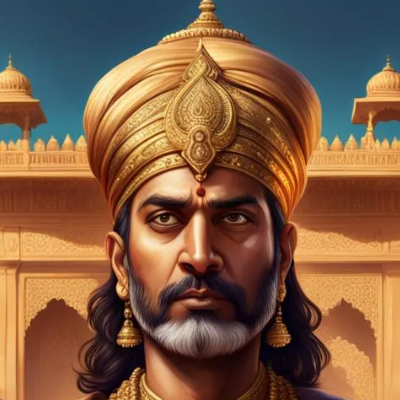
Puru — Youngest Son of Yayati, Founder of the Puruvamsha, Ancestor of the Pandavas and Kauravas
Puru · Pūru · Sharmishtha-kanishtha-suta · Yayati-putra-kanishtha · Paurava-sthapaka · Kuru-purvajanaka · Pandava-Kaurava-pitamaha · Chakravarti
Puru is the youngest son of Yayati and Sharmishtha; the full brother of Druhyu and Anu; the only son who agreed to exchange his youth for his father's old age; the heir whom Yayati designated as the legitimate successor of the Chandravamsha despite being the youngest of five sons; and the founding ancestor of the Puruvamsha — later renamed the Kuruvamsha — from which the Pandavas and the Kauravas of the Mahabharata descend. Through his son Janamejaya, his grandson Prachinan, his great-grandson Pravira, and then through a long line of kings culminating in Hastin (who founded Hastinapura), Kuru (who gave his name to the dynasty and to Kurukshetra), Shantanu, Pandu, and Dhritarashtra — the entire central narrative of the Mahabharata flows from Puru's single act of filial devotion. He is a universal emperor — a Chakravarti who ruled from the central kingdom of the Gangetic plain — and is recorded in the Mahabharata as having defeated Ravana of Lanka in a war that pre-dates the Ramayana. His dynasty becomes the Kuru dynasty, names the Kurukshetra battlefield, and produces the Pandavas and Kauravas whose conflict is the subject of the greatest epic in the tradition.
✦ The Name
The Sanskrit name Puru is ancient — like Yadu, it appears in the Rigveda as one of the five major Vedic tribes. The Purus are recorded in the Rigveda's Battle of Ten Kings (Dasharajna) as among the tribes defeated by the Bharata king Sudas — the same battle that also involved the Yadus and the Turvasas. In the Puranic tradition Puru's name becomes dynastic: his descendants are the Pauravas (from Puru) and then the Kauravas and Pandavas. The tradition notes that Yayati, in making Puru his heir, declared that his race would be known by Puru's name — a direct statement that in the tradition of the Chandravamsha, dynastic identity flows from the son of greatest virtue rather than merely from primogeniture.
✦ Lineage
- Father: Yayati; Mother: Sharmishtha
- Full brothers: Druhyu and Anu
- Half-brothers: Yadu and Turvasu
- First wife (Bhagavata Purana): Paushti (also called Paushthi or Pausthi) — from whom three heroic sons were born: Pravira, Ishvara, and Raudrasva
- Second wife (Wikipedia Puru article): Kausalya — from whom Janamejaya was born; the Bhagavata Purana records Prachinvan or Prachinvat as his son and successor; the Mahabharata Adi Parva records Pravira as the successor
- Territorial grant: the central kingdom between the Ganga and Yamuna — Prayag and its surrounding territories — the most prestigious portion of the empire; the heartland of the Chandravamsha sovereignty
- The youth exchange: Puru accepted Yayati's old age into his own body and bore the infirmities of age for a thousand years while Yayati enjoyed his youth; he ruled the kingdom in this aged body during Yayati's indulgence; when Yayati returned his youth, Puru was immediately restored to the prime of his life and crowned as the legitimate heir
- Puru's dynasty — the line to the Mahabharata:
- Puru — Pravira (or Janamejaya I) — Manasyu — ... — Hastin (founder of Hastinapura) — ... — Kuru (who gave his name to the dynasty and to Kurukshetra; who levelled the field of Kurukshetra through his own austerities to make it the most sacred land in creation) — Shantanu (the king who married Ganga and later Satyavati) — Bhishma (son of Ganga; also called Devavrata; the grandsire of the Mahabharata) — Vichitravirya — Dhritarashtra (through Ambika and Vyasa) and Pandu (through Ambalika and Vyasa) — Kauravas (hundred sons of Dhritarashtra and Gandhari, led by Duryodhana) and Pandavas (five sons of Pandu: Yudhishthira, Bhima, Arjuna, Nakula, Sahadeva)
- Other notable descendants: Bharata (son of Dushyanta and Shakuntala; from whom India — Bharatavarsha — takes its name; who conquered the world from the Himalayas to the sea; whose glory is so great that the Mahabharata itself is called the Bharata); Uparichara Vasu (the devoted Vishnu-worshipper who conquered the Chedi kingdom; from whom Satyavati — the Fisher king's daughter who married Shantanu and whose children Chitrangada and Vichitravirya continued the line — was born; making Satyavati the great-great-granddaughter of Puru through the Chedi branch)
✦ The Youth Exchange — The Act That Defined the Dynasty
Puru's defining act — accepting his father's old age and bearing it for a thousand years — is the moral foundation of the entire Kuru dynasty's claim to pre-eminence in the tradition. The Mahabharata records Yayati's words with great emphasis: Puru alone obeyed his father; Puru alone bore the burden without complaint; Puru alone is the true son; the dynasty shall be known by his name. The crowning of Puru over his four elder brothers — the youngest elevated above the oldest on the sole basis of virtue and filial devotion — is the Mahabharata's opening statement about the moral basis of political legitimacy: sovereignty belongs not to the firstborn but to the most righteous. The dynasty that Puru founded would carry this founding moral principle through every generation to the Kurukshetra battlefield — where the same question of righteousness versus birth-order would be posed again, this time between Yudhishthira (the righteous eldest Pandava) and Duryodhana (the eldest Kaurava), and answered through an eighteen-day war.
✦ Puru's Defeat of Ravana
The List of Puru and Yadu Dynasties Wikipedia article records a remarkable episode: the Puru dynasty kings, including Puru himself and his successor Janamejaya, were once defeated by Ravana of Lanka. The EverybodyWiki and Detailedpedia sources confirm this: the Puru dynasty kings including King Puru and Janamejaya were once defeated by Ravana. This places the early Puru kings in contemporaneity with Ravana — in the Treta Yuga — and establishes that the Puru dynasty's sovereignty extended to encounters with the very demon whose defeat by Rama is the subject of the Ramayana. The tradition's genealogical reach, linking the founding of the Puru dynasty through Yayati to the Ramayana era and then forward to the Mahabharata, illustrates the enormous temporal and cosmic scope of the Chandravamsha genealogy profiled in this series.
✦ References
- Mahabharata (Adi Parva, Chapters 85–95) — Puru's acceptance of his father's old age; Yayati's declaration of him as heir; his coronation; the Puru dynasty genealogy from Puru through Hastin, Kuru, Shantanu, Dhritarashtra, and Pandu to the Pandavas and Kauravas
- Bhagavata Purana (Canto 9, Chapters 19–22) — the most complete Puranic account: the youth exchange; Puru as heir; his wife Paushti; his sons Pravira, Ishvara, and Raudrasva; the dynasty's continuation; Bharata; the line to Kuru and to Shantanu
- Vishnu Purana (Book 4) — Puru's genealogy; the Puruvamsha becoming Kuruvamsha; the full dynasty from Puru to Parikshit
- Harivamsa — the territorial division; Puru receiving the central kingdom; his dynasty's political geography
- Wikipedia — Puru (Hinduism); Bharatpedia — King Puru; AncientVoice — Puru Lineage; Wikipedia — List of Puru and Yadu dynasties; Stories of India Retold — Yayati and Devayani; Grokipedia — Yayati; PeoplePill — Puru Son of Yayati: modern summaries drawing from the above primary sources