
About
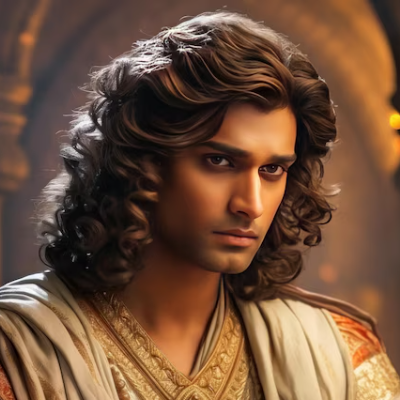
Manasyu — King of the Puru Line, Son of Pravira and Shuraseni
Manasyu · Manasyu Paurava · Son of Pravira · King of the Puru Dynasty
Manasyu was a king of the Puru dynasty, recorded in the dynastic genealogies of the Mahabharata and the Puranas as the son of Pravira and his wife Shuraseni. Pravira was himself the son of Puru, the youngest of the sons of King Yayati and his wife Sharmishtha, who was the daughter of the Asura king Vrishaparva, and the founder of the Puru dynastic line. Manasyu's wife is named in the tradition as Sauviri, and their son was Shakta, who continued the Puru dynastic succession in the following generation. Manasyu occupies the third position in the Puru royal succession — after Puru the founder and his son Pravira — and as such forms part of the critical chain of kings through whom the line descends over many generations to the Kuru kings and ultimately to the Pandavas and Kauravas of the Mahabharata war. He is recorded in the dynastic lists of the Adi Parva of the Mahabharata and in the Puranic genealogies of the lunar dynasty, and no independent narrative episode is attached to him in any surviving primary source.
✦ The Name
The name Manasyu is derived from the Sanskrit root manas, meaning mind, spirit, or thought, with the suffix yu conveying the sense of one who is desirous of, intent upon, or characterised by the quality named in the root. The name thus carries the sense of one of purposeful or aspiring mind, or one who is earnestly devoted in spirit — a quality name of the type common in the Puranic royal lists, where names derived from manas and its compounds frequently appear among kings of the lunar and solar dynasties. The dynastic epithet Paurava, meaning one belonging to or descended from Puru, applies to Manasyu as to all members of the Puru line and identifies his genealogical position within the broader lunar dynasty without functioning as a personal name.
✦ Lineage
- Paternal great-grandfather: Yayati — a celebrated king of the lunar dynasty, son of King Nahusha; famous in the Mahabharata and the Puranas for the episode in which he was cursed with premature old age by the sage Shukracharya as punishment for taking a second wife, Sharmishtha, while still bound by his obligations to his first wife Devayani; he transferred the curse to his youngest son Puru, who accepted it willingly, and after enjoying Puru's youth for a thousand years returned it and rewarded Puru with the succession to his principal kingdom
- Paternal great-grandmother: Sharmishtha — daughter of Vrishaparva, king of the Asuras; second wife of Yayati and mother of Puru; her union with Yayati was the cause of Shukracharya's curse upon Yayati, as she had originally been the handmaiden of Devayani, Shukracharya's daughter and Yayati's first wife, and her elevation to the status of wife violated the terms of Yayati's marriage agreement
- Paternal grandfather: Puru — the youngest son of Yayati and Sharmishtha; the prince who accepted Yayati's curse of premature old age upon his own body so that his father could continue to enjoy worldly pleasures; rewarded by Yayati with the inheritance of the principal kingdom, which became the foundation of the Puru dynasty; the Mahabharata and the Puranas trace the entire Kuru lineage back to Puru as their dynastic ancestor
- Paternal grandmother: Paushti — named in some Puranic sources as the wife of Puru; the textual tradition is not entirely uniform regarding her name across all sources
- Father: Pravira — son of Puru and the first king of the Puru line after the dynasty's founder; his wife was Shuraseni, a woman whose name associates her with the Shurasena people and kingdom of ancient Bharatavarsha in the region broadly corresponding to the Mathura area; no independent narrative episode is recorded for Pravira in any primary source beyond his position in the dynastic succession
- Mother: Shuraseni — wife of Pravira and mother of Manasyu; her name associates her with the Shurasena people and territory of ancient Bharatavarsha; she is recorded in the tradition as the mother of Manasyu alongside Pravira
- Wife: Sauviri — named in the tradition as the consort of Manasyu and the mother of Shakta; her name is a feminine form derived from Suvira or the Suvira people, a tribal or regional grouping known from the geographic and genealogical literature of ancient Bharatavarsha; the name indicates her origin from or association with that people or territory
- Son: Shakta — recorded in the dynastic lists as the son of Manasyu and Sauviri and the next king of the Puru line; his name derives from the Sanskrit shakta, meaning powerful, capable, or one endowed with strength or energy; he continues the Puru dynastic succession in the generation after Manasyu
- Son — Sahana (also Samhana or Sanhanana): second son; likewise described as a battle-hero and chariot-warrior; the name varies in spelling across editions.
- Son — Vagmi (also Vagmin): third son; likewise described as a battle-hero and chariot-warrior; the name Vagmin in Sanskrit connotes one who is eloquent in speech.
✦ Textual Base and Its Limitations
Manasyu appears in the dynastic genealogies of the lunar line as preserved in the Adi Parva of the Mahabharata and in the Puranic texts, principally the Vishnu Purana, the Bhagavata Purana, and the Matsya Purana, all of which include king-lists of the Puru dynasty tracing the succession from Puru through many generations to the Kuru kings of the epic period. In these lists Manasyu is placed as the son of Pravira and the father of the next generation of the line. No narrative episode, personal deed, speech, or characterisation is attached to Manasyu in any of these sources. Like his father Pravira before him, he is a name in a dynastic list, present to maintain the integrity of the genealogical chain rather than as a figure with an independent narrative identity. The profile is accordingly brief, and no expansion beyond what the dynastic lists directly attest is possible without departing from the evidence.
✦ Textual Variants and Inconsistencies
The Puranic dynastic lists for the Puru line show the characteristic variation of king-list transmission, with the Vishnu Purana, the Bhagavata Purana, the Matsya Purana, and the Mahabharata's Adi Parva not always agreeing precisely on the names and sequence of kings in the middle generations of the dynasty between Puru and the well-attested Kuru kings of the later period. Manasyu's position as the son of Pravira and the father of Shakta is the version followed in this profile, consistent with the tradition as recorded in Vettam Mani's Puranic Encyclopaedia and with the dynastic tree of the Puru line as preserved in the principal Puranic sources. Readers should be aware that some versions of these lists may name additional sons or variant sequences that do not appear in all recensions.
✦ Connection to the Wider Genealogy
Manasyu's genealogical significance lies in his position as the third king of the Puru line, the generational link between Pravira and Shakta through whom the dynasty descends toward the Kuru kings and the epic period. Through his son Shakta and the many generations that follow, the line eventually reaches the king Kuru, the eponymous ancestor of the Kuru dynasty, and from Kuru through Shantanu to the generation of Dhritarashtra and Pandu, whose sons the Kauravas and the Pandavas are the central figures of the Mahabharata. Manasyu's wife Sauviri, associated by her name with the Suvira people of ancient Bharatavarsha, represents one of the many inter-regional marriage alliances that the Puranic dynastic lists embed within the genealogical succession of the great royal houses, connecting the Puru line through its women to the broader political and ethnic geography of ancient India. Manasyu himself left no mark on the tradition beyond his structural position in this chain, but that position is essential to the integrity of the dynastic record as the primary sources preserve it.
✦ References
- Mahabharata, Adi Parva (Book 1), Sambhava Parva section: Records the dynastic succession of the Puru line including Manasyu within the genealogical list tracing the kings from Puru to the Kuru period; supplies the genealogical framework within which Manasyu's position is established.
- Vishnu Purana, Book 4, chapters 17–19: Provides a detailed dynastic list of the Puru kings from Puru through the Kuru line; records Manasyu within the succession and identifies the continuation of the line through his descendants.
- Bhagavata Purana, Skandha 9, chapters 20–22: Includes the Puru dynastic list as part of the broader lunar dynasty genealogy; records Manasyu within the succession from Puru to the Kuru kings with some variation in detail from the Vishnu Purana version.
- Matsya Purana, chapters 49–50: Preserves a version of the Puru dynastic list including Manasyu; exhibits the characteristic variations of the Puranic king-list tradition while maintaining his core genealogical position within the succession.
- Vettam Mani, Puranic Encyclopaedia (1975): Entry on Manasyu identifies him as the son of Pravira and Shuraseni, names Sauviri as his wife and Shakta as his son, and records his place in the Puru dynastic succession; synthesises the Mahabharata and Puranic list material and serves as the principal secondary reference for the details of this profile.
- F. E. Pargiter, Ancient Indian Historical Tradition (1922): Analyses the Puranic dynastic lists of the lunar line including the Puru succession; discusses the variations between different Puranic versions of the king-list and their implications for reconstructing the genealogical tradition; contributes scholarly critical perspective on the textual transmission of these lists.