
About
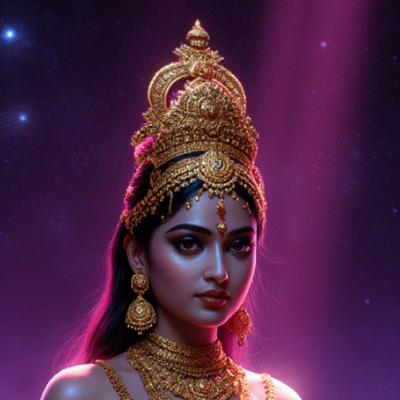
Misrakesi — Celestial Apsara, Consort of Raudrasva and Mother of Ten Sons
Misrakesi · Mishrakeshi · Misrakeshi · Mishrakesi
Misrakesi is a celestial Apsara recorded in the Hindu Puranic and epic tradition whose principal significance derives from her union with Raudrasva — a son of King Puru, the youngest and most celebrated of the five sons of King Yayati of the lunar dynasty, and the progenitor of the Paurava line from which the Kauravas and Pandavas of the Mahabharata descend. From this union were born ten sons, the eldest and most celebrated of whom was Richeyu, also known by the names Anadhrishti and Anvagbhanu. Through Richeyu's son Matinara, and through Matinara's descendants including Dushyanta and the emperor Bharata, Misrakesi stands as a maternal ancestress at a significant node within the Paurava branch of the lunar dynasty — the very lineage whose internecine conflict forms the central subject of the Mahabharata. Misrakesi appears most substantially in the Adi Parva of the Mahabharata, where the Paurava genealogy is recorded in detail, and in related passages of the Bhagavata Purana and the Vishnu Purana. She is also named in the Matsya Purana as a daughter of Kashyapa by his wife Arishtha, establishing her specific birth lineage within the Puranic genealogical framework, and she appears in enumerative catalogues of the Apsaras of the celestial court across several texts. A significant textual variant exists in which the Apsara associated with Raudrasva is named as Ghritachi rather than Misrakesi, and this inconsistency is addressed in full in the textual variants section.
✦ The Name
The name Misrakesi is a Sanskrit compound formed from two elements: misra, meaning mixed, variegated, mingled, or of diverse kinds, and kesi, a feminine form of kesha, meaning hair. The compound therefore yields the meaning she of the mixed or variegated hair, or she whose hair is of diverse or mingled colours. In classical Sanskrit aesthetic description, the hair of a beautiful woman is a subject of considerable poetic attention, and epithets describing its colour, lustre, length, and adornment are common in the characterisation of Apsaras and other celestial women. Variegated or mixed-coloured hair may evoke the image of hair adorned with flowers of different hues, or hair whose natural colour shimmers between dark and lustrous tones in different lights, or hair dressed with fragrant substances giving it a complex mingled appearance. The name participates in the broader practice of giving Apsaras names that encode a quality of beauty specific to their bearing: Misrakesi's name focuses on the particular beauty of her hair as its defining aesthetic signature. The variant spellings Mishrakeshi and Misrakeshi reflect standard orthographic variation in the transliteration of Sanskrit into English and refer to the same figure without any difference in identity or meaning.
✦ Lineage and Relationships
- Birth lineage: The Matsya Purana identifies Misrakesi as a daughter of the progenitor sage Kashyapa by his wife Arishtha — also rendered as Arishtha or Aristha — one of the daughters of Daksha, the Prajapati appointed by Brahma to oversee the generation of created beings. According to this account, Arishtha bore thirteen Apsaras for Kashyapa, of whom Misrakesi was one, alongside Alambusa, Vidyutparna, Tilottama, Rakshita, Rambha, Manorama, Kesini, Subahu, Suraja, Surata, and Supriya. This places Misrakesi's birth lineage specifically within the Kashyapa-Arishtha maternal line, distinct from the Kashyapa-Pradha line given in some other Puranic accounts as the origin of the Apsara class generally. Arishtha is also recorded as having borne four Gandharvas — Haha, Huhu, Atibahu, and Tumburu — making the celestial musicians and the Apsaras of this group uterine siblings in the Puranic genealogical scheme.
- Court affiliation: Misrakesi is associated with Indra's celestial court in Svarga and is named among the Apsaras of the divine assembly in enumerative passages of the Mahabharata and in Puranic catalogues including the Vayu Purana.
- Consort: Raudrasva, a son of King Puru by his wife Paushti. Puru was the youngest of the five sons of King Yayati — the great lunar dynasty king who distributed his kingdoms among his sons — and the son who accepted his father's premature old age in exchange for his own youth, an act of filial devotion for which Yayati eventually restored Puru's youth and named him as his principal heir and the perpetuator of the main dynastic line. Raudrasva was one of three sons born to Puru by Paushti, the other two being Pravira — who became the primary perpetuator of Puru's dynasty — and Isvara. Raudrasva was a mighty warrior described in the Mahabharata as a great bowman and a hero of the Paurava line.
- Sons — ten in number, born of Misrakesi and Raudrasva: The Mahabharata's Adi Parva names all ten. They were Richeyu, Kaksheyu, Vrikeyu, Sthandileyu, Vaneyu, Jaleyu, Tejeyu, Satyeyu, Dharmeyu, and Sannateyu. All ten are described as great bowmen who performed numerous sacrifices and were devoted to virtue and learning. Of these ten, Richeyu became by far the most significant, rising to become the sole monarch of the entire earth.
✦ The Union of Misrakesi and Raudrasva
The Mahabharata's Adi Parva records the union of Raudrasva and Misrakesi within the Paurava genealogical account without providing extended narrative elaboration of the circumstances of their meeting. The text presents the fact of the union and its ten sons as a genealogical statement within the broader dynastic record, following the standard practice of the epic's genealogical passages, which prioritise the establishment of lineage over the narration of episode. The union of a Paurava prince of the lunar dynasty with a celestial Apsara follows a pattern well established across the epics and Puranas, in which the great kings and warriors of the royal dynasties attract celestial consorts through their valour, piety, or spiritual merit. Raudrasva, described as a mighty warrior and great bowman, belongs to the most prestigious branch of the lunar dynasty through his father Puru, and the birth of ten powerful sons from his union with the Apsara Misrakesi is consistent with the tradition's representation of such unions as producing progeny of exceptional quality and strength.
The ten sons born of this union are described collectively in the Mahabharata as great heroes, performers of numerous sacrifices, learned in all branches of knowledge, and ever devoted to virtue. That all ten are characterised in these terms reflects the dual inheritance their parentage confers: the martial and royal qualities of Raudrasva's Paurava lineage and the celestial nature of their Apsara mother Misrakesi. Among the ten it is Richeyu who rises to supreme prominence, becoming the sole monarch of the earth and the ancestor through whom the dynastic line continues into the further generations that produce the central figures of the Mahabharata.
✦ Richeyu — The Eldest Son
Richeyu is the eldest and most celebrated of Misrakesi's ten sons. The Mahabharata records that among all ten brothers, Richeyu alone rose to become the sole monarch of the whole earth, a distinction that marks him as the most consequential of the group in terms of dynastic and political significance. He is identified in the Mahabharata by the epithet Anadhrishti — meaning one impossible to overpower or assault in battle, derived from the Sanskrit root dhrishta meaning bold or impudent with the prefix an negating it and the nominal suffix conveying the quality of one who cannot be thus overcome. This epithet reflects his reputation as a warrior of invincible standing. A second alternative name or epithet, Anvagbhanu, is recorded in certain sources: this compound means one in whose wake the sun itself follows, or one whose radiant energy is so great that even the sun seemed to follow him — a name conveying supreme brilliance and sovereign glory. The Bhagavata Purana and certain other Puranic texts use the name Richeyu or Richesu for the same figure, while the name Arinaya also appears in some Puranic passages for what appears to be the same individual in the same genealogical position, though the relationship between these names is not resolved within the primary sources.
Richeyu's son was Matinara — also rendered as Rantinara or Rantibhara in certain Puranic recensions — who became a famous and virtuous king celebrated in the tradition for having performed both the Rajasuya sacrifice, the great royal consecration that establishes a king's sovereignty over other rulers, and the Ashvamedha, the horse sacrifice that proclaims imperial dominion over the entire earth. Matinara had four sons: Tansu, Mahan, Atiratha, and Druhyu. Of these, Tansu became the perpetuator of Puru's main dynastic line, and his son Ilina in turn fathered five sons upon his wife Rathantara, the eldest of whom was Dushyanta — the king who fell in love with Shakuntala, the daughter of the sage Vishvamitra and the Apsara Menaka, and whose son by Shakuntala was the emperor Bharata, after whom the dynasty and the subcontinent of Bharatavarsha take their name. The entire dynastic succession leading to the Pandavas and Kauravas of the Mahabharata thus flows through this line, making Misrakesi — as the mother of Richeyu — a maternal ancestress of the whole Paurava lineage in its most consequential extension.
✦ Enumerative Appearances
Beyond her genealogical role, Misrakesi appears in enumerative passages cataloguing the Apsaras of the celestial court. The Vayu Purana lists her among the Apsaras assembled at Indra's court in Svarga, placing her in the company of Alambusa, Marichi, Vidyutparna, Tilottama, Adrika, Rambha, Manorama, Hema, and others. The Natyashastra of Bharata Muni — the foundational text on dramatic theory and performance — names Misrakesi among the Apsaras specifically associated with the art of dance and dramatic performance, listing her in its catalogue of celestial nymphs who were created to perfect and embody the arts of the Natyaveda. In Puranic genealogical texts she is named as one of the thirteen Apsaras born of Kashyapa and Arishtha, as described above. These appearances collectively confirm her established standing within the celestial community of divine nymphs across multiple textual traditions.
✦ Textual Variants and Inconsistencies
The most significant textual inconsistency surrounding Misrakesi concerns her identification as the Apsara who bore Raudrasva's ten sons. The Mahabharata's Adi Parva, in the principal critical recension and in the Ganguli translation, names Misrakesi clearly and unambiguously as the Apsara who bore Raudrasva's ten sons. However, a separate tradition preserved in certain Puranic sources — including a passage in the Wisdomlib compilation drawing on the Matsya Purana and related texts — identifies the Apsara in this same role as Ghritachi, one of the most celebrated and extensively attested Apsaras of the tradition, rather than Misrakesi. These two accounts assign the same genealogical role — mother of Raudrasva's ten sons — to two different named Apsaras, and the primary texts do not harmonise or resolve the discrepancy.
Ghritachi is herself a figure of considerable independent narrative significance, associated in other passages with the sage Vyasa — the author or compiler of the Mahabharata — and with other major sages, and her identification in this role may represent a tradition in which a more widely known Apsara name was substituted for or conflated with the less frequently attested Misrakesi in certain Puranic compilations. The Mahabharata's epic account naming Misrakesi is the older and more directly primary attestation, while the Ghritachi identification appears in certain Puranic and secondary compendia. Both are recorded here as the tradition presents them, without suppressing either account.
A further point of variation concerns the names of the ten sons themselves. The Mahabharata's Adi Parva gives the names as Richeyu, Kaksheyu, Vrikeyu, Sthandileyu, Vaneyu, Jaleyu, Tejeyu, Satyeyu, Dharmeyu, and Sannateyu. The Bhagavata Purana's ninth skandha gives a partially different list, naming Richeyu, Hrishyeyu, Kaksheyu, Sthaneyu, Dhriteyeu, Vineyu, and others, with some names differing between recensions. The eldest son Richeyu is consistent across all versions. The variations in the names of the other nine brothers reflect the standard pattern of divergence between the epic and Puranic genealogical lists, which frequently agree on the most significant figure while varying in their enumeration of the less prominent members of a group.
The name of Richeyu himself also varies across sources. The Mahabharata uses Richeyu and Anadhrishti. The Bhagavata Purana uses Richeyu or Richesu in some recensions. Certain Puranic passages use Arinaya for what appears to be the same figure. And the compound name Anvagbhanu is recorded as yet another designation in certain secondary sources. These multiple names for a single individual reflect the common Puranic practice of accumulating epithets and alternative names that encode different qualities or aspects of a figure's fame, without the texts always being explicit about which names are formal personal names and which are epithets or later-acquired designations.
✦ Theological and Philosophical Significance
Misrakesi's theological significance operates primarily through the pattern her union with Raudrasva enacts and through the dynastic consequence of that union. The birth of ten sons to a royal warrior of the Paurava line from an Apsara mother is consistent with the Puranic theology of the celestial-royal union, in which the greatest warriors and kings of the human world attract celestial counterparts through their qualities, and the children of such unions embody a concentration of both royal and divine heredity. All ten of Misrakesi's sons are described as sacrificial, learned, and virtuous — qualities that reflect both the dharmic rigour of their Paurava paternal lineage and the celestial grace of their Apsara mother.
Her identification in the Matsya Purana as a daughter of Kashyapa and Arishtha — born alongside other Apsaras and the Gandharvas Haha, Huhu, and Tumburu — places her within a specific creative genealogical event at the beginning of cosmic history, in which the great progenitor sage populated the celestial world with its complement of musicians and dancers. This origin narrative frames Misrakesi not merely as a wandering nymph of uncertain provenance but as a being whose existence was part of the deliberate cosmic ordering that Kashyapa performed through his marriages to Daksha's daughters. She belongs to the celestial world by right of birth rather than by accident of emergence.
✦ Connection to the Wider Genealogy
Misrakesi's genealogical significance is among the most substantial of any Apsara in the tradition, exceeding that of many more narratively prominent celestial nymphs, because her union with Raudrasva produces a line of descent that runs directly to the central figures of the Mahabharata. The full genealogical chain descending from her is as follows: Misrakesi and Raudrasva produce ten sons, of whom Richeyu becomes sole monarch of the earth; Richeyu's son is Matinara, the celebrated sacrificial king; Matinara's son Tansu perpetuates the main Paurava line; Tansu's son is Ilina; Ilina's son by Rathantara is Dushyanta; Dushyanta's son by the Apsara-born Shakuntala — herself the daughter of Menaka and Vishvamitra — is the emperor Bharata; and from Bharata's line, through further generations, descend the Kuru kings including Shantanu, whose sons Bhishma and Vichitravirya and whose grandsons — the Pandavas and Kauravas — are the central protagonists of the entire Mahabharata narrative.
Raudrasva's paternal lineage connects equally to this foundational narrative. His father Puru was the son of Yayati — the great emperor of the lunar dynasty who received the curse of premature old age from the sage Shukracharya and distributed his kingdoms among his five sons. Yayati was himself the son of Nahusha, and Nahusha the son of Ayu, and Ayu the son of Pururavas — the great king who loved the Apsara Urvashi and whose story is one of the oldest in the Hindu scriptural tradition. The lunar dynasty thus runs in an unbroken chain from Chandra the moon god through Budha, Pururavas, Ayu, Nahusha, Yayati, Puru, Raudrasva, and Richeyu — with Misrakesi's union contributing the maternal celestial strand to this chain at the Raudrasva generation.
As a daughter of Kashyapa and Arishtha, Misrakesi's own birth lineage runs through Kashyapa — son of the sage Marichi, who was one of the ten mind-born sons of Brahma — to Brahma himself as the ultimate creative source. Kashyapa is also, through his wife Aditi, the father of the twelve Adityas including Indra, Vishnu in his solar form, and Surya the sun god, making him the progenitor of both the celestial hierarchy and the Asura world through different wives. Misrakesi thus shares Kashyapa as an ancestor with the gods themselves, the Asuras, and virtually every other significant class of beings in the Puranic cosmos.
✦ References
- Primary Sources
- Mahabharata, Adi Parva, Section XCIV: Principal epic source for the union of Raudrasva and Misrakesi and the birth of their ten sons; names all ten sons, identifies Richeyu as the eldest and most celebrated, records his epithet Anadhrishti, and places the lineage within the broader Paurava genealogy descending through Matinara toward Dushyanta and Bharata.
- Mahabharata, Shanti Parva: Contains supplementary genealogical and didactic material on the Paurava dynasty and its kings, providing additional context for the lineage into which Misrakesi's sons were born.
- Mahabharata, Sabha Parva: Names Misrakesi among the Apsaras of Indra's celestial court in enumerative descriptions of the divine assembly.
- Bhagavata Purana, Skandha IX: Contains Puranic genealogical material on the Paurava line including the Raudrasva-Misrakesi-Richeyu succession, with variant names for some of the ten sons and for Richeyu himself in certain recensions.
- Vishnu Purana, Book IV: Contains Puranic genealogical accounts of the lunar dynasty including the Paurava branch, providing supplementary context for the dynastic succession in which Misrakesi's union with Raudrasva is situated.
- Matsya Purana: Identifies Misrakesi as one of the thirteen Apsaras born of Kashyapa by his wife Arishtha, establishing her specific birth lineage; also contains the listing of Misrakesi among the Apsaras of Indra's court in enumerative passages.
- Vayu Purana: Names Misrakesi among the assembled Apsaras at Indra's court in cataloguing passages describing the celestial community.
- Natyashastra of Bharata Muni: Names Misrakesi among the Apsaras associated with the arts of dance and dramatic performance, situating her within the tradition of celestial artistry connected to the Natyaveda.
- Secondary Sources
- Mani, Vettam. Puranic Encyclopaedia. Motilal Banarsidass, 1975: Provides reference entries on Misrakesi, Raudrasva, Richeyu, and Matinara, identifying their relationships, principal textual sources, and the variant naming across Puranic accounts; essential cross-referencing tool for the genealogical connections in this profile.
- Wilson, H. H. (trans.). The Vishnu Purana. Trubner and Co., 1840: English translation of the Vishnu Purana with annotations, providing accessible rendition of the genealogical passages relevant to the Paurava dynasty succession.
- Ganguli, Kisari Mohan (trans.). The Mahabharata of Krishna-Dwaipayana Vyasa. 1883–1896: Full translation of the Mahabharata including Section XCIV of the Adi Parva containing the Raudrasva and Misrakesi genealogical account, providing the primary English rendition of the foundational epic source for this profile.
- Dowson, John. A Classical Dictionary of Hindu Mythology. Trubner and Co., 1879: Contains entries relevant to the Paurava dynasty and its principal figures, providing context for Raudrasva's place within the dynastic succession and for the broader genealogical framework.
- Monier-Williams, Monier. A Sanskrit-English Dictionary. Clarendon Press, 1899: Provides etymological analysis of the Sanskrit elements misra and kesha, establishing the meaning and aesthetic connotations of the name Misrakesi.