
About
Ilina — King of the Puru Line and Father of Dushyanta
Ilina · Ailina · Tansu-putra · Kalingi-ja · Paurava · Dushyanta-pita
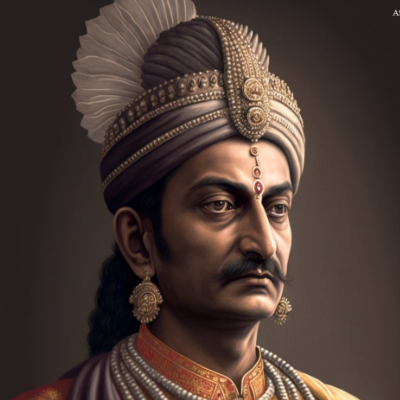
Ilina was a king of the Puru line of the Lunar Dynasty — the Chandravamsha — and the son of Tansu and his queen Kalingi, a princess of the Kalinga kingdom. Through his father Tansu he inherited the dual lineage of the human king Matinara and the river goddess Saraswati, who had appeared to Matinara at the conclusion of his twelve-year sacrifice and chosen him as her husband. Ilina married Rathantari — also called Rathantara in some textual traditions — and by her fathered five sons, the most celebrated of whom was Dushyanta, the king whose union with Shakuntala — the foster daughter of the sage Kanva — produced the emperor Bharata, the eponymous ancestor of the Bharata race from whom the Mahabharata takes its name. Ilina's narrative is recorded in the Mahabharata at Book 1, the Adi Parva, Section XCV of the Sambhava Parva, in the genealogical account narrated by the sage Vaishampayana to King Janamejaya. His name appears as Ailina in the Vishnu Purana, representing a variant form of the same figure, and the Vayu Purana's account of the same generation introduces a variation in the order of his sons' births. Ilina is a figure whose individual narrative is not elaborated in the primary sources beyond his genealogical position, but whose importance within the Puru dynastic sequence is considerable given that his son Dushyanta and grandson Bharata are among the most celebrated figures of the entire Mahabharata tradition.
✦ The Name
The name Ilina is a Sanskrit masculine form whose derivation admits of several interpretations. One analysis connects it to the root il or ila, meaning earth or the earth's nourishing abundance — the same root that gives the Sanskrit tradition the word ila as a term for refreshment, libation, and the productive earth — giving Ilina the sense of "one connected to the earth" or "the earthly one." Another analysis sees in the name a connection to the broader family of names associated with the Ila tradition of the Lunar Dynasty — noting that the Lunar Dynasty itself traces its human origin through the figure of Ila or Ile, the child of Vaivasvata Manu who became the progenitor of the Lunar royal line — though no direct genealogical connection between Ilina and that primordial Ila is drawn in the primary sources. The variant name Ailina in the Vishnu Purana represents a slight phonological variation — the addition of the initial vowel a — that is common in manuscript transmission of Sanskrit names and does not indicate a substantially different identity or tradition. The patronymic Tansu-putra means "son of Tansu," the matronymic Kalingi-ja means "born of Kalingi," and the epithet Dushyanta-pita means "father of Dushyanta" — the last being in many ways the most significant of his identifiers given the fame of his son.
✦ Lineage
- Paternal grandfather: Matinara, king of the Puru line, who performed a twelve-year sacrifice on the banks of the Saraswati river of such efficacy that the river goddess appeared in person and chose him as her husband.
- Paternal grandmother: Saraswati, the river goddess and goddess of speech, learning, and wisdom, who appeared to Matinara at the conclusion of his twelve-year sacrifice and bore him Tansu as the continuer of the Puru line.
- Father: Tansu, king of the Puru line, born of Matinara and Saraswati, who married Kalingi and by her begot Ilina as the continuation of the dynasty.
- Mother: Kalingi, a princess of the Kalinga kingdom of the eastern coast, who became Tansu's queen and Ilina's mother.
- Wife: Rathantari, also called Rathantara in some textual traditions, who became the mother of Ilina's five sons. The primary sources do not elaborate her parentage or individual narrative beyond her identity as Ilina's wife and the mother of his sons.
- Son: Dushyanta, the eldest of Ilina's five sons according to the Mahabharata's account, and the most celebrated of them by far — the king whose encounter with Shakuntala at the hermitage of the sage Kanva, his temporary forgetting of her through a sage's curse, and his eventual recognition and reunion with her and their son Bharata form one of the most celebrated romantic and narrative episodes of the entire Sanskrit literary tradition, treated in the Mahabharata itself and most elaborately in the play Abhijnana Shakuntalam by the poet Kalidasa.
- Other sons: Four additional sons of Ilina and Rathantari are noted in the Adi Parva's genealogical account alongside Dushyanta, though the primary sources consulted for this series do not name all five individually in the passage treating this generation. Dushyanta's pre-eminence among the five is the account's primary concern.
✦ Ilina's Position in the Puru Dynastic Sequence
Ilina occupies a generationally critical position within the Puru line of the Lunar Dynasty. He is the son of Tansu — himself the son of the extraordinary union between Matinara and Saraswati — and the father of Dushyanta, whose son Bharata is the eponymous ancestor of the Bharata race. The Mahabharata's genealogical sections narrated in the Adi Parva are constructed with a clear sense of direction toward Bharata as the culminating figure of the Puru line's early phase — the great emperor whose name defines the race and whose descendants eventually produce both the Pandavas and the Kauravas of the epic's central conflict. Ilina stands one generation before Dushyanta and two generations before Bharata in this sequence, occupying the penultimate position before the dynasty reaches its most celebrated early figure. His own individual narrative is accordingly subordinated to his genealogical function as the link between Tansu's divine-maternal heritage and Dushyanta's celebrated kingship.
✦ Textual Variants
Two significant textual variants concerning Ilina are recorded across the primary sources consulted for this series, and both require honest statement in the genealogical record.
The first variant concerns his name. The Mahabharata's Adi Parva Section XCV gives the name as Ilina, which this series takes as the primary form. The Vishnu Purana refers to the same figure as Ailina — a minor phonological variation involving the addition of the initial vowel that is common in manuscript transmission of Sanskrit genealogical names and does not indicate a substantially different identity.
The second and more substantive variant concerns the order of Ilina's sons. The Mahabharata's account identifies Dushyanta as the eldest of Ilina's five sons. The Vayu Purana, in its account of the same generation, gives a different order: it names Sushyanta as the eldest son and Dushyanta as the second son. This is a genuine textual inconsistency between two primary sources rather than a mere phonological variation, and it affects the question of Dushyanta's birth order and therefore his claim to the kingship as the senior son. This series follows the Mahabharata's account as the standard for the tree, identifying Dushyanta as the eldest, while noting the Vayu Purana's variant honestly so that the reader is aware of the alternative tradition.
✦ Connection to the Wider Genealogy
Ilina's genealogical connections extend in two directions of great significance. Looking backward through his lineage, he is connected through his father Tansu and his divine grandmother Saraswati to the Vedic divine order, and through Matinara and the earlier Puru kings to Puru himself, to Yayati, and to the primordial Lunar Dynasty genealogy stretching back to the moon god Chandra. Looking forward through his offspring, he is the father of Dushyanta and the grandfather of Bharata — the emperor whose name defines the Bharata race — and through Bharata the ancestor of the entire subsequent Puru royal line that eventually divides into the Pandava and Kaurava branches whose conflict is the Mahabharata's central subject. Every king, warrior, and figure of the Mahabharata's main narrative who belongs to the Puru line — from Shantanu and Bhishma through the Pandavas and Kauravas to the epic's final generation — traces their lineage through Ilina and his son Dushyanta. His genealogical position is therefore one of structural indispensability to the entire epic tradition, even where his individual narrative receives only the brief treatment that the Adi Parva's genealogical sections accord him.
✦ References
Primary Sources
- Mahabharata, Adi Parva, Section XCV (Sambhava Parva): The principal primary source for Ilina's genealogical identification, naming him as the son of Tansu and Kalingi, identifying Rathantari as his wife, and recording Dushyanta as the eldest of his five sons who continued the Puru line toward the emperor Bharata.
- Vayu Purana: Provides the variant tradition naming Sushyanta as the eldest son of Ilina and Dushyanta as the second — a genuine textual inconsistency with the Mahabharata's account noted honestly in this profile — and refers to Ilina's father as Trasu rather than Tansu.
- Vishnu Purana: Refers to Ilina as Ailina — a phonological variant — and contains genealogical material on the Puru dynastic line relevant to situating Ilina within the broader sequence of that dynasty's kings.
Modern Reference Works
- Vettam Mani, Puranic Encyclopaedia (1975): Provides consolidated entries on Ilina and the Puru dynastic sequence across Puranic and epic sources, useful for situating him within the broader genealogical tradition of the Lunar Dynasty's Puru branch and for mapping the textual variants in his name and his sons' birth order.
- Wisdomlib (wisdomlib.org), entries on Ilina, Dushyanta, and the Puru line: Aggregates Sanskrit textual references to these figures across the Mahabharata and Puranic sources, useful for cross-referencing the Adi Parva genealogical account against parallel material in the Vayu Purana and Vishnu Purana.