
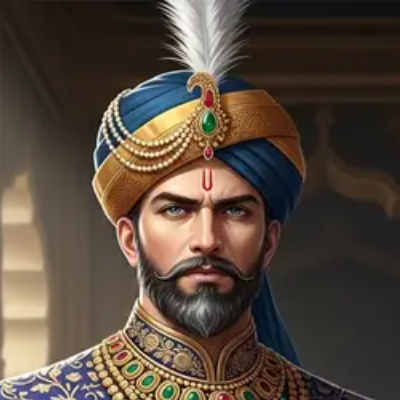
About
Suhotra — King of the Paurava Line, Son of Bhumanyu, Father of Hastin
Suhotra · Suhotra Bhamanyu · Suhotra Paurava
Suhotra is a king of the Paurava branch of the Lunar dynasty, son of Bhumanyu — a descendant of the emperor Bharata — and father of Hastin, the founder of Hastinapura. He is attested in the Bhagavata Purana's ninth skandha and the Vishnu Purana as the connecting node between the Bharata-Bhumanyu line above him and the Hastin-Ajamidha line below him — the latter being the generation from which the Kuru line leading to the Pandavas and the Panchala line leading to Mudgala both descend. Suhotra has no independent narrative episode in any primary text and his profile reflects this limitation honestly. His significance in this genealogical reference series is entirely structural: he is the generation through which the Paurava royal line passes between Bhumanyu and Hastin, and without him correctly placed in the tree the connection between the emperor Bharata's lineage and the founding of Hastinapura cannot be accurately represented. A disambiguation of importance attaches to his name: a separate figure named Suhotra appears in some Puranic lists at a different generational level of the same dynasty — placed in the sequence leading toward the later Kuru kings rather than in the Bharata-to-Hastin stretch — and this later Suhotra must not be conflated with Hastin's father. The primary sources for this profile are the Bhagavata Purana Skandha IX and the Vishnu Purana.
✦ The Name
The name Suhotra is a Sanskrit compound of su (good, well, auspicious, or excellent) and hotra (sacrifice, the act of pouring oblations into fire, or one who performs the sacrificial rite). The compound carries the meaning of "one who performs the sacrifice well," "the excellent sacrificer," or "he of the auspicious oblation." The element hotra is directly connected to the Vedic sacrificial tradition — the hotr is the priest who recites the Rigvedic hymns at the soma sacrifice, and hotra refers to both the priestly function and the sacrificial act itself. As a royal name, Suhotra places its bearer in close association with the Vedic sacrificial order — identifying the king as one who performs or maintains the fire sacrifice with excellence, which is a fundamental duty of the righteous Kshatriya king in the Vedic and Puranic worldview. The name is entirely consistent with the naming conventions of Paurava Lunar dynasty kings in this stretch of the genealogy, several of whom carry names with sacrificial or generosity-related components.
✦ Lineage
- Remote dynastic ancestry: The Paurava branch of the Lunar dynasty, descending from Soma through Pururavas, Nahusha, Yayati, and Puru — the youngest of Yayati's five sons who accepted his father's premature old age and received the kingdom. From Puru the line descends through several generations to the great emperor Bharata — son of Dushyanta and Shakuntala — whose name the tradition gives to the Indian subcontinent as Bharatavarsha.
- Father: Bhumanyu — named in the Bhagavata Purana and the Vishnu Purana as the son of the emperor Bharata and the father of Suhotra. Bhumanyu is one of Bharata's sons — the Puranas record that Bharata had multiple sons but that none of them was deemed worthy to inherit the empire, leading to a gap in the succession that was filled by a son born through divine intervention. The specific details of Bhumanyu's birth and his relationship to Bharata's succession vary between the Bhagavata Purana, the Vishnu Purana, and the Mahabharata. Beyond his genealogical position as Bharata's son and Suhotra's father, Bhumanyu has no extended independent narrative in the primary texts.
- Son: Hastin — the founder of Hastinapura, the great city on the Ganges that becomes the capital of the Kuru kingdom and the central political location of the Mahabharata. Through Hastin and his son Ajamidha, Suhotra is the ancestor of the entire network of royal lines documented in the lower portions of this genealogical reference series — including the Kuru-Pandava line and the Panchala line leading to Mudgala.
- Additional sons (variant accounts): Some Puranic passages name additional sons of Suhotra beyond Hastin, but the names given are not consistent across the Bhagavata Purana, the Vishnu Purana, and the Harivamsha. The Bhagavata Purana's account of this stretch of the Paurava line is the most parsimonious and focuses on Hastin as the genealogically consequential son without developing additional branches from Suhotra's household. These additional sons, where named, have no independent narrative presence and their lines are not developed in the primary texts.
✦ The Sequence Between Bharata and Suhotra — Textual Variance
The generational sequence between the emperor Bharata and Suhotra is one of the most variable stretches of the Paurava Lunar dynasty genealogy across the primary texts. The Bhagavata Purana Skandha IX gives the sequence as Bharata → Bhumanyu → Suhotra → Hastin, placing only Bhumanyu between Bharata and Suhotra. The Vishnu Purana and the Mahabharata's genealogical passages insert additional intermediate kings, producing a longer sequence for the same dynastic stretch. The Harivamsha gives yet another variant. Pargiter's reconstruction attempts a harmonisation of these variant sequences but acknowledges that the intermediate kings between Bharata and Hastin represent one of the most poorly preserved stretches of the Lunar dynasty genealogy in the Puranic record — a stretch where different redactors working with different regional traditions produced inconsistent lists that cannot be fully harmonised without arbitrarily privileging one source over the others.
This profile follows the Bhagavata Purana's account as the primary authority for the immediate parentage of Suhotra — placing him as Bhumanyu's son — while acknowledging that the Vishnu Purana and other sources give a different generational count for the same stretch. The consistent element across all sources is Suhotra's position as the father of Hastin, which is the genealogically critical relationship for this profile's function in the reference series.
✦ Disambiguation — The Later Suhotra
A separate figure named Suhotra appears in some Puranic genealogical lists at a later generational level of the same Paurava Lunar dynasty — placed in the sequence of Kuru kings descending from Ajamidha through the Riksha line toward the Mahabharata period. This later Suhotra is sometimes named as the son of a figure in the Kuru royal succession and must not be conflated with Hastin's father Suhotra, who belongs to an earlier generation. The two figures share only a name and their respective positions in the dynastic tree are clearly separated in the primary texts that name both. This profile concerns exclusively the earlier Suhotra — the son of Bhumanyu and the father of Hastin — and all references to Suhotra within this genealogical reference series in the context of Hastin's parentage refer to this earlier figure.
✦ Textual Limitations
Suhotra son of Bhumanyu has no independent narrative episode in any primary Sanskrit text that can be confirmed from the available scholarly apparatus. He does not appear in the Mahabharata's narrative passages, the Valmiki Ramayana, or any of the major Puranas as an active participant in any recorded story. He is not mentioned in the Vedic anukramani tradition as a sacrificial patron or figure of religious significance. His entire contribution to the primary source record is the fact of his name appearing between Bhumanyu and Hastin in the Paurava dynastic sequence of the Bhagavata Purana and the Vishnu Purana. This is stated honestly as the complete extent of the available evidence.
✦ Connection to the Wider Genealogy
Suhotra's genealogical function is precise and structurally essential despite his minimal independent textual presence. He is the node through which the Paurava Lunar dynasty's descent from the emperor Bharata connects to Hastin — the founder of Hastinapura — and through Hastin to Ajamidha and the entire branching structure of royal lines that Ajamidha's household generates. Through Hastin and Ajamidha, Suhotra is the remote ancestor of the Pandavas, the Kauravas, the Panchala kings, the rajarishi Mudgala and the Moudgalya brahmin gotra, and the extended network of royal and brahminical lineages documented throughout this genealogical reference series. Through his father Bhumanyu he connects upward to the emperor Bharata and through Bharata to the full Paurava Lunar dynastic sequence above — Dushyanta and Shakuntala, Puru, Yayati, Nahusha, Pururavas, and ultimately Soma the moon god, the progenitor of the entire Lunar dynasty.
✦ References
Primary Sources
- Bhagavata Purana, Skandha IX: The principal primary source for Suhotra as the son of Bhumanyu and the father of Hastin within the Paurava Lunar dynasty sequence; followed as the primary authority for the immediate parentage of Suhotra in this profile.
- Vishnu Purana: Provides a parallel Puranic genealogical account of the same dynastic stretch, confirming Suhotra's position as Hastin's father while giving a variant intermediate sequence between Bharata and Suhotra.
- Mahabharata, Adi Parvan: Contains genealogical passages on the Paurava Lunar dynasty within which Suhotra's position in the sequence leading to Hastin and Ajamidha is recorded.
- Harivamsha: The appendix to the Mahabharata containing supplementary genealogical material on the Lunar dynasty, consulted for the variant intermediate sequences between Bharata and Hastin within which Suhotra appears.
Modern Reference Works
- Pargiter, F.E. Ancient Indian Historical Tradition. Oxford University Press, 1922: The genealogical reconstruction examining the variant intermediate sequences between Bharata and Hastin across the Bhagavata Purana, Vishnu Purana, Mahabharata, and Harivamsha, and placing Suhotra as Bhumanyu's son and Hastin's father within the harmonised reconstruction.
- Mani, Vettam. Puranic Encyclopaedia. Motilal Banarsidass, 1975: Notes Suhotra in the context of the Paurava Lunar dynasty sequence and provides disambiguation from the later Suhotra appearing in the Kuru royal succession.