
About
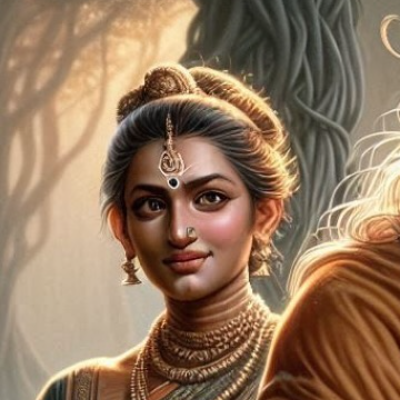
Shubhangi — Princess of the Dasharha Clan, Wife of Kuru, Mother of Viduratha
Shubhangi · Subhangi · Shubhangi of the Dasharha
Shubhangi is a princess of the Dasharha clan — a branch of the Yadava lineage — and the wife of Kuru, the celebrated king of the Chandravamsha after whom the Kuru dynasty, the Kuru kingdom, and the sacred field of Kurukshetra all take their name. She is the mother of Viduratha, through whom the entire Kuru royal line of Hastinapura continues to the generation of the Mahabharata's central figures. She is attested in the Mahabharata (Adi Parva, chapter 95, verse 39) as her sole primary source, which is also the source basis for the Wisdomlib Puranic Encyclopaedia entry on the same figure. No independent narrative, episode, or further personal detail concerning Shubhangi is recorded in any consulted primary source. Her profile is accordingly brief, reflecting the limited but genuine textual base.
✦ The Name
The name Shubhangi is a Sanskrit compound of shubha — auspicious, bright, beautiful, or of good omen — and angi, from anga, meaning limb or body — yielding the meaning she of beautiful or auspicious limbs, or the one whose body is fair and blessed. The Shiva Purana (II.3.6) uses shubhangi as a descriptive epithet for a woman of auspicious appearance, confirming it as a recognised feminine epithet of this meaning in the broader Sanskrit tradition before its use as a personal name. The Ganguli translation of the Mahabharata renders the name as Subhangi; the Wisdomlib entry gives the Sanskrit form as Shubhangi; both represent the same name under different transliteration conventions.
✦ Lineage
- Clan of origin: Dasharha — a branch of the Yadava lineage; the Dasharhas are attested across the Mahabharata and several Puranas as a distinct Yadava clan, their name derived from Dasharha, an ancestor in the Yadu genealogical tree; Shubhangi's identification as a Dasharha princess connects the Kuru royal house through her marriage to this Yadava sub-clan, prefiguring the broader Kuru-Yadava alliances that mark the Mahabharata tradition
- Husband: Kuru — son of Samvarana and Tapati, the daughter of the sun god Vivasvat; the celebrated king who performed great austerities at Kurukshetra and transformed that field into sacred ground; regarded as the founding dynastic ancestor of the Kuru house in its mature form; his name gives the dynasty, the kingdom, and Kurukshetra their designations
- Son: Viduratha — son of Kuru and Shubhangi; his name means one with a wide-ranging or wise chariot, from vidura — far-sighted or wise — and ratha — chariot; he married Sampriya, a princess of the Madhu dynasty, and fathered Anasvan; the name is given as Vidura in certain manuscript traditions of the same verse, consistent with the scribal compression of Viduratha to Vidura noted in the Kausiki translation
✦ Textual Variants
The Mahabharata Adi Parva chapter 95 verse 39 is the sole primary text reference for Shubhangi. The Ganguli translation (Sacred Texts edition) renders her name as Subhangi and her husband's son's name as Viduratha; the Kausiki edition translation renders her name as Shubhangi and the son's name as Vidura. These are orthographic and manuscript variants for the same names across different recensions and translation conventions rather than substantively different traditions. The Wisdomlib Puranic Encyclopaedia entry gives the Sanskrit form Shubhangi and names the son as Vidura, consistent with the Kausiki reading. No other Puranic source — Vishnu Purana, Bhagavata Purana, Harivamsha, or Matsya Purana — names Shubhangi independently in the sources consulted; the Kuru-to-Viduratha generational link appears in the Puranic genealogical lists without naming the mother.
✦ Connection to the Wider Genealogy
Shubhangi stands at a critical juncture in the Kuru royal genealogy: she is the wife of the dynasty's founding eponym Kuru and the mother of the generation that continues the line. The sequence running from her son forward is: Viduratha → Anasvan → Parikshit → Bhimasena → Pratisravas → Pratipa → Devapi, Bahlika, and Shantanu → Bhishma and the Mahabharata-era Kuru house. Through her marriage to Kuru she is connected backward to Samvarana and the Puru-Ajamidha genealogical chain, and through her Dasharha clan origin she introduces a Yadava blood-line into the Kuru royal house at this foundational moment — a Kuru-Yadava intermarriage that in structural terms anticipates the alliance of the Kuru Pandavas with Krishna and the Vrishni Yadavas many generations later.
✦ References
Primary Sources
- Mahabharata, Adi Parva, chapter 95, verse 39 — The sole primary source naming Shubhangi; identifies her as a princess of the Dasharha clan, wife of Kuru, and mother of Viduratha (or Vidura in the Kausiki manuscript tradition).
Secondary Sources
- Wisdomlib.org, "Shubhangi" definition entry — Records Shubhangi as a virgin born in the Dasharha tribe who married Kuru of the lunar dynasty and bore a son named Vidura; cites Mahabharata Adi Parva chapter 95 verse 39 as the primary source; records the additional Shiva Purana usage of shubhangi as a descriptive epithet.
- Mahabharata, Adi Parva, chapter 95, tr. K. M. Ganguli (Sacred-texts.com) — Renders the verse as: Kuru married Subhangi, the princess of Dasarha, and begat on her a son named Viduratha.
- Mahabharata, Adi Parva, chapter 95, Kausiki edition translation — Renders the verse as: Kuru married Shubhangi, the princess of Dasarha, and she gave birth to a son named Vidura; the manuscript variant giving Vidura for Viduratha.