
About
Sugriva — King of Kishkindha, Son of Surya, and Ally of Rama
Sugriva · Sugreeva · Surya-putra · Riksharajas-putra · Vanarendra · Kapitishvara · Plavagaraja
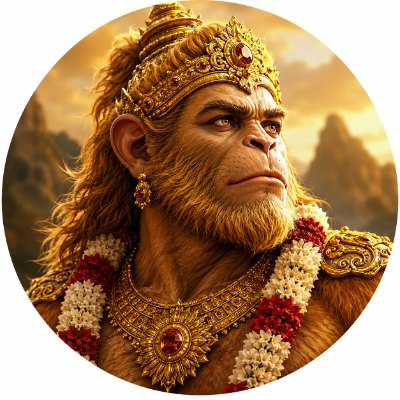
Sugriva is the king of Kishkindha, the Vanara sovereign whose alliance with the divine hero Rama — seventh avatar of Vishnu and son of the king Dasharatha of the Ikshvaku solar dynasty of Ayodhya — makes possible the entire campaign against the demon king Ravana of Lanka and thereby the rescue of Rama's abducted wife Sita. He is the son of the sun god Surya — Vivasvat, one of the twelve Adityas born to the sage Kashyapa and his wife Aditi — and the younger brother of Vali, the previous king of Kishkindha and son of Indra the king of the gods. Sugriva is the husband of Ruma — his principal wife, whose seizure by Vali was one of the central injustices that defined Sugriva's years of exile — and subsequently the husband of Tara, the daughter of the Vanara elder and physician Sushena and the widow of Vali, whom Sugriva married after his brother's death. He is the father of a son named Shatabali in some traditions. His life as narrated in the Kishkindha Kanda and Yuddha Kanda of the Valmiki Ramayana encompasses a period of dispossession and exile on the hill of Rishyamuka, the formation of the crucial alliance with Rama, the recovery of his kingdom and wife through Rama's killing of Vali, and the organisation and command of the vast Vanara army that assaulted Lanka. He appears throughout the Valmiki Ramayana, in the Mahabharata's Vana Parva summary, in the Bhagavata Purana, the Vishnu Purana, the Brahma Purana, and in the extensive tradition of regional and vernacular Ramayana retellings across South and Southeast Asia. His character as presented across these sources is complex and not uniformly heroic: he is a figure of genuine capability and eventual decisive action who is also shown to be capable of self-indulgence, neglect of duty, and moral inconsistency, and the tradition's treatment of him reflects this complexity without either simply condemning or simply celebrating him.
✦ The Name
The name Sugriva is a Sanskrit compound derived from su, meaning good, excellent, or auspicious, and griva, meaning neck or throat. Sugriva therefore means the one with a beautiful or excellent neck — a physical attribute that in the aesthetics of the Sanskrit literary tradition is associated with nobility, strength, and royal bearing. The neck in Sanskrit physiognomy is a significant marker of a being's quality, and a well-formed neck is consistently listed among the characteristics of the ideal warrior-king. The name thus encodes both physical beauty and the royal dignity that physical bearing expresses.
The patronymic Surya-putra — son of Surya — is among the most frequently applied epithets and reflects the centrality of his solar divine parentage to his identity. Riksharajas-putra appears in certain passages and refers to an earthly Vanara king Riksharajas in whose household Sugriva and Vali grew up, a tradition discussed in the context of Vali's profile. Vanarendra and Plavagaraja both mean king of the Vanaras or king of those who leap — plava and vanara both relating to the jumping, leaping quality of the monkey beings — and are royal epithets reflecting his sovereignty over Kishkindha. Kapitishvara means lord of the monkeys.
✦ Lineage
- Father (divine): Surya — the sun god Vivasvat; one of the twelve Adityas born to the sage Kashyapa and his wife Aditi, daughter of the patriarch Daksha; the source of solar light, warmth, and life; father also of Yama the lord of the dead, of Vaivasvata Manu the progenitor of the current human race, and of the Ashvini Kumara twins in the most widely attested Puranic genealogy. Through Surya, Sugriva is the grandson of Kashyapa and Aditi and the nephew at the divine generational level of all the other Adityas including Indra, Varuna, Vishnu, Mitra, Bhaga, Pushan, and the rest.
- Father (earthly, in certain accounts): Riksharajas — a Vanara king identified in some textual traditions as the earthly father or foster-father in whose household Vali and Sugriva were raised. This tradition is not universally attested across all recensions of the Valmiki Ramayana.
- Brother: Vali — the elder brother; son of Indra the king of the gods; king of Kishkindha before Sugriva; possessor of the boon by which he received half the strength of any direct opponent; slain by Rama at Sugriva's request in the Kishkindha Kanda. The relationship between Vali and Sugriva — brothers of the same earthly household but of different divine fathers, caught in a conflict rooted in misunderstanding and inflamed by pride — is the defining political and personal situation of Sugriva's life before the Rama alliance.
- First wife: Ruma — Sugriva's principal wife, seized by Vali when he expelled Sugriva from Kishkindha; restored to Sugriva after Vali's death. Ruma is not a developed narrative figure in the Valmiki Ramayana — she is identified and named but given no independent episodes or extended characterisation — but her seizure by Vali is cited by Rama as one of the specific injustices that justify his killing of Vali.
- Second wife: Tara — daughter of Sushena the Vanara elder and physician, Sushena being the son of Varuna the Aditya; widow of Vali; mother of Angada; celebrated for her beauty, intelligence, and prophetic counsel; included in some enumerations of the Panchakanya. Sugriva married Tara after Vali's death and funeral.
- Son: Shatabali — named in certain Puranic genealogical traditions as Sugriva's son, though he receives no narrative development in the surviving primary sources and is known only through genealogical lists.
- Paternal grandfather: Kashyapa — one of the seven great primordial sages; progenitor of all orders of beings; son of Marichi, one of the mind-born sons of Brahma.
- Paternal grandmother: Aditi — daughter of the patriarch Daksha; wife of Kashyapa; the boundless mother of all twelve Adityas including Surya; one of the most frequently invoked divine mothers in the Rigveda.
- Divine half-brothers through Surya: The Ashvini Kumara twins Nasatya and Dasra — divine physicians of the gods, fathers of the Vanara heroes Mainda and Dvivida respectively; and Yama — lord of the dead; and Vaivasvata Manu — progenitor of the current human race and ancestor of the Ikshvaku solar dynasty of Ayodhya, from which Rama himself descends, making Sugriva a divine cousin at several removes of the hero whose cause he serves.
- Step-son: Angada — son of Vali and Tara; Sugriva's nephew by blood through Vali, and step-son by marriage through Tara; appointed yuvaraja by Rama upon Sugriva's installation as king; one of the foremost warriors and diplomats of the campaign against Ravana.
✦ Sugriva's Solar Nature and Divine Inheritance
As the son of Surya — the sun god and one of the twelve Adityas — Sugriva carries a divine inheritance whose character is distinct from that of his brother Vali, the son of Indra. Where Indra's nature is martial, stormy, and aggressive — the god of thunder and battle whose power asserts itself through direct force — Surya's nature is luminous, sustaining, and universally present. The sun god is the source of all light and warmth, the deity who sees all things with his all-encompassing radiance, and the progenitor of both the royal dynasties of kings and the divine figures of the cosmic order. Sugriva's solar inheritance manifests in his golden complexion — the Valmiki Ramayana describes him as golden in appearance, his colouring reminiscent of his father's solar light — and in a quality of presence and authority that, while not matched to Vali's overwhelming martial power, carries its own kind of divine weight.
The solar connection also places Sugriva in a specific genealogical relationship to Rama himself. Surya as an Aditya is a son of Kashyapa and Aditi, and through his son Vaivasvata Manu he is the progenitor of the Ikshvaku royal dynasty of Ayodhya from which Rama descends through his father Dasharatha and the long line of solar kings. Sugriva as Surya's son is therefore a divine half-brother — at the generational level of gods rather than humans — of the ancestor from whom Rama's entire royal lineage flows. The alliance between Rama and Sugriva thus has a dimension of divine fraternal connection — however distant and mediated — that the tradition does not spell out explicitly in the Valmiki Ramayana but that is embedded in the genealogical structure it consistently maintains.
✦ The Cave of Mayavi and the Origins of the Conflict with Vali
The immediate cause of the catastrophic rupture between Vali and Sugriva — the event that set in motion years of exile, dispossession, and the eventual chain of alliance and war that constitutes the Kishkindha Kanda's central narrative — is the episode of the cave of Mayavi, discussed in detail in the profile of Vali and summarised briefly here for the sake of Sugriva's own narrative completeness.
When Mayavi, the son of the demon Dundubhi whom Vali had killed, came to Kishkindha to challenge Vali, Vali went out to fight him and took Sugriva as his companion. Mayavi fled into a cave and Vali pursued him, leaving Sugriva to wait at the entrance with instructions to consider Vali dead if he did not return within one month. When a full year passed with blood flowing from the cave and the sounds of demonic laughter but no sign of Vali, Sugriva concluded — on the evidence available to him — that Vali had been killed and the demon had triumphed. Fearing that the demon would now emerge and kill him as well, he sealed the cave's entrance with a boulder and returned to Kishkindha, where he accepted the kingship under pressure from the Vanara ministers who argued that the kingdom could not remain without a king.
Vali had in fact killed Mayavi after a prolonged underground combat, and the blood was Mayavi's. When he emerged and found the cave sealed, he interpreted Sugriva's action as deliberate treachery — a calculated act to secure the throne by imprisoning him underground. He returned to Kishkindha, expelled Sugriva, took his wife Ruma, and refused all of Sugriva's subsequent attempts to explain what had actually occurred. The Valmiki Ramayana presents both the logic of Sugriva's panicked action and the understandable but mistaken fury of Vali's response with a narrative evenhandedness that resists simple moral allocation of blame. Sugriva was not treacherous; Vali was not irrational. The catastrophe arose from the collision of genuine misunderstanding with the lethal pride of the most powerful being in the Vanara world.
✦ Exile on Rishyamuka and the Refuge of Matanga's Curse
After his expulsion from Kishkindha, Sugriva sought refuge on the hill of Rishyamuka — the territory that had been cursed by the sage Matanga in connection with Vali's disposal of the demon Dundubhi's carcass. Matanga's curse specified that any Vanara who entered his hermitage's territory would suffer the splitting of his head, and Vali — having defiled Matanga's sacred grounds through his careless throw of Dundubhi's body — was the specific target of this curse. Sugriva, knowing that the curse bound Vali and not himself, made Rishyamuka the one place in the world where he could live without fear of his brother's pursuit.
The years of Sugriva's exile on Rishyamuka are presented in the Valmiki Ramayana as a period of genuine deprivation and sustained anxiety. He lived with a small group of loyal followers — four Vanara companions including Hanuman, the son of Vayu — in reduced circumstances, watching from a distance the kingdom that had been his, separated from his wife, and unable to do anything about his situation. The Valmiki Ramayana does not elaborate at great length on the interior experience of these years, but it establishes clearly that Sugriva's exile was not merely an inconvenience but a prolonged period of genuine suffering and powerlessness that shaped his character's particular combination of gratitude, loyalty — and, later, the self-indulgent relief of a being who had been denied pleasure and power for a very long time.
It was during the Rishyamuka exile that Hanuman first became Sugriva's companion and eventually his most trusted counsellor and minister. The relationship between Sugriva and Hanuman — the Vanara king and his extraordinary wind-god son minister — is one of the most important structural relationships of the epic, and its foundation in the shared exile on Rishyamuka gives it a quality of tested loyalty that the subsequent narrative consistently invokes.
✦ The First Encounter with Rama and Lakshmana
The encounter between Sugriva and Rama — the pivot on which the entire second half of the Ramayana's narrative turns — occurs when Rama and Lakshmana, in their search for Sita following her abduction by Ravana, arrived in the forest region below Rishyamuka. Sugriva, observing two armed warriors approaching the territory associated with his exile, was initially alarmed — fearing that Vali had sent them to kill him — and sent Hanuman to investigate, disguised as a wandering brahmin student.
Hanuman's reconnaissance revealed that the two warriors were not Vali's agents but two princes of extraordinary quality who were themselves in distress, searching for a lost companion. Hanuman revealed his own divine identity and nature to Rama and Lakshmana, was overcome with devotion at the encounter with Rama, and carried the two princes on his shoulders up the hill of Rishyamuka to meet Sugriva. The meeting between Rama and Sugriva is presented in the Kishkindha Kanda as a meeting of two beings in symmetrical distress: both have lost what was most precious to them — Rama his wife Sita, Sugriva his kingdom and his wife Ruma — and both are in need of the other's specific capacity to address that loss.
The alliance between them was formalised through a ritual of friendship sealed before a sacred fire — the Agni witness being the divine guarantor of covenant in the tradition. The specific terms were explicit and direct: Rama would kill Vali and restore Sugriva to the kingship of Kishkindha and to his wife Ruma; Sugriva would mobilise the entire Vanara army and direct it to search for Sita and, once she was found, to assist in the campaign to rescue her. The symmetry of the exchange — each offering what the other most needed — gives the alliance a quality of genuine mutual dependence rather than simple patronage.
Sugriva also provided Rama with significant intelligence at this first meeting: he had witnessed Ravana flying overhead carrying a struggling woman southward, and he had recovered pieces of jewellery and cloth that the woman had thrown down — items that Rama and Lakshmana identified with certainty as belonging to Sita. This intelligence confirmed the direction of the search and the identity of the abductor. The jewels recovered by Sugriva and presented to Rama at this meeting are one of the most emotionally charged details of the Kishkindha Kanda, and Rama's recognition of Sita's ornaments among the items Sugriva had kept is described with a grief and tenderness that establishes the human scale of the cosmic events being set in motion.
✦ The Two Combats with Vali
As part of the alliance's terms, Sugriva challenged Vali to single combat twice. The first combat took place without the distinguishing mark — Rama, watching from concealment with an arrow nocked, was unable to tell the two brothers apart in the intensity of the fight and did not shoot. Sugriva was beaten and retreated wounded to Rishyamuka, reproaching Rama for his failure to act. Rama explained the difficulty of identification and gave Sugriva a garland of flowering vines to wear as a visible distinguishing mark.
In the second combat, the garland made Sugriva identifiable and Rama shot Vali from behind a tree while Vali was engaged with Sugriva. The combat itself — Sugriva fighting Vali in direct confrontation, absorbing punishment from the mightiest of all Vanaras while Rama prepared his shot — required considerable courage from Sugriva, who was fighting an opponent against whom he had no prospect of victory in direct combat and who was inflicting genuine damage upon him. Sugriva's willingness to serve as the necessary visible target — the bait who held Vali's attention while Rama acted from concealment — is not glamorous but it required a specific kind of deliberate fortitude.
✦ Restoration to Kishkindha and Coronation
After Vali's death and the completion of his funeral rites — in which Sugriva participated alongside Tara and Angada, the grief of the family being treated with respect by the Ramayana's narrative even as Vali's killer was Sugriva's ally — Rama installed Sugriva as king of Kishkindha. The coronation was performed with Rama's sanction if not in Rama's direct presence, since Rama, bound by his vow not to enter any settlement or city during his fourteen-year forest exile, remained outside the walls of Kishkindha while the installation ceremony took place within. Lakshmana represented Rama at the ceremony. Sugriva was crowned with the full rites of Vanara kingship, and simultaneously Rama appointed Angada — Vali's son — as yuvaraja, the crown prince, establishing the political dispensation that would govern Kishkindha going forward.
Sugriva also married Tara at this time — the marriage of the new king to the previous king's widow being presented in the text as consistent with the customs of the world in which these events occur. The marriage gave Sugriva both Tara's continued presence and counsel at the Kishkindha court and a formal acknowledgment of continuity between his reign and Vali's.
✦ Sugriva's Delay and Lakshmana's Confrontation
The episode of Sugriva's delay in honouring his alliance obligations — and the furious confrontation this precipitated with Lakshmana — is one of the most dramatically significant passages of the Kishkindha Kanda and one of the most revealing in terms of Sugriva's character. Having recovered his kingdom, his wives, and his freedom, Sugriva threw himself into the pleasures of palace life with an intensity that reflected the full force of years of deprivation suddenly released. He feasted, drank, spent his days and nights in the company of his wives, and in the absorption of recovered pleasure effectively forgot — or set aside — the obligation to Rama that his entire restoration had been predicated upon.
The monsoon season came and passed. Rama had agreed, when the alliance was first formed, that the search for Sita could not begin until the rains ended — the monsoon made large-scale military movement impractical — and he waited on the hill of Prasravana through the entire rainy season in a state of grief and yearning for Sita that the Valmiki Ramayana describes with great lyrical power. As the rains ended and the stipulated period for action arrived without any movement from Kishkindha, Rama's patience gave way to anger. He sent Lakshmana into Kishkindha with an explicit message: if Sugriva had forgotten his obligation, Rama would send him the same way as Vali. The threat was not rhetorical.
Lakshmana arrived at the gates of Kishkindha blazing with rage, the force of his anger visible in his bearing and his words to the gatekeepers. The news of his arrival and his fury spread through the palace. It was Tara — Sugriva's wife, the woman of exceptional intelligence and diplomatic skill — who went out to meet Lakshmana and who managed the initial confrontation. She received him with composure, acknowledged Sugriva's failing without making excuses for it, explained the intoxicating effect of recovered pleasure on a being who had been denied it for years, and assured Lakshmana that Sugriva was genuinely committed to the alliance and would act immediately. Her intervention calmed Lakshmana sufficiently for a productive meeting to follow.
When Lakshmana finally met Sugriva directly, Sugriva was contrite and honest. He did not make excuses or attempt to minimise his failure. He acknowledged that he had been overwhelmed by pleasure and distracted from his duty, expressed genuine remorse, and immediately gave orders for the mobilisation of the Vanara army. The Valmiki Ramayana presents this episode without either fully excusing Sugriva's failure — it was a real and potentially catastrophic neglect of his most important obligation — or treating it as a simple moral condemnation. The text's presentation of Tara's diplomatic role and Sugriva's eventual honest remorse gives the episode a quality of moral realism: a being who had suffered years of deprivation and then received everything he had longed for became overwhelmed by the relief of that restoration and temporarily lost his larger purpose. This is a recognisable human failing even in its divine-born Vanara register.
✦ Organisation of the Search for Sita
Once roused from his period of pleasure and recalled to his obligations, Sugriva acted with genuine decisiveness and organisational capability. He summoned the Vanara army — described in the Kishkindha Kanda in terms of vast multitudes, Vanaras gathered from every forest and mountain in the known world, filling the land around Kishkindha in numbers that the text's hyperbolic enumeration suggests were beyond ordinary counting. The assembly was one of the most extraordinary martial gatherings in the epic tradition, and Sugriva's command of it — his ability to summon and direct such an enormous force — demonstrated the full extent of his authority as king.
He organised the search with strategic care, sending parties in all four cardinal directions under the command of capable leaders. The northern party was led by Shatavali; the eastern party by Vinata; the western party by Sushena — his father-in-law and the Vanara physician — and the southern party, directed toward the ocean and ultimately toward Lanka, was led by Angada as commander with Hanuman among his principal warriors. Sugriva gave each party a detailed geographical description of the territories they were to search, naming specific mountains, rivers, forests, and known demon habitations that the parties should investigate. This geographical briefing, which occupies several sargas of the Kishkindha Kanda, demonstrates a knowledge of the world's geography — the mountains, rivers, and regions of the ancient Indian geographical imagination — that the Valmiki Ramayana presents as part of Sugriva's sovereign authority and practical intelligence.
He set a specific time limit for each party — one month — with clear consequences for failure to return. The urgency he imposed on the search, once he had decided to act, was as decisive as his earlier delay had been problematic, and the two together give a picture of a character capable of both the failure of self-indulgence and the recovery of purposeful action when the situation demanded it.
✦ Sugriva's Role in the Campaign Against Ravana
Once Hanuman's successful mission to Lanka confirmed Sita's location and established that she was alive and still faithful to Rama, the campaign moved into its military phase. Sugriva as the king and supreme commander of the Vanara army was the principal organiser and commander of the forces throughout the Yuddha Kanda, though the strategic decisions were effectively shared between him, Rama, and the council of senior Vanara leaders.
The march from Kishkindha to the southern ocean, the assembly of the army on the shore, and the building of the great bridge across the sea to Lanka — the Nala Setu, constructed through the engineering of the Vanara architect Nala under Rama's direction — were all accomplished under Sugriva's overall command. The movement of an army of the scale described required logistical coordination that the text attributes to Sugriva's sovereign authority without dwelling at length on the specific mechanisms.
Sugriva participates directly in the battle of Lanka as a warrior of first rank, fighting in multiple engagements throughout the Yuddha Kanda. He is consistently present in the battle narrative as both a commander giving orders and an individual fighter engaging demon warriors directly. His divine-born solar strength — the inheritance of Surya — makes him one of the most physically powerful Vanara warriors after Hanuman, and several of his individual combat episodes are given specific narrative attention.
✦ Sugriva's Direct Combat with Ravana
The most dramatically significant of Sugriva's individual combat episodes in the Yuddha Kanda is his direct engagement with Ravana himself — a confrontation that is extraordinary in its audacity and that temporarily disrupts the demon king's advance against Rama's forces. When Ravana descended from his chariot or emerged from his fortress to fight directly, Sugriva launched himself at the demon king without hesitation, grappling with him in direct combat of a ferocity that shook even Ravana.
The combat between Sugriva and Ravana is presented as one of extraordinary physical intensity. Sugriva struck Ravana with a force sufficient to stagger the demon king and cause him genuine pain — no small achievement against a being whose austerities had made him nearly invulnerable and who had defeated gods, celestial beings, and the greatest warriors of the three worlds. Ravana recovered and retaliated with power sufficient to drive Sugriva back. The exchange between them was not decided in a single blow but constituted a genuine trial of strength between two beings of extraordinary divine inheritance.
Sugriva ultimately withdrew from this direct combat — not in defeat but recognising that Ravana as the primary antagonist of the entire campaign was not his to kill, that Ravana's death belonged to Rama specifically as the avatar of Vishnu whose cosmic mission was the demon king's destruction. The episode demonstrates both Sugriva's individual martial courage — he was one of the very few beings in the three worlds capable of engaging Ravana directly and surviving — and his awareness of the larger purposes the battle served.
✦ The Killing of Kumbhakarna's Son Kumbha
Among Sugriva's specific individual combat victories in the Yuddha Kanda, the killing of Kumbha — the son of Ravana's brother Kumbhakarna, the giant demon whose extraordinary capacity for sleep had made him one of Ravana's most formidable but unpredictable warriors — is one of the most notable. Kumbha had been fighting with devastating effect against the Vanara army when Sugriva confronted him directly. Their combat was fierce and extended, the Valmiki Ramayana giving it considerable narrative attention. Sugriva ultimately killed Kumbha with a blow of sufficient force to end the engagement decisively, establishing himself as capable of killing a demon of the first rank in individual combat.
This victory, along with the engagement with Ravana, places Sugriva among the Vanara warriors who contributed most significantly to the campaign's military outcome — not merely as a commander directing others but as a fighter capable of decisive individual action against the most powerful opponents Lanka had to offer.
✦ The Episode of Sugriva's Capture and Release
One of the more dramatic and personally dangerous episodes of the Yuddha Kanda involving Sugriva occurs when he is captured — briefly and humiliatingly — by a demon warrior of Ravana's army. During a particularly intense phase of the battle, the demon Praghasa or, in some versions of the text, another warrior of significant power, seized Sugriva and attempted to carry him into Lanka. Sugriva was momentarily overwhelmed — not by direct combat defeat in the conventional sense but by a surprise seizure in the chaos of battle.
The capture of the Vanara king caused immediate alarm throughout the army and required urgent intervention. Sugriva was eventually freed through the action of other Vanara warriors who came to his assistance. The episode is presented without softening in the Valmiki Ramayana — the king of the Vanaras was taken prisoner, however briefly, and required rescue — and it functions as a reminder that even the most divinely born and physically powerful figures in the narrative are not beyond the reach of the battle's chaos and its dangers. Sugriva's recovery from this episode and his continued effective command and combat engagement thereafter demonstrate the resilience that is one of his characteristic qualities.
✦ Sugriva's Counsel and Strategic Role
Beyond his role as a warrior, Sugriva functions throughout the Yuddha Kanda as a member of the campaign's strategic council, contributing to the decisions that governed the conduct of the war. He participates in the councils at which the bridge-building was decided, the approach to Lanka was planned, and the responses to Ravana's various tactical moves were formulated. His knowledge of the Vanara army — its capabilities, its individual commanders, and its collective limitations — made him an essential strategic voice alongside Rama, Lakshmana, Hanuman, Jambavan, and the other senior figures of the allied force.
One of the most significant strategic moments involving Sugriva was the decision about how to respond to Vibhishana — Ravana's youngest brother and a man of dharmic inclination who came to Rama's camp as a defector seeking refuge. Several of the Vanara leaders, including Sugriva, were initially suspicious of Vibhishana's motives, arguing that a demon who had deserted his own king and brother was not a reliable ally and might be a spy. Sugriva's counsel at this point was cautious and argued for caution regarding the defector's reception. Rama overruled the caution, chose to accept Vibhishana with full trust and honour, and his decision proved correct — Vibhishana's intelligence about Lanka's geography, defences, and Ravana's weaknesses proved invaluable to the campaign. The episode illustrates both Sugriva's practical caution — which had its own logic — and Rama's superior wisdom in the governance of the campaign.
✦ Sugriva's Relationship with Hanuman
The relationship between Sugriva and Hanuman is one of the most important structural partnerships of the Ramayana, and it deserves extended attention as a dimension of Sugriva's character and role that is woven through every phase of his narrative. Hanuman was Sugriva's companion during the years of exile on Rishyamuka, his minister and counsellor in the reformed Kishkindha administration, the one who discovered Sita's location in Lanka, and the most extraordinary individual warrior of the entire campaign. Without Hanuman, the alliance between Rama and Sugriva would not have been established — it was Hanuman who approached Rama and Lakshmana on Sugriva's behalf, who assessed their character and their sincerity, and who facilitated the meeting on Rishyamuka that made the alliance possible.
The Valmiki Ramayana presents the relationship between Sugriva and Hanuman as one of genuine mutual dependence and complementary capacities. Sugriva provides the sovereign authority, the command of the army, and the political structure within which the campaign operates; Hanuman provides the extraordinary individual capability — the ability to cross the ocean, to enter Lanka unseen, to find Sita, to carry mountains, to revive the fallen — without which the campaign's most critical achievements would have been impossible. Neither could have accomplished what the campaign required without the other, and the alliance between them is as structurally essential as the alliance between Sugriva and Rama.
Hanuman's famous devotion to Rama — his transformation from Sugriva's minister into the supreme devotee of Vishnu's avatar — did not diminish his loyalty to Sugriva but rather elevated the entire service relationship into a framework of divine purpose that gave Sugriva's campaign its ultimate significance. Sugriva as Hanuman's sovereign was, in this framework, the instrument through which divine grace gathered the forces that would accomplish Vishnu's cosmic mission; and Hanuman's own extraordinary gifts were deployed in Sugriva's service as the expression of that same divine purpose working through the structure of the Vanara kingdom.
✦ Sugriva in the Aftermath — The Uttara Kanda and Beyond
The Uttara Kanda of the Valmiki Ramayana — the seventh book, regarded by many scholars as a later addition to the core six books — contains material on the post-war period including Sugriva's continued kingship of Kishkindha, the honours distributed to the Vanara allies, and the broader resolution of the epic's political world. Sugriva attended Rama's coronation at Ayodhya and was honoured among the foremost of Rama's allies. The Uttara Kanda presents his ongoing sovereignty over Kishkindha as settled and secure — the restoration achieved through the Rama alliance had been permanent and complete.
Some Puranic treatments of the Ramayana tradition include references to Sugriva's later reign and the continuation of the Kishkindha lineage beyond the narrative's primary endpoint. These are brief and genealogical rather than narrative in character, establishing the dynastic continuation of the solar Vanara lineage descended from Surya without developing the specific episodes of Sugriva's later life.
✦ Textual Variants and Inconsistencies
The Valmiki Ramayana's northern and southern recensions agree on the essential outline of Sugriva's narrative but show variation in the length and detail of specific passages — particularly the delay episode and Lakshmana's confrontation, the geographical briefing of the search parties, and some of the individual combat episodes of the Yuddha Kanda. The southern recension is generally more expansive in its treatment of the Kishkindha Kanda's political and personal dimensions; the northern recension somewhat more concise.
The role of Riksharajas as an earthly foster-father — present in some accounts as the context for Vali and Sugriva's shared upbringing — is not uniformly attested across all recensions. Some passages imply that Vali and Sugriva had the same mother as well as being raised in the same household; others treat them as having entirely separate divine origins with Kishkindha as their shared kingdom by virtue of Vali's sovereignty rather than shared birth.
The moral evaluation of Sugriva's delay varies significantly across regional and vernacular retellings. In some traditions the delay is treated as a relatively minor failing quickly corrected; in others it is developed into an extended exploration of the corrupting effects of power and pleasure on a being who has suffered deprivation; and in some Vaishnava devotional readings it is reframed as a test that Sugriva ultimately passed by responding honestly and without excuse to the confrontation it precipitated. None of these framings fully dominates the tradition, and the moral ambiguity of the episode remains productive across different retellings.
The specific demon warriors killed by Sugriva in individual combat vary somewhat across manuscript traditions of the Yuddha Kanda, with different recensions assigning different secondary combats to him. The engagements with Ravana and with Kumbha are among the most consistently attested of his individual combats across the major manuscript traditions.
✦ Theological and Literary Significance
Sugriva's theological significance in the Ramayana tradition is primarily structural and instrumental: he is the being through whom the divine forces needed for Rama's mission were gathered and directed. As the king of the Vanaras, his sovereign authority was the indispensable basis for the assembly of the army that would assault Lanka; without a king to command them, the Vanara hosts could not have been mobilised as a coherent force. The alliance between Rama and Sugriva is therefore not merely a narrative convenience but a cosmic structural necessity — the Vanara army as the earthly expression of divine power required a legitimate sovereign through whom it could be assembled and commanded, and Sugriva, restored to his rightful throne through Rama's act, was that sovereign.
Literarily, Sugriva is one of the most realistically drawn characters in the Valmiki Ramayana — a figure whose virtues and failings are presented with a balance and honesty that make him more credible as a being than either a purely heroic or a purely flawed figure would be. His years of exile produced in him genuine suffering, genuine courage, and eventually genuine gratitude; his restoration to power produced in him genuine relief and genuine self-indulgence; his recall to duty produced in him genuine remorse and genuine decisive action. The arc of his character across the Kishkindha Kanda is one of moral realism — not the unvarying heroism of a purely divine figure but the recognisable trajectory of a capable being whose capacity for both failure and recovery is part of what makes him a vehicle for the divine mission he ultimately serves.
In the Vaishnava devotional tradition, Sugriva's relationship to Rama is understood as a form of divine friendship — the relationship of the soul that has found its sovereign and master and has been restored to its proper condition through that encounter. The years of exile, the encounter with Rama, the restoration, the failure, the remorse, and the ultimate loyal service constitute a pattern of the soul's relationship to the divine that commentators have found generative and applicable beyond the specific narrative of the Kishkindha Kanda.
✦ Connection to the Wider Genealogy
As a son of Surya — the sun god Vivasvat and one of the twelve Adityas born to Kashyapa and Aditi — Sugriva belongs to the supreme tier of the divine lineage in the tradition. Through Surya he is the grandson of Kashyapa and Aditi, and the nephew at the divine level of all the other Adityas including Indra — whose son Vali is Sugriva's brother — Varuna, Vishnu, Mitra, Bhaga, Pushan, and the rest. Through Surya's other sons — Yama the lord of the dead, Vaivasvata Manu the progenitor of the current human race, and the Ashvini Kumara twins whose sons Mainda and Dvivida are among the Vanara warriors under Sugriva's command — Sugriva is connected to the full width of the divine lineage's reach across both the cosmic order and the human world.
The connection to Rama through Surya — Sugriva's father — and through Manu — Surya's son and the progenitor of the Ikshvaku dynasty — means that the alliance between Rama and Sugriva has a genealogical dimension of divine kinship: both are descendants of the same Aditya lineage, one through the direct solar-human royal succession and the other through the Vanara world, and their meeting on Rishyamuka is in some sense a reunion of two branches of the same primordial divine family.
Through his wife Tara and her father Sushena, son of Varuna, Sugriva is connected by marriage to yet another Aditya lineage — Varuna being the lord of cosmic law and the waters and a son of Kashyapa and Aditi. Through Angada — his nephew by blood and step-son by marriage, the son of Vali and Tara — Sugriva's genealogical connections extend to include the double divine descent from Indra through Vali and from Varuna through Tara. The Kishkindha royal family as Sugriva governs it is thus a nexus of Aditya divine lineages converging from multiple directions — solar, celestial, and aquatic — in a single royal household, a concentration of divine genealogical depth that reflects the tradition's understanding of Kishkindha as a kingdom of cosmic significance rather than merely a regional political entity.
✦ References
- Primary Sources
- Valmiki Ramayana, Kishkindha Kanda, Sargas 1–67 (the full Kishkindha Kanda): The primary and most authoritative source for Sugriva's life, character, and narrative role; establishes his divine parentage, his conflict with Vali, the exile on Rishyamuka, the alliance with Rama, the restoration to Kishkindha, the delay episode and Lakshmana's confrontation, and the organisation of the great search for Sita.
- Valmiki Ramayana, Yuddha Kanda (the full battle narrative): Records Sugriva's military role as supreme commander of the Vanara army, his individual combat episodes including the engagement with Ravana and the killing of Kumbha, the capture and release episode, and his strategic counsel throughout the campaign.
- Valmiki Ramayana, Bala Kanda (divine parentage of the Vanaras): Establishes Sugriva as the son of Surya, providing the divine genealogical foundation of his identity and power.
- Valmiki Ramayana, Uttara Kanda: Contains post-war material on Sugriva's coronation honours and the continuation of the Kishkindha kingship; to be read with awareness of the Uttara Kanda's status as a probable later addition.
- Mahabharata, Vana Parva (Book III, Markandeya's Ramayana summary): Contains the condensed Mahabharata retelling of the Ramayana including Sugriva's story; confirms the tradition's reception of his narrative within the Mahabharata period.
- Bhagavata Purana, Skandha IX (genealogical and narrative references to the Ramayana): Contains Puranic treatment of the Ramayana tradition including Sugriva's lineage and narrative.
- Vishnu Purana and Brahma Purana (Ramayana summary passages): Contain Puranic retellings of the Ramayana episodes including the Sugriva narrative.
- Adhyatma Ramayana (Kishkindha Kanda and Yuddha Kanda): A later Sanskrit retelling within the Brahmanda Purana that gives a Vaishnava devotional interpretation of Sugriva's alliance with Rama and his role in the campaign.
- Kamba Ramayana (Tamil, Kishkindha Kanda): The celebrated Tamil retelling by Kamban that gives one of the most elaborated regional treatments of the Sugriva narrative, with particular attention to the delay episode and the confrontation with Lakshmana.
- Ananda Ramayana (relevant Kandas): A later Sanskrit retelling that includes Sugriva's story with some variant emphases; useful for tracing the development of his character across the extended Sanskrit retelling tradition.
- Secondary Sources
- Mani, Vettam. Puranic Encyclopaedia (1975): Entries on Sugriva, Vali, Tara, Ruma, Angada, Hanuman, Kishkindha, Surya, Riksharajas, and related figures; invaluable for cross-referencing the primary sources and identifying the full scope of Sugriva's narrative appearances across the corpus.
- Goldman, Robert P. (general editor). The Ramayana of Valmiki: An Epic of Ancient India, Volume IV: Kishkindha (Princeton University Press, 2011): Critical edition and translation with extensive notes on the Kishkindha Kanda; the most authoritative modern scholarly treatment of Sugriva's primary narrative.
- Sutherland Goldman, Sally J. and Goldman, Robert P. The Ramayana of Valmiki, Volume IV: Kishkindha (2011): Detailed scholarly translation with commentary on the Kishkindha Kanda; addresses Sugriva's character, the Vali conflict, the delay episode, and the organisation of the search with attention to textual variants.
- Brockington, John. The Sanskrit Epics (1998): Contains analysis of Sugriva's narrative within the broader structure of the Ramayana and discussion of the political and moral dimensions of the Kishkindha episodes.
- Lutgendorf, Philip. Hanuman's Tale: The Messages of a Divine Monkey (2007): Contains relevant discussion of the Vanara world including analysis of the Sugriva-Hanuman relationship and the political dynamics of Kishkindha.
- Wisdomlib (wisdomlib.org), entries on Sugriva, Vali, Ruma, Tara, Angada, Hanuman, Kishkindha, and the Vanara army: Aggregates verse references from digitised primary texts; useful for locating specific passages, tracking variant readings across recensions, and cross-referencing the tradition's treatment of Sugriva across the full primary corpus.