
About
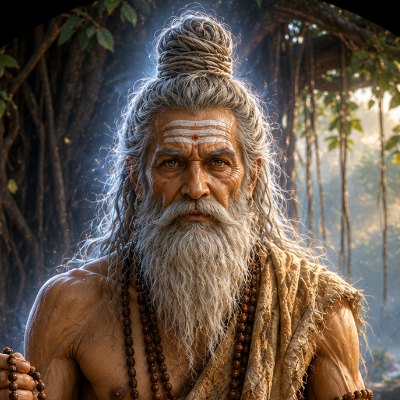
Sage Kratu — Mind-Born Son of Brahma, Father of the Valakhilyas
Kratu · Manasaputra · Saptarishi · Prajapati · Brahmarishi · Valakhilya-pita · Bhargava
Kratu is one of the Saptarishis — the seven great sages of the first Manvantara — and one of the ten Manasaputras, the mind-born sons of Brahma. He is one of the ten Prajapatis entrusted with the facilitation of creation. He is most celebrated as the father of the Valakhilyas — sixty thousand thumb-sized sages of ethereal form who perpetually circle the sun chanting hymns of praise. He is counted among the Bhargavas — descendants of the lineage of Rishi Bhrigu. He is also named among the Vishvadevas — a group of ten cosmic beings. He took birth again in the Vaivasvata Manvantara — the current age — through the boon of Lord Shiva, though in that birth he had no family. He adopted Idhvaaha, the son of Rishi Agastya, as his own child when Agastya had no heirs. He is linked in the Saptarishi constellation to one of the seven stars of the Big Dipper.
✦ The Name
The name Kratu means will, resolve, intelligence, or sacrificial rite in Sanskrit. It is connected to the root kri — to do, to act — and carries the meaning of purposeful, directed creative action. In the Vedic context, a kratu is also a specific type of sacrifice or yajna — making the sage's very name a declaration of his identity as one inseparable from the sacred sacrificial tradition. He is associated in some cosmological passages with the Maruts — the storm gods — as one who contributes to the cosmic forces that regulate nature.
✦ Lineage
- Father: Brahma — mind-born son of the creator god
- Second father (alternate tradition): Sage Kardama — the Bhagavata Purana records Kratu also as a son of Kardama Prajapati
- Mother (Matsya Purana): Poulami — whose name connects him to the Bhrigu lineage, as Poulami is also the name of Bhrigu's wife, explaining his identification as one of the Bhargavas
- Wife: Kriya — daughter of Kardama Prajapati and Devahuti; one of the nine daughters of Kardama given in marriage to the Saptarishis
- Children: 60,000 sons known as the Valakhilyas — thumb-sized sages of ethereal form who perpetually orbit the sun chanting its praises
- Adopted son: Idhvaaha — son of Rishi Agastya, adopted by Kratu because he had no family of his own to continue the lineage at that time
- Sisters (recorded tradition): Punya and Satyavati
✦ The Valakhilyas — His Most Celebrated Legacy
Kratu's most enduring legacy in the tradition is his sixty thousand sons, the Valakhilyas — a race of thumb-sized sages of radiant piety whose entire existence is devoted to orbiting the sun and hymning its glory. They are described across the Puranas as beings of extraordinary purity and ascetic power whose small physical form belies their immense spiritual authority. The Mahabharata records an episode in which the Valakhilyas had collected sticks for a ritual fire but were struggling to cross a footprint left by Indra's horse because, at their thumb-sized scale, the water gathered in the hoofprint was to them like an ocean. Indra laughed. The Valakhilyas, angered, performed austerities to create a second Indra — which led to the birth of Garuda, the divine eagle, as a compromise arranged by Brahma. This episode established the Valakhilyas' significance as sages whose power, despite their tiny form, was sufficient to challenge the king of the gods.
✦ Among the Vishvadevas
Kratu is listed among the Vishvadevas — a group of ten cosmic beings whose names are: Kratu, Daksha, Vasu, Satya, Kaalakama, Muni, Kuraja, Manuja, Beeja, and Rochaman. The Vishvadevas are invoked in Shraddha rites — the ritual offerings made to departed ancestors — and their inclusion in such ceremonies places them at the intersection of the cosmic and the ancestral dimensions of Hindu sacred practice.
✦ Rebirth in the Vaivasvata Manvantara
The tradition records that Kratu was reborn in the Vaivasvata Manvantara — the current cosmic age — through the boon of Lord Shiva. In this second birth he had no family. It is in this context that he adopted Idhvaaha, son of Agastya, as his own — an act of compassion and continuation that preserved the adoptive line of his lineage across the change of cosmic epochs.
✦ Note on Available Information
Among the seven Saptarishis of the first Manvantara, Kratu is one of the least extensively recorded in the surviving textual tradition. Beyond his identity as a Manasaputra, Prajapati, father of the Valakhilyas, husband of Kriya, and member of the Bhargava and Vishvadeva traditions, the primary sources preserve comparatively little further narrative detail about him individually.
✦ References
- Mahabharata (Vyasa) — Adi Parva: names Kratu among the Saptarishis and Prajapatis of the first Manvantara; the Valakhilyas episode — Indra's mockery, the Valakhilyas' austerities, and the birth of Garuda as their result
- Bhagavata Purana — records Kratu's wife Kriya as a daughter of Kardama Prajapati and Devahuti; their sixty thousand sons the Valakhilyas; Kratu also recorded as a son of Kardama in this Purana's alternate genealogy
- Vishnu Purana — names Kratu among the nine Manasaputras of Brahma
- Matsya Purana — names Kratu's mother as Poulami, connecting him to the Bhrigu lineage and his identification as a Bhargava
- HinduTemple Talk — Saptarshi; Medium — Saptarshi Seven Sages: record Kratu's sisters Punya and Satyavati; his adoption of Idhvaaha; his rebirth in the Vaivasvata Manvantara through Shiva's boon
- Wikipedia — Kratu; Wikipedia — Valakhilyas: modern summaries drawing from the above primary sources