
About
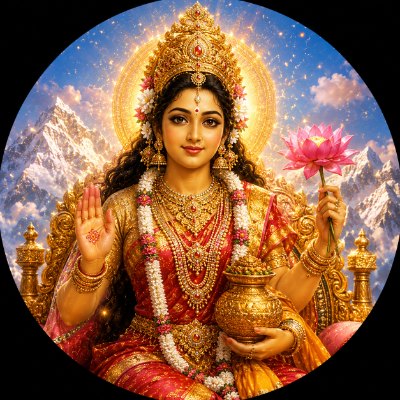
Parvati — Goddess of Power and Grace, Consort of Shiva, Mother of Ganesha and Kartikeya, Reincarnation of Sati
Parvati · Pārvatī · Uma · Gauri · Girija · Shailaja · Haimavati · Ambika · Bhavani · Durga · Kali · Shakti · Adi Parashakti · Annapurna · Kamakshi · Meenakshi · Lalita · Himavat-putri · Shiva-patni · Ganesha-mata · Kartikeya-mata · Sati-punarjanma
Parvati is the daughter of Himavat (the king of the Himalayas) and his wife Mena; the younger sister of Ganga; the reincarnation of Sati, Shiva's first wife; the consort of Shiva; and the mother of Ganesha and Kartikeya. She is simultaneously the most benign and the most terrifying goddess in the Hindu tradition — the gentle mountain daughter who performed extraordinary tapas to win the ascetic Shiva's acceptance, and the cosmic force whose ferocious manifestations as Durga, Kali, Chamunda, and the ten Mahavidyas constitute the tradition's most elaborate theology of divine wrath and transformative destruction. As the embodiment of Shakti — the primordial energy that underlies all creation, preservation, and dissolution — she is not merely Shiva's consort but his essential power: without her, the tradition insists, Shiva is inert; it is she who activates and animates the divine consciousness. The image of Ardhanarishvara — the half-male, half-female form in which one body is simultaneously Shiva and Parvati — is the tradition's most precise visual statement of their inseparable unity: they are not two beings in relationship but one cosmic reality viewed from two directions at once. She appears in the Mahabharata and the Ramayana as Shiva's wife and is fully elaborated as a major independent goddess in the Puranas — above all in the Shiva Purana, the Devi Bhagavata Purana, and the Markandeya Purana — and in the Sanskrit literary tradition through Kalidasa's Kumarasambhava, the most celebrated poem about her tapas and marriage to Shiva. In the Shiva Purana's framework she is the incarnation of Adi Parashakti herself — the supreme primordial goddess — who chose to be born as the daughter of Himavat specifically to reunite with Shiva and restore cosmic balance after Sati's self-immolation had withdrawn the divine feminine from the world.
✦ The Names
The name Parvati derives from the Sanskrit parvata — mountain — and means daughter of the mountain or she who belongs to the mountains, named after her father Himavat who is also called Parvat — king of the mountains. Her name Girija means mountain-born; Shailaja means born from rock; Haimavati means of the Himalaya — all recording the same identity through slightly different compounds. Her name Uma — one of her oldest names, appearing in the Kena Upanishad — derives from the Sanskrit u ma, said to be the words spoken by Mena when she tried to stop Parvati from her harsh tapas: O ma — O, do not. Her name Gauri means the fair one, the radiant white one — applied after Shiva called her dark-complexioned and she shed her dark skin through tapas, emerging as golden-white Gauri, her cast-off darkness becoming the goddess Koushiki. Her name Ambika means the little mother, the dear mother; Bhavani means the creative power of the universe; Annapurna means she who is full of food and nourishment. As Durga — the invincible fortress — she is the warrior goddess who emerged from the combined divine energy of all the Trimurti and the devas to slay the buffalo-demon Mahishasura when no male god could. As Kali — the black one, the time-force — she is the most terrifying aspect of the divine feminine: dark-complexioned, wild-haired, tongue extended, garlanded with severed heads, who emerged from Durga's forehead in the battle against the demon Raktabija — whose every drop of blood sprouted a new demon — and who drank the blood before it could touch the ground, preventing the multiplication. The tradition records over a thousand names for Parvati across her various manifestations, the most comprehensive collection being the Lalita Sahasranama — the thousand names of the goddess in her Lalita aspect — from the Brahmanda Purana.
✦ Lineage
- Father: Himavat — king of the Himalayas; the personification of the Himalayan mountain range; who in the Shiva Purana tradition performed tapas to obtain the goddess herself as his daughter; described as Brahma's son in some cosmic genealogies; a devotee of Shiva; already profiled in this series
- Mother: Mena — also called Menaka or Menavati; daughter of Swadha and the Pitrs (ancestral spirits) per the Shiva Purana; a mind-born daughter of the manes, not born from the womb; cursed at Vishnu-loka for failing to rise before the Sanaka sages and destined to be reborn as the wife of Himalaya and mother of the goddess; who served Sati herself during the previous incarnation when Sati and Shiva lived in the Himalayas after their first marriage; who performed twenty-seven years of tapas to Devi to receive Parvati as a daughter; who tried to dissuade Parvati from her harsh tapas — crying Uma, do not — and thus gave Parvati one of her oldest names
- Elder sister: Ganga — the river goddess; firstborn of Himavat and Mena; taken to Svarga while young; already profiled in this series; the same figure who would later be received on Shiva's head as he caught the river's descent — making Parvati and Ganga sisters sharing the same divine husband in different relationships
- Brother: Mainaka — the mountain who hid under the sea when Indra was destroying mountains; who later rose to assist Hanuman during his flight to Lanka in the Ramayana; born to Himavat and Mena before Parvati
- Previous birth: Sati — also called Dakshayani; the daughter of Daksha and Prasuti; who married Shiva against her father's wishes; who self-immolated at Daksha's yajna when she could not bear the public humiliation of her husband; whose body was carried by grief-mad Shiva across the three worlds until Vishnu dismembered it to relieve his pain, the fifty-one pieces becoming the fifty-one Shakti Peethas
- Husband: Shiva — Mahadeva; the Destroyer in the Trimurti; lord of Kailasha; who in this second birth accepted Parvati after her extraordinary tapas brought the cosmic necessity of their union to a point that could no longer be ignored
- Son (created by her alone): Ganesha — the elephant-headed god of wisdom, auspicious beginnings, and the removal of obstacles; created by Parvati from turmeric paste (or clay or sandalwood paste per variant accounts) while Shiva was absent, to serve as her own guardian; whose head was severed by Shiva on his return, not recognising the child; later given the head of an elephant by Shiva or Vishnu; among the most widely worshipped deities in the tradition
- Son (born of Shiva's seed without Parvati's direct agency): Kartikeya — also called Skanda, Murugan, Subrahmanya, Shanmukha; the war-god; the commander of the divine army; born when the gods interrupted Shiva and Parvati's union at the moment of Shiva's seed emerging, passed through Agni to Ganga to the Shara-vana reed-forest where six divine children were born and nursed by the six Krittikas, then fused by Parvati into one six-headed child; slayer of the demon Tarakasura; the stated cosmic purpose of the entire Parvati-Shiva marriage narrative
- Relation to Vishnu: described in the Puranas as the sister of Vishnu — they are both children of the supreme divine principle; the Harivamsa records Parvati as the sister of Vishnu in a cosmic-genealogical sense; the tradition also records them as the two highest manifestations of the formless absolute taking gendered form
- Residence: Mount Kailasha — Shiva's abode in the Himalayas; where the divine family lives; the highest sacred point in the tradition's sacred geography
✦ The Previous Birth — Sati and the Daksha Yajna
The story of Parvati is inseparable from the story of her previous birth as Sati — the younger daughter of Daksha, the Prajapati and son of Brahma. Sati grew up as an ardent devotee of Shiva from childhood. When she came of age, she wished to marry him. Daksha had arranged a svayamvara for her and invited all the gods — but not Shiva, whom he considered an uncouth ascetic, smeared with ash, wearing animal skins, keeping the company of ghosts and goblins — an unsuitable match for a Prajapati's daughter. Sati insisted on Shiva. Brahma and the tradition record that it was cosmically necessary for Shiva and Sati to unite in this Manvantara to produce Kartikeya — the only being capable of slaying Tarakasura. Sati married Shiva against her father's explicit disapproval. The tension between Daksha and Shiva — between the socially ordered world of the Prajapatis and the ascetic world of Shiva who stood outside all social categories — never resolved. Eventually Daksha organized a grand yajna — a fire sacrifice of universal scope — and invited every god, sage, and celestial being in creation. He deliberately excluded Shiva and Sati. Sati wished to go anyway, reasoning that a daughter does not need a formal invitation to her father's house. Shiva warned her against it; the Mahabhagavata Purana records that she transformed into the ten Mahavidyas and surrounded Shiva from all ten directions to overcome his resistance. She attended. Daksha publicly humiliated her — pouring scorn on Shiva before the assembled devas — and refused to offer the share of the sacrifice that should have gone to Shiva. Unable to endure the insult to her husband, and unwilling to continue living in a body born from someone who so dishonoured Shiva, Sati walked into the sacrificial fire. Some texts record that she used the inner yogic fire of her tapas to immolate herself rather than the outer fire of the yajna. When news reached Shiva, his grief transformed into cosmic fury. He created the terrifying being Virabhadra from a lock of his hair and hurled it at Daksha's sacrifice. Virabhadra and Bhadrakali destroyed the yajna site — beheading Daksha and wounding the assembled devas. Eventually Brahma and Vishnu intervened; Shiva was pacified; Daksha was restored to life with the head of a goat; the yajna was allowed to be completed. But Shiva was inconsolable. He took Sati's corpse and wandered the three worlds in the derangement of grief. Vishnu, to relieve Shiva's pain, followed behind him and used the Sudarshana Chakra to cut the corpse piece by piece as Shiva carried it — fifty-one pieces fell across the subcontinent, each place becoming a Shakti Peetha — a sacred seat of the divine feminine. When the last piece had fallen, Shiva was empty-handed. He withdrew to the Himalayas in austere meditation, refusing all engagement with the world. This withdrawal was the cosmic crisis. Without Shiva's engagement with the world — without the union of Purusha (cosmic consciousness) and Prakriti (creative energy) — creation could not continue. The demon Tarakasura, who had received a boon that only Shiva's son could kill him, expanded his power and expelled the devas from Svarga. The gods went to Brahma and Vishnu in desperation. The only solution was the return of the goddess — Sati reborn in a new body, performing tapas to win Shiva's acceptance once more, and producing the child who would slay Tarakasura.
✦ Birth as Parvati — Cosmic Purpose and Royal Childhood
The Shiva Purana records the sequence with precision. The devas and Vishnu went to Himavat — whose peak Shiva himself inhabited in meditation — and invoked the supreme goddess. She appeared before them in cosmic form and consented to be reborn as Himavat's daughter, to perform tapas sufficient to draw Shiva from his meditation, and to unite with him again. Himavat and Mena performed twenty-seven years of tapas for her arrival. She was born at midnight — dark-complexioned, radiantly beautiful — and recognized immediately by the sages Narada and others as the incarnation of the goddess herself. She was named Parvati, after her father the mountain-king. From the earliest childhood she was wholly devoted to Shiva — his stories, his worship, his nature. Her parents were in the difficult position of raising a daughter who was destined for an ascetic who had no worldly life, who was still lost in the grief of his first wife's death, and who showed no interest in marriage or any domestic arrangement. Unlike Sati's father Daksha — who had disapproved of Shiva — Himavat was already Shiva's devotee, and his household was the mountain on which Shiva himself sat in meditation.
✦ The Tapas — Winning Shiva Through Austerity
When Parvati reached the appropriate age she resolved to marry Shiva. Her parents attempted to dissuade her — her mother Mena being most vocal in her protests — but she was immovable. She gave up all the comforts of a mountain princess, went to the forest, and performed tapas of extraordinary severity. She discarded her royal garments for bark and leaves. She stood on one foot in summer heat, stood in water in the cold season, and surrounded herself with fires in the rainy season — the classic pancha-tapas, the five-fire austerity. She fasted for increasingly extended periods until she was living on fallen leaves alone, and then gave up even that — an austerity so severe it earned her the name Aparna: she who does not even eat a leaf. The intensity of her tapas heated the cosmos, disturbed the devas, and penetrated Shiva's meditation in ways that could not be ignored. The devas, having waited long enough and in urgent need of Tarakasura's defeat, decided to accelerate matters. They sent Kamadeva — the god of desire and erotic love — with his consort Rati to shoot an arrow of desire at Shiva and awaken him to the presence of Parvati. Kamadeva discharged his flower-tipped arrow. Shiva, disturbed by the intrusion into his meditation, opened his third eye and burned Kamadeva to ash instantaneously. Rati, Kamadeva's wife, was devastated. Parvati was not deterred. Shiva, in various accounts, tested her resolve by coming to her in disguise — either as a Brahmin or as a young man — and argued extensively that Shiva was an unsuitable husband: he was ash-smeared, ghost-consorting, homeless, without proper lineage or manners. Parvati refused to hear a word against him and maintained her position with undisturbed calm. Shiva revealed himself. He acknowledged that her tapas had earned him, and that he accepted her. Kamadeva was later restored to life — Parvati prevailed upon Shiva to reverse the incineration, and he was reborn as Pradyumna, the son of Krishna and Rukmini, already profiled in this series — thus the arrow that disturbed Shiva's meditation ultimately resulted in the birth of one of the Chatur-Vyuha's four divine forms.
✦ The Marriage
The wedding of Shiva and Parvati is the most celebrated divine marriage in the Hindu tradition. Brahma officiated; Vishnu gave the bride away; the entire company of gods, sages, gandharvas, apsaras, yakshas, and nagas attended. Shiva arrived in his wedding procession accompanied by his ganas — his retinue of wild, misshapen, ash-covered supernatural beings — and the procession caused considerable alarm among the wedding guests, including Parvati's mother Mena who nearly fainted at the sight of her son-in-law. But when Shiva revealed his divine form — the Sadashiva form, blazing with cosmic light — Mena and Himavat were fully reassured. The marriage rituals were performed with all proper ceremony. Brahma performed the rites; the holy fire bore witness; the cosmos rejoiced. Parvati moved to Mount Kailasha, Shiva's abode, as his wife. The union is celebrated on Maha Shivaratri — the great night of Shiva — observed on the fourteenth night of the dark fortnight of Phalguna (February-March) as the night of their marriage and as the most auspicious night of the year for Shiva's worship.
✦ Birth of Ganesha — The Guardian Created From Her Own Body
The Shiva Purana records the most widely known account of Ganesha's birth. Parvati wished to bathe and had no attendant to guard the entrance to her chambers and prevent intrusion. She fashioned a figure of a boy from the turmeric paste prepared to cleanse her body — or from clay, or from sandalwood paste, per variant accounts across different texts — and infused life into the figure. She named him and assigned him the role of guardian: no one was to enter while she bathed. Shiva returned to Kailasha and attempted to enter his own dwelling. The boy-guardian refused him entry, not knowing who Shiva was. Shiva, infuriated by the obstruction at the threshold of his own home, severed the boy's head with his trident. When Parvati emerged and saw her son's lifeless body, her grief transformed into cosmic fury — she was on the point of destroying the universe. Shiva, recognising the depth of her anguish and his error, sent his ganas to find and bring back the head of the first living being they encountered sleeping with its head toward the north. They found an elephant sleeping in that position and brought back its head. Shiva or Vishnu placed the elephant's head on the child's body and restored him to life. Ganesha was accepted by Shiva as his eldest son, given the position of commander of his ganas and the status of the deity to be worshipped first before any ritual undertaking — a status requested by Parvati as her condition for withdrawing her cosmic wrath.
✦ Birth of Kartikeya — The Divine Purpose Fulfilled
The birth of Kartikeya — the cosmic purpose for which the entire Sati-Parvati sequence was set in motion — is told differently across the Shiva Purana, Skanda Purana, Mahabharata, Kumarasambhava of Kalidasa, and the Valmiki Ramayana. The common thread is that the gods, alarmed by the intensity of Shiva and Parvati's union which was shaking the cosmos, interrupted the couple at the moment of Shiva's seed, preventing its reception by Parvati's body. The seed was passed to Agni, who could barely contain its heat, and from Agni to Ganga, who carried it to the Shara-vana — the forest of reeds — where it was deposited. Six divine sparks emerged per the Skanda Purana and became six baby boys, nursed by the six Krittikas. When Parvati found them she fused them into one six-headed child — Kartikeya, Shanmukha, the six-faced one. He grew to divine warrior stature with extraordinary speed, received celestial weapons from Shiva and the Shakti-vel spear from Parvati herself, was appointed commander of the divine army, and slew Tarakasura. The cosmic crisis was resolved. The divine purpose of the entire sequence — from Sati's self-immolation through Shiva's grief through Parvati's tapas through the Kamadeva episode through the marriage — was the production of this one warrior. He is worshipped throughout India but has his principal devotional centre in Tamil Nadu, Kerala, and Sri Lanka under the name Murugan — one of the oldest and most beloved deities of the Dravidian tradition.
✦ The Gauri Episode — The Transformation of Complexion
The Linga Purana and Shiva Purana record the episode in which Parvati's complexion was transformed from dark to golden-white, producing the goddess-form Gauri. Shiva teased Parvati about her dark complexion — calling her by a name meaning the dark one. Parvati was stung by the remark and went into the forest to perform tapas. Brahma appeared before her and granted her wish. She shed her dark outer skin — and the discarded darkness coalesced into the goddess Koushiki, who went on to slay the demons Shumbha and Nishumbha. Parvati emerged from the tapas as Gauri — radiant, golden-white — and returned to Kailasha transformed. The episode encodes the theological principle of the Devi Bhagavata: the ferocious warrior aspect of the goddess (Koushiki-Durga-Kali) and the gentle nurturing aspect (Gauri-Parvati) are not two different beings but the two poles of the same divine feminine reality, separated by this act of cosmic molting.
✦ As Durga and Kali — The Warrior Manifestations
The Devi Mahatmya (Markandeya Purana, Chapters 81–93) — the foundational text of the Shakta tradition — records the three great battles of the goddess, in which Parvati's warrior manifestations take centre stage. When the buffalo-demon Mahishasura expelled the devas from Svarga and no male god could defeat him — his boon granting him invulnerability to all male beings — the combined divine energy of Brahma, Vishnu, Shiva, Indra, and all the other devas poured forth from their bodies as light and coalesced into a single female form: Durga. Armed with weapons given by every god and riding a lion, she engaged Mahishasura in single combat. After a massive battle she slew him — the killing of Mahishasura Mardini, the buffalo-slayer, being celebrated across India at the festival of Navaratri (nine nights) and Vijaya Dashami (the tenth day of victory). When the demons Shumbha and Nishumbha — and their general Raktabija, whose every drop of blood became a new demon when it touched the ground — proved impossible to defeat by any means, Kali emerged from Durga's forehead: dark, wide-mouthed, eyes blazing, tongue extended, drinking every drop of Raktabija's blood before it could touch the earth, consuming the multiplication at its source. In the Tantric tradition and the Dasa Mahavidya theology, all ten Mahavidyas — Kali, Tara, Tripura Sundari, Bhuvaneshvari, Bhairavi, Chhinnamasta, Dhumavati, Bagalamukhi, Matangi, and Kamala — are aspects of Parvati's cosmic power.
✦ Ardhanarishvara — The Half-Female Lord
The Ardhanarishvara form — the divine body that is simultaneously half Shiva on the right and half Parvati on the left — is the most theologically precise image in the entire Shaiva-Shakta tradition. The iconographic convention is exacting: the right half of the body is Shiva — blue or ash-white, wearing tiger skin, matted locks with the crescent moon, carrying the trident; the left half is Parvati — golden or red, wearing silk, jewelled, carrying a lotus. The boundary between them runs through the middle of the body. The image makes the philosophical statement that is the foundation of the tradition's non-dual understanding of the divine masculine and feminine: they are not two beings in relationship — they are one reality that cannot be apprehended from a single direction. Shiva without Shakti is inert; Shakti without Shiva is unmanifest; together they are the complete reality of the cosmos — consciousness (Shiva) animated by energy (Parvati), energy directed by consciousness (Shiva through Parvati). The Ardhanarishvara image is found across the entire breadth of Shaiva temple sculpture from at least the 1st century BCE onward.
✦ Parvati as Teacher — The Tantric Dialogues
A significant strand of the tradition presents Parvati not as the student of Shiva but as his equal interlocutor and sometimes his teacher. The Tantric scriptures — the Agamas and Tantras of the Shaiva tradition — are almost universally structured as dialogues between Shiva and Parvati, with Parvati asking questions and Shiva answering, or occasionally with the roles reversed. The Shiva Purana records that Parvati taught Shiva various forms of knowledge including music, dance, and meditation. As the embodiment of Adi Parashakti — the primordial power that precedes and encompasses even the Trimurti — the Shakta theology holds that Parvati is not merely Shiva's consort but the supreme reality of which Shiva himself is a manifestation. In this framing the entire narrative of her tapas, her marriage, her domestic life on Kailasha — is the supreme goddess voluntarily taking on the role of devoted wife to reveal the path of devotion, perseverance, and union to humanity.
✦ Connection to This Genealogical Series
Multiple threads from throughout this genealogical series converge in Parvati's profile. As the daughter of Himavat and sister of Ganga and Vindhyavali — Mahabali's wife — she is connected directly to the Daitya-devotional lineage of Prahlada: her sister Vindhyavali married the grandson of Prahlada. She is the adoptive mother of Kartikeya — whom Ganga carried in her waters — making the two sisters of Himavat co-mothers of the war-god. Andhaka — the demon already profiled in this series as adopted son of Hiranyaksha — ultimately desired Parvati herself, leading to his impalement on Shiva's trident, and his eventual acceptance by Parvati as her adopted son after his purification. Through her son Ganesha, she is the mother of Ganesha's sons Shubha and Labha — and the mother-in-law of Siddhi and Buddhi. And through the cosmic arc of the Sati-Parvati rebirth cycle, she is the most sustained theological figure in the tradition's exploration of divine love persisting across death, bodily abandonment, and the passage of cosmic ages.
✦ Iconography and Worship
In her benign Parvati-Gauri form, she is depicted as a fair or golden-complexioned woman of radiant beauty, wearing a red sari, adorned with jewels, with two or four arms. She carries a lotus, a mirror, a rosary, a bell, a goad, a sugarcane stalk, or other gentle implements. One hand is in the Abhaya mudra of protection. Ganesha sits on her knee; Kartikeya stands beside her. Her vehicle is a lion — representing courage, sovereignty, and mastery over the instinctual forces of nature. As Durga she has eight or ten arms carrying the weapons given by every god. As Kali she is dark-complexioned, wild-haired, wearing a garland of severed heads and a skirt of severed hands, wielding a sword and a severed head. The yoni — the feminine sacred symbol — represents Parvati in Shaiva sacred sites alongside the linga of Shiva, their union in the Shivalinga being the most universally present sacred image in the Hindu tradition. Principal festivals of her worship include Navaratri (nine nights, celebrated twice yearly at the equinoxes); Gauri Puja (part of Ganesh Chaturthi in Maharashtra); Teej (a women's festival celebrating Parvati's tapas and marriage, celebrated in Rajasthan, Uttar Pradesh, Bihar, and Nepal); Hartalika Teej; and Maha Shivaratri. Her most celebrated temples include the Kamakshi temple at Kanchipuram (Tamil Nadu), the Meenakshi temple at Madurai (Tamil Nadu) — in which she is the presiding deity rather than a consort — and the Lalita Devi temple at Nainital.
✦ References
- Kena Upanishad — the earliest reference to Uma-Haimavati as the mediator of divine knowledge between the Vedic devas, where she reveals to Agni, Vayu, and Varuna the true source of their recent victory — the earliest layer of the Parvati theology in the Vedic tradition
- Mahabharata — references to Parvati as Shiva's wife throughout; the Daksha yajna episode in the Adi Parva; Parvati and Shiva's conversations on Mount Kailasha in the Anushasana Parva; the Kartikeya birth narrative in the Shalya Parva
- Valmiki Ramayana (Bala Kanda) — Parvati as Himavat's daughter and sister of Ganga; the earliest epic reference to her family
- Kalidasa — Kumarasambhava (circa 5th–6th century CE) — the most celebrated Sanskrit literary account of Parvati's tapas and marriage to Shiva; the Kamadeva episode; the testing in disguise; the grand wedding; considered the defining literary treatment of the myth
- Shiva Purana (Rudra Samhita, Parvati Khanda) — the fullest canonical Puranic account of Parvati's birth and life: the cosmic invocation of Adi Parashakti; Mena's birth from Swadha and the Pitrs; the curse; Menaka's twenty-seven years of tapas; Parvati's birth; her childhood; her tapas; the Kamadeva episode; the disguise-testing by Shiva; the marriage; the birth of Ganesha; the birth of Kartikeya; the Gauri episode; the Andhaka episode
- Devi Bhagavata Purana — Parvati as incarnation of Adi Parashakti; Ganga as her sister; the Shakta theological framework; Parvati as one of the three wives of Vishnu before her assignment to Shiva; the Mahavidyas as her aspects
- Markandeya Purana (Devi Mahatmya, Chapters 81–93) — the three battles of the goddess: Mahishasura Mardini (Durga slaying Mahishasura); the Shumbha-Nishumbha battle; Kali emerging from Durga's forehead against Raktabija; Koushiki as the shed outer skin of Gauri-Parvati; the foundational Shakta text
- Linga Purana — the Gauri episode; the dark-to-golden complexion transformation; Shiva's teasing and Parvati's response; the theological significance of the two complexions
- Skanda Purana — the six divine sparks and the Krittikas as nurses of Kartikeya; Parvati fusing the six babies into the six-headed Shanmukha; the war against Tarakasura; Parvati as Uma-Ganga-Patisvara's wife alongside Ganga; the Kashi Khanda's theology of Shakti
- Harivamsa — Parvati having two younger sisters Ekaparna and Ekapatala; alternate genealogical traditions; Parvati as sister of Vishnu
- Brahmanda Purana — Lalita Sahasranama: the thousand names of the goddess in her Lalita aspect; the fullest canonical enumeration of her epithets
- Wikipedia — Parvati; Wikipedia — Sati (Hindu goddess); Wikipedia — Daksha Yajna; Wikipedia — Kartikeya; Wikipedia — Ganesha; Britannica — Parvati; Exotic India Art — Goddess Parvati the most complex Goddess in the Hindu Pantheon; Hindutva.online — Who Is Parvati Shiva's Consort Complete Story; GreenMesg — Shiva Purana Parvati Khanda Incarnation of Devi Parvati; Rudraksha-Ratna — How Parvati Becomes Gauri; OriginalBuddhas — Love story of Lord Shiva and Goddess Parvati; Dolls of India — Devi Sati; Rudraksha-Ratna — Goddess Sati: modern summaries drawing from the above primary sources