
About
Sushena — Vanara Elder, Physician of Kishkindha, and Father of Tara
Sushena · Sushena Vaidya · Sushena the Vanara
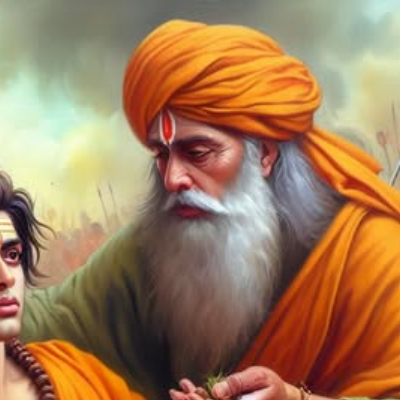
Sushena is a Vanara elder and physician who appears in the Valmiki Ramayana and in several Puranic texts that draw upon the Ramayana tradition. He is the father of Tara — the wife of the Vanara king Vali and, after Vali's death, the wife of Sugriva — and the father-in-law of both Vali and Sugriva, the two brothers whose conflict over the kingship of Kishkindha forms one of the central episodes of the Kishkindha Kanda of the Ramayana. Sushena is also the grandfather of Angada, the valiant Vanara prince who was Vali's son by Tara and who plays a significant role in the Yuddha Kanda as an emissary to Ravana's court and as a warrior in the battle of Lanka. Beyond his familial significance, Sushena is notable in the Ramayana as the physician of the Vanara army — a figure of medical expertise whose knowledge of healing herbs and life-restoring remedies proves critical at a decisive moment in the war against Ravana. He is a secondary figure in the primary sources, without independent mythological narrative beyond what is recorded in connection with the Ramayana's principal events, but his roles as patriarch of a significant lineage and as the army's healer give him a consistent and identifiable presence across the text.
✦ The Name
The name Sushena is a Sanskrit compound derived from su, meaning good, auspicious, or excellent, and sena, meaning army, force, or missile. Sushena therefore means the one with a good or excellent army, or alternatively the one possessed of fine weapons or forces. This martial etymology is somewhat at odds with Sushena's primary narrative role as a physician rather than a warrior, though he does participate in the battle of Lanka as a fighter. In the tradition of Vanara names in the Ramayana, names with martial resonance are common regardless of the individual character's principal role. The designation Sushena Vaidya — Sushena the physician — appears in some manuscript traditions and commentaries to distinguish him from other Vanaras with similar names and to highlight his medical function within the army.
✦ Lineage
- Divine origin: The Valmiki Ramayana, in common with its treatment of the principal Vanara heroes, identifies Sushena as having a divine progenitor. Sushena is stated to be the son of Varuna — the Aditya and lord of the cosmic waters, the western direction, and the sovereign of aquatic beings. Varuna is the son of the sage Kashyapa and his wife Aditi. This divine parentage places Sushena within the framework by which the major Vanaras of the Ramayana are each identified as sons or grandsons of specific gods, their extraordinary strength and capabilities reflecting their divine inheritance.
- Daughter: Tara — one of the most significant female figures in the Kishkindha Kanda and Yuddha Kanda of the Ramayana. Tara is celebrated for her beauty, her intelligence, and her counsel. She is the wife first of Vali and then of Sugriva, and she is the mother of Angada. Her inclusion among the Panchakanya — the five supremely virtuous women of the tradition in some enumerations — reflects the high regard in which the tradition holds her character, though this enumeration is not universal across all texts.
- Son-in-law (first): Vali — the mighty Vanara king of Kishkindha, son of Indra the king of the gods, possessed of the boon by which he received half the strength of any opponent who faced him in direct combat. Vali was the elder brother of Sugriva and the husband of Tara until his death at the hands of Rama.
- Son-in-law (second): Sugriva — the younger brother of Vali, son of the sun god Surya (Vivasvat), who became king of Kishkindha after Vali's death and who was the principal ally of Rama in the campaign against Ravana. After Vali's death, Sugriva married Tara in accordance with the custom described in the epic.
- Grandson: Angada — the son of Vali and Tara; a Vanara prince of great courage and martial ability who was appointed by Rama as the leader of the Vanara forces' advance division, who served as Rama's emissary to Ravana's court in a celebrated episode of the Yuddha Kanda, and who fought with distinction in the battle of Lanka.
✦ Sushena as Patriarch and Father of Tara
Sushena's most consequential role in the Ramayana's genealogical structure is as the father of Tara, whose significance extends well beyond the domestic arrangements of Kishkindha's royal family. Tara is introduced in the Kishkindha Kanda as the wife of Vali and as a woman of exceptional intelligence and foresight. When Sugriva challenges Vali to single combat for the second time — after the first challenge ended in confusion and Rama's failure to kill Vali — Tara attempts to dissuade Vali from accepting the challenge. She has heard reports suggesting that the mysterious prince who has allied himself with Sugriva is no ordinary human and that Vali should be cautious. Vali does not heed her counsel, goes to face Sugriva, and is shot from concealment by Rama.
The scene of Tara's lamentation over the dying Vali is one of the most emotionally intense passages of the Kishkindha Kanda. Tara rushes to the fallen Vali, cradles his head, and speaks to him with a depth of grief and love that the text presents with considerable poetic care. Vali's dying words to Tara are equally significant: he asks her to accept his death without excessive grief, to transfer her loyalty and service to Sugriva, and to provide for their son Angada with the care and wisdom she has always shown. The interaction between Vali, Tara, and Angada at the moment of Vali's death is one of the Ramayana's most humanly resonant episodes.
After Vali's death and cremation, Tara became the wife of Sugriva, continuing to serve as a senior and respected presence in the Kishkindha court. Her counsel remained valued: in one significant episode of the Kishkindha Kanda, when Sugriva had become distracted by pleasure and had failed to honour his promise to Rama to begin the search for Sita within a specified time, it was Tara who advised Sugriva on how to respond when the angry Lakshmana came to confront him, calming the situation and enabling a reconciliation. The Valmiki Ramayana presents Tara throughout as a woman whose intelligence, emotional depth, and practical wisdom make her a significant figure in her own right — a characterisation that reflects back positively on her father Sushena as her progenitor.
✦ Sushena as Physician of the Vanara Army
Sushena's most dramatically significant individual role in the Ramayana narrative occurs in the Yuddha Kanda, during the great battle on Lanka. In the course of the fighting, Lakshmana — the younger brother of Rama and one of the two divine princes at the centre of the epic — was struck by the Shakti spear of the demon warrior Indrajit, the son of Ravana, and fell unconscious. Indrajit was the most formidable of Ravana's warriors, the conqueror of Indra himself, and his weapons carried a power that threatened even those with divine protection. Lakshmana lay on the battlefield in a condition that appeared to be death, and the Vanara army and Rama himself were overwhelmed with grief and dismay.
At this critical moment Sushena stepped forward in his capacity as the army's physician. He examined Lakshmana and declared that Lakshmana was not dead but had fallen into a deep unconscious state from which he could be revived — but only by specific medicinal herbs. Sushena named the herbs required: the Vishalyakarani, which removes arrows and weapons from wounds; the Savalyakarani, which heals the skin and restores flesh; the Suvarnakarani, which restores the natural complexion and vitality; and the Sanjivakarani, which revives life itself. He specified that these herbs were to be found on particular peaks of the Himalayan mountain Gandhamadana, far to the north.
The task of retrieving these herbs was given to Hanuman — the son of the wind god Vayu and the most extraordinary of all the Vanaras in physical capacity. Hanuman flew to the Himalayas at miraculous speed, but when he arrived at Gandhamadana he was unable to identify the specific herbs among the many plants of the mountain. In one of the most celebrated episodes of the Yuddha Kanda, Hanuman resolved this difficulty by lifting the entire peak of the Gandhamadana mountain and carrying it bodily back to Lanka, presenting the whole mountain to Sushena so that the physician could identify and gather the necessary herbs himself. Sushena extracted the required remedies, prepared them, and administered them to Lakshmana. Lakshmana revived, was healed of his wounds, and rose to continue fighting.
This episode is one of the Ramayana's most practically significant medical interventions and it is Sushena's knowledge — his identification of the specific herbs and his direction of Hanuman to retrieve them — that makes the revival possible. Without Sushena's diagnostic expertise, Lakshmana's condition would have appeared irrecoverable and the expedition against Ravana might have been fatally disrupted. The episode thus gives Sushena a functional importance in the Yuddha Kanda that exceeds his relatively modest narrative profile elsewhere in the text.
A parallel episode involves Rama himself being struck down during the battle — in some versions by Indrajit's serpent-arrow weapon, in others by other demonic weapons — and Sushena again providing the medical knowledge and direction that leads to his revival. The details of this second episode vary more across manuscript traditions than the Lakshmana episode, but both underscore Sushena's consistent role as the medical authority of the Vanara army.
✦ Sushena as a Warrior in the Battle of Lanka
In addition to his medical role, Sushena participates directly in the battle of Lanka as a warrior. The Yuddha Kanda describes him fighting against various demon warriors of Ravana's army, though his individual combat episodes are not given the extended treatment reserved for the principal Vanara heroes such as Hanuman, Angada, Nila, and Sugriva himself. He is described as a powerful and experienced fighter, consistent with his divine parentage as the son of Varuna, and his presence in the battle is recorded without the suggestion that he is a figure of secondary martial importance even if his narrative prominence in combat is less than that of the foremost Vanara warriors.
✦ Textual Variants and Inconsistencies
The primary source for Sushena is the Valmiki Ramayana, and the details of his character, lineage, and narrative role are most fully established there. Later texts that engage with the Ramayana tradition — including the Adhyatma Ramayana, the Ananda Ramayana, and regional retellings — do not always treat Sushena with the same degree of consistency. In some later versions the herb-retrieval episode is elaborated further; in others it is compressed or the specific names of the herbs vary. The Valmiki Ramayana's Yuddha Kanda is the authoritative account of the medical episodes.
The divine parentage of Sushena as a son of Varuna is recorded in the Valmiki Ramayana in the passage where the origins of the major Vanaras are enumerated — a passage in which each prominent Vanara is identified with the god from whom he descends. This passage is understood in the tradition as establishing the divine pedigree of the Vanara army as a whole rather than providing detailed genealogical information about each individual Vanara's birth. The nature of the Vanaras' divine parentage in the Ramayana — whether these are literal divine births, divine empowerments of existing Vanaras, or narrative devices for expressing the qualities of the individual characters — has been discussed differently in different commentarial traditions without a single canonical resolution.
The specific herbs named in the revival episode vary somewhat across manuscript traditions of the Yuddha Kanda. The Valmiki Ramayana's southern and northern recensions give slightly different lists of herb names, and the precise botanical identification of these herbs with known medicinal plants has been a subject of interest in Ayurvedic commentary without definitive resolution.
✦ Connection to the Wider Genealogy
Sushena's genealogical position connects him to two of the most significant networks of relationship in the Ramayana. Through his divine father Varuna — the lord of the waters, one of the twelve Adityas born to the sage Kashyapa and his wife Aditi — Sushena is connected to the Aditya lineage and through it to the cosmic divine order of the tradition. Varuna is the brother of Indra, of Vivasvat (Surya), of Vishnu, and of all the other Adityas; Sushena as Varuna's son is therefore the nephew of Indra — whose own son Vali became Sushena's son-in-law — and the nephew of Surya — whose own son Sugriva became Sushena's second son-in-law. The marriages of Tara to both Vali and Sugriva thus unite the son of Varuna's daughter with the sons of Varuna's brothers Indra and Surya, creating a pattern of divine fraternal connection through the marriages of the next generation.
Through his daughter Tara and her son Angada, Sushena is the grandfather of one of the Yuddha Kanda's most significant Vanara warriors. Angada's combination of royal descent — through his father Vali, son of Indra — and the wisdom and eloquence that the text attributes to his mother Tara's influence makes him an appropriate choice for the role of Rama's emissary to Ravana. In that capacity Angada carries the final offer of peace to Ravana's court before the battle begins, and when Ravana refuses all terms, it is Angada who performs the celebrated act of planting his foot so firmly in Ravana's court that none of the demon king's warriors can move it — a demonstration of Vanara power that establishes the tone for the war that follows.
Sushena's role in the revival of Lakshmana also connects him indirectly to the larger theological structure of the Ramayana, since Lakshmana is understood in Vaishnava tradition as a partial manifestation of Shesha — the cosmic serpent on whom Vishnu reclines — and his revival by Sushena's medical knowledge is therefore an act of preserving a divine presence whose continuation is essential to the cosmic mission of Rama, himself the seventh avatar of Vishnu. The physician who preserves the life of Lakshmana is thus, within this theological framework, performing a service of cosmic importance that extends well beyond the immediate narrative context of the battle.
✦ References
- Primary Sources
- Valmiki Ramayana, Kishkindha Kanda (Books 1–67): Introduces Sushena as the father of Tara; establishes his relationship to Vali and Sugriva through his daughter's marriages; records Tara's counsel to Vali before his fatal combat and her lamentation at his death.
- Valmiki Ramayana, Yuddha Kanda (Books 50–74 and related passages): The primary source for Sushena's role as the army physician; describes his diagnosis of Lakshmana's condition, his identification of the healing herbs, his direction of Hanuman to retrieve them from Gandhamadana, and the successful revival of Lakshmana; also records Sushena's participation as a warrior in the battle of Lanka.
- Valmiki Ramayana, Bala Kanda (divine parentage passage): Contains the enumeration of the divine origins of the major Vanaras, establishing Sushena as the son of Varuna.
- Mahabharata, Vana Parva (Book III, the Ramayana summary): Contains a summary retelling of the Ramayana narrative that includes references to the key episodes of the Kishkindha and Yuddha Kandas in which Sushena appears, though without the detail of the Valmiki text.
- Bhagavata Purana, Skandha IX (solar dynasty and Ramayana references): Contains genealogical and narrative material on the Ramayana tradition including references to the Vanara lineages.
- Adhyatma Ramayana (relevant Kandas): A later Sanskrit retelling of the Ramayana within the Brahmanda Purana that includes the key episodes involving Sushena, sometimes with elaborated devotional framing of the herb-revival episode.
- Secondary Sources
- Mani, Vettam. Puranic Encyclopaedia (1975): Entries on Sushena, Tara, Vali, Sugriva, Angada, and related figures; useful for cross-referencing the Ramayana tradition and identifying the scope of Sushena's appearances across the primary corpus.
- Goldman, Robert P. (general editor). The Ramayana of Valmiki: An Epic of Ancient India (Princeton University Press, multiple volumes): Critical edition and translation of the Valmiki Ramayana with extensive notes; the Kishkindha Kanda and Yuddha Kanda volumes are directly relevant to Sushena's appearances and provide textual commentary on the variant manuscript traditions for the herb-revival episode.
- Wisdomlib (wisdomlib.org), entries on Sushena, Tara, the Vanara army, and the Gandhamadana herb episode: Aggregates verse references from digitised versions of the Valmiki Ramayana and related texts; useful for locating specific passages and comparing variant readings across recensions.