
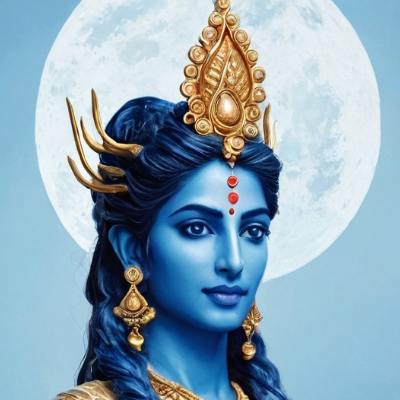
About
Muni — Mother of the Apsaras and Wife of Kashyapa
Muni · Apsaramata · Dakshakanya · Kashyapapatni
Muni is a daughter of Daksha, the primordial progenitor lord and one of the Prajapatis appointed by Brahma to oversee the multiplication of living beings, and one of the wives of the sage Kashyapa — grandson of Brahma through the seer Marichi and the common progenitor of all major races of beings in the Puranic cosmological system. Muni is identified in the genealogical enumerations of the Vishnu Purana as the mother of the Apsaras — the celestial nymphs who inhabit the heavenly realms, who are associated with dance, music, beauty, and sensory pleasure, and who appear throughout the Puranic and epic narratives as temptresses of sages, as rewards for heroic warriors, and as participants in the ceremonial and aesthetic life of the gods. The textual attestation of Muni is almost entirely confined to genealogical lists, and she is not the protagonist of any extended narrative episode in the surviving primary sources. This profile is accordingly proportionate to the limited scope of the available material.
✦ The Name
The name Muni is identical in form to the common Sanskrit noun muni, which denotes a sage, an ascetic, or a silent contemplative — one who practises mauna (silence) as a spiritual discipline. The term is most frequently used in the tradition for male sages such as Valmiki, Vyasa, and others of the sage class. Its use as the proper name of a female figure in the genealogical lists of Kashyapa's wives is therefore unusual, and the primary texts do not supply an etymology or explanation for why this particular name was assigned to this figure. The name may simply have been chosen to complete a set of names for Daksha's daughters, or it may reflect a now-lost narrative or etymological tradition not preserved in the surviving sources. The epithet Apsaramata means "mother of the Apsaras."
✦ Lineage
- Father: Daksha — a Prajapati and primordial progenitor, son of Brahma, who gave his daughters in marriage to the sage Kashyapa to generate the diverse races of beings across the cosmos.
- Mother: The name of Daksha's wife varies across sources as it does for all his daughters — Panchajani in some Puranic passages, Prasuti in the Bhagavata Purana, and Virani in certain Mahabharata references. These are distinct textual traditions rather than a unified account.
- Siblings: Muni is one of the group of Daksha's daughters given to Kashyapa. Her sisters as co-wives of Kashyapa include Aditi (mother of the twelve Adityas), Diti (mother of the Daityas), Danu (mother of the Danavas), Kadru (mother of the Nagas), Vinata (mother of Garuda and Aruna), Surasa (mother of a group of Nagas), Arishta (mother of the Gandharvas), Krodhavasha, Tamra, Ira, Surabhi, Timi, and others named in the Vishnu Purana and Bhagavata Purana.
- Spouse: Kashyapa — the primordial sage and common progenitor of all created beings through his various wives.
- Children — the Apsaras: The Vishnu Purana names Muni as the mother of the Apsaras through Kashyapa. The Apsaras are celestial nymphs of extraordinary beauty who inhabit the divine realms and who appear throughout the Puranic and epic literature in a wide range of roles. Named Apsaras prominent in the tradition include Urvashi, Menaka, Rambha, Tilottama, Ghritachi, and many others, though the primary texts do not consistently assign all named Apsaras to Muni's line specifically, and several cosmogonic passages attribute the origin of the Apsaras to Brahma or to the churning of the cosmic ocean rather than to Muni as their mother. These variant attributions are discussed below.
✦ The Apsaras in the Wider Tradition
The Apsaras are among the most frequently appearing non-human feminine figures in both the Puranas and the epics, and their collective significance far exceeds the minimal narrative profile of their attributed mother Muni. In the Rigveda a figure called Apsara appears in connection with the Gandharva and with the cosmic waters, suggesting an ancient association between the celestial nymphs and the aquatic or atmospheric domain. In the Mahabharata and Puranas, individual Apsaras play roles of considerable narrative importance: Urvashi — one of the most celebrated — is said to have been generated from the thigh of Narayana (Vishnu) in one account, and is the celestial nymph whose union with Pururavas, a king of the Lunar dynasty, is the subject of an extended episode in the Mahabharata's Shanti Parva and in the Vishnu Purana. Menaka is the Apsara sent by Indra to break the austerities of the sage Vishvamitra, and who is the mother of Shakuntala — a figure central to the Mahabharata's Adi Parva and the subject of Kalidasa's celebrated drama. Tilottama is created in the Mahabharata by the divine craftsman Vishvakarma at the gods' request to distract and cause the mutual destruction of the powerful Asura brothers Sunda and Upasunda. Rambha appears in both the Mahabharata and the Ramayana as a paradigmatic figure of celestial beauty. None of these individual episodes in the Apsara tradition specifically involve Muni as an active figure.
✦ Textual Variants and Inconsistencies
The attribution of the Apsaras to Muni as their mother is not universally maintained across the primary texts. The Bhagavata Purana's cosmogonic sections describe the Apsaras as arising during the Samudra Manthan — the churning of the cosmic ocean — among the many beings and objects that emerged from the ocean's depths, which would make them products of the churning rather than offspring of Muni and Kashyapa. Other Puranic passages attribute the creation of the Apsaras to Brahma directly, as part of his initial act of generating the varieties of beings. The Vishnu Purana's genealogical framework, which assigns them to Muni, represents one coherent tradition within the broader textual corpus, but it coexists with these other accounts without any of the primary texts explicitly reconciling the divergence.
Additionally, several individual Apsaras have their own separate origin stories in the texts. Urvashi, as noted, is said in one prominent account to have been generated from Narayana's thigh. Tilottama is explicitly described as having been constructed or fashioned by Vishvakarma rather than born. These individual origin accounts for specific Apsaras exist independently of and without reference to the Muni genealogy, indicating that the tradition did not apply the Muni-as-mother framework uniformly to all members of the Apsara class.
✦ Connection to the Wider Genealogy
Through her father Daksha and her husband Kashyapa, Muni is embedded in the same primordial cosmological genealogy as all of Kashyapa's wives. The Apsaras attributed to her lineage are the celestial feminine counterparts of the Gandharvas attributed to her sister Arishta, and together the two groups constitute the performing and aesthetic community of the heavenly realms. The most cosmologically consequential of the Apsaras in terms of dynastic genealogy is Urvashi, whose union with Pururavas — himself a descendant of Budha, son of the moon god Chandra and Rohini (another of Daksha's daughters) — generates the royal lineage that eventually produces Yayati, Puru, and the ancestors of the Pandavas and Kauravas. If Urvashi is counted among Muni's daughters, then Muni is a collateral ancestress of the major royal lines of the Mahabharata, though this connection depends on the application of the Vishnu Purana's genealogical framework to an Apsara whose individual origin story is given differently in other texts.
✦ References
Primary Sources
- Vishnu Purana, Book 1, chapter 21: The primary source naming Muni as a wife of Kashyapa and as the mother of the Apsaras; provides the genealogical attribution on which the core claim of this profile rests.
- Bhagavata Purana, Book 6, chapter 6: Lists Muni among the daughters of Daksha given to Kashyapa without elaborating her progeny in the same terms as the Vishnu Purana.
- Bhagavata Purana, Book 8, chapter 8: Narrates the emergence of Apsaras from the Samudra Manthan, providing the alternative cosmogonic account of Apsara origins that does not reference Muni.
- Mahabharata, Adi Parva, sections 65–66: Places Muni within the genealogical list of Kashyapa's wives in the broad cosmological genealogy at the opening of the epic.
- Mahabharata, Adi Parva, the Sunda-Upasunda episode; Shanti Parva, the Pururavas-Urvashi episode: Narratives involving named Apsaras providing context for the class of beings attributed to Muni's motherhood.
- Matsya Purana, chapter 6: Names Muni among Daksha's daughters and Kashyapa's wives, consistent with the standard genealogical list.
Modern Reference Works
- Vettam Mani, Puranic Encyclopaedia (1975): Entry on Muni; notes her genealogical position and her attribution as mother of the Apsaras with relevant cross-references.
- Sukumari Bhattacharji, The Indian Theogony (1970): Examines the Puranic genealogical system for secondary divine beings including the Apsaras, relevant to situating Muni's role within the broader Kashyapa household.