
About
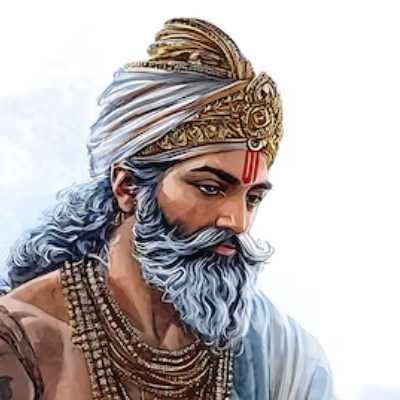
Kakshivan — Rigvedic Sage, Son of Dirghatamas, Hymn-Composer of the Angirasa Tradition
Kakshivan · Kakshivat · Dairghatamasa · Dirghatamasa · Ausija · Pajriya · Angirasakula · Kakshivant
Kakshivan — also spelled Kakshivat or Kakshivant — is a sage of the Angirasa lineage and one of the significant hymn-composers of the Rigveda's first Mandala, identified in the Vedic anukramani — the traditional index of hymn authorship and metres — as the author of a substantial body of hymns addressing principally Indra, the Ashvins, and the dawn goddess Ushas. He is the son of Dirghatamas, the blind sage of the Angirasa line whose Rigvedic hymns include the philosophically celebrated Asya Vamasya hymn, and whose life was marked by abandonment and extraordinary generativity both in sacred poetry and in genealogical progeny. Kakshivan's own hymns in the first Mandala are among the most personally and circumstantially specific in the Rigvedic collection — they narrate mythological episodes concerning the Ashvins in rich detail, record the gifts of royal patrons in the dana-stuti genre, and preserve some of the most important narrative traditions of the Vedic healing deities. He is also the father of the Rigvedic female seer Ghosha, the sage Chandakaushika, and a thousand sons known as the Kushmanda Gautamas. He appears in the Rigveda's first and tenth Mandalas, in the Mahabharata in genealogical and legendary passages, in the Brahmanda Purana and Vayu Purana, and in the Puranic Encyclopaedia of Vettam Mani.
✦ The Names
The name Kakshivan — or its alternate form Kakshivat — is of uncertain precise etymology in the primary texts, which do not provide an elaborated internal derivation. The root kaksha in Sanskrit carries several meanings: an armpit, the girth of a chariot or horse, a thicket or dense undergrowth, and a term associated with a specific part of the sacrificial altar. The possessive suffixes van and vat both yield forms meaning "he who possesses kaksha" — which could mean "he who has a girth" in the context of a chariot warrior, "he of the thicket," or "he of the altar's specific part." The Rigvedic passages attributed to him use the name as a personal designation without etymological commentary. The Monier-Williams Sanskrit-English Dictionary notes that the form Kakshivat is explained by the Kashika commentary on Panini as derived from kakshya-vat.
The patronymic Dairghatamasa or Dirghatamasa means son of Dirghatamas. The designation Ausija — found in some Rigvedic anukramani attributions — connects him to a particular branch of the Angirasa tradition, though its precise genealogical meaning in his context has been discussed in the scholarly tradition without complete resolution; it has been interpreted as a patronymic meaning son of Usij, as a clan designation within the Angirasa tradition, and as a title of uncertain derivation. The epithet Pajriya identifies him with the Pajra subdivision of the Angirasa poetic family. He is also designated Mantrakrit — a creator of mantras — in the Matsya Purana and the Vayu Purana, acknowledging his status as an original composer of Vedic sacred verse. The Vayu Purana records him as a Rajarshi — a royal sage — acknowledging the ambiguity of his birth status and his subsequent elevation to full Brahmin standing through austerities.
✦ Birth — Textual Variants
The circumstances of Kakshivan's birth are narrated differently across the Mahabharata and the Puranic tradition, and both accounts must be presented honestly. The Mahabharata (Adi Parva, Sambhava Parva, Section CIV) gives the principal epic account. The blind sage Dirghatamas, after being set adrift on the Ganga by his sons, was rescued by King Bali of Anga. Bali requested Dirghatamas to beget heirs for him through the niyoga arrangement with his queen Sudeshna. Sudeshna, unwilling to approach the old blind sage, sent her maidservant in her own place. Kakshivan was the son born of the union between Dirghatamas and this unnamed maidservant. Sudeshna herself later went to Dirghatamas and bore five royal sons — Anga, Vanga, Kalinga, Pundra, and Suhma — who became the founders of five eastern kingdoms.
The Puranic Encyclopaedia, drawing on a distinct Puranic strand, gives a variant: the royal patron was King Kalinga — not King Bali of Anga — and the maidservant sent in the queen's place was named Ushi. Kakshivan was born of Dirghatamas and Ushi. The Mahabharata and the Puranic strand diverge both in the identity of the king and in the name of the maidservant. These represent independently transmitted accounts and neither should be suppressed. The Rigvedic anukramani tradition associates Kakshivan with the Ausija and Pajra family branches of the Angirasa tradition in ways that do not always align precisely with either epic or Puranic genealogical account, reflecting the separate transmission history of the Vedic index material.
A further variant appears in the Mahabharata itself: one passage gives a different account in which Kakshivan was born to a sage named Gautama — distinct from the Gautama who was the husband of Ahalya — and a Shudra woman of the land of Usinara. This version is noted by some secondary sources and represents a third distinct strand of the tradition concerning his birth. In all versions, the common thread is Kakshivan's birth from a union of unequal or anomalous social status, which is the basis for the tradition that he subsequently underwent tapas to attain full Brahmin standing.
✦ Lineage
- Father: Dirghatamas — the blind sage of the Angirasa lineage; son of Utathya and Mamata; composer of the Asya Vamasya hymn (Rigveda I.164), one of the most philosophically celebrated passages in the Vedic corpus; his life was marked by blindness, abandonment by his sons, and subsequent extraordinary productivity in both sacred verse and genealogical progeny
- Mother — variant 1 (Mahabharata, Adi Parva): An unnamed maidservant of Queen Sudeshna in the household of King Bali of Anga
- Mother — variant 2 (Puranic Encyclopaedia): Ushi — a maidservant of the queen in the household of King Kalinga
- Paternal grandfather: Utathya — elder brother of Brihaspati the divine preceptor of the gods; a sage of great authority in the Angirasa lineage; his brahminical power over royal sovereignty is demonstrated in the Mahabharata episode of his drinking of the ocean in the dispute with King Mandhata
- Paternal great-grandfather: Angiras — one of the most ancient of the primordial sages; a mind-born son of Brahma; progenitor of the entire Angirasa lineage of hymn-composition and sacred learning
- Brother: Chakshus — accompanied Kakshivan to Girivraja and jointly attained Brahmahood through austerities there; recorded in the Brahmanda Purana and the Vayu Purana
- Half-brothers (Mahabharata account — by Dirghatamas and Queen Sudeshna of King Bali's household): Anga, Vanga, Kalinga, Pundra, and Suhma — founders of five eastern kingdoms whose names correspond to major regions of the subcontinent and whose peoples appear throughout the Mahabharata's political geography
- Wives: The ten daughters of King Bhavayavya — given to Kakshivan in marriage by the king after an encounter facilitated through the king's son Svanaya; their individual names are not recorded in any primary source examined; the marriage is documented in Rigveda hymns I.125 and I.126 and in Sayana's commentary on those hymns
- Daughter: Ghosha — also designated Ghosha Kakshivati (Ghosha daughter of Kakshivan); a Rigvedic seer in her own right and composer of hymns X.39 and X.40 of the Rigveda's tenth Mandala, both addressed to the Ashvins; afflicted from youth with a severe skin ailment described in the tradition as leprosy; remained unmarried for many years; cured through devotion to and grace of the Ashvins; subsequently married and bore a son named Suhastya who also composed a Rigvedic hymn; known by the epithets Mantradrika (well versed in mantras) and Brahmavadini (speaker of Brahman)
- Son: Chandakaushika — a sage of the Gautama-Angirasa tradition; identified in the Jarasandhavadha Mahakavyam as the son of Kakshivana of the Gautama race; instrumental in the birth of Jarasandha, the powerful king of Magadha who is a major adversarial figure in the Mahabharata, through his gift of a sacred mango to King Brihadratha of Magadha
- Sons (collective, Brahmanda and Vayu Puranas): One thousand sons known as the Kushmanda Gautamas and the Krishnangas — their collective names indicate their place within the Gautama-Angirasa tradition and in specific categories of sacred beings within the Puranic taxonomy
✦ Attainment of Brahmahood at Girivraja
The Brahmanda Purana and the Vayu Purana record that after following his father Dirghatamas, Kakshivan proceeded with his brother Chakshus to Girivraja — the ancient hill-city of the Magadha region, later known as Rajagriha, which features prominently in both the Mahabharata and the Buddhist textual traditions as a major seat of power in the sub-Himalayan east. At Girivraja, Kakshivan and Chakshus undertook severe austerities. Through the accumulated power of these tapas, both brothers attained full Brahmahood — the highest spiritual status — transcending the ambiguity of their birth from a maidservant and the resulting uncertainty of their varna position. The Vayu Purana (91.117) records Kakshivan explicitly as a rajarshi — a royal sage — who became a full Brahmin, placing him in the category of figures who attained sacred status through spiritual effort rather than purely through birth. This episode of elevation through tapas is a recurring pattern in the Puranic tradition for figures of mixed or anomalous birth, and its association with Girivraja gives Kakshivan a connection to the same landscape that would later be associated with his own son Chandakaushika and with the birth of Jarasandha.
✦ Marriage — The Ten Daughters of Bhavayavya
One of the most fully documented episodes in Kakshivan's biography is his marriage, recorded in the Rigveda itself at hymns I.125 and I.126 and elaborated in the commentary of the Vedic scholar Sayana. After completing his course of study with his preceptor and taking his leave, Kakshivan was journeying homeward when night fell and he slept by the roadside. In the morning he was found by Svanaya — the son of King Bhavayavya, a powerful king who dwelt on the banks of the Sindhu (Indus) river. Svanaya brought Kakshivan to his father's palace, where the king received him with honour. On learning that Kakshivan was the son of Dirghatamas, son of Ucathya, of the Angirasa tradition, King Bhavayavya gave him his ten daughters in marriage. The gifts that accompanied the marriage were lavish and are recorded precisely in the Rigvedic hymn: a hundred necklets of gold, a hundred horses, a hundred bulls, sixty thousand cows, and eleven four-horse chariots — one for each of the ten wives and one for Kakshivan himself. Rigveda hymn I.126 is Kakshivan's dana-stuti commemorating these gifts and praising the munificence of the Bhavayavya royal household. The ten daughters of Bhavayavya are not named individually in any primary source examined. Kakshivan presented the gifts to his father Dirghatamas on his return home, as the hymn itself records.
✦ Kakshivan in the Rigveda
The Rigveda's first Mandala contains a significant body of hymns attributed to Kakshivan Dirghatamasa by the traditional anukramani indices — spanning from hymns I.116 through I.126 and including several adjacent compositions. These hymns address primarily the Ashvins, Indra, and in one celebrated case the dawn goddess Ushas. They are among the most personal and circumstantially specific hymns in the Rigvedic collection — containing references to the poet's own life, his relationships with divine patrons, his gratitude for divine and royal assistance, and the specific sacrificial occasions on which the hymns were composed. Kakshivan is also named in hymn I.18.1 within the first Mandala, confirming his presence across multiple hymn groups of that collection.
His Ashvin hymns — particularly those in the central section of the first Mandala — are the primary Rigvedic source for several of the mythological traditions concerning the Ashvins' healing and miraculous deeds. These hymns enumerate the Ashvins' past accomplishments in the genre called Ashvin-stuti — the praise of the Ashvins through their mythological deeds — and several specific episodes narrated within them are not found with the same detail elsewhere in the Rigveda. The story of Vishpala — a woman warrior who lost her leg in battle and to whom the Ashvins gave an iron prosthetic leg — is one of the most cited examples of the Ashvins' miraculous powers in the scholarly literature on Vedic mythology, and Kakshivan's hymns are the primary Rigvedic source for this story. Similarly, the healing of the blind sage Rijrasva — blinded by his father as punishment for giving sheep intended for sacrifice to a she-wolf — and the restorations accomplished by the Ashvins upon him are found in Kakshivan's hymns with the greatest narrative specificity. The Ashvins' healing powers celebrated in these hymns are clearly the same tradition that Kakshivan's own daughter Ghosha would later invoke, and which — according to the tradition — cured her of her affliction.
✦ The Dana-Stutis — Praise of Gifts
Several hymns attributed to Kakshivan in the first Mandala include what Vedic scholarship calls dana-stutis — verses that praise the gifts given by royal patrons to the poet-sage in exchange for the composition or performance of sacred hymns. These are among the most historically informative passages in the Rigveda because they record specific items and their quantities — chariots, necklaces of gold, cattle, horses — given by specific named kings. The tradition of the dana-stuti reflects the ancient Indian understanding that the relationship between the hymn-composing sage and the royal patron was one of mutual obligation: the sage composed and performed hymns that channelled divine power toward the patron's welfare, and the king gave lavish gifts in acknowledgement of that sacred service. Kakshivan's dana-stutis — of which the hymn I.126 praising Bhavayavya is the most detailed — give a vivid picture of the material culture of the period and the scale of patronage that distinguished Vedic sage-poets could attract. These personal and circumstantial details make his hymns unique resources for understanding the social context of Rigvedic composition.
✦ Kakshivan as Teacher of Indra and Barhishad
The Mahabharata (Anushasana Parva, Chapter 150) records a tradition of extraordinary significance for Kakshivan's status within the sacred hierarchy: he is named as one of seven Barhishads — a category of manes or divine beings born of Brahma — who served as the celestial gurus of Indra, the king of the gods, and who resided in the eastern quarter. The seven named are Yavakrita, Raibhya, Arvavasu, Paravasu, Kakshivan, Angiras, and Kanva. The same passage states that Kakshivan was preceptor of Indra and possessed creative power equal to that of Rudra (Shiva). This tradition elevates Kakshivan from the category of a mortal sage who composed Rigvedic hymns to a figure of cosmic pedagogical authority — a teacher of the lord of the gods himself. The designation Barhishad — manes born of Brahma who are also gurus of the divine king — places him simultaneously within the ancestral and the cosmic divine orders, a status that reflects the highest possible authority that the epic tradition could attribute to a human sage.
✦ Chandakaushika and the Birth of Jarasandha
Kakshivan's son Chandakaushika is identified in the Jarasandhavadha Mahakavyam — a Sanskrit epic by Goswami Hariraiji drawing on the Mahabharata and the Bhagavata Purana — explicitly as the son of Kakshivana of the Gautama race. Chandakaushika visited the court of King Brihadratha of Magadha, who had long remained childless despite his power and piety. Brihadratha served Chandakaushika with great devotion, and the sage in gratitude gave him a sacred mango fruit endowed with the power to grant an extraordinary child. Unaware that the king had two queens whom he loved equally, Brihadratha divided the mango between both of them. Each queen gave birth to a lifeless half of a child. The two halves were cast outside the city in grief. A Rakshasi named Jara discovered the two fragments and joined them together, whereupon the child came to life with a cry. Jara brought the living child to the king. Brihadratha named him Jarasandha — meaning he who was joined by Jara. Chandakaushika subsequently came to the court again and prophesied Jarasandha's extraordinary destiny and invincibility. Jarasandha grew to be the most powerful king of Magadha, the father-in-law of Kamsa, and the persistent adversary of Krishna across the Mahabharata and the Bhagavata Purana — ultimately defeated in single combat by Bhima at the instigation of Krishna. Through Chandakaushika's role in this narrative, Kakshivan's lineage is connected to one of the most consequential political and theological episodes of the Mahabharata tradition.
✦ Ghosha — The Daughter Who Became a Rigvedic Seer
Kakshivan's daughter Ghosha — also designated Ghosha Kakshivati, meaning Ghosha of the Kakshivan lineage — is one of the most celebrated female seers of the Vedic tradition and a composer in her own right. She is attributed with two hymns in the tenth Mandala of the Rigveda — hymns X.39 and X.40 — both addressed to the Ashvins, the divine twin physicians. Within these hymns she explicitly identifies herself as the daughter of Kakshivan and granddaughter of Dirghatamas of the Angirasa family, making her genealogical identity entirely secure within the Rigvedic text itself without recourse to secondary sources. From an early age Ghosha suffered from a severe and disfiguring skin ailment described in the tradition as leprosy, which rendered her unmarriageable and confined her to her father's household for many years. There she devoted herself to Vedic study, sacred practice, and fervent prayer to the Ashvins. According to the tradition preserved in and around her hymns, the Ashvins responded to her devotion by teaching her the Madhu Vidya — a form of sacred knowledge associated with the restoration of youth, health, and beauty — through which she was cured. She subsequently married and bore a son named Suhastya, who also composed a hymn preserved in the Rigveda. Ghosha is known by the epithets Mantradrika (well versed in mantras) and Brahmavadini (speaker or proclaimer of Brahman), and she is counted among the celebrated Rishikas — female seers — of the Rigvedic tradition. The first of her two hymns is understood as a prayer for healing and the restoration of marital eligibility; the second expresses her longing for married life and progeny. The connection between her devotion to the Ashvins and the Ashvin hymns attributed to her father is theologically and genealogically significant: the divine twins whom Kakshivan celebrated in the first Mandala as healers and helpers of the distressed became, in the next generation, the direct agents of his own daughter's healing.
✦ Textual Variants and Inconsistencies
The identity of Kakshivan's mother presents the most significant textual ambiguity in his biography. Three distinct accounts exist across the primary sources: the Mahabharata gives an unnamed maidservant of Queen Sudeshna in King Bali of Anga's household; the Puranic Encyclopaedia gives a maidservant named Ushi in the household of King Kalinga; and a separate Mahabharata passage gives a Shudra woman of Usinara associated with a different sage named Gautama. These three accounts represent independent transmission streams and are not reconcilable with one another. None should be privileged over the others without textual grounds.
The attribution of hymns to Kakshivan is not entirely uniform across all versions of the anukramani. The hymns most securely attributed to him on the basis of consistent anukramani attestation and internal coherence are the Ashvin hymns in the first Mandala's central section (I.116–I.126). The attribution of certain other compositions in adjacent ranges and the precise boundaries of the Kakshivan corpus relative to other members of the Angirasa-Pajra family tradition of the first Mandala have been subject to discussion in Vedic scholarship.
The designation Ausija applied to Kakshivan in some anukramani passages has been interpreted by different Vedic scholars as a patronymic (son of Usij), as a clan designation within the Angirasa tradition, and as a title of uncertain derivation. This profile notes the designation without asserting a definitive interpretation, as the scholarly literature has not resolved the question.
✦ Theological and Philosophical Significance
Kakshivan's theological significance rests on three foundations. First, he is the primary Rigvedic transmitter of the Ashvin mythology in its most narratively rich form — his hymns preserve specific stories about the divine twin healers, including the Vishpala iron-leg narrative and the Rijrasva healing, that are not found with the same detail elsewhere in the Rigveda, making his compositions an essential source for the mythology of the divine physicians. Second, as one of the seven Barhishads who were the celestial gurus of Indra, he occupies a position of cosmic pedagogical authority that elevates him above the category of ordinary mortal sage-composers. Third, through his austerities at Girivraja he embodies the Puranic principle that spiritual attainment through tapas can transcend the social limitations imposed by birth — a theme of enduring significance in the tradition.
As the son of Dirghatamas — whose hymns are marked by cosmological speculation, riddle-poetry, and philosophical depth — Kakshivan represents the continuation of the Angirasa tradition in a complementary direction: where his father's hymns are speculative and esoteric, Kakshivan's are narrative, devotional, and socially engaged. The two together give the Angirasa-Dirghatamasa family a remarkably broad range within the Rigvedic collection.
✦ Connection to the Wider Genealogy
Through his father Dirghatamas and grandfather Utathya, Kakshivan is a third-generation descendant of Angiras — the primordial mind-born son of Brahma — in the Angirasa lineage. He is thus a cousin-lineage figure relative to Brihaspati, the divine preceptor of the gods, and through Brihaspati a cousin-lineage figure relative to Bharadvaja, whose son Drona trained the central generation of Mahabharata warriors.
Through his half-brothers Anga, Vanga, Kalinga, Pundra, and Suhma — born of Dirghatamas's union with Sudeshna in King Bali's household — Kakshivan is the half-brother of the founders of five eastern kingdoms. Karna, the great warrior of the Mahabharata, was appointed king of Anga by Duryodhana, making the kingdom whose founding ancestor was Kakshivan's half-brother Anga the kingdom associated with the tradition's most tragic heroic figure.
Through his daughter Ghosha and her son Suhastya, Kakshivan's lineage extends into the tenth Mandala of the Rigveda — the latest stratum of that collection — giving the Kakshivan family a presence across both the oldest and the most recent layers of the Rigvedic corpus. Through his son Chandakaushika, his lineage intersects with the birth of Jarasandha, a figure who shaped the political landscape of the Mahabharata's pre-war period and whose enmity with Krishna drove the Sabha Parva's critical episode of Bhima's combat at Magadha. Through his thousand Kushmanda Gautama sons, the Angirasa-Kakshivan line extends into the Puranic classification of sacred groups and their ritual traditions.
✦ References
Primary Sources
- Rigveda, Mandala I, hymns 116–126 and related hymns (Kakshivan Dirghatamasa corpus): The foundational primary source for Kakshivan's identity as a Rigvedic hymn-composer; contains the Ashvin hymns narrating the mythology of the divine twins' miraculous deeds including the Vishpala iron-leg story and the Rijrasva healing; contains the dana-stutis recording gifts from royal patrons; establishes the marriage episode through hymns I.125–I.126 with Sayana's commentary.
- Rigveda, Mandala I, hymn 18, verse 1: Names Kakshivant within the first Mandala, confirming his presence across multiple hymn groups; uses the designation Ausija.
- Rigveda, Mandala I, hymn 126 (Griffith translation; H. H. Wilson translation with Sayana commentary): The dana-stuti hymn recording the marriage to the ten daughters of Bhavayavya and the gifts of gold, horses, cattle, and chariots received from the king; primary source for the marriage episode.
- Rigveda, Mandala X, hymns 39–40 (attributed to Ghosha Kakshivati): Primary source for the existence of Kakshivan's daughter Ghosha; she explicitly identifies herself in these hymns as daughter of Kakshivan and granddaughter of Dirghatamas of the Angirasa family; documents her affliction, her devotion to the Ashvins, and her desire for healing and marriage.
- Rigveda Anukramani (Katyayana's Sarvanukramani and related texts): The traditional Vedic indices of hymn authorship that attribute the first Mandala hymns to Kakshivan Dirghatamasa Pajriya and establish the genealogical designations Ausija and Pajriya.
- Mahabharata, Adi Parva, Sambhava Parva, Section CIV (Ganguli translation): The principal epic source for Kakshivan's birth as the son of Dirghatamas and the unnamed maidservant of King Bali of Anga's household; records the niyoga arrangement and the birth of the five royal sons Anga, Vanga, Kalinga, Pundra, and Suhma from Sudeshna.
- Mahabharata, Anushasana Parva, Chapter 150: Records Kakshivan as one of the seven Barhishads — gurus of Indra living in the eastern quarter — alongside Yavakrita, Raibhya, Arvavasu, Paravasu, Angiras, and Kanva; states his creative power was equal to that of Rudra.
- Mahabharata, Shanti Parva, Chapter 208; Anushasana Parva, Chapter 135: Records Kakshivan as a sage of the Angirasa family living in a hermitage in the east; confirms his Mahabharata presence outside the birth narrative.
- Mahabharata, Shanti Parva, Chapter 292: Records Kakshivan praising Vishnu through Rigvedic recitation and acquiring spiritual merit thereby.
- Brahmanda Purana, III.74.71, 95, 99: Records Kakshivan's journey with Chakshus to Girivraja and their attainment of Brahmahood through tapas; names his thousand sons as the Kushmanda Gautamas and Krishnangas.
- Vayu Purana, 91.117; 99.70, 93–97: Records Kakshivan as a rajarshi who attained Brahmahood; identifies him as a Mantrakrit of the Angirasa branch; names his thousand sons; records the Girivraja austerities with Chakshus.
- Matsya Purana, 145.105: Designates Kakshivan as a Mantrakrit (mantra-creator) of the Angirasa branch.
- Bhagavata Purana, I.9.7: Names a sage called Kakshivat among those who visited Bhishma on his deathbed on the bed of arrows after the Kurukshetra war.
- Vishnu Purana, III.6.6: Records a Kakshivat as a pupil of Paushipinji in the transmission lineage of Vedic learning.
- Jarasandhavadha Mahakavyam by Goswami Hariraiji (Parts 4–5, as translated on Wisdomlib): A Sanskrit epic drawing on the Mahabharata and the Bhagavata Purana; explicitly identifies Chandakaushika as the son of Kakshivana of the Gautama race; narrates the mango episode and the resulting birth of Jarasandha through Chandakaushika's boon to King Brihadratha of Magadha.
Modern Reference Works
- Mani, Vettam — Puranic Encyclopaedia (1975), entry "Story of Kakshivan": The most comprehensive secondary synthesis; gives the Kalinga-Ushi version of his birth; records the encounter with Svanaya and the marriage to the ten daughters of Bhavayavya; confirms his status as Mantrakrit and Angirasa lineage member; provides the narrative basis for several episodes in this profile.
- Wisdomlib.org — entry "Kakshivat" (last updated October 2023): Aggregates the Puranic Index citations from the Cologne Digital Sanskrit Dictionaries covering all major Puranic references to Kakshivat across the Brahmanda Purana, Vayu Purana, Matsya Purana, and Bhagavata Purana; confirms his thousand sons and the Brahmahood episode.
- Wisdomlib.org — entry "Svanaya": Confirms Svanaya as the son of Bhavayavya, records the Rigvedic citation (I.126.3) and the Shankhyayana Shrauta Sutra reference for the marriage episode.
- Monier-Williams, M. — Sanskrit-English Dictionary (1899), entries "Kakshivat" and "Kakshivan": Records the name, its grammatical derivation, its Rigvedic usage, and the identification of Kakshivan as Pajriya; notes the Ausija designation and cites Rigveda I.18.1.
- Macdonell, A. A. — Vedic Mythology (1897): Analyses the Ashvin mythology as found in the Rigveda including the Vishpala and Rijrasva narratives preserved in Kakshivan's hymns; essential scholarly background for the mythological content of his compositions.
- Macdonell, A. A. and Keith, A. B. — Vedic Index of Names and Subjects (1912), entries "Kakshivan" and "Pajra": Establishes the Vedic genealogical background; discusses the Ausija designation and its possible interpretations; records the Pajra family affiliation.
- Wikipedia — "Ghosha" article: Secondary summary confirming Ghosha Kakshivati as Rigvedic seer and daughter of Kakshivan; confirms hymn attributions X.39–X.40, her son Suhastya, and her epithets Mantradrika and Brahmavadini.
- Wikipedia — "Jarasandha" article: Secondary source confirming the role of sage Chandakaushika in the birth of Jarasandha; corroborates the narrative details of the mango episode and the birth from two queens of Brihadratha of Magadha.
- Gonda, Jan — The Vision of the Vedic Poets (1963): Examines the personal and devotional dimensions of Rigvedic hymn-composition; provides scholarly framework for understanding the distinctive personal quality of Kakshivan's Ashvin hymns.
- Doniger O'Flaherty, Wendy (translator) — The Rig Veda: An Anthology (1981): Contains translations of selected Rigvedic hymns including material from the Ashvin tradition relevant to the mythological content of Kakshivan's compositions.